
fomox
MarketsPerpsSpotSwap
Meme
Referral
More
Search Token/Wallet
/

A Comprehensive Introduction to Web3: A Must-Have Guide for Beginners

2025-12-28 02:26:08
Blockchain
Crypto Ecosystem
Crypto Tutorial
DAO
Web 3.0
Article Rating : 4.5
half-star
200 ratings
Explore the fundamentals and practical applications of Web3 technology. This guide offers a thorough introduction for beginners, detailing the distinctions between Web3 and Web2, the principles of decentralization, key blockchain concepts, and leading projects like Polkadot and Filecoin. Assess the strengths, challenges, and future outlook of Web3, equipping you with the foundational knowledge required to navigate the Web3 ecosystem confidently.
A Comprehensive Introduction to Web3: A Must-Have Guide for Beginners

What Is Web 3.0?

Following the eras of Web 1.0 and Web 2.0, the internet is evolving toward a more open, equitable, and secure network—ushering in the era of Web 3.0. With the advancement of blockchain technology, Web 3.0 has become a central focus within the tech industry.

Understanding Web 3.0

In 2014, Dr. Gavin Wood introduced a transformative vision for Web 3.0. So, what is Web3? At its core, Web 3.0 represents a broad movement and suite of protocols designed to make the internet more decentralized, verifiable, and secure. The goal of Web 3.0 is to build a serverless, decentralized internet where users control their identities, data, and digital destinies.

Web 3.0 will drive the creation of a new global digital economy, foster innovative business models and markets, disrupt platform monopolies, and spark widespread, grassroots innovation. Kevin Kelly, in his book "Out of Control," described it succinctly: "No beginning, no end, no center—or conversely, everywhere is a beginning, everywhere is an end, everywhere is a center." This perfectly captures the essence of Web 3.0—a world without servers or centers, or, alternatively, a world where every point can be a server or a center.

Origins of Web 3.0

The internet has progressed through three major stages, each defined by distinct features and paradigms.

Web 1.0 Era—the early internet of the 1990s—was characterized by passive browsing. Users could only consume the content provided by websites, with no interactivity. Portals like Yahoo and Google epitomize this era. The Web 1.0 model meant platforms created, owned, controlled, and profited from content, while users were passive recipients of information.

Web 2.0 Era emerged in 2004 as the internet matured, marked by a fundamental shift in how information was shared. Web 2.0 empowered users to create content and engage in collaboration and interaction, as seen with the rise of blogs and social media platforms like Facebook. This era placed users at the center, transforming them from passive consumers into active content producers.

Web 3.0 Era emerged in response to the increasing centralization and growing issues with data security and privacy that defined Web 2.0. Events like the Facebook data breach exemplified these concerns. Web 3.0 is positioned to address these challenges, delivering a more "efficient, fair, trustworthy, and valuable" internet. In Web 3.0, digital identity, assets, and data are restored to individual ownership and control, driving greater decentralization. The operating model is user-created, user-owned, user-controlled, and distributed. For this reason, Web 3.0 is also called the decentralized value internet.

The table below visually compares the three eras:

Stage Web 1.0 Web 2.0 Web 3.0
Keywords Read-Only Interactive Decentralized
Description Websites provide content; users read content Users generate content and interact with others and websites Digital identity, assets, and data return to individual ownership
Representative Examples Portals like Yahoo Social platforms like Facebook Diverse applications

Web 3.0 Project Overview

As internet technology evolves, a continuous stream of Web 3.0 projects is emerging. Key sectors currently include public blockchains, decentralized storage, domain names, browsers, and more.

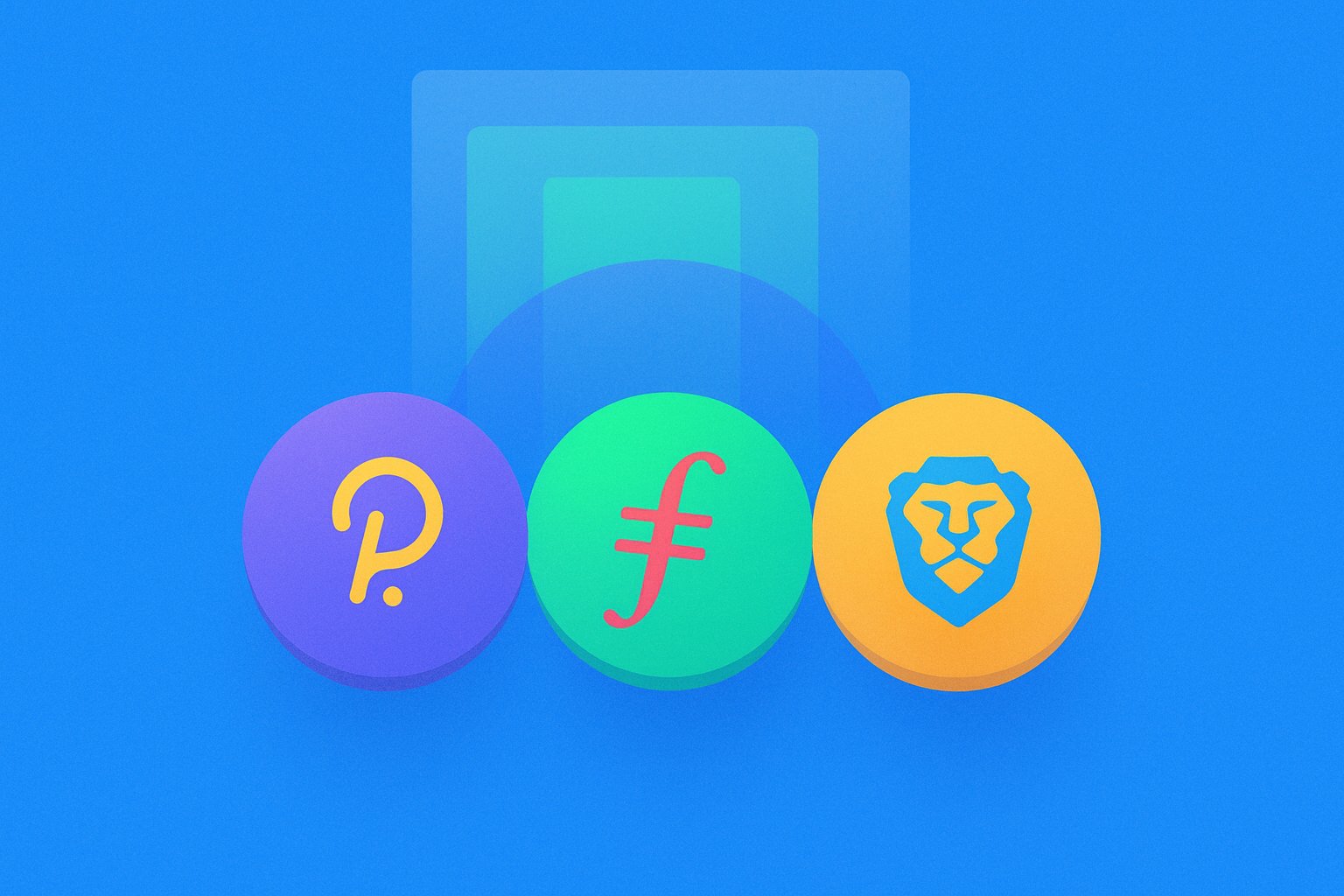
In public blockchains, Polkadot—created by Dr. Gavin Wood—addresses cross-chain interoperability for blockchains operating in the smart contract era. Polkadot enables both asset and information transfers between chains, providing foundational infrastructure for Web 3.0.

For decentralized storage, Filecoin is a prominent Web 3.0 protocol. It allows users to offer excess hard drive storage to those in need, creating a decentralized marketplace for storage resources and fostering a sharing economy.

In browser technology, the Brave browser elevates user experience by blocking ads. Users browsing with Brave enjoy an ad-free experience and earn rewards for their activity.

In decentralized domain names, the Handshake project opens new opportunities for users. Registration fees are paid with HNS tokens, and users receive cryptographic keys as proof of domain ownership. All HNS domain transactions are recorded on the blockchain, guaranteeing transparency and immutability.

Advantages and Disadvantages of Web 3.0

Advantages

Web 3.0 offers transformative economic models and robust protections for user rights. First, it establishes a transparent, trustworthy digital economy. In Web 3.0, users own the data they generate, and consumers cannot access it without explicit permission from the creator. Content owners directly benefit from their high-quality contributions. Users serve as both consumers and ecosystem maintainers, creating healthy value cycles.

Second, Web 3.0 grants users full ownership of their content. In traditional internet models, content creators rarely receive fair rewards. For example, articles posted to social platforms may be deleted due to policy changes; digital music purchased can disappear when licenses expire; game items may be lost when developers alter operations. In the Web 3.0 world, these issues are resolved—changes to products or games now require community votes, eliminating unilateral developer control.

Disadvantages

Despite its promise, Web 3.0 still faces significant challenges. Technical limitations—such as blockchain network congestion, low efficiency, and high fees—directly impact the user experience. These costs are often passed on to users, increasing barriers to adoption.

Security risks remain a concern. Vulnerabilities in smart contracts are exploited for attacks, threatening user assets. Furthermore, Web 3.0 has a steep learning curve, requiring new users to invest time in mastering the technology and operations, which slows mass adoption.

Conclusion

Web 3.0 introduces a safer, more efficient, and more open internet model, empowering users to protect their privacy and security. Through decentralization, Web 3.0 restores control of data, identity, and assets to individuals, breaking the monopoly of legacy internet platforms.

Although Web 3.0’s full realization will take time and must overcome technical, security, and adoption hurdles, continued progress in blockchain technology is paving the way for a safer, more dynamic, and engaging online environment. The advent of Web 3.0 promises revolutionary change for the digital economy.

FAQ

What Is the Core Principle of Web3?

Web3’s core principle is decentralization. By leveraging blockchain technology, it gives users direct control over their data, assets, and identity. This approach removes intermediaries, enables peer-to-peer value exchange and information sharing, and builds a more open, transparent, and self-governing internet ecosystem.

Is Web3 Illegal?

Web3 itself is not illegal—it is a technology and a philosophy. Illicit activities conducted through Web3, such as fraud or money laundering, are illegal. Legitimate, compliant use of Web3 and cryptocurrencies is fully legal, and many countries are developing regulatory frameworks for the industry.

What Exactly Is Web 3.0?

Web 3.0 is the next-generation internet built on blockchain technology, restoring data ownership to users. Through smart contracts and decentralized applications, users interact directly, without intermediaries. Data is transparent and immutable, granting individuals complete control over their assets and privacy.

How Does Web3 Differ from Web2?

Web2 platforms centralize and control user data, while Web3 leverages blockchain for decentralization. In Web3, users own their data, transactions are transparent and tamper-proof, and smart contracts automatically execute rules—eliminating intermediaries and enabling genuine peer-to-peer value transfer.
* The information is not intended to be and does not constitute financial advice or any other recommendation of any sort offered or endorsed by Gate.

Share

Content

Understanding Web 3.0

Origins of Web 3.0

Web 3.0 Project Overview

Advantages and Disadvantages of Web 3.0

Conclusion

FAQ

Related Articles
What Is Token Economics Model: How Do Token Distribution, Inflation Mechanisms, and Governance Work?

What Is Token Economics Model: How Do Token Distribution, Inflation Mechanisms, and Governance Work?

# Article Introduction This comprehensive guide explores token economics models, examining how dual-token architectures, strategic distribution, and automated governance mechanisms create sustainable blockchain ecosystems. Learn how TRAC and NEURO tokens optimize network incentives through fixed supply mechanisms and transaction efficiency. Discover balanced allocation frameworks allocating 50% community, 30% investors, and 20% team, alongside inflation control through Collective Programmatic Treasury and deflationary burns. Perfect for investors, developers, and crypto enthusiasts seeking to evaluate tokenomics health. The article breaks down token distribution strategies, inflation mechanisms, governance participation, and vesting structures while addressing critical risks like excessive inflation and token concentration. Master the essential principles distinguishing successful models like Bitcoin and Ethereum, enabling informed decisions on blockchain projects traded on Gate.
2026-01-01 02:56:38
Become a Web3 Developer: Key Skills and Career Path Essentials in Blockchain

Become a Web3 Developer: Key Skills and Career Path Essentials in Blockchain

This article serves as a comprehensive guide to becoming a blockchain developer, detailing essential skills and career pathways in Web3 development. It explains the distinct roles of core and software developers, highlighting the technical and innovative aspects of blockchain technology. The text explores the opportunities and challenges that come with this evolving field, catering to aspiring developers seeking to leverage blockchain in various industries. Structured around understanding the developer roles, benefits, risks, and steps to enter the field, it provides actionable insights on mastering the necessary skills and engaging with the Web3 community.
2025-12-18 15:07:49
Understanding Digital Ledgers: The Backbone of Blockchain Technology

Understanding Digital Ledgers: The Backbone of Blockchain Technology

The article "Understanding Digital Ledgers: The Backbone of Blockchain Technology" explains the fundamental role of digital ledgers in blockchain, emphasizing their decentralized nature and significance in cryptocurrency networks. It delineates the differences between blockchain and Distributed Ledger Technology (DLT), exploring various types and consensus mechanisms like Proof-of-Work and Proof-of-Stake. Aimed at readers seeking insight into digital transactions and decentralized systems, it discusses permissionless versus permissioned ledgers and evaluates the pros and cons of DLT. Key concepts such as cryptography, scalability, and privacy are addressed to provide a comprehensive understanding of digital data management.
2025-12-18 19:49:42
Designing Safe Utility Tokens: Key Differences and Best Practices

Designing Safe Utility Tokens: Key Differences and Best Practices

The article "Designing Safe Utility Tokens: Key Differences and Best Practices" explores three strategies for designing legally compliant utility tokens, emphasizing regulatory consideration and sustainability. It addresses concerns for token creators about navigating legal frameworks and differentiating between utility and security tokens. The piece discusses three methods to reduce securities risk: distributing tokens through earning mechanisms, treating payouts as bonuses, and avoiding profit expectation statements. The article’s structured approach aids web3 projects in ensuring compliance, providing valuable insights for developers, legal advisors, and blockchain entrepreneurs. Key topics include legal risks, compliance methods, and utility token benefits.
2025-12-25 05:23:37
Creating Your Own Web3 Personal Blog: A Comprehensive Guide

Creating Your Own Web3 Personal Blog: A Comprehensive Guide

This comprehensive guide navigates you through the creation and management of your Web3 personal blog, emphasizing the importance of self-expression, brand building, and professional growth. It addresses key aspects such as choosing the right platform, crafting compelling content, and growing your audience through SEO and social media integration. Monetization strategies, technical maintenance, and performance measurement are also explored to enhance your blogging success. Ideal for aspiring bloggers keen on sharing their expertise and creativity, this guide provides actionable insights for building a vibrant online presence.
2025-12-22 06:19:27
Comprehensive Data Solutions for Blockchain Indexing

Comprehensive Data Solutions for Blockchain Indexing

This article explores Covalent Network's role in enhancing blockchain data infrastructure, focusing on data aggregation and accessibility across multi-chain platforms. It addresses challenges like data complexity and indexing inefficiencies, catering to developers and analysts in the blockchain industry. Structured around the functionalities of Covalent, its tokenomics, and migration to CXT, the article guides readers through its innovative solutions and future roadmap. Key concerns include blockchain data access, storage efficiency, and community engagement. Purposely crafted for quick scan reading, it highlights Covalent's impact on blockchain data excellence and developer empowerment.
2025-12-18 11:52:23
Recommended for You
What is the current cryptocurrency market overview: rankings, trading volume, and liquidity trends today
What is the current cryptocurrency market overview: rankings, trading volume, and liquidity trends today

This article delivers a comprehensive cryptocurrency market overview encompassing current rankings, trading volume dynamics, and liquidity trends. It examines top 10 cryptocurrencies by market capitalization, analyzing dominance metrics and how they reflect investor concentration in established digital assets. The guide explores 24-hour and 7-day trading volume patterns across major platforms, revealing market sentiment and volatility indicators essential for traders and analysts. Liquidity assessment focuses on bid-ask spreads and order book depth in leading trading pairs, demonstrating how assets like Bitcoin and Ethereum maintain superior liquidity profiles. The analysis covers Gate's significant role in cryptocurrency trading infrastructure, handling substantial daily volumes across diverse token portfolios. This resource equips investors and traders with actionable insights into market structure, price discovery mechanisms, and optimal trading venue selection for executing efficient transactions in today
2026-01-12 06:38:55
QR Code Payment Trends You Need to Know in Recent Years

QR Code Payment Trends You Need to Know in Recent Years

This comprehensive guide explores secure digital payment solutions powered by blockchain QR codes, combining traditional payment convenience with Web3 innovation. QR code payments have dominated emerging markets across Southeast Asia, Latin America, and Africa, with transaction volumes reaching $3 trillion globally. The article examines how cryptocurrency integrates with QR code technology through PayFi platforms, enabling users to pay with digital assets while merchants receive fiat currency instantly. Addressing key barriers including security concerns, infrastructure gaps, and user adoption challenges, the guide demonstrates how blockchain smart contracts and decentralized systems overcome traditional payment limitations. Advanced features including QR staking, NFT rewards, and Web3 identity verification represent the next evolution of this technology, transforming QR codes into universal access points for Web3 applications and reshaping how value flows through the digital economy.
2026-01-12 06:37:06
What Do Crypto Derivatives Market Signals Tell Us About Future Price Movements: Futures Open Interest, Funding Rates, and Liquidation Data
What Do Crypto Derivatives Market Signals Tell Us About Future Price Movements: Futures Open Interest, Funding Rates, and Liquidation Data

This article decodes three essential crypto derivatives market signals—futures open interest, funding rates, and liquidation data—to predict price movements. The guide reveals how position accumulation patterns and long-short ratios reflect market sentiment and potential reversals. It explains how funding rate extremes signal excessive leverage vulnerability, while liquidation cascades trigger self-reinforcing price movements. The analysis compares options versus futures positioning divergence on Gate and other platforms to identify trader conviction levels. Readers learn to combine these three indicators to anticipate market inflection points, detect early warning signs before liquidation events, and distinguish between sustainable trends and reversal-prone extremes. With practical frameworks and accuracy insights, this comprehensive guide empowers traders to transform derivative market mechanics into actionable price prediction strategies.
2026-01-12 06:34:50
Vertus (VERT) Airdrop Guide: Listing Dates, Price Prediction and How to Qualify
Vertus (VERT) Airdrop Guide: Listing Dates, Price Prediction and How to Qualify

This comprehensive guide explores the Vertus (VERT) airdrop opportunity on the TON Blockchain, providing essential information for cryptocurrency enthusiasts. The article covers critical details including the January 2025 airdrop timeline with snapshot and listing dates, qualification requirements through active platform engagement, and transparent tokenomics allocating 55% to the community. Learn how to accumulate points through daily tasks, referral programs, and mining activities to maximize your airdrop allocation. The guide details VERT token pricing projections ranging from $0.08-$0.15 at launch, with medium-term targets of $0.35-$0.45 as the ecosystem matures. Additionally, discover step-by-step instructions for purchasing VERT on major exchanges post-listing and the project's ambitious roadmap including DeFi integration, cross-chain interoperability, and sustained community growth initiatives within the TON ecosystem.
2026-01-12 06:34:15
What is the difference between major cryptocurrency competitors in 2026: market cap, performance, and user adoption compared

What is the difference between major cryptocurrency competitors in 2026: market cap, performance, and user adoption compared

This comprehensive guide examines major cryptocurrency competitors in 2026, analyzing market capitalization rankings, performance metrics, and user adoption patterns. The article compares established cryptocurrencies like Bitcoin and Ethereum with emerging platforms like Fireverse, revealing significant valuation gaps and differentiated competitive positioning. Key sections explore transaction speed and fee structures across blockchain networks, demonstrate how 80,000+ token holders reflect genuine ecosystem adoption, and highlight specialized technological innovations driving competitive advantages. Fireverse exemplifies how AI-integrated blockchain solutions create distinct market positioning within the crypto ecosystem. The analysis reveals that market share distribution increasingly depends on technological innovation rather than network size alone, with platforms trading on Gate and other major exchanges showing varied growth trajectories. Understanding these competitive dynamics helps investors identify
2026-01-12 06:33:20
What is crypto holding and fund flow: exchange inflows, concentration, staking rates, and on-chain lock volume explained

What is crypto holding and fund flow: exchange inflows, concentration, staking rates, and on-chain lock volume explained

This comprehensive guide explains cryptocurrency holding metrics and fund flow analysis essential for market participants. Learn how exchange inflows and outflows track capital movement patterns across trading platforms, revealing investor sentiment and trading activity. Understand holding concentration metrics that measure token distribution and identify whale accumulation trends, with practical examples like Fireverse demonstrating market structure. Discover how staking rates and on-chain lock volume indicate genuine capital commitment versus temporary positioning. Analyze institutional positioning changes through large holder activity to identify market sentiment shifts before price movements occur. By monitoring these interconnected metrics—exchange fund flows, concentration patterns, staking participation, and lock volumes—investors gain actionable intelligence on network health, capital allocation efficiency, and emerging market trends. This framework enables differentiation between speculative activity
2026-01-12 06:31:21