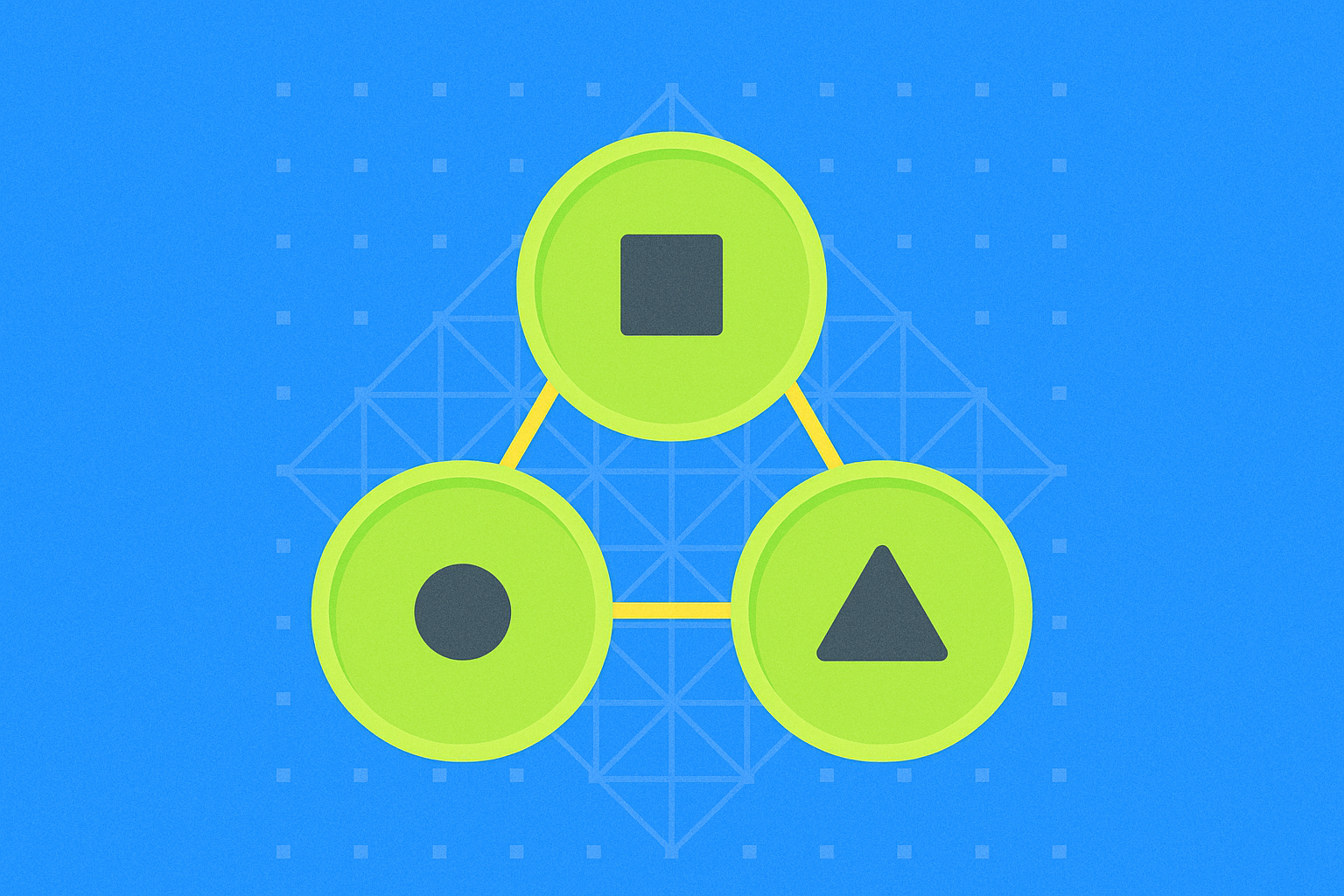
Decentralized Infrastructure Networks: Exploring DePIN's Growth Potential


What is DePIN? Your Comprehensive Guide to Decentralized Physical Infrastructure Networks
Decentralized Physical Infrastructure Networks (DePIN) represent a transformative approach to managing and operating physical infrastructure through blockchain technology and community-driven incentives. This comprehensive guide explores the fundamental concepts, mechanisms, and the evolving DePIN landscape, demonstrating how this innovative model is reshaping traditional infrastructure systems.
What is DePIN?
DePIN, or Decentralized Physical Infrastructure Networks, refers to blockchain-based projects that utilize cryptocurrency tokens to incentivize the deployment and operation of physical networks and infrastructure. This innovative approach fundamentally differs from traditional centralized systems by prioritizing community-driven ownership, public verifiability, incentivized participation structures, and permissionless access—all core principles of blockchain technology.
At its essence, DePIN represents more than merely a technical framework; it signifies a paradigm shift in how society manages and interacts with physical infrastructure. Community members evolve from passive users into active stakeholders and contributors, engaging through sophisticated incentive mechanisms embedded within blockchain tokens. The transformation affects numerous aspects of daily life, converting WiFi hotspots, security cameras, ride-sharing services, and food delivery systems into community-owned entities.
The decentralized model ensures that decision-making processes are distributed across the community rather than concentrated in centralized authorities, fostering unprecedented transparency through public verifiability. An important concept within this ecosystem is the DePIN flywheel effect, which illustrates how advancement in one component can catalyze progress in other system elements, creating sustainable momentum and exponential growth. According to industry projections, the DePIN flywheel possesses the potential to contribute significantly to global GDP in the coming years, with estimates suggesting multi-trillion dollar impacts.
The DePIN landscape has demonstrated remarkable expansion, with hundreds of projects emerging across six subsectors: compute, artificial intelligence, wireless, sensors, energy, and services. The collective market capitalization of DePINs featuring liquid tokens has grown substantially, while generating significant on-chain revenue, underscoring the considerable economic impact and growth trajectory of this innovative sector.
How does DePIN work?
DePIN operates through a sophisticated integration of blockchain technology and community-driven incentive mechanisms. The fundamental operational principle involves motivating participants with blockchain token rewards, thereby creating a self-sustaining, community-driven ecosystem with multiple practical applications. This approach represents a significant departure from traditional hierarchical business models, favoring instead a grassroots, community-centered methodology.
By leveraging crowdsourcing strategies for network growth, DePIN networks can scale efficiently while operating at substantially lower costs compared to conventional infrastructure providers. This cost efficiency, combined with enhanced scalability, positions DePIN as a compelling alternative to traditional infrastructure deployment models within the broader DePIN landscape.
The DePIN architecture comprises five essential structural components working in concert:
First, physical hardware forms the foundation, encompassing all physical infrastructure vital for connecting DePIN networks with the physical world. Examples include wireless hotspots, network routers, servers, power generators, telecommunication equipment, and renewable energy systems such as solar panels and batteries for energy networks.
Second, hardware operators—including individuals, communities, or businesses—bear responsibility for deploying and maintaining the physical infrastructure. While token incentives motivate these operators, their participation also depends on factors such as technical expertise, initial hardware costs, and ongoing maintenance capabilities.
Third, decentralized ledger technology, particularly blockchain supported by smart contract logic, serves as the central hub for the token economy. This provides essential transparency, traceability, and robust security throughout the network, ensuring all transactions and operations are verifiable and immutable.
Fourth, decentralized token incentive systems motivate active participation by rewarding individuals who contribute to deploying and operating physical infrastructure. Contributors, such as those hosting hotspots or providing computational resources, receive blockchain tokens as compensation, creating a self-sustaining ecosystem where network growth thrives on member participation and incentives.
Fifth, end users complete the ecosystem by utilizing crypto assets for real-world payment of services offered by DePIN networks. This creates practical utility for cryptocurrency while enabling direct peer-to-peer service transactions.
By synergistically combining blockchain networks, smart contracts, and Internet of Things (IoT) devices, DePIN creates a robust and efficient system that fundamentally redefines how infrastructure assets are managed, maintained, and monitored across the DePIN landscape.
Key participants in the DePIN ecosystem
While Ethereum is commonly recognized as a primary blockchain for DePIN projects, Solana has rapidly gained significant momentum in this space. Solana's integrated infrastructure and performance-focused developer community attracts DePIN projects at every stage of their lifecycle. The blockchain's high transaction throughput enhances reach and liquidity for users while maintaining lower transaction costs, making it increasingly attractive for DePIN implementations.
Helium (HNT) stands as one of the most prominent DePIN projects, successfully demonstrating blockchain technology's practical real-world applications. Helium strategically migrated from its standalone layer-1 blockchain to Solana, capitalizing on the platform's scalability, reduced transaction costs, and superior performance. Operating as a decentralized LoRaWAN network, often called "The People's Network," Helium has been instrumental in advancing IoT connectivity globally.
The network empowers communities through user-owned hotspots, enabling autonomous improvement of internet and cellular coverage while liberating users from dependence on traditional telecommunications providers. Individuals who purchase and host these hotspots receive token rewards for contributing nodes to the network. Currently, Helium operates individual hotspots across more than 170 countries, offering 5G services to multiple cities in the United States. Helium Mobile has introduced cost-effective monthly phone plans featuring unlimited data, talk, and text powered by community-owned 5G hotspots—significantly more affordable than traditional cellular expenses. Subscribers who share hotspot nodes receive rewards in Solana-based MOBILE tokens, which can offset their phone plan costs.
Filecoin (FIL) represents one of the largest DePIN projects by market capitalization within the DePIN landscape. This crypto-incentivized peer-to-peer storage network enhances traditional data storage models, enabling individuals and businesses to rent unused storage space securely and decentralizedly. Operating as a decentralized marketplace for data storage services, Filecoin compensates storage providers with FIL tokens while users pay for required storage capacity. Since its launch, Filecoin has functioned similarly to established Web2 cloud storage providers, but with a crucial distinction—it provides distributed storage solutions secured by crypto-economic incentives. By connecting storage seekers with users possessing spare hard drive space, Filecoin creates a decentralized marketplace offering compelling alternatives in pricing and decentralization compared to traditional providers.
Render (RNDR) operates as a peer-to-peer graphics processing unit (GPU) provider, connecting entities seeking image and animation rendering services with those holding unused GPUs. Providers receive RNDR token compensation while users benefit from decentralized rendering services. This decentralized model guarantees efficient GPU resource utilization while creating a reward-driven, community-centric marketplace for rendering needs. Render's approach challenges traditional centralized rendering solutions, embodying core DePIN tenets by establishing an open, community-driven marketplace for computational resources. Render upgraded its infrastructure from Ethereum to Solana, expanding capabilities with potential features including real-time streaming and dynamic non-fungible tokens (NFTs). The project also implemented a burn and mint equilibrium (BME) model, enabling consistent service pricing through supply and demand equilibrium.
Forging ahead: embracing the future of DePIN
The transformative potential of DePIN signals a fundamental shift in how physical infrastructure is deployed, operated, and utilized. In this era of rapid innovation, the movement toward decentralized systems unlocks numerous advantages, including cost-efficient crowdsourcing, community empowerment, and the promotion of true decentralization. These elements collectively pave the way for a future where individuals and communities actively shape the technological landscape rather than remaining passive consumers.
Other noteworthy DePIN networks contributing significantly to this space include IoTeX (IOTX), Livepeer (LPT), Theta Network (THETA), and Akash (AKT), each bringing unique capabilities and use cases to the ecosystem. Many industry experts believe DePINs are positioned for substantial evolution in the coming years, driven by innovations such as zero-knowledge (ZK) technology, meme coin integrations, on-chain artificial intelligence, and on-chain gaming. Industry analysis predicts that significant growth for the DePIN landscape will occur in Asia, where multiple leading DePIN projects are forecasted to emerge.
However, the journey toward comprehensive decentralization presents notable challenges requiring careful navigation. Potential hurdles include regulatory uncertainties across different jurisdictions, scalability concerns as networks grow, and the critical need for widespread adoption among both users and infrastructure providers. Successfully addressing these challenges will prove crucial for sustained growth and mainstream acceptance of DePIN technologies. The regulatory landscape, in particular, remains complex and evolving, requiring ongoing dialogue between DePIN projects and regulatory bodies to establish clear frameworks that protect users while fostering innovation.
Conclusion
DePIN represents a revolutionary approach to physical infrastructure management, combining blockchain technology, community incentives, and decentralized governance to create more resilient, secure, and empowering systems. The remarkable growth demonstrated across the DePIN landscape, with hundreds of projects and substantial market capitalization, underscores the significant momentum behind this movement. Projects like Helium, Filecoin, and Render exemplify how DePIN can deliver practical, real-world value while maintaining decentralization principles.
The potential for DePIN to contribute trillions of dollars to global GDP over the coming decades highlights its transformative economic impact. As the ecosystem continues evolving with technological innovations and expanding into new markets, particularly in Asia, DePIN stands poised to fundamentally reshape how society approaches infrastructure deployment and operation. While challenges related to regulation, scalability, and adoption remain, the positive impact already demonstrated by DePIN projects points toward a future where physical infrastructure operates on truly decentralized principles, fostering greater resilience, security, and empowerment in our increasingly interconnected world. With the potential to revolutionize multiple industries and empower individuals globally, the DePIN landscape is positioned to play a significant role in the future of infrastructure and the broader cryptocurrency ecosystem for years to come.
FAQ
What does DePIN mean?
DePIN stands for Decentralized Physical Infrastructure Network. It uses blockchain to manage and incentivize real-world hardware networks, like Filecoin for storage or Hivemapper for mapping.
Is Grass a DePIN project?
Yes, Grass is a DePIN project on Solana blockchain, launched in 2024. It focuses on earning passive income through decentralized physical infrastructure.
What is the future of DePIN?
DePIN will revolutionize infrastructure, driving decentralized, sustainable networks across industries by 2025. It'll boost efficiency, cut costs, and enhance security.
What is the DePIN sector in crypto?
DePIN (Decentralized Physical Infrastructure Networks) connects physical systems to blockchains, including wireless connectivity and IoT. These projects provide essential services like internet connectivity and AI training, operating as utilities in the crypto ecosystem.

What Is the Fundamental Analysis of Arweave (AR) in 2025?

Exploring the Concepts of Decentralized Physical Infrastructure Networks

How Active is Solana's Community and Ecosystem in 2025?

Claim Your Reward: Explore the Latest Grass Token Airdrop Opportunity

Discover the Future of Wireless Communication with Helium Network Technology

Understanding DePIN: The Future of Decentralized Physical Networks

What is the fundamental analysis of a cryptocurrency project: whitepaper logic, use cases, technology innovation, roadmap progress, and team background explained
What Causes Crypto Price Volatility and How to Predict Market Swings

Mitosis Listing Details: $MITO Trading Dates, Features, and What Makes Mitosis Unique
What is on-chain data analysis and how do whale movements affect crypto prices

What Is SEX Odyssey (SEX)? Learn How This One-Supply Crypto Combines Memes, Mythology, and DeFi