Fungibility
What Is Fungibility?
Fungibility is a fundamental economic property that defines whether units of an asset can be interchanged with one another without any loss of value or distinction. An asset is considered fungible when its individual units are completely interchangeable and indistinguishable from each other. This means that each unit of a fungible asset holds the same validity, market value, and functional properties as any other unit of the same asset class.
To illustrate this concept, consider a pound of pure gold. Regardless of its physical shape, form, or origin, one pound of pure gold is always equal in value and quality to any other pound of pure gold. The same principle applies to various other asset classes, including commodities like oil or wheat, fiat currencies such as the US dollar or Euro, government bonds, precious metals, and digital assets like cryptocurrencies.
It is important to note that fungibility does not require the exchange of physically identical units. Rather, an equal exchange of a fungible asset means trading instruments of the same kind that share the same functionality and value. For instance, a five-dollar bill can be exchanged with five one-dollar bills, and this transaction is considered equal because both represent the same underlying value of five US dollars. In this example, the US dollar serves as the fungible asset, while the physical bills are merely different representations of that value.
Fungibility in Cryptocurrencies
In the realm of digital assets, most cryptocurrencies are designed to be fungible assets by their fundamental nature. Bitcoin (BTC) serves as a prime example of fungibility in the cryptocurrency space. Each unit of BTC is theoretically equivalent to any other unit, possessing identical quality, functionality, and technological properties. This means that one Bitcoin holds the same value and utility as any other Bitcoin, regardless of when or in which block it was mined or issued.
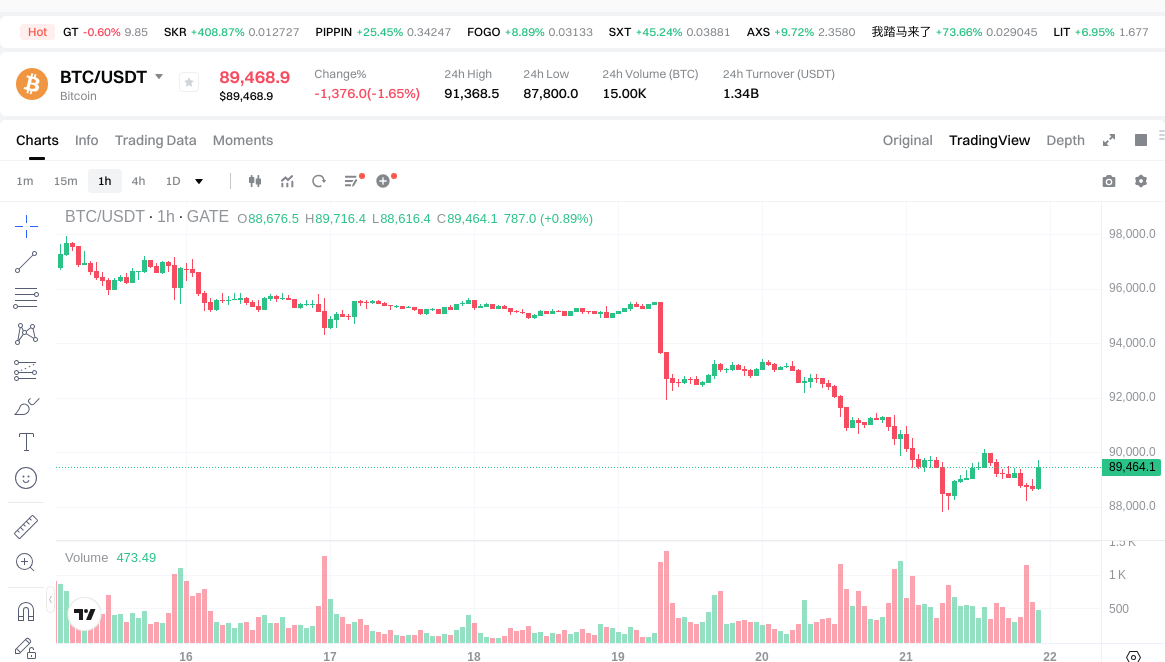
The fungibility of Bitcoin is rooted in its underlying blockchain technology. All Bitcoin units exist within the same decentralized network and operate under identical protocol rules. They can be sent, received, stored, and used in transactions with the same level of functionality, making them interchangeable from a technical and economic standpoint. This property is essential for Bitcoin to function effectively as a medium of exchange and store of value.
However, it is crucial to understand that if someone creates a fork of the Bitcoin blockchain and generates a new version of Bitcoin, those newly created coins would not be considered original Bitcoin. They would exist on a separate network with potentially different rules and properties, thus forming a distinct asset class rather than being fungible with the original Bitcoin.
Bitcoin Traceability and Fungibility
An ongoing debate in the cryptocurrency community centers around the relationship between Bitcoin's traceability and its fungibility. Due to the transparent and immutable nature of blockchain technology, all Bitcoin transactions are permanently recorded and can be traced through the network's public ledger. This inherent traceability means that the history of each Bitcoin unit can be tracked from its creation through all subsequent transactions.
Some observers have pointed out that this traceability feature may lead to certain Bitcoin units being perceived as less desirable than others, particularly if they have been previously associated with dubious or illicit activities. In practice, this has led to situations where some merchants or service providers may refuse to accept specific Bitcoins as payment if they believe those particular coins were used by criminals in the past. This phenomenon has raised questions about whether such discrimination affects Bitcoin's fungibility.
However, it is essential to understand that traceability and fungibility are fundamentally different concepts, and the existence of transaction history does not inherently negate Bitcoin's fungible properties. Despite their transactional history, each Bitcoin remains identical in terms of quality, underlying technology, and functional capabilities. The protocol treats all Bitcoin units equally, and they maintain the same technical properties regardless of their past usage.
To put this into perspective, consider the US dollar, which remains a fungible asset despite the fact that physical currency has been used in illicit activities for many decades. The potential misuse of an asset does not change its fundamental economic properties. Similarly, while certain market participants may choose to discriminate based on transaction history, this represents a social or regulatory layer imposed on top of Bitcoin's inherent fungibility rather than a technical limitation of the asset itself. The distinction between technical fungibility and practical acceptance is an important consideration in understanding how cryptocurrencies function in real-world scenarios.
FAQ
What is Fungibility (可替代性)?
Fungibility refers to the property of an asset where each unit is interchangeable and identical in value. For example, one Bitcoin equals another Bitcoin, making cryptocurrencies highly fungible. This ensures fair exchange without quality or condition differences.
What is the difference between fungibility and [non-<<>>](<<>>) (NFTs)?
Fungible tokens are interchangeable and identical in value, like currency. NFTs are unique digital assets with distinct properties and cannot be exchanged one-to-one. Each NFT holds individual value based on rarity and ownership.
Why is Bitcoin considered fungible while NFTs are not?
Bitcoin is fungible because each unit is identical and interchangeable—one BTC equals another. NFTs are non-fungible because each token is unique with distinct properties, metadata, and ownership history, making them irreplaceable and one-of-a-kind.
What are examples of fungibility in traditional finance?
Currency notes are perfectly fungible—any $100 bill equals another $100 bill. Similarly, standardized commodities like crude oil barrels, gold ounces, and government bonds with identical terms are mutually interchangeable without affecting value.
How to determine if an asset has fungibility?
An asset is fungible if each unit is identical and interchangeable with others of the same type. Check if units are standardized, divisible, and hold equal value. For example, cryptocurrencies like Bitcoin are fungible because one BTC equals another BTC. Unique or limited-edition assets like NFTs lack fungibility.
What impact does fungibility have on the value and liquidity of cryptocurrencies?
Fungibility ensures each token holds identical value, enabling seamless exchange and trading. This interchangeability enhances market liquidity by increasing transaction volume and reducing friction. Higher fungibility attracts institutional investors, stabilizing prices and strengthening long-term value proposition.
Understanding Ordinals in the Crypto World

Exploring the World of Bitcoin NFTs: Understanding Ordinals
Top Platforms to Purchase Bitcoin Ordinals Safely
Understanding Bitcoin Ordinals: A Comprehensive Guide

A Beginner's Guide to Purchasing Bitcoin Ordinals

Exploring Atomicals: Innovative Digital Assets on the Bitcoin Blockchain

Exploring the Otherside Metaverse by Yuga: Features, Innovations, and Future Roadmap

What is a Payment Pin in Crypto Transactions?

What is VVS Finance: Beginner's Guide and Key Insights

Can I Sell My Pi Network? Understanding the Options
What Is the Best App to Buy XRP? Top Picks Compared