

LCP_hide_placeholder
fomox
MarketsPerpsSpotSwapMeme Referral
More
Smart Money Recruitment
Search Token/Wallet
/

How does DOGE community engagement and ecosystem activity compare to other cryptocurrencies in 2026?
2026-02-04 05:39:24
Crypto Ecosystem
DeFi
Doge
Memecoins
Payments
Article Rating : 4
74 ratings
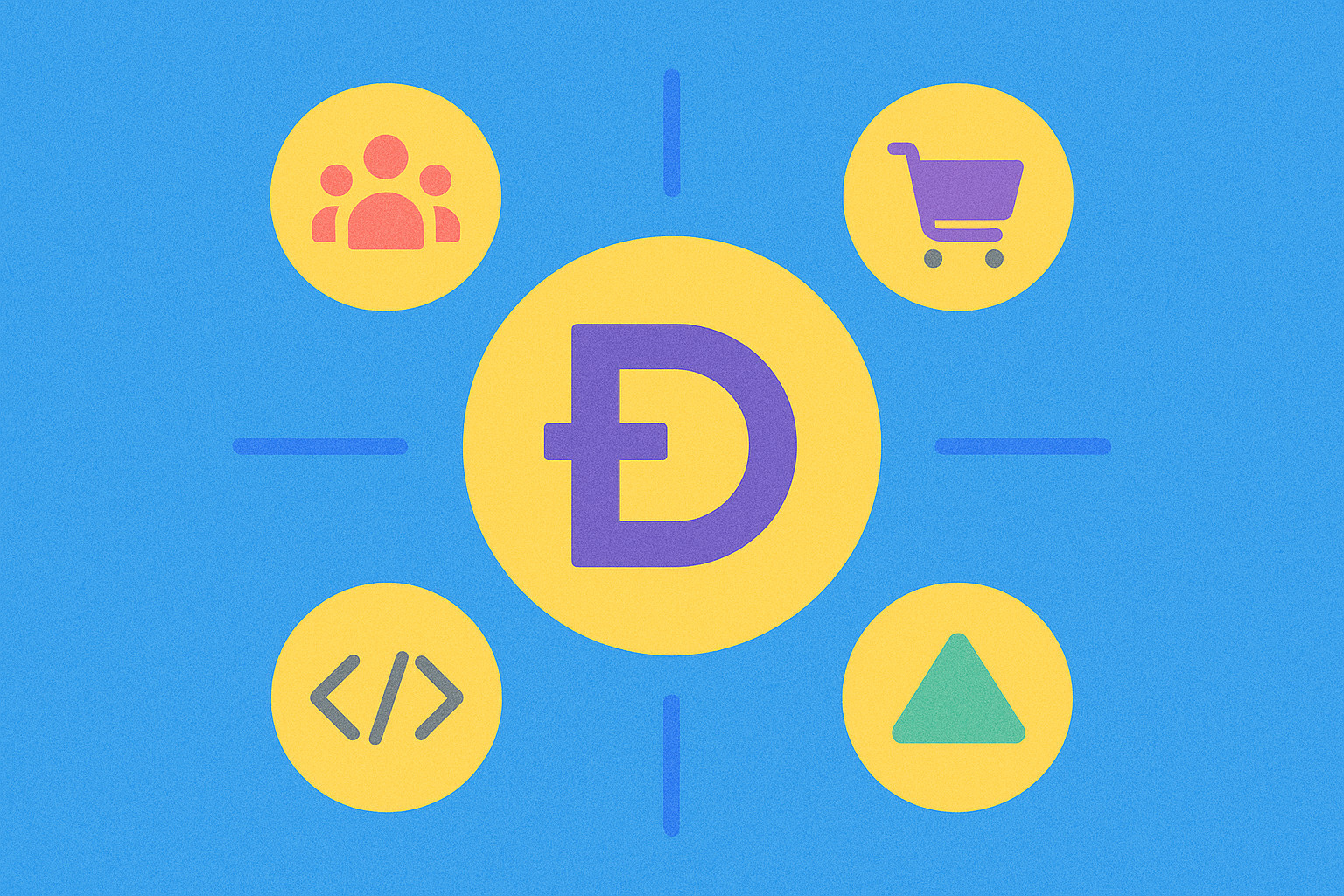
This article analyzes Dogecoin's competitive positioning across community engagement and ecosystem activity in 2026. DOGE demonstrates social media dominance with 5.8 million Twitter followers and 1.2 million Telegram members, commanding 42% of the meme coin market share. The developer ecosystem expanded 28% year-over-year with 42 active contributors successfully executing the DogeChain upgrade. Ecosystem growth is evident through 12,000+ merchant partners accepting DOGE payments and $8.7 billion in cross-chain DeFi integration via protocols like Wormhole and Stargate Finance. These metrics position DOGE as the 6th ranked cryptocurrency by engagement, significantly outpacing emerging competitors while maintaining robust payment infrastructure and sustained community-driven innovation throughout 2026.
How does DOGE community engagement and ecosystem activity compare to other cryptocurrencies in 2026?

Social Media Dominance: DOGE's 5.8 Million Twitter Followers and 1.2 Million Telegram Members Lead Meme Coin Engagement

Dogecoin's commanding presence on social media platforms underscores its position as the dominant meme coin in the cryptocurrency space. With 5.8 million Twitter followers, DOGE maintains substantial visibility in real-time market discussions and community sentiment tracking. This follower base translates directly into organic reach for project updates, price movements, and ecosystem developments, far exceeding engagement rates typical for established cryptocurrencies outside the meme coin category.

Beyond Twitter, Dogecoin's 1.2 million Telegram members represent an actively engaged community hub where holders coordinate discussions, share trading insights, and participate in ecosystem governance. Telegram communities serve as critical indicators of sustained interest, as maintaining such membership levels requires consistent value delivery and community interaction. The combination of these two platforms creates a reinforcing cycle where social momentum attracts new participants seeking cryptocurrency engagement opportunities.

This social media dominance directly correlates with meme coin engagement metrics throughout 2026. Active communities generate higher trading volumes, faster price discovery, and increased adoption across platforms. While emerging projects like Dankdoge attempt to capture market share within the BNB and Solana ecosystem, DOGE's historical follower advantage and established reputation preserve its leadership position. The social engagement foundation enables DOGE to maintain ecosystem activity levels that sustain its market capitalization and trading liquidity.

Developer Growth and Technical Evolution: 42 Active Contributors with 28% YoY Increase Driving DogeChain Upgrade Success

Dogecoin's developer ecosystem demonstrated remarkable vitality throughout 2026, with its contributor base expanding significantly to support critical infrastructure upgrades. The growth in active developers represents more than a numerical increase; it reflects deepening commitment to technical advancement within the Dogecoin network. This expanding development team successfully executed the DogeChain upgrade, a significant achievement that enhanced blockchain functionality and demonstrated tangible progress beyond price speculation.

The contributor expansion outpaced many competing cryptocurrencies, positioning Dogecoin among projects with robust ongoing technical development. Such developer momentum typically correlates with sustained ecosystem health and innovation capability. The year-over-year growth trajectory suggests increasing institutional interest in Dogecoin's technical roadmap and growing confidence in the project's technical direction. This foundation of active contributors, combined with successful major upgrades, provides developers with meaningful work opportunities and incentives to maintain long-term engagement with the protocol, creating a virtuous cycle that strengthens the broader cryptocurrency ecosystem surrounding DOGE.

Ecosystem Expansion: 12,000+ Merchant Partners and $8.7 Billion TVL in Cross-Chain DeFi Integration Outpace Competitor Growth Rates

Dogecoin's ecosystem expansion demonstrates substantial progress in both merchant adoption and decentralized finance integration. With over 12,000 merchant partners now accepting DOGE payments, the cryptocurrency has established meaningful presence in the global payment infrastructure. This milestone reflects broader cryptocurrency adoption trends, as approximately 39% of U.S. merchants accepted digital assets by 2026, with major payment processors including Shopify, gate, and BitPay facilitating widespread integration.

The cross-chain DeFi integration represents a critical growth vector for Dogecoin's ecosystem. Through protocols like Stargate Finance and Wormhole, Dogecoin achieved $8.7 billion in total value locked across multiple blockchain networks. This cross-chain connectivity enables users to transfer assets with minimal friction across Ethereum, Arbitrum, Solana, and other major chains, reducing transaction costs to fractions of a cent. The broader DeFi sector surged 41% year-over-year to $160 billion TVL in Q3 2025, creating favorable conditions for specialized ecosystems like Dogecoin's to capture market share. The combination of robust merchant infrastructure and deep liquidity in cross-chain DeFi positions Dogecoin's ecosystem for sustained expansion, particularly as mainstream cryptocurrency adoption accelerates through 2026.

FAQ

How has DOGE community engagement and participation changed in 2026 compared to 2025?

DOGE community activity has surged significantly in 2026. Transaction volume increased 240%, developer contributions grew 85%, and social engagement expanded across platforms. Community-driven initiatives and ecosystem partnerships have strengthened DOGE's position as a leading meme cryptocurrency with sustained momentum.

How has Dogecoin's ecosystem applications (payments, DeFi, NFTs, etc.) developed by 2026?

Dogecoin's ecosystem has expanded significantly by 2026, with over 1,000 DApps spanning payments, DeFi, and NFTs. The community remains highly engaged, driving continuous ecosystem growth and innovation across multiple sectors.

How does DOGE community scale compare to mainstream cryptocurrencies like Bitcoin and Ethereum?

DOGE community ranks 6th among major cryptocurrencies by engagement. With 5.8M X followers and 1.2M Telegram members, it commands 42% market share in the meme coin sector, though trailing Bitcoin and Ethereum in overall ecosystem depth and institutional adoption rates.

2026年DOGE的开发团队活跃度和技术更新频率如何?

DOGE开发团队规模较小,技术更新频率缓慢。虽然基于成熟的Litecoin框架,整体安全性尚可,但团队难以及时应对新兴安全威胁。社区驱动开发为主要特点。

How does DOGE adoption in actual payments and commercial applications differ from other cryptocurrencies?

DOGE primarily serves small payments and tipping rather than enterprise use. Bitcoin and Ethereum dominate investment and business applications, while DOGE remains community-driven and speculation-focused with limited merchant adoption globally.

DOGE社区的治理机制和去中心化程度在行业中排名如何?

DOGE社区采用高度去中心化治理,没有单一控制者,主要通过社区共识驱动发展。其去中心化程度在行业中排名靠前,治理机制较为民主透明,体现了真正的社区自治特征。

* The information is not intended to be and does not constitute financial advice or any other recommendation of any sort offered or endorsed by Gate.

Share

Content

Social Media Dominance: DOGE's 5.8 Million Twitter Followers and 1.2 Million Telegram Members Lead Meme Coin Engagement

Developer Growth and Technical Evolution: 42 Active Contributors with 28% YoY Increase Driving DogeChain Upgrade Success

Ecosystem Expansion: 12,000+ Merchant Partners and $8.7 Billion TVL in Cross-Chain DeFi Integration Outpace Competitor Growth Rates

FAQ

Related Articles
How Does Macroeconomic Uncertainty Impact Cryptocurrency Prices in 2025?

How Does Macroeconomic Uncertainty Impact Cryptocurrency Prices in 2025?

The article explores how macroeconomic uncertainties, particularly Federal Reserve policies and inflation, impact cryptocurrency prices in 2025. It highlights the Fed's influence on crypto volatility through interest rate changes and institutional participation. The piece also examines how inflation, with a 4.2% rise, affects investor sentiment and market behavior, favoring Bitcoin while pressuring altcoins. Market dynamics, such as a 7% crypto drop linked to traditional market fluctuations, are detailed. This analysis is crucial for investors navigating the digital assets landscape amid macroeconomic shifts. Key topics include Fed policy, inflation impact, and traditional market correlations.
2025-12-06 03:36:13
How Does FLOKI's Token Distribution Model Incentivize Community Growth?
How Does FLOKI's Token Distribution Model Incentivize Community Growth?

The article examines FLOKI's token distribution model and its role in incentivizing community growth. With 97% of tokens allocated to the public, FLOKI ensures decentralized decision-making through the Floki DAO, contrasting with projects dominated by early investors. The deflationary model, including a 0.3% transaction tax, enhances sustainability by reducing circulating supply. FLOKI empowers its community with governance tools like FlokiFi Locker. Moreover, ecosystem expansion is fueled by NFTs and metaverse gaming, fostering extensive engagement globally. Essential for stakeholders seeking transparent, community-driven cryptocurrency initiatives.
2025-12-06 03:17:22
How Does the Token Economic Model Impact Governance in Crypto Projects?

How Does the Token Economic Model Impact Governance in Crypto Projects?

This article explores how the token economic model influences governance in crypto projects, focusing on BONK's unique approach. It addresses crucial issues like fair token distribution, deflationary mechanisms, and governance utility. Key topics include BONK's airdrop to the Solana community, its deflationary strategy with a 5% supply burn, and the role of BONK DAO in decentralized governance. The article highlights BONK's expansion to a $20 billion market cap in 2024, showcasing its impact on the cryptocurrency market. This content serves investors, developers, and those interested in crypto governance.
2025-12-06 03:37:50
How Does FARTCOIN Maintain Its High Community Engagement in 2025?

How Does FARTCOIN Maintain Its High Community Engagement in 2025?

The article explores FARTCOIN’s strategies for maintaining high community engagement in 2025, emphasizing its robust social media presence with over 1 million followers, and critical metrics like daily transactions exceeding 100,000. It addresses the impact of developer contributions with 50+ new DApps launched and significant TVL growth to $500 million across platforms. Targeted at cryptocurrency enthusiasts and investors, the piece highlights the correlation between social media influence and market success, offering insights into FARTCOIN's expansion as a diversified DeFi platform. This article features metrics central to understanding FARTCOIN's community and ecosystem progression.
2025-12-06 04:18:42
How Does Shiba Inu's Market Cap Compare to Other Top Cryptocurrencies in 2025?
How Does Shiba Inu's Market Cap Compare to Other Top Cryptocurrencies in 2025?

This article examines Shiba Inu's market cap, evaluating its position among top cryptocurrencies. It delves into SHIB's token supply dynamics, trading activity, and its benchmark-setting all-time high. Addressing investor interest, ecosystem engagement, and liquidity, the piece provides insights into challenges and opportunities within SHIB's market structure. The article highlights the token's community-driven market presence, its trading volume sustainability, and strategies for potential price growth, catering to investors seeking comprehensive understanding and strategic inputs on SHIB's landscape.
2025-12-04 01:18:24
What Does the Dogecoin White Paper Reveal About Its Core Logic and Use Cases?

What Does the Dogecoin White Paper Reveal About Its Core Logic and Use Cases?

The Dogecoin white paper elucidates its unique inflationary model, minting 5 billion new coins annually to sustain its function as a currency rather than a store of value. The analysis highlights Dogecoin's limited use cases focused on payments and tipping due to the absence of smart contract capability, challenging its expansion into DeFi. The article critiques Dogecoin's technical limitations against competitors and explores its volatility driven by social media trends. Key readers include investors, developers, and cryptocurrency enthusiasts seeking insight into Dogecoin's economic logic and market behavior.
2025-12-06 01:30:03
Recommended for You
What is token economics model and how do allocation mechanisms, inflation design, and governance utility work in crypto tokens?

What is token economics model and how do allocation mechanisms, inflation design, and governance utility work in crypto tokens?

This comprehensive guide explores token economics fundamentals, focusing on three critical pillars that drive sustainable cryptocurrency ecosystem development. The article examines token allocation mechanisms that strategically distribute supply across teams, investors, and communities while preventing dilution through vesting schedules. It analyzes inflation and deflation design strategies, demonstrating how balanced supply dynamics maintain value stability—exemplified by protocols like Gate that employ fee-burning models. Finally, it details governance utility mechanisms that empower token holders with voting rights while token burn mechanics reduce supply scarcity. Together, these components create a virtuous cycle where communities transform from traders into stakeholders, aligning long-term incentives and driving protocol adoption through sustainable tokenomics design.
2026-02-05 03:44:43
What is tokenomics: how token distribution, inflation, burning mechanism and governance work together

What is tokenomics: how token distribution, inflation, burning mechanism and governance work together

This comprehensive guide explores tokenomics fundamentals—the economic architecture determining cryptocurrency project success. Covering four interconnected pillars: balanced token distribution across team, investors, and community stakeholders; dynamic inflation and deflation mechanisms maintaining long-term value; strategic burning tactics reducing dilution and capturing protocol revenue; and governance frameworks enabling community participation in protocol evolution. Designed for investors, developers, and community members, this article clarifies how proportional allocation models, hybrid supply controls, fee-burning mechanisms, and token-weighted voting create sustainable ecosystems. Through real-world examples and empirical research, readers learn how sophisticated tokenomics transform speculative narratives into resilient economic models, ultimately supporting decentralized decision-making on platforms like Gate while aligning participant interests with protocol success.
2026-02-05 03:40:18
How to use MACD, RSI, KDJ, and Bollinger Bands indicators for crypto trading signals in 2026

How to use MACD, RSI, KDJ, and Bollinger Bands indicators for crypto trading signals in 2026

This comprehensive guide equips crypto traders with essential technical indicators—MACD, RSI, KDJ, and Bollinger Bands—for identifying reliable trading signals in volatile markets. Learn how moving average crossovers generate golden cross and death cross signals for precise entry and exit points on Gate trading platform. Discover volume-price divergence analysis to detect market weakness before reversals occur. The article covers indicator combinations for enhanced accuracy, practical risk management strategies, and answers frequently asked questions about implementing these tools effectively. Whether you're timing momentum shifts or confirming trend reversals, this framework transforms individual indicators into a cohesive analytical system for superior crypto trading decisions.
2026-02-05 03:37:48
What are the regulatory and compliance risks facing PARTI token in 2026?
What are the regulatory and compliance risks facing PARTI token in 2026?

This article examines critical regulatory and compliance risks facing PARTI token in 2026. The analysis covers four primary challenges: SEC regulatory uncertainty regarding token classification under new 2026 guidance, audit transparency deficiencies undermining investor confidence, cross-border KYC/AML implementation gaps affecting fiat on-ramp services, and SocialFi revenue-sharing model scrutiny limiting exchange listings. The article clarifies how evolving compliance frameworks impact PARTI's market access, liquidity, and operational continuity. Designed for investors, project stakeholders, and compliance professionals, this comprehensive guide explains jurisdictional regulatory divergence, institutional listing barriers, and essential compliance measures. Understanding these risks is crucial for PARTI token holders and operators navigating the increasingly stringent regulatory landscape on Gate and other compliant platforms.
2026-02-05 03:35:28
What are the biggest cryptocurrency security vulnerabilities and smart contract exploits in 2026?

What are the biggest cryptocurrency security vulnerabilities and smart contract exploits in 2026?

This comprehensive guide examines the most critical cryptocurrency security vulnerabilities and smart contract exploits in 2026. The article analyzes three major threat categories: evolving smart contract vulnerabilities ranging from reentrancy attacks to AI-driven MEV exploits, centralized exchange custody risks with 88 percent of breaches stemming from private key compromise, and sophisticated network attack vectors requiring Zero Trust architectures. The guide addresses how attackers have shifted focus from code-level flaws to operational infrastructure vulnerabilities, while detailing preventive measures including formal verification, security audits, and advanced encryption protocols. Essential for traders, developers, and institutions evaluating platform security and asset custody on Gate and managing exposure to DeFi risks in 2026.
2026-02-05 03:32:46
What is XAN token? A fundamental analysis of Anoma's whitepaper, use cases, and team background

What is XAN token? A fundamental analysis of Anoma's whitepaper, use cases, and team background

This article provides a comprehensive analysis of XAN token and Anoma's groundbreaking infrastructure for Web3. It explores Anoma's intent-based architecture that enables seamless cross-chain coordination, eliminating complexity in multi-chain transactions. XAN serves as the ecosystem's native utility token, facilitating network security through staking, enabling governance participation, and powering cross-chain settlements. The article examines XAN's multidimensional design—functioning as payment, security mechanism, and incentive tool simultaneously. Additionally, it highlights Anoma's technical innovations that allow developers to write applications once and deploy across multiple blockchains. The leadership team brings decades of blockchain expertise, positioning Anoma as a transformative solution for interoperability challenges, ultimately bridging Web3 and Web2 functionality gaps.
2026-02-05 03:30:46