LCP_hide_placeholder
fomox
MarketsPerpsSpotSwapMeme Referral
More
Smart Money Recruitment
Search Token/Wallet
/

How does MASK token compare to competitor coins in market cap and performance in 2026?
2026-01-18 03:07:57
Altcoins
Crypto Insights
DeFi
Web 3.0
Zero-Knowledge Proof
Article Rating : 4
28 ratings
This article provides a comprehensive analysis of MASK token's market position and performance in 2026. MASK maintains a $68.9 million market cap, trading on Gate and 36 other exchanges with moderate volatility and steady trading volume. While privacy-focused competitors like Monero ($12.86 billion) and Zcash ($6.94 billion) lead the segment, MASK differentiates through advanced privacy protection and Web2-Web3 integration. The token demonstrates strong recovery momentum with 28.06% monthly gains, positioning it favorably among emerging decentralized identity protocols. As the decentralized identity market expands at 16.8% CAGR toward $3.6 billion by 2026, MASK captures significant growth opportunities, particularly in non-biometric authentication use cases and regional expansion across Asia-Pacific.
How does MASK token compare to competitor coins in market cap and performance in 2026?

Market Cap Comparison: MASK Token vs Leading Privacy-Focused Cryptocurrencies in 2026

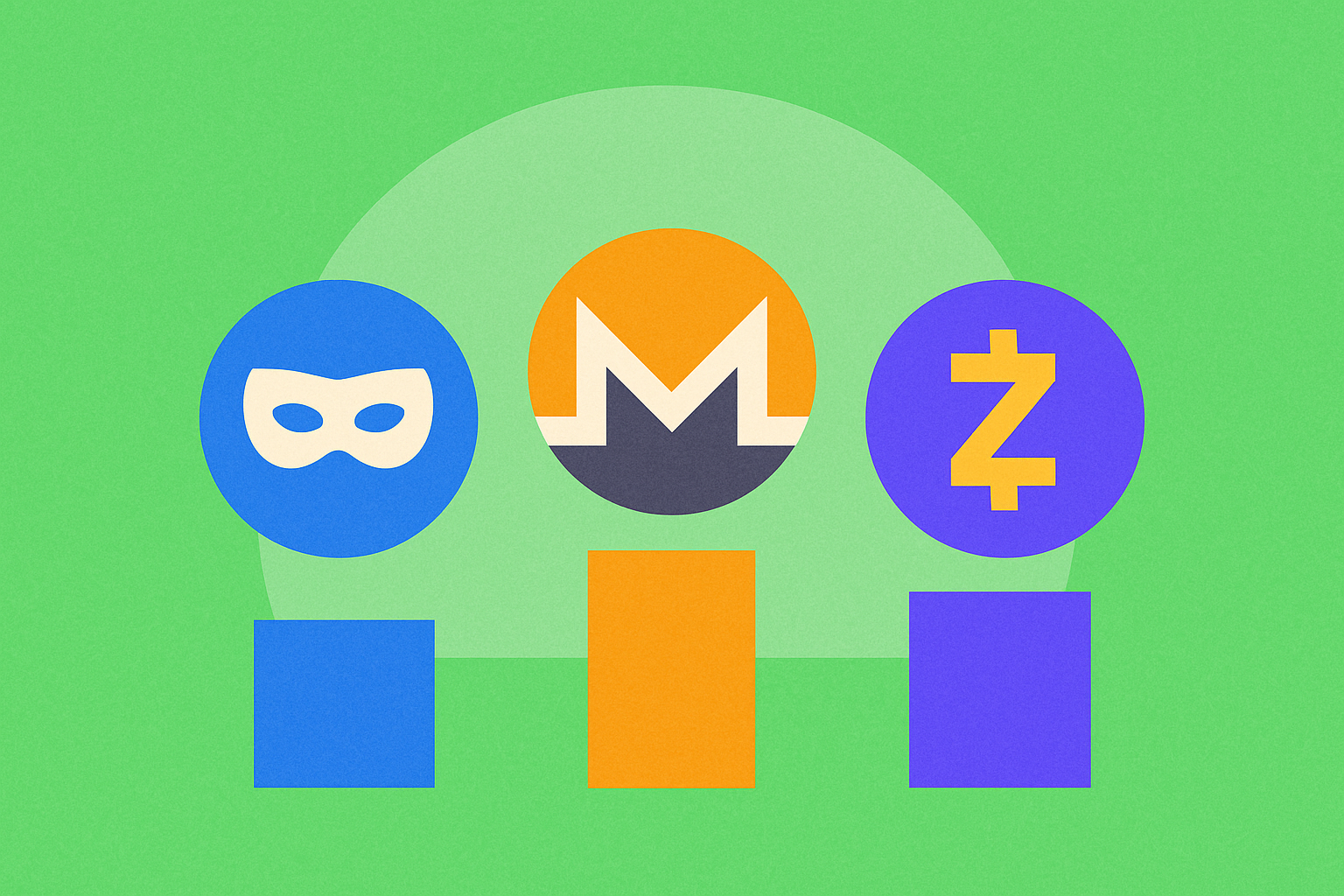
The MASK token maintains a market capitalization of $68.9 million as of January 2026, positioning it within a competitive landscape of privacy-focused cryptocurrencies. While MASK operates in a different segment compared to established privacy coins, the broader privacy-focused cryptocurrency market has demonstrated significant institutional interest. Monero leads the privacy-focused segment with a market cap of $12.86 billion, reflecting its dominant position in the sector. Zcash follows with a $6.94 billion valuation, demonstrating strong investor confidence in privacy technologies and zk-SNARKs architecture. Pirate Chain, despite its smaller scale at $125.5 million market cap, showcases rapid growth momentum with notable weekly gains. Secret Network occupies a similar tier to MASK with $44.98 million valuation, both representing emerging protocols in the privacy ecosystem. The privacy-focused cryptocurrency market experienced substantial growth in 2026, with 80% of tracked tokens exceeding $100 million market cap—a significant shift driven by regulatory developments and increased demand for privacy technologies. Monero's substantial valuation advantage reflects its longer track record and established network effects, while MASK's lower market cap suggests room for potential appreciation as privacy-focused solutions gain broader adoption and regulatory clarity improves across jurisdictions.

Performance Metrics Analysis: Price Volatility, Trading Volume, and Return on Investment

MASK token's price volatility demonstrates moderate fluctuations characteristic of mid-cap digital assets, with the token experiencing a 24-hour change of +0.94% and a 7-day performance of +2.18%. Over the past month, MASK has shown stronger momentum with a 30-day gain of 28.06%, suggesting building investor confidence despite historical challenges—the token trades down 76.86% year-over-year from its peak performance. The trading volume of approximately 224,799 units daily reflects steady market participation, positioning MASK within the mid-tier liquidity bracket compared to larger-cap alternatives. With a market capitalization of $68.26 million and a current ranking of 447 globally, MASK maintains consistent trading activity on gate and 36 other exchanges. Return on investment metrics reveal stabilization patterns after periods of market correction. Short-term traders observe the token's recovery trajectory in recent weeks, while longer-term holders continue evaluating the cryptocurrency's performance against competitors in the decentralized social network space. The balanced combination of moderate volatility, predictable daily volumes, and recent price momentum creates a relatively stable trading environment for MASK investors navigating 2026's dynamic cryptocurrency landscape.

Competitive Positioning: MASK's Differentiated Advantages in Privacy Protection and User Adoption

MASK distinguishes itself through advanced privacy protection mechanisms that provide provable security guarantees, setting it apart in a crowded cryptocurrency market. The platform's privacy-focused architecture enables users to engage with decentralized applications seamlessly while maintaining control over their personal data—a critical advantage as consumer concern over data handling continues to shape purchasing decisions. Research indicates that privacy-enhancing technologies create stronger security foundations than traditional approaches, positioning MASK favorably among privacy-conscious users transitioning from Web2 to Web3 environments.

The competitive positioning extends beyond technical capabilities into trust-building practices that directly influence adoption rates. By demonstrating commitment to user privacy through transparent operations and robust encryption standards, MASK cultivates stronger user relationships compared to competitors prioritizing different market segments. This trust advantage translates into higher user retention and platform engagement, which fuels organic adoption growth. As market participants increasingly prioritize data sovereignty and privacy rights, MASK's differentiated approach to both privacy protection and user experience creates sustainable competitive momentum that strengthens its market position entering 2026.

Market Share Evolution: Tracking MASK's Growth Against Emerging Decentralized Identity Competitors

The decentralized identity market has experienced substantial expansion, growing from USD 1.2 billion in 2024 to an anticipated USD 3.6 billion by 2026, representing a compound annual growth rate of 16.8%. Within this rapidly evolving landscape, MASK holds a significant market share position, though the competitive dynamics continue to shift. The broader decentralized identity market encompasses software platforms, managed services, and developer tools that enable individuals and enterprises to create, hold, and selectively disclose verifiable credentials using decentralized identifiers anchored on distributed-ledger frameworks.

Regionally, North America commanded 38.4% of the decentralized identity market share in 2024, powered by enterprise pilots in financial services and blockchain protocol development. Concurrently, Asia-Pacific emerges as the fastest-growing region, projected to achieve a 20.56% compound annual growth rate through 2030, significantly outpacing other geographies. This geographic diversification indicates that MASK's market cap evolution depends substantially on regional adoption patterns and regulatory tailwinds in emerging markets.

Within the decentralized identity market, biometric-based solutions currently dominate with 63.8% market share in 2024, while non-biometric credentialing solutions are expanding at a 21.7% compound annual growth rate through 2030. This segmentation shift presents opportunities for MASK to capture growth in emerging non-biometric authentication use cases, particularly as regulatory frameworks mature and enterprise adoption accelerates across banking, healthcare, and government sectors.

FAQ

MASK token在2026年的市值排名预测如何?与Uniswap、Aave等主要竞争币种相比处于什么位置?

MASK token在2026年预计市值排名将中等偏后,相比Uniswap和Aave等头部治理代币仍有差距。其生态应用扩展和社区热度将是影响排名的关键因素。

How does MASK token compare to competitor coins like Curve and Balancer in technical features and use cases?

MASK excels in seamless Web2-Web3 integration and privacy protection, differentiating it from Curve and Balancer which focus on liquidity and governance. MASK's strength lies in social media integration and data security, though it has narrower DeFi functionality compared to competitors.

What are the main factors affecting MASK token's market performance in 2026? Including ecosystem development, market demand, and regulatory policies?

MASK token's 2026 performance depends on ecosystem maturity, technology advancement, and institutional adoption. Regulatory clarity, macroeconomic conditions, and token supply dynamics significantly influence market outlook. Growing decentralized social demand and mainstream integration drive positive momentum.

How does MASK token's historical price volatility compare to similar tokens, and what is the investment risk assessment for 2026?

MASK token exhibits higher volatility compared to peer tokens, reflecting its dynamic market position. In 2026, the token demonstrates strong recovery potential with projected upside momentum, though price fluctuations remain inherent to the crypto market. Growth prospects appear favorable.

What are the development plans and growth potential of the Mirror Protocol ecosystem where the MASK token is located in 2026?

Mask Network is projected to experience significant growth by 2026, driven by strategic partnerships and technological advancements. The ecosystem expansion will increase user base and trading volume substantially, strengthening its market position.

* The information is not intended to be and does not constitute financial advice or any other recommendation of any sort offered or endorsed by Gate.

Share

Content

Market Cap Comparison: MASK Token vs Leading Privacy-Focused Cryptocurrencies in 2026

Performance Metrics Analysis: Price Volatility, Trading Volume, and Return on Investment

Competitive Positioning: MASK's Differentiated Advantages in Privacy Protection and User Adoption

Market Share Evolution: Tracking MASK's Growth Against Emerging Decentralized Identity Competitors

FAQ

Related Articles
2025 Token Unlock Timeline: Key Dates to Know

2025 Token Unlock Timeline: Key Dates to Know

"2025 Token Unlock Timeline: Key Dates to Know" explores the impact of token unlocks on the crypto market, particularly focusing on August 2025. The article outlines the significance of these unlocks on liquidity, circulating supply, and potential price volatility. It offers an in-depth overview of top token unlocks, including SUI, ENA, and APT, and guides traders and investors in navigating these events strategically. By understanding tokenomics and tracking unlock schedules, readers will be equipped to manage risks and capitalize on opportunities in a dynamic market environment.
2025-12-19 20:06:39
Exploring the Three Layers of Avalanche Blockchain Architecture

Exploring the Three Layers of Avalanche Blockchain Architecture

This article explores Avalanche's triple-layer blockchain architecture, offering solutions for scalability and efficiency. It explains the Avalanche network and its three blockchains — X-Chain, C-Chain, and P-Chain — each serving distinct functions like token transfer, smart contracts, and validation. Readers gain insights into AVAX's benefits such as high speed, low fees, and eco-friendliness, making it ideal for developers and users interested in decentralized finance and green technology. Suitable for audiences looking for an innovative blockchain solution in the crypto space.
2025-11-16 10:24:31
Exploring Manta Network: A Full Guide to Privacy Layer Blockchain
Exploring Manta Network: A Full Guide to Privacy Layer Blockchain

Explore Manta Network's groundbreaking privacy-layer blockchain, offering modular infrastructure for zero-knowledge applications. As blockchain adoption increases, Manta Network addresses scalability and privacy, providing developers with an EVM-compatible platform for seamless integration. With dual-blockchain architecture, the network ensures efficient and secure Web3 development, supporting privacy-preserving solutions like confidential transactions and secure authentication. Manta Network's use of MANTA coin enhances transaction efficiency and governance participation, positioning it as a vital player in future blockchain growth.
2025-12-22 19:03:22
Understanding Directed Acyclic Graphs in Blockchain Systems

Understanding Directed Acyclic Graphs in Blockchain Systems

This article dives into the concept of Directed Acyclic Graphs (DAG) within blockchain systems, offering insights into its advantages like speed, scalability, and energy efficiency over traditional blockchain technology. It discusses DAG's unique transaction structure and how it's suitable for micropayments and high-throughput applications. Readers will understand the difference between DAG and blockchain, the operational mechanics, and its current implementations in cryptocurrencies like IOTA, Nano, and BlockDAG. Targeted toward those interested in crypto innovations, the article presents DAG as both a complementary and alternative technology, highlighting its potential and existing challenges.
2025-12-05 14:56:37
Top IDO Launchpads for Crypto Projects in 2023

Top IDO Launchpads for Crypto Projects in 2023

The article explores the top IDO launchpads for crypto projects in 2023, highlighting their impact on decentralized fundraising. It provides insights into the distinct features and mechanisms of IDOs compared to ICOs and IEOs, emphasizing decentralization, accessibility, and community engagement. The piece addresses investor needs for transparent, low-cost entry to early-stage ventures, and offers guidelines on participating successfully in IDOs. By analyzing prominent platforms like DAO Maker, Seedify, and others, it serves as a comprehensive guide for investors seeking high-potential projects in the blockchain ecosystem.
2025-12-26 03:19:57
How to Analyze a Crypto Project's Fundamentals: 5 Key Factors to Consider

How to Analyze a Crypto Project's Fundamentals: 5 Key Factors to Consider

The article "How to Analyze a Crypto Project's Fundamentals: 5 Key Factors to Consider" provides a comprehensive guide to evaluating crypto projects, using Lisk as a case study. It addresses assessing white papers, use cases, technological innovations, and roadmap milestones, focusing on developer-friendly aspects using JavaScript. The article is aimed at developers and investors seeking deeper insight into decentralized application platforms' viability. Topics like dPoS consensus and market metrics are discussed for understanding potential investment and development opportunities. Key insights are well-structured for accessibility and quick comprehension.
2025-11-30 01:27:16
Recommended for You
What does on-chain data reveal about TRUMP token's whale distribution and trading volume trends?
What does on-chain data reveal about TRUMP token's whale distribution and trading volume trends?

This article analyzes TRUMP token's explosive price movement from $0.1824 to $82 (450x returns) through on-chain data lens. It examines whale concentration patterns where top 1,000 addresses control 39% of supply worth $4.68 billion, with average acquisition costs of $26.9 per token. The analysis reveals stark disparities: elite whales averaged 123% gains through strategic exits, while 78% of retail investors faced liquidation. Key findings show whale transfers correlate with subsequent market movements, indicating insider advantage. The article provides trading depth insights across Gate exchanges and tracks user growth metrics. Essential reading for traders seeking to understand memecoin market mechanics, whale behavior patterns, and on-chain indicators predicting price volatility and liquidity conditions.
2026-01-18 06:21:05
What is on-chain data analysis and how does it predict cryptocurrency price movements

What is on-chain data analysis and how does it predict cryptocurrency price movements

This comprehensive guide explores on-chain data analysis and its role in predicting cryptocurrency price movements. The article examines key on-chain metrics including active addresses, transaction volume, whale accumulation patterns, and network transaction value that serve as leading indicators for market trends. It demonstrates how monitoring large holder behavior, institutional sentiment shifts, and exchange flow patterns provides critical insights into price direction. The guide covers essential on-chain indicators like MVRV ratio and Daily Active Addresses, comparing on-chain analysis with traditional technical analysis to highlight its authenticity in revealing real market activity. Through practical examples including Verasity data, it illustrates how traders can leverage these metrics on platforms like Gate to identify market cycles and optimize trading strategies before price movements fully materialize.
2026-01-18 06:19:15
What are the regulatory and compliance risks facing Verasity (VRA) in 2026?
What are the regulatory and compliance risks facing Verasity (VRA) in 2026?

Verasity (VRA) faces critical regulatory and compliance risks throughout 2026 as global authorities intensify oversight of blockchain projects. This article examines four major challenges: SEC classification uncertainty regarding VRA's Proof-of-View technology and whether tokens function as securities or utilities; institutional-level KYC/AML compliance gaps amid Travel Rule implementation across jurisdictions like Australia and Brazil; audit transparency shortfalls where market valuation claims lack independent third-party verification; and exchange delisting risk as major platforms enforce stricter compliance standards. The analysis demonstrates how regulatory tightening in the US, EU, and Hong Kong threatens VRA's market accessibility, liquidity sustainability, and investor confidence. Understanding these multilayered compliance requirements is essential for stakeholders assessing VRA's regulatory trajectory and operational viability in 2026.
2026-01-18 06:17:13
Is Robinhood Crypto FDIC Insured?

Is Robinhood Crypto FDIC Insured?

This article explains why FDIC insurance does not cover cryptocurrency holdings on Robinhood and explores the unique risks investors face. While FDIC protection safeguards traditional bank deposits up to $250,000, digital assets exist in a different regulatory framework entirely. The article examines real-world exchange failures, evolving industry insurance solutions, and cybersecurity threats including hacking and theft incidents costing billions globally. It highlights that Robinhood offers proprietary security measures and crime insurance for custody protection, though this differs fundamentally from FDIC coverage. The guide provides practical security strategies including hardware wallets, two-factor authentication, and portfolio diversification. Ultimately, this resource helps cryptocurrency traders on Robinhood understand their actual protection levels and implement essential risk management practices to safeguard digital assets.
2026-01-18 06:17:12
How Many Trillions in a Quadrillion: Explained
How Many Trillions in a Quadrillion: Explained

This comprehensive guide demystifies quadrillions and trillions, essential large-scale numbers in finance and investments. The article establishes that one quadrillion equals 1,000 trillions, providing clear mathematical foundations for understanding macroeconomic data and institutional finance. Readers will explore practical applications in global GDP analysis, cryptocurrency markets, and government fiscal policies. The guide addresses how financial professionals and individual investors use this numerical literacy to evaluate market opportunities, assess risks, and make informed decisions. Special emphasis on crypto trading platforms like Gate demonstrates real-world relevance in modern financial landscapes. Whether you're analyzing portfolio valuations or economic forecasts, mastering these scales is fundamental to navigating contemporary investment environments effectively.
2026-01-18 06:15:25
What is POL (Polygon Ecosystem Token) price today and why is it up 1.81% in 24 hours with $105M trading volume?

What is POL (Polygon Ecosystem Token) price today and why is it up 1.81% in 24 hours with $105M trading volume?

This comprehensive guide explores POL (Polygon Ecosystem Token) trading dynamics, currently priced at $0.1575 with 1.81% 24-hour gains and $105M trading volume. The article provides complete market analysis including POL's $1.56-1.64B market cap, top-50 ranking, and 10.56B circulating supply. Historical context spans from $0.09 ATL to $1.57 ATH, establishing price movement patterns. Trading coverage across Gate and major exchanges ensures optimal liquidity and market efficiency. Essential FAQs address POL's purpose within Polygon network, investment risks, and development prospects. This resource equips investors with critical data for informed decision-making on Polygon ecosystem participation and token trading strategies.
2026-01-18 06:14:45