

How does Polkadot compare to other layer-1 blockchains in market cap and performance metrics
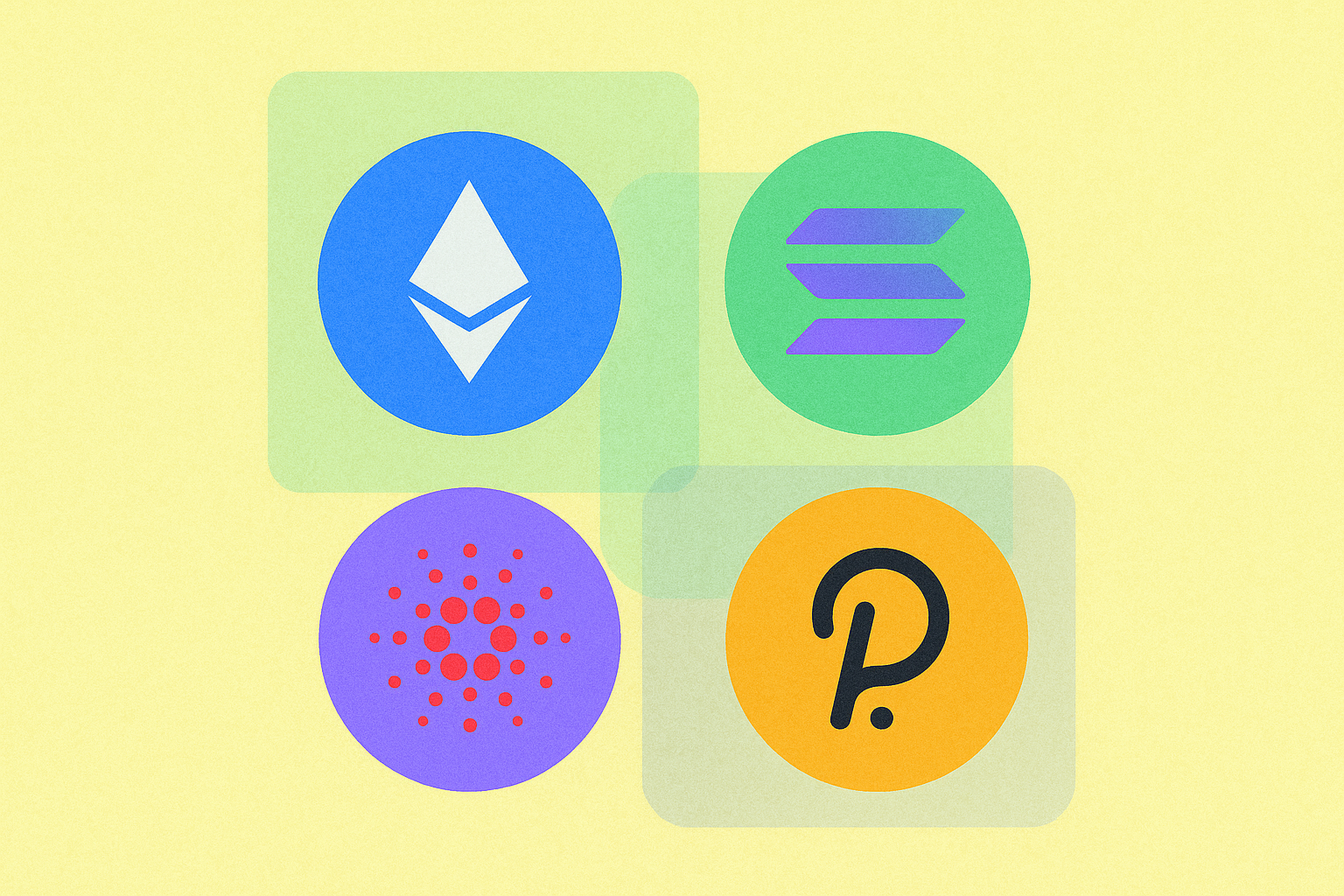
Market Cap Leadership: Polkadot vs Ethereum, Solana, and Cardano in 2026
The cryptocurrency market landscape in 2026 reveals a significant capitalization hierarchy among major layer-1 blockchains. Polkadot's current positioning reflects broader market dynamics affecting interoperability-focused networks. The following comparison illustrates how DOT's valuation stands relative to other established blockchain platforms:
| Cryptocurrency | Market Cap | Rank | Price Range |
|---|---|---|---|
| Ethereum | $376.34B | 2 | $3,118 |
| Solana | $80.72B | 6 | $142.95 |
| Cardano | $14.12B | 3 | $0.39 |
| Polkadot | $3.72B | 43 | $2.04-$2.32 |
Polkadot's market valuation positions it substantially below these competing layer-1 platforms, trailing Ethereum by approximately 101x and Solana by roughly 22x in capitalization metrics. Cardano similarly maintains a market cap roughly 3.8 times larger than DOT. With 1.65 billion tokens in circulation, Polkadot's individual token pricing reflects the market's current assessment of its blockchain infrastructure and adoption trajectory compared to rivals. This significant gap underscores how the broader cryptocurrency market weighs different layer-1 blockchain technologies, governance models, and developer ecosystems when determining relative valuations and rankings among competing networks.
Performance Metrics Comparison: Transaction Speed, Finality, and Network Security Across Layer-1 Protocols
Polkadot demonstrates competitive performance across key layer-1 metrics while maintaining a distinctive architecture. The network achieves a maximum throughput of 462.7 transactions per second with a 6.05-second block time, though real-world testing has revealed impressive peak performance reaching 143,343 TPS while utilizing only 23% of available computing resources. This performance profile positions Polkadot competitively within the layer-1 ecosystem, though faster networks like Solana achieve higher theoretical maximums.
Transaction Finality and Consensus Innovation
Polkadot's finality mechanism deserves particular attention due to its architectural uniqueness. The GRANDPA consensus protocol achieves 30-second finality by finalizing entire chains rather than individual blocks—a fundamental departure from competing approaches. This chain-level voting by validators enables rapid certainty while maintaining security, with the network keeping finality a few blocks behind the chain tip to allow fishermen verification periods.
Network Security Architecture
The network employs Nominated Proof of Stake (NPoS) security with 600 validators maintaining a Nakamoto coefficient of 178, indicating strong decentralization. Polkadot's shared security model represents a significant innovation where parachains inherit security from the relay chain rather than requiring independent validator sets. This architecture reduces individual security risks while allowing parachains to focus on scalability and application-specific optimization. Compared to standalone layer-1 protocols, this model efficiently distributes security resources across the ecosystem while maintaining comprehensive network protection through on-chain governance mechanisms.
Market Share Evolution: Polkadot's Growing Adoption Against Competing Layer-1 Ecosystems
Polkadot's ecosystem transactions experienced a dramatic 200% surge, reaching 39.6 million transactions and signaling substantial growth in user engagement within the layer-1 ecosystem. This expansion reflects heightened adoption across competing layer-1 blockchains, where Polkadot strengthened its market position through increased network activity. The growth in ecosystem transactions demonstrates how Polkadot's architecture supports increasing transaction volumes compared to traditional layer-1 alternatives.
User adoption metrics further underscore Polkadot's expanding market share among layer-1 competitors. The network reached 3.84 million total accounts with 1.46 million active holders, indicating a steadily growing user base engaging with the Polkadot ecosystem. This metric reflects market share evolution as more participants recognize the value proposition of Polkadot's cross-chain capabilities relative to competing layer-1 platforms. Staked DOT increased 7.9% quarter-over-quarter to 843.9 million tokens, demonstrating robust validator participation and network security commitments that attract long-term participants.
Total Value Locked reached $500 million, highlighting how Polkadot's layer-1 ecosystem attracts liquidity and financial activity. When evaluating market share within the layer-1 blockchain landscape, these adoption indicators collectively demonstrate Polkadot's competitive positioning against other established layer-1 ecosystems. The combination of transaction growth, user expansion, and capital inflows illustrates the growing adoption trajectory that distinguishes Polkadot's market evolution through 2026.
Differentiation Advantages: Polkadot's Multi-Chain Architecture and Interoperability Edge
Polkadot's architecture fundamentally differentiates it from traditional layer-1 blockchains through its innovative multi-chain infrastructure. Rather than operating as isolated networks, Polkadot coordinates multiple independent blockchains called parachains through a central relay chain, creating a unified ecosystem where each parachain leverages the network's shared security model. This design eliminates the typical blockchain trilemma constraint—individual parachains focus on specific functionalities while benefiting from collective network security and validation.
The interoperability advantage proves particularly compelling. While conventional layer-1 blockchains operate independently and struggle with cross-chain communication, Polkadot enables seamless data and asset transfer between parachains through its Cross-Consensus Message Format (XCM). This native interoperability facilitates sophisticated applications impossible on isolated networks, including cross-chain decentralized exchanges that allow users to trade assets across multiple blockchains without intermediaries.
From a scalability perspective, Polkadot's parallel processing architecture surpasses traditional blockchain limitations. Isolated blockchains handle transactions sequentially, creating bottlenecks; Polkadot processes transactions simultaneously across multiple parachains, dramatically increasing network throughput. Additionally, Polkadot's forkless upgrade capability allows the network to evolve and adapt without contentious hard forks that fragment communities and create separate token chains.
Developed by Ethereum co-founder Dr. Gavin Wood, Polkadot's multi-chain approach enables developers to build specialized, interoperable applications while maintaining robust security. This architectural advantage positions Polkadot as a compelling alternative to isolated layer-1 blockchains, offering superior flexibility, scalability, and interconnectedness for next-generation decentralized applications and services.
FAQ
Polkadot在市值排名中处于什么位置?与以太坊、Solana、Cardano等主流Layer-1公链相比如何?
Polkadot ranks around 10th in market capitalization among Layer-1 blockchains, positioned below Ethereum and Solana but ahead of many competitors. Its unique focus on interoperability and cross-chain communication differentiates it. DOT token has declined approximately 90% from its historical peak, presenting a discount opportunity for investors seeking exposure to Web3.0 infrastructure.
What are the advantages of Polkadot's TPS (transactions per second) and transaction confirmation speed compared to other Layer-1 blockchains?
Polkadot processes 300-400 TPS with fast finality and offers significant interoperability benefits. Its energy efficiency is notably superior to other Layer-1 chains, consuming as little as 6.6 US households worth of power while maintaining high performance.
What are the unique advantages of Polkadot's parachain mechanism compared to Ethereum's single-chain architecture and Solana's high-performance design?
Polkadot's parachain mechanism enables multi-chain interoperability and shared security through a relay chain, allowing parallel processing of multiple blockchains simultaneously. Unlike Ethereum's single-chain model, Polkadot achieves greater scalability. Unlike Solana's single high-speed chain, Polkadot prioritizes interoperability and decentralization across its ecosystem.
How does Polkadot rank in terms of ecosystem projects and total locked value (TVL) among Layer-1 blockchains?
Polkadot ranks third among Layer-1 ecosystems by project count and TVL. It hosts over 200 unique projects and maintains significant locked value. Its strength lies in interoperability, enabling seamless connections between multiple blockchains through its relay chain architecture.
Does Polkadot's transaction fees compare competitively with Ethereum, Solana, Polygon and other layer-1 blockchains?
Yes, Polkadot offers highly competitive transaction fees ranging from $0.0001 to $0.0005, significantly lower than Ethereum ($5-50+ during congestion) and comparable to or better than Solana and Polygon, providing excellent cost efficiency.
Polkadot作为投资标的,相比其他Layer-1区块链的长期发展前景和风险因素分别是什么?
Polkadot的核心优势在于跨链互操作性和平行链生态,长期发展前景看好。风险包括竞争加剧、技术迭代风险和监管不确定性。相比单链项目,Polkadot多链架构更具扩展性,但治理复杂度更高。

What are the Key Differences Between Ethereum and Its Competitors in 2025?

How Does On-Chain Data Analysis Reveal Aptos Network Growth in 2025?

Maximizing Payment Processing Efficiency: Transactions Per Second Explained

Layer 1 Blockchain Technology: Fundamentals and Applications

Layer 1 Blockchain Fundamentals: Insights and Applications

Key Layer 1 Blockchain Protocols

What causes Notcoin (NOT) price volatility between $0.001277 and $0.003217 in 2025
How to track cryptocurrency holdings and fund flows across exchanges in real-time

How does BANANAS31 compare to other AI tokens in market cap and trading volume?

What is Banana For Scale (BANANAS31) market cap and trading volume today?
How to use MACD, RSI, and Bollinger Bands to predict WOO token price movements in 2026
