How to Invert Chart on TradingView: A Comprehensive Guide
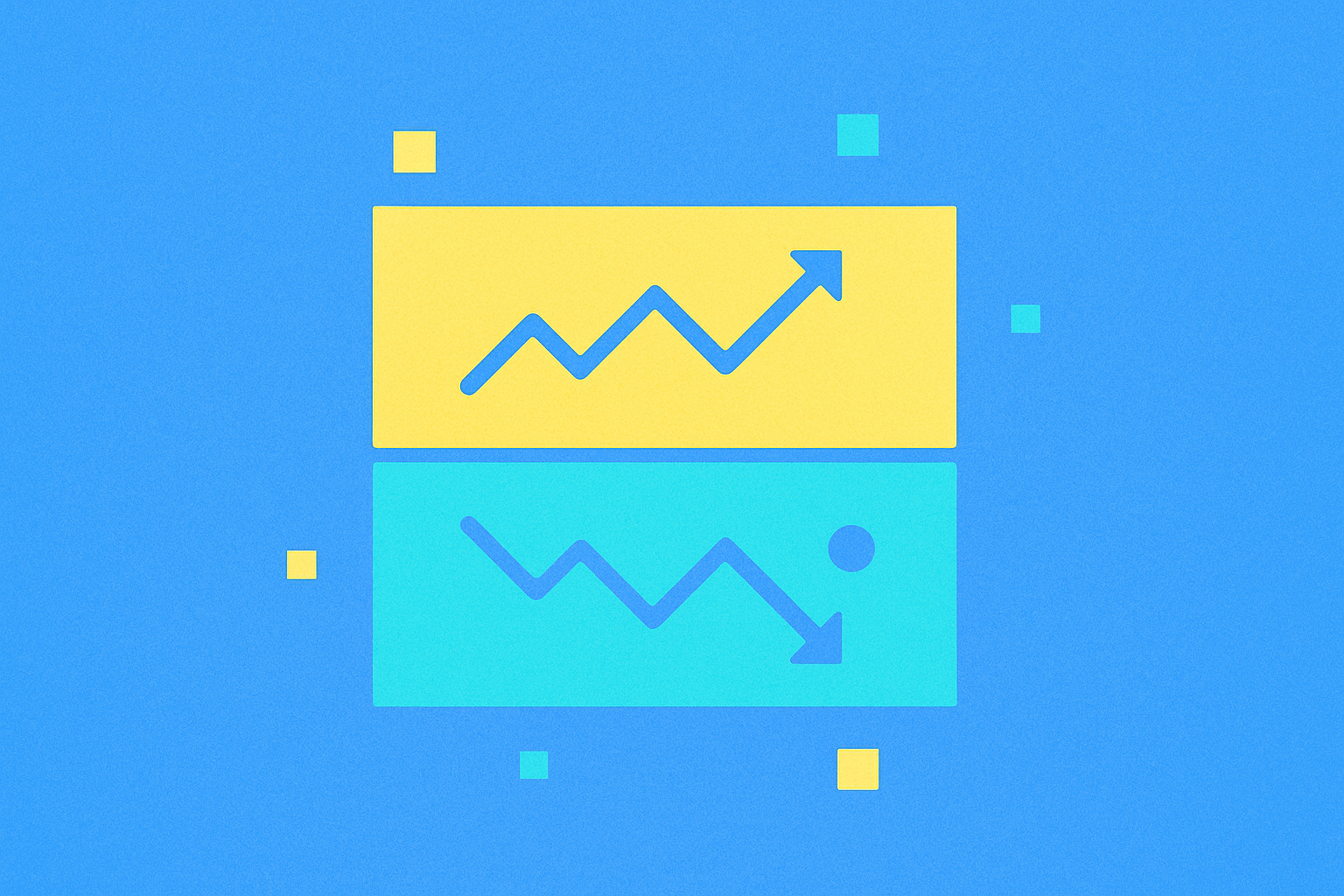
Discovering How to Invert Chart on TradingView
Navigating the world of trading can be daunting, with a plethora of data points and charting techniques to master. For traders and analysts, visualizing data in a way that makes trends and patterns more discernible is a crucial aspect of making informed decisions. Enter TradingView—a powerful charting platform that offers myriad customization options to suit diverse trader needs, including the ability to invert charts.
Why would one want to invert a chart? The answer lies in perspective. Much like flipping a photograph to reveal new compositional insights, inverting a chart can illuminate trends that were previously obscured by conventional viewing angles. This technique proves particularly valuable for traders seeking to identify bullish or bearish market sentiments by examining data from an alternative perspective. By reversing the visual representation, traders can challenge their initial assumptions and potentially uncover hidden opportunities that traditional chart views might mask.
The process of chart inversion on TradingView is straightforward yet profound in its implications. It allows traders to break free from psychological anchoring—the tendency to fixate on the first piece of information encountered. When a trader consistently views charts in their standard orientation, cognitive biases can develop, leading to pattern recognition that confirms pre-existing beliefs rather than revealing objective market realities. Inverting the chart disrupts this pattern, forcing the analytical mind to reassess data without the comfort of familiar visual cues.
Let's dive into the step-by-step process of inverting a chart on TradingView and explore the nuances that make this tool indispensable for savvy traders who seek to maintain analytical objectivity in volatile market conditions.
Understanding Chart Inversion
Before delving into the practical how-to, it's essential to understand what chart inversion entails and why it matters in the broader context of technical analysis. In the realm of trading, an inverted chart is a graphical representation where the price scale is flipped vertically, making peaks appear as troughs and vice versa. Consequently, what appears as a bullish uptrend in standard view transforms into a bearish downtrend when inverted, and bearish patterns manifest as bullish formations.
This transformation is more than a visual trick—it's a powerful psychological tool. Human perception is heavily influenced by orientation and context. When traders view charts in their standard configuration over extended periods, they develop pattern recognition habits that can become rigid. These habits, while useful for quick analysis, can also create blind spots. An inverted chart forces the brain to process information differently, activating alternative neural pathways and potentially revealing insights that standard viewing would miss.
The theoretical foundation for chart inversion rests on the principle of perspective diversification. In technical analysis, confirmation from multiple viewpoints strengthens trading decisions. Just as traders use multiple timeframes to validate trends, inverting charts provides another dimension of confirmation. If a pattern remains compelling even when viewed upside down, it likely represents a genuine market structure rather than a perceptual artifact.
Reverse engineering price movements by viewing inverted charts can significantly increase a trader's analytical prowess. This technique provides a fresh perspective that might unveil hidden patterns, divergences, or signals that were camouflaged in the standard view. For instance, a resistance level that appears formidable in standard view might reveal itself as less significant when inverted, suggesting that the psychological barrier may be weaker than initially perceived.
Moreover, chart inversion serves as an excellent tool for testing the robustness of trading strategies. If a strategy identifies opportunities equally well in both standard and inverted views, it demonstrates genuine pattern recognition rather than bias-driven interpretation. This validation process can help traders refine their methodologies and develop more reliable trading systems.
Steps to Invert Chart on TradingView
TradingView houses a comprehensive suite of tools that cater to both novice and experienced traders. The feature to invert charts, while not immediately obvious to new users, follows a logical and user-friendly process once you know where to look. Here's a detailed, practical guide to implementing this powerful function:
1. Accessing Your Chart Settings
Start by logging into your TradingView account using your credentials. Once logged in, load the desired chart by selecting the instrument or market you are interested in analyzing. This could be a cryptocurrency pair, stock, forex currency pair, commodity, or any other tradable asset available on the platform. TradingView supports thousands of instruments, so take your time to select the one most relevant to your current analysis.
2. Hover and Engage the Menu
Once you have your chart displayed on screen, locate the settings icon, typically represented by a gear or cogwheel symbol. This icon is generally found in the upper-right corner of the charting area, near other chart control buttons. Clicking this icon opens a comprehensive settings menu where numerous options to customize chart aesthetics, scales, and behaviors are available. This menu is your gateway to personalizing the TradingView experience to match your analytical preferences.
3. Dive into Scales Settings
Within the settings menu, navigate to the 'Scales' tab or section. This area houses various options related to price scales, axis adjustments, logarithmic versus linear scaling, and other scale-related configurations. The Scales section is crucial for traders who need precise control over how price data is displayed, as different scaling methods can reveal or obscure certain patterns.
4. Enable Inversion
In the 'Scales' tab, you will find a checkbox or toggle labeled 'Invert Scale' or similar terminology. By checking this box or activating this toggle, you instruct TradingView to flip the price scale vertically. Immediately upon activation, the chart redraws itself, presenting price data from an inverted perspective. The transformation happens in real-time, allowing you to instantly see how the inversion affects your current chart view.
Important note: The inversion affects only the price scale, not the time axis. This means that time still progresses from left to right as usual, but prices that were at the top of the chart now appear at the bottom, and vice versa.
5. Analyze with Fresh Eyes
With the inverted chart at your fingertips, embark on a fresh analysis session. Note how certain formations appear in this new orientation and test patterns you previously identified. Does inverting the chart change your perception of the market's trend? Do support levels that seemed weak now appear stronger when viewed as resistance in the inverted chart? Are there divergences between indicators and price action that become more apparent in this alternative view?
Take time to compare the inverted view with your original analysis. Document any differences in interpretation, as these discrepancies can reveal important insights about your analytical biases. Many experienced traders keep screenshots of both standard and inverted views for side-by-side comparison, which can be particularly enlightening when reviewing past trades to understand what worked and what didn't.
Common Troubleshooting Tips
If the invert function doesn't seem to work as expected, verify that you're adjusting the correct scale (price scale rather than time scale). Also, ensure that your TradingView version is up to date, as older versions may have different menu structures. If you're using a mobile device, the menu navigation might differ slightly from the desktop version, but the core functionality remains the same.
When to Use an Inverted Chart
Inverting charts isn't a routine procedure that should accompany every analysis session—it's a strategic choice employed in particular scenarios where alternative perspective can yield significant analytical advantages. Understanding when to deploy this technique separates skilled analysts from those who merely follow mechanical processes.
Counteracting Cognitive Biases
If you find yourself predisposed to always seeing bullish formations, perhaps because you hold a long position or have a fundamental belief in an asset's long-term value, inverting the chart can help you overcome this confirmation bias. By viewing data from a different angle, you force your analytical mind to consider bearish scenarios with equal weight. This balanced perspective is essential for risk management and can prevent costly mistakes driven by wishful thinking.
For example, a trader who bought a stock at a lower price might unconsciously interpret every minor price increase as the beginning of a major rally. Inverting the chart removes this psychological anchor, allowing the trader to assess whether the price action genuinely supports a bullish thesis or merely reflects normal volatility.
Challenging Forecasts
If you're developing price forecasts and your projections seem overly optimistic or pessimistic, inverting the chart can help validate or challenge these projections. This technique is particularly useful before committing significant capital to a trade. If your bullish forecast still makes sense when you view the chart inverted (where it appears bearish), it suggests your analysis is based on robust technical structures rather than emotional bias.
Consider a scenario where you've identified what appears to be a bullish flag pattern. By inverting the chart, you can assess whether the pattern's structure remains compelling or if it was merely an artifact of your desire to find a bullish setup. This validation process can prevent false signals from triggering premature entries.
Pattern Recognition Enhancement
Sometimes, seeing trends in the opposite direction can help confirm or reject patterns previously unobserved. Certain chart patterns, such as head and shoulders formations or double tops/bottoms, have inverse equivalents. By inverting the chart, you can identify whether a pattern exists in both orientations, which strengthens the case for its validity.
Additionally, inverted charts can reveal hidden divergences between price action and technical indicators. An indicator that seems to confirm a trend in standard view might show divergence when the chart is inverted, suggesting that the trend may be weakening despite appearances.
Testing Strategy Robustness
Traders developing systematic strategies can use chart inversion as a testing mechanism. If a strategy's signals remain valid in inverted view (accounting for the reversal of long/short positions), it demonstrates that the strategy identifies genuine market structures rather than exploiting visual artifacts or biases. This testing method can significantly improve strategy reliability and reduce false signals.
Benefits of Using TradingView
While several charting platforms are available in the market, TradingView stands out due to its robust features, communal spirit, and integration capabilities. Here's why making TradingView your analytical workbench of choice offers unparalleled advantages for traders at all experience levels:
Customization Flexibility
TradingView provides a custom-tailored environment allowing traders to modify views extensively, including the vital ability to invert charts. Beyond inversion, traders can adjust color schemes, indicator parameters, drawing tools, and virtually every aspect of chart appearance. This flexibility ensures that each trader can create an optimal visual environment that matches their analytical style and reduces eye strain during extended analysis sessions.
The platform supports multiple chart types—from traditional candlesticks and bars to more specialized formats like Renko, Kagi, and Point & Figure charts. This variety enables traders to select the visualization method that best reveals the patterns they're seeking. When combined with the inversion feature, these chart types offer nearly limitless analytical perspectives.
Powerful Community and Social Features
Engage with an energetic, global community of traders and analysts. Users can publish and share charts, permitting collaborative analysis and strategy discussions. This social dimension transforms trading from a solitary activity into a collaborative learning experience. Leveraging TradingView's social features enriches understanding and democratizes trading insights that were once available only to institutional traders.
The platform's idea stream allows users to browse thousands of published chart analyses, filtered by asset, timeframe, and analytical approach. This exposure to diverse perspectives can significantly accelerate learning, especially for newer traders. Comments and discussions on published charts create opportunities for mentorship and knowledge exchange that traditional platforms simply cannot match.
Moreover, TradingView's reputation system helps users identify consistently accurate analysts, creating a meritocratic environment where quality analysis rises to prominence. This feature helps traders distinguish between genuine expertise and noise, a critical skill in an era of information overload.
Affordable and Accessible
While premium subscriptions add depth to your analytical toolkit with features like additional indicators, alerts, and chart layouts, TradingView offers substantial functionality in its free tier. This accessibility makes state-of-the-art charting tools available to retail investors and large institutions alike, democratizing access to professional-grade analysis tools.
The free version includes essential features like basic indicators, drawing tools, and the chart inversion capability discussed in this guide. For many traders, especially those just beginning their journey, the free tier provides more than sufficient functionality to develop and test strategies. As traders grow and their needs expand, they can upgrade to premium tiers that offer advanced features like multiple chart layouts, priority customer support, and extended historical data.
Superior Integration Capabilities
TradingView's compatibility with a variety of exchanges and brokers ensures seamless trading experiences. The platform supports direct trading through integrated brokers, allowing users to execute trades without leaving the charting interface. This integration eliminates the friction of switching between analysis and execution platforms, reducing the risk of errors and improving trade timing.
The platform also offers robust API access for developers who want to create custom indicators, strategies, or integrations. This extensibility ensures that TradingView can adapt to evolving market conditions and trading methodologies. The Pine Script programming language, TradingView's proprietary scripting tool, enables traders to code custom indicators and automated strategies without requiring extensive programming knowledge.
Furthermore, TradingView's cross-platform availability—accessible via web browsers, desktop applications, and mobile apps—ensures that traders can monitor markets and analyze charts regardless of their location or device. This flexibility is increasingly important in global markets that operate around the clock.
Wrapping Up
Inverting a chart on TradingView propels traders into a novel world of data visualization, enhancing their analytical acumen and challenging ingrained perceptual biases. By scrutinizing trends from an atypical angle, traders apprehend not just the 'what' but the 'why' behind market movements. Trading becomes more than just executing strategies—it evolves into an art of perception, where multiple viewpoints converge to create a comprehensive understanding of market dynamics.
The ability to invert charts represents just one of many powerful tools available on TradingView, but its simplicity belies its profound impact on analytical quality. This technique costs nothing to implement, requires no additional software, and takes mere seconds to activate, yet it can fundamentally transform how traders interpret price action. In an industry where marginal advantages compound into significant performance differences, such accessible yet powerful tools deserve a prominent place in every trader's analytical arsenal.
The journey of becoming a seasoned trader is peppered with challenges, insights, revelations, and pivotal tools like chart inversion. Whether you're a novice trader testing the waters of market speculation or a seasoned analyst seeking to amalgamate new techniques into your skill set, mastering the art of inverting charts on TradingView could be the key to unlocking a fresh perspective and achieving greater consistency in your trading results.
As you incorporate chart inversion into your analytical routine, remember that it's not a standalone solution but rather one component of a comprehensive analytical framework. Combine it with other techniques—multiple timeframe analysis, volume profiling, indicator divergence analysis, and fundamental research—to build a robust trading methodology. The traders who succeed in the long term are those who continuously expand their analytical toolkit while maintaining the discipline to apply these tools systematically and objectively.
Ultimately, the power of chart inversion lies not in the mechanical act of flipping a visual representation, but in the mental flexibility it cultivates. By regularly challenging your initial interpretations and viewing markets from alternative angles, you develop the cognitive agility necessary to adapt to changing market conditions and avoid the rigid thinking that leads to costly mistakes. This mental flexibility, more than any single technique or indicator, represents the true edge in trading—and TradingView's chart inversion feature offers an accessible pathway to developing this essential skill.
FAQ
How to invert chart on TradingView? What are the specific steps?
Press Alt+I (or ⌥ I on Mac) to invert the chart and flip the price axis. This reverses the vertical price coordinates instantly for better downtrend visualization.
What are the practical uses and application scenarios of inverting charts in TradingView?
Inverting charts helps identify potential trends by flipping the chart upside down to test price movements from different perspectives. This technique is especially useful for confirming trend direction and validating trading signals when market direction is uncertain.
Which chart types does the TradingView invert chart feature apply to, such as candlestick charts and line charts?
TradingView's invert chart feature primarily applies to candlestick charts, enabling traders to identify potential market reversal points. It works effectively with most standard chart types for technical analysis.
How to quickly switch between normal and inverted view in TradingView?
Press ALT + I to toggle between normal and inverted chart views instantly. Mac users should press Option⌥ + I. This keyboard shortcut provides a quick way to flip your chart perspective.
After inverting a chart on TradingView, do technical indicators and drawing tools automatically adjust?
Yes, technical indicators and drawing tools automatically adjust after chart inversion on TradingView. They update to reflect the new chart direction, including Fibonacci levels and other automated tools.
Why do traders need to use the chart inversion feature to analyze markets?
Traders use chart inversion to identify trend reversals and potential turning points. It reveals price strength patterns and helps spot early buying or selling opportunities by displaying inverted perspectives of price movements and trading volume.

Decoding the KDJ Indicator: A Comprehensive Guide

How to Interpret MACD and RSI Signals for Cryptocurrency Trading?

Mastering Bitcoin Trading with Pivot Points: Strategies and Techniques

Understanding Take-Profit in Cryptocurrency Trading
How to Use MACD, RSI, and KDJ Indicators for Effective Crypto Trading?

Understanding Cross Trade: Definition and Insights

What Is the Best Crypto Mining Setup Cost in India?

Who Inherited John McAfee's Money: Exploring the Legacy of a Crypto Pioneer

Marina Protocol Daily Quiz Answer Guide

How to Verify BTC on Cash App

How Many ETH Coins Are There: Understanding Ethereum's Supply Dynamics