Is It Too Late to Buy Bitcoin Now? Expert Analysis

Professional financial advisors recommend allocating only 1-5% of your portfolio to Bitcoin, with a proven 4% allocation to improve diversification without compromising overall portfolio stability. This conservative strategy allows participation in the upside potential while maintaining prudent risk management.
The dollar cost averaging strategy has become the optimal approach for entering the Bitcoin market. This method spreads purchases over time, significantly reducing the impact of the asset’s notable volatility and eliminating the anxiety of trying to perfectly time the market.
Any investment in Bitcoin requires a minimum holding period of 4–6 years. Historical data supports this recommendation, showing that this time frame has never resulted in negative returns, mainly due to the compounded effects of multiple halving cycles.
Spot Bitcoin ETFs from providers like BlackRock and Fidelity now offer regulated, accessible entry points. These investment vehicles simplify the management of cryptocurrency wallets and provide the protection of traditional regulatory frameworks.
The fixed supply of 21 million Bitcoin and scheduled halving cycles create long-term scarcity that fundamentally differentiates it from traditional inflationary currencies. This unique feature is a key pillar of its value proposition as a digital store of value.
Understanding Bitcoin’s Current Market Position
Bitcoin has undergone a radical transformation in market perception, evolving from a niche speculative asset to a mainstream investment vehicle recognized by major global financial institutions. The world’s largest asset managers, such as BlackRock and Fidelity, now offer spot Bitcoin ETFs, providing traditional investors regulated and simplified access to this digital asset. Simultaneously, publicly traded companies have begun allocating substantial portions of their balance sheets to Bitcoin as a treasury asset, confirming its role as a corporate store of value.
This institutional acceptance fundamentally alters Bitcoin’s risk profile compared to its early years. What was once considered a technological experiment is now regarded as a legitimate asset class with unique diversification characteristics. The influx of institutional capital has also helped reduce the extreme volatility that characterized Bitcoin’s initial cycles, although the asset remains considerably more volatile than traditional investments.
The cryptocurrency operates on a four-year halving cycle, a programmed mechanism in its code that cuts mining rewards in half approximately every four years. The most recent halving occurred recently, reducing new supply from about 900 coins per day to roughly 450. This scheduled decrease in issuance creates a unique deflationary pressure not present in any traditional asset.
This programmed scarcity, combined with rising demand from institutional and retail investors, exerts a long-term bullish pressure on price despite ongoing short-term market volatility. With only 21 million Bitcoin to ever exist and more than 19 million already mined, the scarcity intensifies each year, fueling the supply and demand dynamics that drive its valuation.
Expert Price Predictions
Financial analysts and cryptocurrency experts remain notably optimistic about Bitcoin’s price prospects despite its current levels. Bernstein, a respected investment research firm, predicts Bitcoin will reach $200,000 in the coming years, driven by continued institutional adoption and favorable regulatory developments creating a more conducive environment for digital asset investment.
Standard Chartered, one of the world’s leading international banks, projects a price of $500,000 in the medium term, based on valuation models considering Bitcoin’s scarcity, its growing role as a store of value, and its potential inclusion in global institutional portfolios. This projection reflects a view of Bitcoin not only as a speculative asset but as a structural component of future financial systems.
Cathie Wood of Ark Invest, known for bold yet analysis-based forecasts, suggests Bitcoin could reach $2.4 million long-term under optimal conditions. Her model includes scenarios where Bitcoin is adopted by sovereign nations as a reserve of value and fully fulfills its role as “digital gold” in the global economy. While this prediction represents the upper bound of possible outcomes, it is based on quantitative analysis of adoption rates and potential capital flows.
However, not all financial institutions share the same level of optimism. JP Morgan estimates Bitcoin’s fair value at $45,000 based on production cost models and relative valuation analysis. Critics of this conservative estimate argue it underestimates fundamental factors such as programmed scarcity, network effects, and ongoing institutional adoption. Many analysts expect JP Morgan to adjust its estimates as regulatory clarity improves and institutional adoption consolidates.
More than specific price targets, understanding the overall trend and the fundamental shift in asset maturity is crucial. Bitcoin’s returns are naturally compressing as the asset matures and its market capitalization grows. Early investors who bought Bitcoin for dollars or hundreds of dollars experienced 100x or more gains, but those entering at current levels should adjust expectations to the reality of a more mature market.
Even a conservative doubling of price over four years would represent approximately 19% compound annual growth—an exceptional return by traditional investment standards and exceeding historical stock market averages. Yet, it’s far below the explosive 1,000x gains of Bitcoin’s early days. This normalization of expectations is healthy and reflects Bitcoin’s evolution from a speculative asset to a more predictable growth investment.
Smart Ways to Buy Bitcoin Today
Dollar Cost Averaging Strategy
Dollar Cost Averaging (DCA) is widely recognized as the most effective strategy for building a Bitcoin position, especially for investors without experience in timing volatile markets. This approach eliminates the anxiety of trying to identify the perfect entry point—an extremely difficult task even for professional traders—in the cryptocurrency market.
Instead of investing a lump sum that might coincidentally match a local price peak, DCA involves purchasing fixed amounts at regular intervals—for example, $100 weekly or $500 monthly. This systematic approach distributes your entry points across different price levels, dramatically reducing Bitcoin’s volatility impact on your average purchase price.
The mechanics of DCA work in your favor in both market scenarios: when Bitcoin experiences price declines, your fixed investments buy more coins, lowering your average cost. When prices rise, you buy fewer coins but benefit from appreciation of your existing holdings. Over time, this disciplined method steadily builds your position while smoothing out price fluctuations.
In addition to mathematical benefits, DCA offers crucial psychological advantages. It prevents emotional decision-making during market swings, eliminates regret over “buying at the top,” and cultivates a disciplined investment habit essential for long-term success. Investor behavior studies show that DCA significantly improves the likelihood of maintaining investments through periods of volatility.
Recommended Portfolio Allocation
Professional financial advisors and certified planners typically recommend limiting Bitcoin exposure to 1-5% of your total net worth or investment portfolio. This conservative guideline is based on decades of modern portfolio theory and risk management, tailored to incorporate Bitcoin’s unique volatility characteristics.
Academic research from CoinShares, a digital asset management firm, empirically demonstrates that a 4% allocation to Bitcoin can substantially enhance portfolio diversification and risk-return profiles without compromising prudent investment principles. This level of exposure allows participation in Bitcoin’s asymmetric upside—where potential gains far outweigh potential losses—while maintaining overall portfolio stability.
This conservative approach ensures that even if Bitcoin experiences a major decline of 70–80% from all-time highs, your overall financial stability and ability to sleep well remain intact. An 80% drop in a 4% allocation results in only a 3.2% loss of your total portfolio—painful but manageable.
It is crucial never to invest money needed for short-term expenses, emergency funds, or upcoming financial obligations. Bitcoin’s extreme volatility makes it unsuitable for capital you might need within the next 4–6 years. Investors violating this principle often are forced to sell at losses during market downturns to cover liquidity needs, turning temporary losses into permanent ones.
ETF vs Direct Purchase
Spot Bitcoin ETFs represent the most accessible, regulated entry point for traditional investors seeking exposure to Bitcoin without the technical complexity of direct ownership. These exchange-traded funds trade on regular stock exchanges alongside stocks and other ETFs, allowing you to buy them through your existing brokerage account without creating accounts on crypto platforms.
ETFs offer several significant advantages: they eliminate the need to manage cryptocurrency wallets or worry about private key security; they are subject to familiar regulatory oversight providing investor protections; and they simplify tax reporting by generating standard tax forms. For institutional investors and financial advisors, ETFs also facilitate the inclusion of Bitcoin in professionally managed portfolios.
Alternatively, you can buy Bitcoin directly via cryptocurrency exchanges, gaining actual ownership and custody of the coins. Direct ownership grants complete control over your assets, eliminates ETF management fees (though exchanges charge their own commissions), and allows free transfer or use in decentralized finance applications.
However, direct ownership requires full responsibility for security. For substantial holdings, experts strongly recommend transferring Bitcoin from exchanges to hardware wallets (“cold wallets”) that keep private keys completely offline, protecting against remote hacks. This process demands technical knowledge and diligence—losing your private keys means permanently losing access to your Bitcoin without recovery options.
Each approach involves important trade-offs: ETFs offer maximum convenience and regulatory protection but charge annual expense ratios (typically 0.2–0.5%) and do not provide actual ownership of Bitcoin. Direct ownership offers full sovereign control and potentially lower long-term costs but requires more technical expertise, personal security responsibility, and active management of private keys.
Risk Management and Time Horizon
Extreme volatility remains the defining characteristic of Bitcoin and the most critical factor investors must understand before allocating capital. Historical data documents multiple instances where Bitcoin experienced 70–80% drops from its all-time highs—corrections that would shake most investors’ confidence and trigger panic selling if unprepared psychologically.
Yet, these same historical patterns reveal a consistent trend: each of these devastating declines has eventually been followed by recoveries leading Bitcoin to new all-time highs, rewarding those who held their positions through turbulent periods. This cycle of extreme swings is fundamental to Bitcoin’s investment thesis.
Any investment in Bitcoin should be made with a minimum holding period of 4–6 years in mind. This timeframe is not arbitrary—it corresponds to 1–1.5 Bitcoin halving cycles, the scheduled events every four years that reduce new coin issuance and have historically preceded significant price rallies. Historical data is clear: holding Bitcoin for at least six years has never produced less than 22% cumulative gains, regardless of entry point.
This remarkable statistic owes much to the compounded effects of passing through multiple halving cycles. Each halving reduces Bitcoin’s inflation rate and, combined with steady or increasing demand, creates a structural bullish pressure. The more halving cycles you experience as an investor, the higher your chances of substantial positive returns and the lower your risk of permanent losses.
This long-term perspective fundamentally transforms Bitcoin from a high-risk speculative gamble into a calculated portfolio diversifier with asymmetric upside potential. Investors adopting this timeframe can psychologically tolerate inevitable volatility, avoid emotional sell-offs during downturns, and benefit from the power of compound gains across multiple market cycles.
Common Mistakes to Avoid When Buying Bitcoin
New Bitcoin investors repeatedly make predictable mistakes that significantly undermine their investment success and often lead to avoidable losses. Understanding these common errors is as important as knowing the right strategies.
Trying to perfectly time the market is perhaps the most common and costly mistake. Many investors wait indefinitely for the “perfect” entry point—a specific price dip or ideal technical signal. In practice, this approach often results in missing the opportunity altogether, as Bitcoin rarely signals ideal buy moments in advance, and the most attractive dips are only obvious in hindsight. The market consistently punishes those who wait for certainty before acting.
Investing money needed for living expenses is a fundamental risk management error. Using funds allocated for rent, bills, debt payments, or emergency funds creates unbearable psychological stress during inevitable price declines. This stress leads to emotional decisions and forced sales at losses to meet liquidity needs, turning temporary setbacks into permanent losses.
Panicked selling during price corrections is how unprepared investors transfer wealth to disciplined investors. Bitcoin’s 70–80% drops, while terrifying in real time, are historically normal and predictable. Selling during these declines locks in permanent losses rather than treating them as opportunities to accumulate at lower prices. Data shows that investors who sell during panic rarely buy back and miss subsequent recoveries.
Leaving large Bitcoin holdings on exchanges exposes your assets to unnecessary counterparty risks. Exchanges can be hacked (as repeatedly happened in crypto history), face bankruptcy, or freeze withdrawals during liquidity crises. Significant Bitcoin holdings should be transferred to secure wallets where you control private keys exclusively, following the core crypto principle: “not your keys, not your coins.”
Expecting overnight wealth reflects a fundamental misunderstanding of Bitcoin’s current maturity. The days of 1,000x returns that characterized its early years are definitively over. Realistic expectations of 15–20% annual growth prevent disappointment, emotional decision-making, and premature abandonment of a solid investment strategy. Bitcoin remains an exceptional growth asset but is no lottery ticket.
Following social media hype without independent research is a reliable path to losses. Trending tweets, viral Reddit posts, and sensationalist YouTube videos often promote elaborate scams, coordinated pump-and-dump schemes, or fundamentally misleading information designed to manipulate unsophisticated investors. Due diligence and healthy skepticism are essential.
Underestimating volatility risks leads many investors to allocate more capital than appropriate to Bitcoin. If a 50% drop in your portfolio would cause sleepless nights, severe anxiety, or panic selling, then Bitcoin exceeds your personal risk tolerance regardless of its potential returns. Successful investing requires aligning your asset allocation with your actual psychological profile, not aspirational risk tolerance.
Ignoring the critical importance of long-term holding undermines the entire investment thesis. Bitcoin rewards patience and punishes active trading. Data clearly shows that selling within 1–2 years of initial purchase often results in losses or suboptimal gains, whereas holding for 4–6 years has historically yielded substantial positive returns. The time horizon is as vital as the entry price.
Conclusion
The evidence is conclusive: it is certainly not too late to buy Bitcoin, but success requires realistic expectations, disciplined strategy, and psychological readiness for significant volatility. Bitcoin’s evolution from a speculative tech experiment to a mature institutional asset means the days of 100x explosive gains are definitively behind us. Nonetheless, its fixed supply, increasing scarcity, and accelerated institutional adoption still offer a compelling value proposition for long-term investors.
The key to success lies in disciplined implementation of core principles: start with small, conservative allocations of 1–5% of your total portfolio, use dollar cost averaging to build positions gradually and spread entry risk, and mentally prepare for 50–80% price drops that are normal in Bitcoin cycles.
More importantly, only invest capital you genuinely do not need for at least 4–6 years—a timeframe corresponding to 1–1.5 halving cycles and historically never producing negative returns. This time commitment is not optional; it is essential to the full investment thesis.
Bitcoin specifically rewards patient investors who understand its proper role in a diversified portfolio: not as a get-rich-quick scheme or all-or-nothing speculation but as a portfolio diversifier with unique scarcity and asymmetric upside potential. For those willing to adopt this disciplined, long-term perspective, Bitcoin continues to offer significant opportunities regardless of its current price level.
FAQ
What is Bitcoin’s current price and its all-time high?
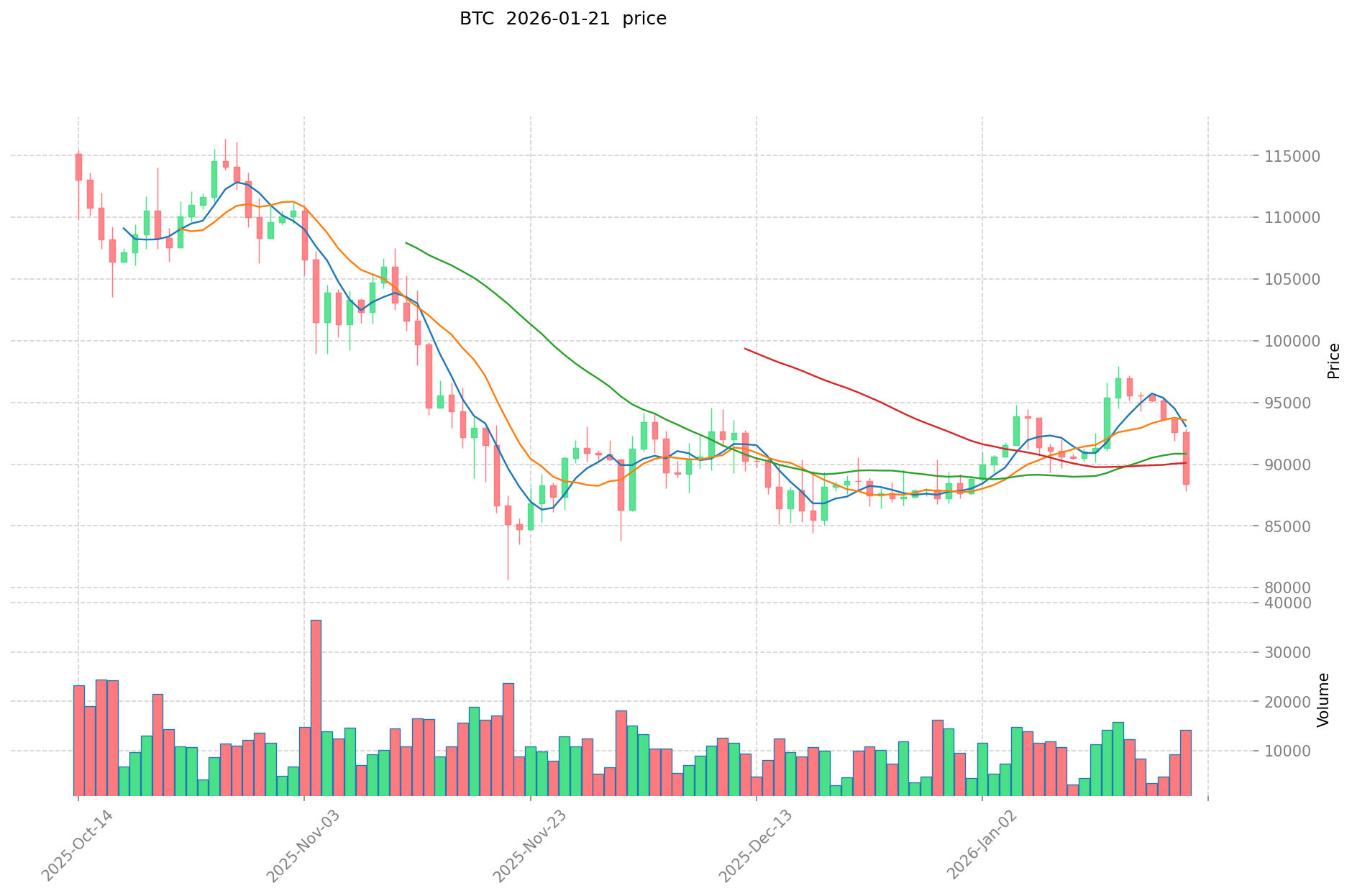
As of January 2026, Bitcoin trades around $100,000 USD. Its all-time high was approximately $108,000 USD reached in 2025. It currently remains near these peak levels.
Is it really too late to invest in Bitcoin in 2024?
No, it’s not too late. Bitcoin continues expanding with increasing institutional adoption. In 2024, many experts project the bullish cycle will persist, especially after positive regulatory developments. The opportunity remains for long-term investors.
What are the main risks of buying Bitcoin now?
Main risks include price volatility, regulatory changes, competition from altcoins, and macroeconomic fluctuations. However, Bitcoin’s history shows consistent long-term recovery, offering significant opportunities for patient investors.
What do experts say about Bitcoin’s future price?
Experts are optimistic about Bitcoin’s long-term prospects. Many predict continued price increases driven by institutional adoption, scarcity, and global inflation. Bitcoin is expected to reach new all-time highs in coming years.
What is the best strategy to buy Bitcoin: all at once or in small amounts?
The small-amounts (dollar cost averaging) approach is superior. It reduces volatility risk, allows taking advantage of different prices, and better suits market changes. Since Bitcoin tends to appreciate long-term, gradual investing maximizes opportunities.
How can I buy Bitcoin safely and reliably?
Use regulated platforms with two-factor authentication, verify addresses before transferring, store private keys in secure wallets, and never share sensitive information. Start with small amounts while learning the process.

How Does On-Chain Data Analysis Reveal Bitcoin Market Trends in 2025?

An Insight into Institutional Bitcoin Ownership: How Much is Held?

Evaluating the Benefits of Bitcoin and ETFs for Investment

Understanding Cryptocurrency ETFs: A Simplified Guide
Ultimate Guide to Secure Your Cryptocurrency with Offline Paper Wallets
How Does Litecoin's Holding and Fund Flow Compare to Bitcoin in 2025?
What are the top derivatives market signals: futures open interest, funding rates, long-short ratio, and liquidation data explained
What are the biggest smart contract vulnerabilities and crypto exchange hacks in 2024-2025?

What is a token economics model and how do allocation, inflation, and governance mechanisms work?

What Do Crypto Derivatives Market Signals Tell Us About Future Price Movements

What is crypto holdings and fund flow: exchange inflows, concentration, staking rates, and on-chain locked value explained