The Complete History of Bitcoin: When Bitcoin Began and How It Transformed Finance


Introduction: The Revolutionary Rise of Digital Currency
Bitcoin’s journey from an obscure digital experiment to a globally recognized financial asset stands as one of the most remarkable stories of technological and economic transformation in the 21st century. Beginning with a concise nine-page white paper, this revolution has evolved into a multi-trillion-dollar market that fundamentally challenges the foundations of traditional global finance.
This comprehensive guide explores Bitcoin’s full development arc—from its mysterious origins in 2009 to its rise as “digital gold” in recent years. We examine the pivotal milestones, technical breakthroughs, and historic moments that shaped Bitcoin into the world’s first successful cryptocurrency, revealing how this decentralized digital asset grew from a fringe experiment into mainstream finance.
Bitcoin’s creation was more than a technical innovation; it was a profound response to the shortcomings of legacy finance. Born out of the 2008 global financial crisis, Bitcoin’s decentralized, censorship-resistant, and fixed-supply properties offered a new way to store and transfer value. From its origins as a cryptography enthusiast’s project to its current recognition by major institutions and governments, Bitcoin’s evolution has been defined by challenges, ingenuity, and transformation.
Bitcoin Historical Timeline: Key Milestones
Technical Foundations Before Bitcoin:
- 1982 – Cryptographer David Chaum introduces a blockchain-like protocol in an academic paper, laying the theoretical groundwork for future decentralized systems.
- 1997 – Adam Back invents the Hashcash proof-of-work system, which later becomes the core technology for Bitcoin mining.
- 1998 – Wei Dai proposes the b-money concept and Nick Szabo conceives Bit Gold, both outlining visions for cryptography-based decentralized digital currencies.
The Birth and Early Exploration of Bitcoin:
- August 18, 2008 – The bitcoin.org domain is registered, officially launching the Bitcoin project.
- October 31, 2008 – Satoshi Nakamoto publishes the Bitcoin white paper to a cryptography mailing list, presenting a comprehensive vision for peer-to-peer electronic cash.
- January 3, 2009 – The Genesis Block is mined, with a headline about bank bailouts embedded to express skepticism toward traditional finance.
- January 12, 2009 – The first Bitcoin transaction occurs, with Satoshi Nakamoto sending 10 bitcoins to Hal Finney, inaugurating peer-to-peer value transfer.
- May 22, 2010 – Bitcoin is used for a real-world purchase for the first time, as a programmer buys two pizzas for 10,000 bitcoins—later celebrated as “Bitcoin Pizza Day.”
- 2010 – A major security flaw in the Bitcoin protocol is discovered and quickly resolved, highlighting the community’s rapid response capabilities.
- 2011 – The first alternative cryptocurrencies appear, and Satoshi Nakamoto gradually fades from public view.
Growth and Market Recognition:
- 2012 – The Bitcoin Foundation is established, and major platforms like WordPress begin accepting Bitcoin payments, marking the start of commercial adoption.
- 2013 – Bitcoin’s price breaks $1,000 for the first time as trading volume surges.
- 2014 – The collapse of Mt. Gox results in the loss of 744,000 bitcoins, prompting the industry to strengthen security.
- 2017 – Segregated Witness (SegWit) is activated, Bitcoin Cash forks from Bitcoin, and the CME launches Bitcoin futures.
- 2020-2021 – Corporations like Tesla and MicroStrategy adopt Bitcoin at scale, investing billions as a reserve asset.
The Institutional Era Arrives:
- January 2024 – The US Securities and Exchange Commission approves the first spot Bitcoin ETFs, opening compliant investment channels for traditional investors.
- April 2024 – The fourth Bitcoin halving reduces mining rewards to 3.125 BTC per block.
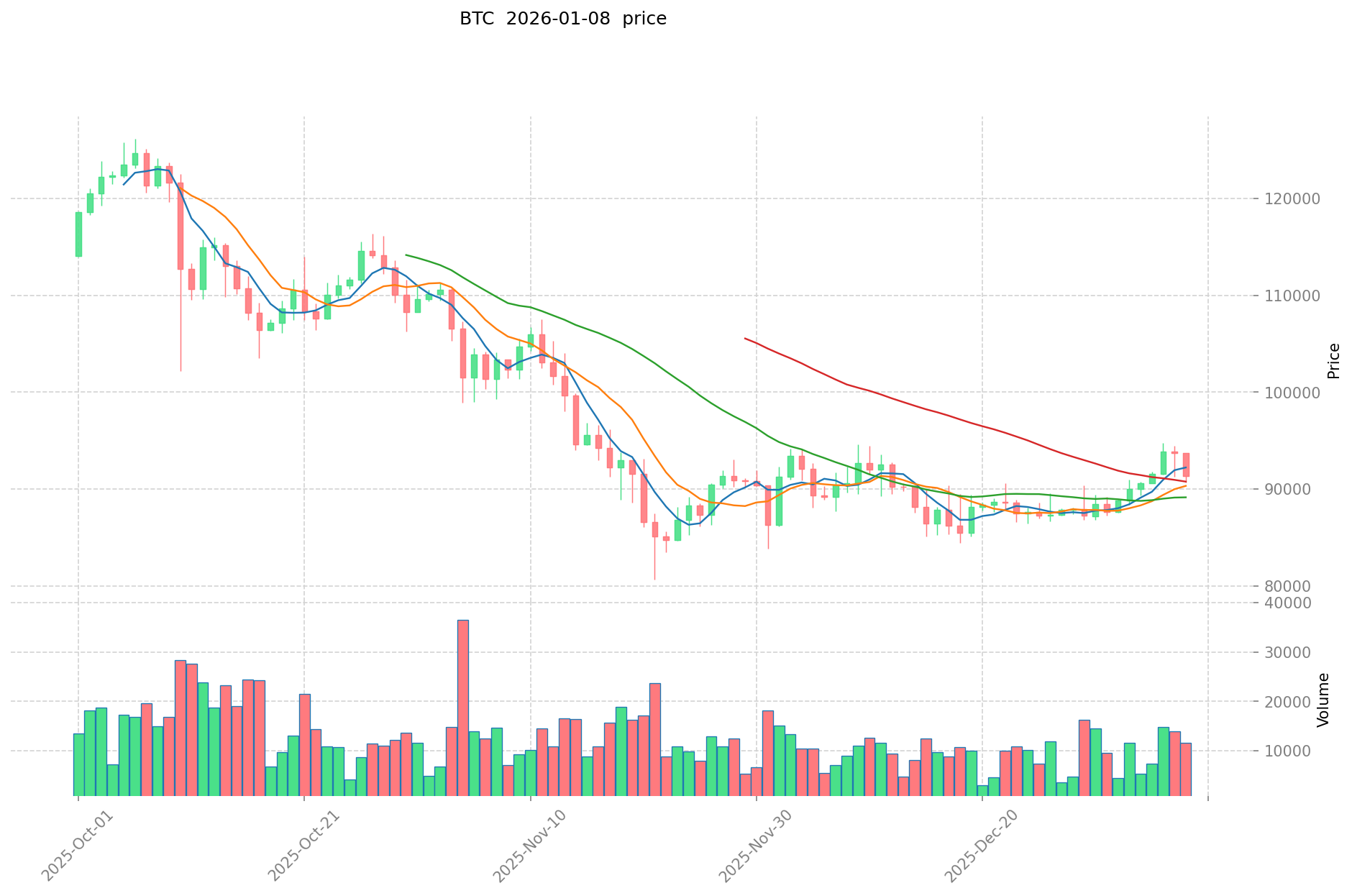
- December 2024 – Bitcoin price breaks the $100,000 psychological barrier, setting a new all-time high.
- Mid-2025 – Bitcoin price continues to rise, exceeding $123,000 as institutional adoption deepens.
Pre-Bitcoin Era: Building the Technical Foundation (1980s–2008)
Before Bitcoin’s debut, decades of cryptography research and technological exploration built its theoretical and practical foundations. In 1982, David Chaum’s pioneering paper “Computer Systems Established, Maintained, and Trusted by Mutually Suspicious Groups” introduced a blockchain-like protocol, exploring how to establish reliable computer systems among untrusted parties and providing a framework for later decentralized technology.
The 1990s brought breakthroughs in digital cash. David Chaum’s ecash system introduced anonymous electronic transactions, allowing private digital payments. Stefan Brands developed similar issuer-based cryptographic protocols. However, all early efforts suffered from reliance on centralized authorities, limiting scalability and exposing them to single points of failure.
Breakthroughs came in 1997 and 1998. Adam Back’s Hashcash, originally designed to fight email spam, became the foundation for Bitcoin’s mining process. Around the same time, Wei Dai’s “b-money” and Nick Szabo’s “Bit Gold” envisioned distributed digital currencies based on cryptographic proof, though technical hurdles remained unresolved.
In 2004, Hal Finney launched the first reusable proof-of-work system (RPOW), leveraging Hashcash to bring cryptocurrencies closer to practical use. Despite this progress, all pre-Bitcoin attempts struggled with centralization, double-spending, or Sybil attack vulnerabilities—leaving truly decentralized, secure digital currency unresolved until Satoshi Nakamoto’s breakthrough.
The Birth of Bitcoin (2008–2009)
The 2007–2008 global financial crisis exposed the fragility of traditional finance, with governments forced to rescue failing institutions using taxpayer funds. In this context, a mysterious individual or group registered bitcoin.org on August 18, 2008, setting the stage for a financial revolution.
On October 31, 2008, Satoshi Nakamoto published the white paper “Bitcoin: A Peer-to-Peer Electronic Cash System” to a cryptography mailing list. In just nine pages, the document outlined a revolutionary decentralized digital currency system. As computer scientist Arvind Narayanan later observed, Bitcoin’s breakthrough was not inventing new components, but combining cryptographic techniques, proof-of-work, peer-to-peer networking, and timestamp servers into the first truly decentralized, Sybil-resistant, and Byzantine fault-tolerant digital cash system.
On January 3, 2009, Satoshi Nakamoto mined the Genesis Block, embedding a Times headline: “Chancellor on brink of second bailout for banks.” This served as both timestamp and critique of financial instability, expressing Bitcoin’s founding mission—to create a monetary system free from centralization and arbitrary inflation.
Nine days later, the first real Bitcoin transaction occurred. Satoshi Nakamoto sent 10 BTC to Hal Finney, recorded in Block 170. Finney was the first Bitcoin recipient and the first to run the client software after Satoshi, proving Bitcoin’s peer-to-peer system was viable without intermediaries.
Early on, the Bitcoin network was minuscule, attracting only cryptography enthusiasts and techies. Bitcoin had no market value, and its worth was nearly zero. In March 2010, a user named “SmokeTooMuch” tried to auction 10,000 bitcoins for $50—with no takers. This now-famed episode highlights Bitcoin’s early obscurity and later tales of missed fortune.
The Satoshi Nakamoto Mystery
The true identity of “Satoshi Nakamoto” remains one of the internet’s greatest unsolved mysteries. This enigmatic figure or group designed the protocol in 2007, released the white paper in 2008, and launched the Bitcoin network in 2009. Satoshi led early development, wrote most of the original code, published technical documents, answered questions, and guided the project’s earliest growth.
Media and researchers have investigated many candidates. The New Yorker and Fast Company suggested cryptographer Michael Clear, Finnish sociologist Vili Lehdonvirta, and a research trio—Neal King, Vladimir Oksman, and Charles Bry—who filed a patent using language similar to the white paper. All have denied involvement.
Other suspects include Japanese mathematician Shinichi Mochizuki and Silk Road founder Ross Ulbricht, but neither theory holds up. Recently, Adam Back, inventor of Hashcash, has emerged as a leading candidate, given his expertise in proof-of-work and cryptography—traits closely aligned with Bitcoin’s architecture.
Analysis of Satoshi’s forum posts shows little activity from 5 a.m. to 11 a.m. GMT, suggesting residence in time zones matching North or South America. Satoshi consistently used British spelling, like “optimise” and “colour,” hinting at a Commonwealth background.
Satoshi’s direct involvement ended abruptly in mid-2010, transferring project control to Gavin Andresen and then disappearing after a final email in April 2011 stating he was “moving on to other things.”
Blockchain analysis estimates Satoshi mined about one million bitcoins in the early days, now worth over $100 billion and still untouched. Satoshi’s decision to remain anonymous and forgo this wealth likely helped ensure Bitcoin’s decentralization, free from individual or organizational control.
Early Growth and First Real-World Application (2010–2012)
Bitcoin’s move from concept to real-world use began with a symbolic transaction: on May 22, 2010, Laszlo Hanyecz in Florida offered 10,000 BTC for two pizzas. Jeremy Sturdivant in the UK accepted, sending two Papa John’s pizzas and receiving 10,000 BTC—worth about $40 at the time. This transaction, now “Bitcoin Pizza Day,” proved Bitcoin could function as a medium of exchange. Ironically, those 10,000 BTC later surpassed $1 billion in value, making them the most expensive pizzas in history.
2010 also saw Bitcoin’s first major security crisis. On August 6, developers found a bug allowing users to bypass supply limits. On August 15, someone exploited this to create over 184 billion BTC, sending them to two addresses. The community quickly fixed the bug, hard-forked the chain, and erased the invalid coins. This remains the only successful exploit of its kind, demonstrating the open-source community’s crisis response.
2011 marked the rise of alternative cryptocurrencies, or “altcoins,” built on Bitcoin’s code and experimenting with new features. The Electronic Frontier Foundation began accepting Bitcoin donations, signaling mainstream interest, but paused due to legal uncertainty before resuming in 2013.
2012 was pivotal for mainstream awareness. Major media coverage and TV shows explained Bitcoin’s peer-to-peer and decentralized nature, bringing it into public view. In September, the Bitcoin Foundation was founded by Gavin Andresen, Jon Matonis, Mark Karpeles, Charlie Shrem, and Peter Vessenes to advocate, standardize, and support Bitcoin’s growth. Despite later challenges, the Foundation played a key early role.
In November, WordPress became the first major online service to accept Bitcoin, highlighting its potential for international payments. Payment processor BitPay reported over 1,000 merchants using its services, signaling Bitcoin’s shift from speculative asset to functional currency and paving the way for broader business adoption.
Mainstream Recognition and Growing Pains (2013–2014)
2013 saw Bitcoin’s transition from fringe technology to the mainstream, with prices surpassing $1,000 and media attention surging. Coinbase reported selling $1 million of BTC in one month at over $22 per coin, and the price skyrocketed, peaking at $1,000 in November. New investors surged in, but technical and regulatory challenges soon followed.
In March 2013, a software upgrade created a network fork, splitting the chain and disrupting transactions. Developers and miners coordinated to revert software versions, restoring consensus. The incident emphasized the importance of backward compatibility and consensus mechanisms.
Regulators began to take notice. In March, FinCEN classified Bitcoin miners selling coins as money service businesses, imposing federal compliance. In June, the DEA seized bitcoins in a drug case, setting a precedent for law enforcement in crypto.
The FBI’s October 2013 shutdown of the Silk Road and seizure of 26,000 BTC was a watershed moment. While it highlighted concerns about illicit uses, Bitcoin’s price rebounded quickly, showing its growing legitimacy.
Legitimate uses expanded: the University of Nicosia in Cyprus accepted Bitcoin for tuition, while global regulatory complexity persisted. In December, China’s central bank banned financial institutions from Bitcoin dealings, causing a temporary price crash but ultimately failing to halt growth.
2014 was marked by the collapse of Mt. Gox, then the largest exchange, with the loss of 744,000 BTC and $28 million in cash. The crisis exposed the risks of centralized exchanges and led to industry-wide improvements in security, cold storage, and audits. The event reinforced the mantra, “Not your keys, not your coins,” highlighting the importance of self-custody.
Infrastructure and Technical Evolution (2015–2019)
Following Mt. Gox, the community focused on infrastructure and technical progress. By early 2015, over 100,000 merchants accepted Bitcoin. The need for advances in security, scalability, and usability became clear to support mass adoption.
In August 2017, Segregated Witness (SegWit) was activated, improving block capacity and enabling second-layer solutions like the Lightning Network. SegWit’s implementation caused community debate, ultimately leading to the Bitcoin Cash fork on August 1, 2017, with larger blocks. The fork reflected deeper governance challenges within decentralized ecosystems.
Institutional interest surged, with CME and CBOE launching Bitcoin futures in December 2017—enabling regulated exposure and signaling Bitcoin’s growing legitimacy. Academic institutions introduced dedicated blockchain courses, and researchers published extensively, fueling professional talent development.
Global regulation diversified: Japan legalized Bitcoin and regulated exchanges, while other countries took varied approaches. Regulatory clarity, though increasing compliance costs, provided a foundation for industry growth.
The 2017 bull market pushed Bitcoin to nearly $20,000, followed by the 2018 bear market, wiping out speculators and proving the resilience of the core community dedicated to building for the long term.
Corporate Adoption and Institutional Interest (2020–2021)
The COVID-19 pandemic and unprecedented monetary easing drove a historic shift from retail to institutional adoption. MicroStrategy led the way, adding Bitcoin as a reserve asset in August 2020, with CEO Michael Saylor calling it a superior store of value. Square, MassMutual, and eventually Tesla followed, signaling a sea change among traditional institutions.
In February 2021, Tesla’s $1.5 billion Bitcoin purchase and acceptance of BTC payments, along with CEO Elon Musk’s vocal support, drove prices higher and put crypto center stage in mainstream business discourse.
PayPal’s October 2020 announcement enabling crypto for 346 million users was a milestone for consumer adoption, lowering barriers and signaling a shift for payment providers worldwide.
In September 2021, El Salvador adopted Bitcoin as legal tender, rolling out Bitcoin ATMs and providing $30 in BTC to citizens. The move drew global attention and debate, with supporters citing financial inclusion and lower remittance costs.
The period also saw the rise of NFTs and Bitcoin Ordinals, extending Bitcoin’s utility beyond simple value transfer. In April 2021, Bitcoin hit a new high near $69,000, though volatility persisted amid regulatory and environmental debates.
The ETF Era and Institutional Breakthrough (2022–2024)
January 2024 marked a regulatory turning point as the SEC approved the first spot Bitcoin ETFs, enabling direct, regulated exposure through major asset managers like BlackRock and Fidelity. This opened the door for pension funds, endowments, and wealth managers to invest in Bitcoin without direct custody risks.
ETF launches drew tens of billions in inflows, driving prices higher and cementing Bitcoin’s status as a mainstream investment option. The fourth Bitcoin halving in April 2024 further tightened supply, while the US presidential election and pro-crypto political rhetoric fueled further gains, with Bitcoin surpassing $100,000 in December.
Institutional adoption accelerated: banks offered crypto custody, asset managers launched new products, and even sovereign wealth funds considered allocations. Bitcoin’s infrastructure became more secure, liquid, and compliant, supporting its role in diversified portfolios.
The ETF era brought deeper liquidity and legitimacy, but also raised questions about institutional influence and decentralization. Regardless, ETF approval was a watershed, marking Bitcoin’s transition from counterculture to mainstream finance.
The Current Era and Market Maturity
Post-2025, Bitcoin’s market has matured, with new opportunities and policy momentum. The Trump administration’s executive order to establish crypto regulation and explore strategic reserves buoyed institutional confidence, though details are still in development.
By mid-2025, Bitcoin exceeded $123,000, reflecting growing institutional participation and a shift in market dynamics—reduced volatility, stronger macro linkages, and a departure from the traditional four-year cycle as ETF-driven demand overtakes halving events as the main price driver.
Regulatory clarity advanced, with the EU’s MiCA providing a unified crypto framework and US states exploring strategic reserves. This clarity, while increasing compliance costs, supports industry health and global adoption.
Bitcoin’s price volatility has decreased compared to earlier years, though it remains higher than most traditional assets. Correlation with other markets has increased during stress periods, challenging its diversification narrative, but Bitcoin’s store-of-value and inflation hedge appeal remain strong in a high-debt, inflationary world.
Adoption is growing globally but varies by region—investment asset in developed markets, payment and wealth protection tool in developing economies. El Salvador’s experiment offers lessons for other countries.
Technologically, Lightning Network and other second-layer solutions enable fast, low-cost payments and cross-border transfers. Network security and decentralization have improved as mining migrated away from China, and environmental sustainability continues to improve as miners shift toward renewables and grid-balancing initiatives.
Technical Evolution and Network Development
Bitcoin’s technology has advanced steadily while preserving backward compatibility and decentralization. SegWit and the Lightning Network have increased efficiency and usability, with Lightning enabling near-instant, low-fee payments—widely adopted in places like El Salvador.
The 2021 Taproot upgrade brought Schnorr signatures, boosting privacy, efficiency, and smart contract capabilities. Mining has evolved from CPUs to ASICs, now a global industrial enterprise with record hashrate and security. In May 2024, Bitcoin processed its billionth transaction, demonstrating its operational resilience.
Hashrate growth has made 51% attacks economically prohibitive, and mining’s geographic diversity has strengthened network resilience. The shift toward renewable energy and grid integration addresses sustainability concerns.
Ordinals and Inscriptions introduce NFTs and digital collectibles to Bitcoin, sparking innovation and debate. The technical roadmap includes interoperability, privacy, and validation improvements, with conservative, consensus-driven upgrades ensuring unmatched security.
Global Impact and Cultural Legacy
Bitcoin’s influence extends beyond finance—it’s a cultural phenomenon that’s redefined money, value, and trust. Over 10,000 alternative cryptocurrencies and a multi-trillion-dollar industry have sprung from its example, and central banks worldwide are piloting CBDCs in response.
In developing countries facing inflation or weak financial systems, Bitcoin is a tool for wealth preservation and remittance. Its open-access nature fosters financial inclusion for the unbanked, even as challenges remain.
Bitcoin’s unique community, language (“HODL,” “digital gold,” “to the moon”), and ethos have become cultural touchstones. It inspires art, literature, academic research, and debate over sovereignty, privacy, and decentralization, embodying cypherpunk ideals of freedom through cryptography.
Network effects drive growth—each new user or service increases utility and value. Bitcoin’s open-source development, maintained by a global, decentralized community, ensures no single entity controls its direction.
Bitcoin’s Lasting Legacy and Future Outlook
From Satoshi Nakamoto’s anonymous white paper to a trillion-dollar global asset, Bitcoin’s sixteen-year journey is a landmark in financial innovation. Its resilience—adapting and strengthening through crisis—shows the power of antifragility, community consensus, and technical conservatism.
Bitcoin’s role has evolved from “electronic cash” to “digital gold,” with Lightning Network preserving payment possibilities. The approval of ETFs and possible national reserves marks its assimilation into mainstream finance, even as debates over decentralization and institutional influence continue.
The next era may see Bitcoin consolidate as digital gold, regain payment utility through new technology, or inspire broader decentralization. However it unfolds, Bitcoin has permanently changed how humanity thinks about money, value, and trust—proving the power of decentralized systems and cryptography, and inspiring the pursuit of a more open financial future.
Satoshi’s Genesis Block message on bank bailouts remains prophetic—a challenge to centralized finance that has become a global movement. Whether as an investment, store of value, inflation hedge, or foundation for innovation, Bitcoin’s legacy is indelible, demonstrating the viability of decentralization and the enduring quest for financial freedom.
FAQ
When was Bitcoin created? Who is Satoshi Nakamoto?
Bitcoin was created on January 3, 2009, when a mysterious figure known as Satoshi Nakamoto released the first Bitcoin software. Satoshi’s true identity remains unknown, with all activity under this pseudonym. In 2008, Satoshi published the conceptual white paper before vanishing from the public eye.
When did the first Bitcoin transaction occur?
The first Bitcoin transaction took place on January 12, 2009, when Satoshi Nakamoto sent 10 BTC to cryptographer Hal Finney, marking the beginning of Bitcoin’s transaction history.
What are the key price milestones in Bitcoin’s history?
Significant Bitcoin price milestones include breaking $100 in 2013, surpassing $1,000 in 2016, reaching $20,000 in 2017, and hitting an all-time high of $64,895 in 2021. These events are closely linked to halving cycles and growing institutional acceptance.
How has Bitcoin changed the traditional financial system?
Bitcoin removes intermediaries through decentralization, enables peer-to-peer value exchange, increases transparency and security, lowers cross-border transaction costs, empowers individual asset control, and disrupts legacy financial monopolies.
What innovation does Bitcoin’s blockchain technology bring?
Bitcoin’s blockchain delivers decentralized, transparent, and immutable transaction records. It eliminates central intermediaries, secures transactions with distributed consensus, and has revolutionized digital asset finance.
What major crises or challenges has Bitcoin faced?
Bitcoin has endured the 2013 price crash, the 2017 bubble burst, the volatile market of 2021, and the sharp drop in 2022, along with persistent regulatory uncertainty, scalability challenges, and market volatility.
How do halving events affect Bitcoin’s development?
Bitcoin halvings limit supply growth, drive up prices, and enhance holder value. Reduced issuance increases scarcity, supports ecosystem health, and reinforces long-term value recognition.
How did Bitcoin evolve from niche technology to a global asset?
Through decentralized innovation and blockchain trust, surging transaction volume, institutional investment, and policy recognition, Bitcoin transformed from a technical experiment into a globally recognized asset class and store of value.

Understanding Cryptographic Hash Algorithms in Digital Security

Understanding Crypto ETFs: Simplified Overview

Understanding Cryptocurrency ETFs: A Beginner's Guide

What Is Bitcoin's Market Cap and How Does It Compare to Other Cryptocurrencies in 2025?

How Does Macroeconomic Data Influence Cryptocurrency Prices in 2025?

How Does the Federal Reserve Policy Impact Crypto Market Volatility?

How Did Andrew Tate Make His Money: Crypto Insights
Ready or Not: How to Unlock Missions
How to Transfer Bitcoin to Your Bank Account
When Can I Withdraw from BlockFi Interest Account?

How to Use Trust Wallet to Make Money