


Understanding the Functionality of Polygon Sidechain Technology
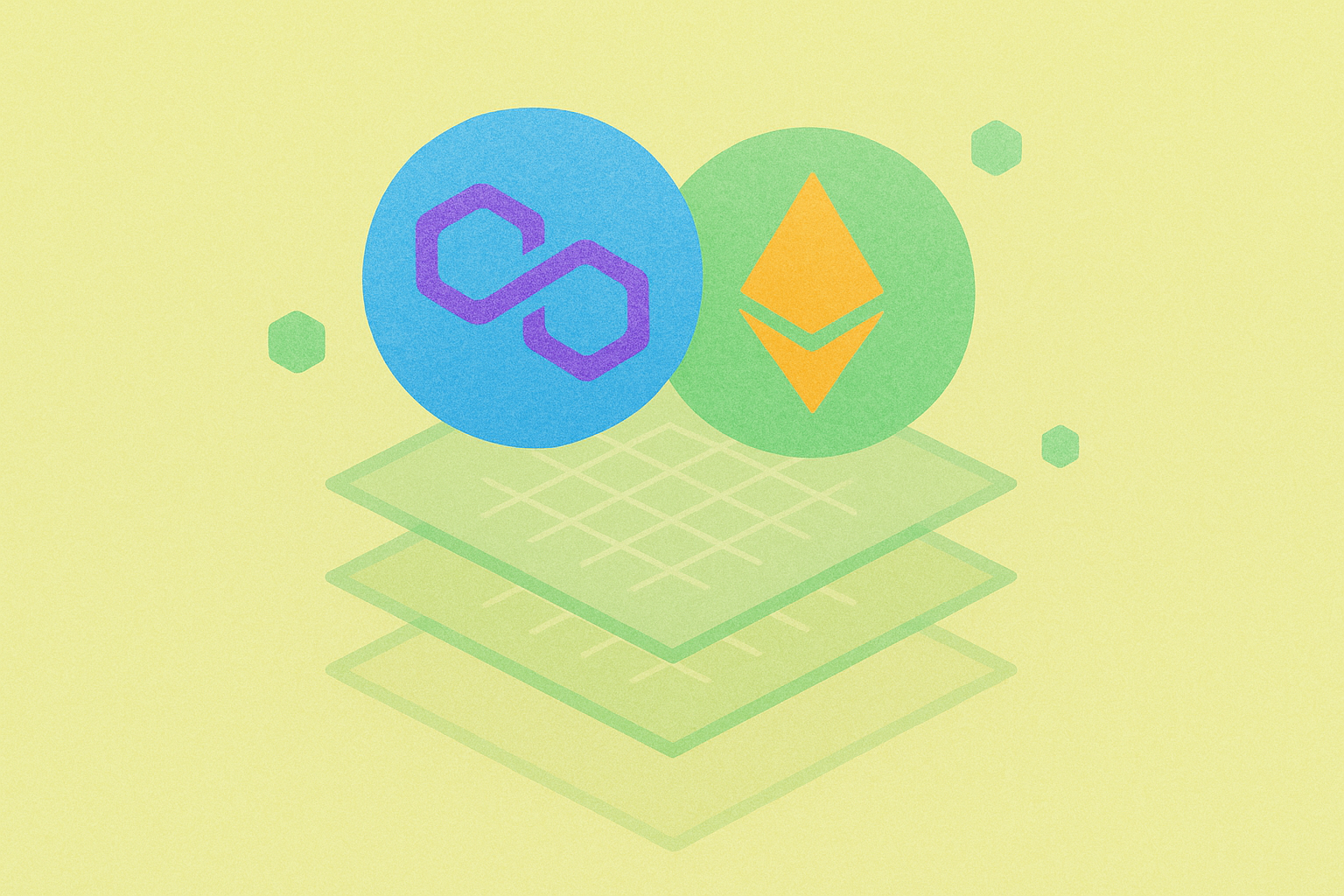
What is Polygon?
Polygon Network has emerged as one of the most significant blockchain platforms in the Web3 ecosystem, attracting partnerships with major corporations including the Walt Disney Company, Meta (Facebook), Starbucks, and Reddit. With over 219 million active users, 20,000 decentralized applications (dApps), and approximately 2.5 billion transactions processed, Polygon has established itself as a leading player in the cryptocurrency market. This article explores the fundamental aspects of Polygon, its technological infrastructure including the innovative polygon sidechain, and its growing importance in the blockchain industry.
What is Polygon in Crypto?
Polygon Network is a Web3 software platform designed to enhance interaction with the Ethereum blockchain. It functions as a "layer-2 scaling solution," meaning it operates on top of Ethereum's "layer-1" blockchain to address scalability challenges. The platform's primary objective is to make Ethereum more accessible by providing lower transaction fees and faster confirmation speeds.
The project originated in 2017 when three developers—Jaynti Kanani, Sandeep Nailwal, and Anurag Arjun—founded the Matic Network in Mumbai, India. The inspiration came from observing inefficiencies on Ethereum's mainnet, particularly during the CryptoKitties phenomenon. This blockchain game, created by Dapper Labs, allowed users to collect and breed unique NFTs representing animated cat avatars. The overwhelming demand for CryptoKitties caused significant congestion on Ethereum, driving up transaction fees and slowing payment confirmations. This event motivated the founders to develop decentralized software solutions for processing crypto payments off Ethereum's main chain.
The Matic Network launched its MATIC tokens on a major cryptocurrency exchange in 2019 and officially deployed its Ethereum scalability services in 2020. In 2021, the project rebranded to "Polygon Network," experiencing remarkable growth from a market capitalization of $100 million in January to significant heights by year end. Today, Polygon Labs oversees the development and maintenance of Polygon's online infrastructure.
How Does Polygon's Technology Work?
Polygon's technological approach to Ethereum scalability has evolved to incorporate multiple solutions. Initially, the platform focused on plasma chains—separate decentralized networks (also called "child chains") that communicate transaction data with a "parent chain" (Ethereum) using smart contracts. These autonomous coded programs execute complex tasks according to pre-coded instructions. By handling transaction data off the main chain, plasma chains reduce pressure on Ethereum and typically offer faster and more cost-effective crypto transactions.
Beyond plasma chains, Polygon introduced an Ethereum-compatible polygon sidechain shortly after its 2020 launch. While sidechains share similarities with plasma chains, they maintain greater independence from the parent chain. Rather than directly communicating every transaction to Ethereum, the polygon sidechain captures transaction snapshots at regular intervals and submits this data in batches for final confirmation on Ethereum via smart contracts. The polygon sidechain employs its own consensus algorithm—a proof-of-stake (PoS) mechanism—where network nodes must lock MATIC tokens to secure the network, confirm transfers, and earn crypto rewards. This relative independence provides developers with greater flexibility, though it involves some trade-offs in security compared to plasma chains.
In 2023, Polygon introduced another innovative scalability solution called "Polygon zkEVM." The "zk" acronym represents "zero-knowledge proofs," which are advanced cryptographic procedures used to securely verify batches of crypto transfers off-chain before sending them to the main chain. "EVM" stands for Ethereum Virtual Machine—the decentralized software infrastructure powering the Ethereum blockchain. Polygon zkEVM combines the security and speed of zero-knowledge technology with Ethereum's network architecture, creating a synthetic version of Ethereum with reduced fees and higher transaction throughput. This solution enables Ethereum developers to seamlessly create or port their dApp code directly on Polygon, enhancing user engagement and experience.
What is MATIC?
MATIC serves as the native cryptocurrency of the Polygon Network, fulfilling multiple essential functions including transaction payments, validator rewards, and network security through staking on the PoS polygon sidechain. MATIC token holders can operate validator nodes on the polygon sidechain by locking their tokens on the blockchain and collecting rewards. Those preferring not to run validator nodes can "delegate" their MATIC to staking pools through Polygon's official Staking Portal to earn a percentage of rewards. The platform enables MATIC holders to submit Polygon Improvement Proposals (PIPs) for review on Polygon's DAO and vote on network upgrades using their tokens.
As one of the most widely adopted crypto projects, MATIC is available on most major cryptocurrency exchanges and trading platforms. To locate current MATIC trading pairs, users can visit crypto price aggregator websites such as CoinMarketCap or CoinGecko, search for "MATIC," and click the "Markets" tab for a comprehensive list of platforms offering the cryptocurrency.
It's important to note that most MATIC tokens sold on centralized platforms are Ethereum-compatible tokens following the ERC-20 coding standard. These ERC-20 MATIC tokens function within the Ethereum ecosystem and are primarily used for staking digital assets, but they cannot be used to pay transaction fees on Polygon-based dApps. Users holding ERC-20 MATIC who wish to utilize financial services on Polygon must transfer their cryptocurrency to an EVM-compatible wallet like MetaMask, which handles conversions between the two networks.
Polygon Versus Ethereum
Unlike competing blockchains such as Solana, Cardano, and Avalanche—often labeled "Ethereum killers"—Polygon maintains a symbiotic relationship with Ethereum. While the polygon sidechain is technically a separate blockchain, all of Polygon's applications focus on enhancing Ethereum's convenience and efficiency. Therefore, Polygon's success is intrinsically linked to Ethereum's prosperity rather than attempting to divert users and developers to a competing layer-1 blockchain.
Despite their interconnectedness, Polygon and Ethereum exhibit critical distinctions. The polygon sidechain offers significantly faster and more affordable transaction speeds compared to Ethereum's main blockchain. On average, Polygon users pay minimal fees per transfer, with the blockchain processing over 7,000 transactions per second (TPS). In contrast, Ethereum operates at 15 TPS with variable gas fees that fluctuate based on network congestion.
However, the polygon sidechain's advantages in speed and cost come with trade-offs in decentralization and security. Despite substantial growth in the cryptocurrency market, Polygon remains considerably smaller than Ethereum in market capitalization and has fewer network participants. The polygon sidechain maintains a cap of 100 blockchain validators, while Ethereum boasts more than 500,000 validators. Additionally, earlier reports indicated concerns about key control concentration, though the platform has since taken steps to address these security considerations.
To address security and decentralization concerns, Polygon has implemented measures to transition away from concentrated wallet storage. The platform has also established a decentralized autonomous organization (DAO) governance structure, giving community members input in decision-making processes. As Polygon continues to evolve, developers plan to gradually reduce centralized control to achieve greater decentralization, strengthening the polygon sidechain's security model.
What are Polygon's Use Cases?
Similar to Ethereum, Polygon supports diverse Web3 applications. While thousands of dApps already operate within Polygon's ecosystem, several categories attract the most user activity:
Decentralized Finance (DeFi): DeFi dApps offer cryptocurrency financial services including trading, staking, and borrowing without centralized intermediaries. The polygon sidechain's EVM compatibility enables existing Ethereum DeFi dApps to easily integrate Polygon's faster and cheaper services. Popular Ethereum DeFi platforms now operating on the polygon sidechain include various decentralized exchanges and lending protocols.
NFT Trading: Non-fungible tokens (NFTs) are cryptocurrencies with unique blockchain addresses, often compared to virtual collectibles. Major NFT marketplaces now support Polygon NFT trading on the polygon sidechain. Companies like Reddit and Starbucks collaborate with Polygon to offer exclusive NFTs to their community members.
Blockchain Games: Decentralized games represent an emerging field combining traditional online gaming with blockchain technology. Beyond providing new entertainment experiences, blockchain-based games often include incentives such as in-game crypto rewards and collectible NFTs. Examples of blockchain games in Polygon's ecosystem include The Sandbox and Benji Bananas, all leveraging the polygon sidechain infrastructure.
Conclusion
Polygon has established itself as a crucial infrastructure layer for the Ethereum ecosystem, successfully addressing scalability challenges while maintaining compatibility with Ethereum's network. Through innovative technological solutions including plasma chains, the polygon sidechain, and zkEVM, Polygon offers users faster transaction speeds and lower fees without requiring migration to alternative blockchains. The polygon sidechain architecture provides developers with flexibility and efficiency while maintaining connection to Ethereum's security. The platform's growing adoption by major corporations, extensive user base of over 219 million active users, and ecosystem of 20,000 dApps demonstrate its significant impact on the blockchain industry. While challenges related to decentralization and security continue to be addressed, Polygon's commitment to implementing DAO governance and reducing centralized control indicates a path toward sustainable growth. As the Web3 landscape continues to evolve, Polygon's role as a layer-2 scaling solution, particularly through its polygon sidechain technology, positions it as an essential component of Ethereum's long-term success and the broader blockchain ecosystem's development.
FAQ
Is Polygon sidechain?
Yes, Polygon is a Layer 2 sidechain solution for Ethereum. It processes transactions off-chain, reducing fees and increasing transaction throughput. Polygon uses Proof of Stake consensus and bridges to connect assets between Ethereum and its sidechains.
Is Polygon obsolete?
No, Polygon is not obsolete. It maintains strong development momentum, a thriving ecosystem, and continues to evolve as a leading Layer 2 scaling solution with growing transaction volume and developer adoption.
Why is Polygon so cheap?
Polygon's low price reflects its design as a cost-efficient sidechain. With minimal transaction fees and high throughput capacity, it prioritizes accessibility over token scarcity. The abundant token supply and focus on utility rather than speculation keep pricing affordable for users and developers.
What is the difference between Polygon and other Layer 2 solutions like Arbitrum or Optimism?
Polygon uses zk-rollups for scaling, while Arbitrum and Optimism employ optimistic rollups. Polygon emphasizes broader ecosystem and interoperability, whereas Arbitrum and Optimism focus on transaction speed and cost efficiency on Ethereum.
How does Polygon sidechain improve transaction speed and reduce gas fees compared to Ethereum mainnet?
Polygon processes 68 million transactions daily versus Ethereum's 34 million, with average fees of $0.0021 per transaction compared to Ethereum's $0.18, delivering significantly faster speeds and lower costs through its sidechain architecture.
What is Avalanche (AVAX): A Complete Fundamentals Analysis of Whitepaper Logic, Use Cases, and Technical Innovation
Complete Guide to Blockchain Gas Fees in Web3

Understanding Polygon Blockchain: A Comprehensive Guide

Layer 2 Scaling Made Easy: Bridging Ethereum to Enhanced Solutions
ZK Rollups Explained: Enhancing Blockchain Scalability Through Zero-Knowledge Solutions

Understanding the Foundation of Polkadot

What is BULLA coin: analyzing whitepaper logic, use cases, and team fundamentals in 2026

What is on-chain data analysis and how does it reveal whale movements and active addresses in crypto?

What is Vodra (VDR) crypto: whitepaper logic, use cases, and fundamentals analysis for 2026

How do cryptocurrency competitors compare in market share, performance, and user adoption in 2026?

What is on-chain data analysis and how does it predict crypto market trends
