Unveiling zkLink: A New Age in Multi-Chain Infrastructure
Understanding zkLink
zkLink represents a revolutionary advancement in multi-chain trading infrastructure, leveraging the sophisticated power of zero-knowledge proof (ZK-proof) technology to create a seamless and secure trading environment. While this technology may initially appear complex, its fundamental purpose is to enhance blockchain scalability and security in an elegant manner.
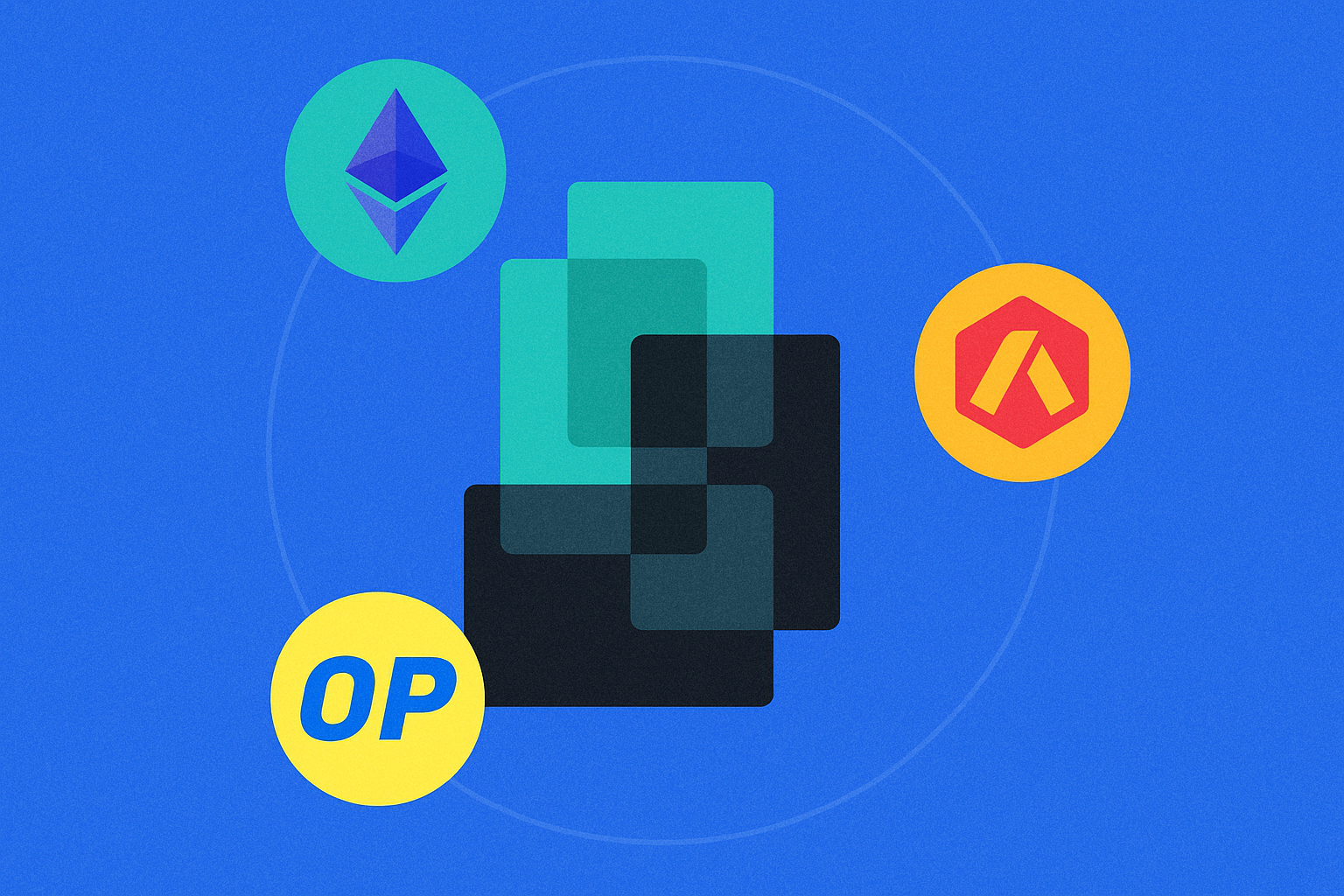
At its core, zkLink operates as a Layer 2 (L2) platform with a primary focus on multi-chain decentralized trading capabilities. What distinguishes zkLink from traditional solutions is its ability to aggregate liquidity from diverse blockchain ecosystems. This includes various Layer 1 (L1) EVM-compatible blockchains such as Ethereum, BNB Chain, and Avalanche, as well as advanced L2 rollups including Optimism, Arbitrum, and zkSync Era. By bridging these disparate networks, zkLink creates a unified liquidity pool that addresses one of the most pressing challenges in decentralized finance: fragmented liquidity across multiple chains.
The foundation of zkLink's efficiency and security lies in its innovative implementation of ZK-proof technology. This cryptographic approach enables the platform to achieve high transaction throughput while maintaining low-cost application deployment, all without compromising on security standards. Through this technological framework, zkLink empowers its decentralized applications (DApps) to access multi-chain liquidity effortlessly. These applications span a wide range of use cases, including decentralized exchanges (DEXs), derivatives trading platforms, and NFT marketplaces. The seamless integration of native assets from different blockchain networks creates substantial liquidity pools, effectively solving the persistent problem of limited liquidity that individual chains face when operating in isolation.
The Emergence of Innovative Layer 2 Solutions
In recent years, Ethereum's Layer 2 network landscape has undergone significant transformation. Traditional approaches primarily relied on Optimism or ZK-rollup technology, both developed with the goal of scaling the Ethereum mainnet and reducing transaction fees that often hindered user adoption. However, as blockchain technology continues its rapid evolution, the industry is witnessing the emergence of more unconventional and sophisticated L2 solutions.
Platforms such as Blast, Manta Pacific, and ZKFair represent this new generation of Layer 2 infrastructure. These innovative solutions combine various advanced technologies, creating hybrid architectures that ensure both groundbreaking innovation and enterprise-grade security. Unlike their predecessors, these platforms don't simply focus on transaction rollups; instead, they introduce novel functionalities and capabilities that fundamentally redefine what Layer 2 solutions can achieve.
zkLink exemplifies this paradigm shift in the Layer 2 ecosystem. Rather than concentrating solely on expanding the Ethereum mainnet's capacity, zkLink's architecture is designed from the ground up to enable true multi-chain integration. This represents a fundamental reimagining of what Layer 2 solutions can accomplish, signaling the industry's movement towards more expansive and interconnected blockchain technologies. This evolution marks a new era where blockchain platforms are no longer isolated entities but rather interconnected components of a larger, more efficient ecosystem.
A Comprehensive Overview of the zkLink Protocol
The zkLink Protocol distinguishes itself as a sophisticated multi-chain ZK-rollup infrastructure, built upon four distinct yet interconnected layers: the settlement layer, the execution layer, the sequencing layer, and the Data Availability (DA) layer. This modular architecture is intentionally designed to be decoupled, providing developers with the flexibility to customize their application rollup deployment according to specific requirements. The protocol's most groundbreaking innovations are primarily concentrated in its execution and settlement layer solutions, which work in harmony to deliver unprecedented performance and security.
Settlement Layer: Reinventing Transaction Settlement
zkLink introduces two pioneering settlement solutions that address different use cases and network requirements: zkLink Nexus and zkLink Origin. These solutions represent a significant leap forward in how transactions are settled across multiple blockchain networks.
zkLink Nexus operates as a Layer 3 (L3) rollup solution that leverages Ethereum's ZK-L2s infrastructure for secure and verifiable transaction processing. By settling transactions and state transitions directly on Ethereum's ZK-L2s, Nexus inherits the robust security guarantees of the Ethereum ecosystem while achieving superior scalability. This approach ensures that every transaction benefits from cryptographic verification, creating a trust-minimized environment where users can trade with confidence.
zkLink Origin takes a more expansive approach, extending support beyond ZK-L2s to include Optimistic Rollup Layer 2s (OP-L2s), Alternative Layer 1 blockchains (Alt-L1s), and ZK-L2s. This broader compatibility is achieved through the integration of a Light Oracle Network, which facilitates secure cross-chain communication without compromising on security or decentralization. The Light Oracle Network acts as a bridge, enabling zkLink Origin to verify and settle transactions across diverse blockchain architectures while maintaining the integrity and security standards required for financial applications.
Execution Layer: Customizable Transaction Processing
The execution layer provides developers with two distinct environments for processing transactions: TSzkVM and zkEVM. This dual-environment approach offers flexibility, allowing developers to choose the execution framework that best aligns with their application's specific requirements.
TSzkVM is optimized for high-performance transaction processing, offering a streamlined environment for applications that prioritize speed and efficiency. Meanwhile, zkEVM provides full compatibility with Ethereum Virtual Machine (EVM) smart contracts, enabling developers to deploy existing Ethereum applications on zkLink with minimal modifications. Both environments are designed to execute transactions that result in valid state transitions, ensuring that all operations maintain the integrity of the blockchain state while delivering the performance characteristics needed for real-world trading applications.
Sequencing Layer: Orchestrating Transactions
The sequencing layer plays a crucial role in organizing and batching user transactions before they are submitted to the settlement layer. This layer is responsible for determining the order in which transactions are processed, a critical function that directly impacts network fairness and efficiency.
zkLink is actively moving towards implementing decentralized sequencer solutions, partnering with cutting-edge projects like Espresso, Astria, and Fairblock. These decentralized sequencing mechanisms aim to eliminate single points of failure and prevent potential manipulation of transaction ordering. By distributing the sequencing responsibility across multiple independent nodes, zkLink enhances network security and ensures that all users receive fair and equitable treatment, regardless of their transaction size or timing.
Data Availability Layer: Ensuring System Resilience
The Data Availability (DA) layer serves as a critical safeguard, ensuring that the information needed to reconstruct rollup states remains accessible even during network interruptions or unexpected failures. This layer is essential for maintaining the integrity and recoverability of the entire system.
zkLink supports multiple DA solutions to provide redundancy and flexibility. The platform can utilize the primary chain for data availability, ensuring that all critical state information is stored on the most secure and decentralized networks. Additionally, zkLink supports Validium mode, which offers an alternative approach to data availability that can reduce costs while maintaining security guarantees. Looking forward, zkLink plans to integrate third-party DA solutions and potentially establish a Data Availability Committee (DAC), which would provide additional layers of assurance and redundancy for critical system data.
Supported Networks on zkLink
zkLink's multi-chain architecture supports an extensive array of blockchain networks, demonstrating its commitment to creating a truly interconnected ecosystem. This broad network support enables users to access liquidity and trade assets across multiple chains seamlessly, without the friction typically associated with cross-chain transactions.
The platform's network support is organized into several categories, each serving different use cases and user requirements:
| Category | Network | zkLink Nexus | zkLink Origin |
|---|---|---|---|
| Mainnet | Ethereum | ✓ | ✓ |
| Ethereum ZK-Rollup L2s | zkSync Era | ✓ | ✓ |
| StarkNet | ✓ | ✓ | |
| Scroll | ✓ | ✓ | |
| Linea | ✓ | ✓ | |
| Taiko | ✓ | ✓ | |
| Polygon zkEVM | ✓ | ✓ | |
| Ethereum OP-Rollup L2s | Arbitrum One | ✓ | |
| Optimism | ✓ | ||
| EVM-Compatible L1s | BNB Chain | ✓ | |
| Polygon POS | ✓ | ||
| Avalanche | ✓ |
This comprehensive network support ensures that zkLink can serve as a universal bridge between different blockchain ecosystems, enabling users to access the full spectrum of decentralized finance opportunities regardless of which network their assets are currently held on.
Exploring zkLink's Diverse Ecosystem Projects
zkLink's ecosystem comprises three flagship projects, each designed to showcase the platform's capabilities while serving distinct use cases within the decentralized finance landscape. These projects demonstrate how zkLink's infrastructure can be leveraged to create innovative financial applications that transcend the limitations of single-chain solutions.
ZKEX: A Multi-Chain Order Book Decentralized Exchange
ZKEX stands as the pioneering ecosystem project built on zkLink, introducing a sophisticated multi-chain order book DEX that combines the security of zero-knowledge proofs with the user experience of centralized exchanges. This platform represents a significant advancement in decentralized trading infrastructure, offering features that were previously only available on centralized platforms.
The platform delivers a trading experience that rivals centralized exchanges, featuring zero slippage execution, instant transaction finality, and exceptional capital efficiency. Unlike automated market maker (AMM) based DEXs, ZKEX's order book model ensures that traders can execute large orders without experiencing significant price impact, a critical feature for institutional and high-volume traders.
Despite offering a centralized exchange-like experience, ZKEX remains fully decentralized and non-custodial. Users maintain complete control over their private keys and assets at all times, eliminating the counterparty risk associated with centralized platforms. The platform employs zero-knowledge proofs to verify all transactions cryptographically, creating a trust-minimized environment where users can trade with confidence.
ZKEX supports spot trading across multiple blockchain networks, with an ambitious roadmap that includes derivatives trading capabilities. The platform has successfully integrated numerous blockchain networks, including Ethereum, Avalanche, BSC, BNB Chain, Polygon, Linea, StarkNet, Era zkSync, Arbitrum, Optimism, and Base, with additional networks planned for future integration.
One of ZKEX's most innovative features is its unified stablecoin approach. The platform supports various fiat-backed stablecoins including USDC, USDT, and DAI, automatically merging them into a unified 'USD' equivalent within users' ZKEX wallets. This elegant solution simplifies trading pairs and streamlines the trading process, eliminating the need for users to manage multiple stablecoin balances or navigate complex trading pair combinations.
zkJump: Simplifying Cross-Chain Asset Transfers
zkJump addresses one of the most persistent challenges in the multi-chain ecosystem: the complexity and risk associated with moving assets between different blockchain networks. This cross-chain bridge streamlines the transfer of native assets across various blockchains, eliminating the need for intermediate wrapped tokens that often introduce additional complexity and risk.
By leveraging zkLink's robust infrastructure, zkJump connects an extensive array of Layer 1 and Layer 2 networks, creating a seamless pathway for asset movement. What distinguishes zkJump from traditional bridge solutions is its unique approach to liquidity. Rather than maintaining its own liquidity pools, which can be vulnerable to attacks and require significant capital commitment, zkJump relies on the liquidity of DApps built on zkLink's infrastructure.
This innovative approach offers several advantages. First, it ensures top-tier security by distributing risk across multiple applications rather than concentrating it in a single bridge contract. Second, it provides users with a more intuitive and user-friendly asset management experience, as they can move assets between chains without worrying about liquidity constraints or complex token wrapping mechanisms. Finally, it creates a more capital-efficient ecosystem where liquidity is utilized more effectively across multiple applications.
OpenWorld: Bridging Real-World Assets and Cryptocurrencies
OpenWorld represents an ambitious vision to merge traditional finance with decentralized finance, creating a platform where real-world assets (RWAs) and cryptocurrencies can be traded seamlessly within a DEX format. This innovative approach combines the operational efficiency of centralized finance (CeFi) with the transparency and accessibility of decentralized finance (DeFi).
The platform aims to democratize access to financial markets by creating a secure, efficient, and transparent trading environment that is accessible to users worldwide, regardless of their geographic location or financial status. OpenWorld addresses several critical challenges that have historically limited the adoption of decentralized finance in traditional asset markets.
Investment accessibility is significantly improved through OpenWorld's platform, as users can access a wide range of real-world assets that were previously only available through traditional financial institutions. Security concerns are addressed through the platform's non-custodial architecture and cryptographic verification mechanisms, ensuring that users maintain control over their assets while benefiting from institutional-grade security.
The platform also tackles the persistent problem of liquidity fragmentation by aggregating liquidity across multiple chains and asset classes. Through its support for perpetual contracts and order book trading model, OpenWorld enables efficient price discovery and execution for both real-world assets and cryptocurrencies. This hybrid approach creates new opportunities for traders and investors, allowing them to construct diversified portfolios that span both traditional and digital assets within a single, unified platform.
FAQ
What is zkLink? How does it differ from other multi-chain solutions?
zkLink is a zero-knowledge proofing multi-chain infrastructure enabling seamless cross-chain transactions and liquidity aggregation. Unlike traditional solutions, zkLink uses ZK technology for secure, efficient, and unified multi-chain experiences without intermediaries or wrapped tokens.
What are the specific advantages of zkLink using zero-knowledge proof technology?
zkLink leverages zero-knowledge proofs to enable privacy-preserving transactions, reduce computational overhead, enhance cross-chain scalability, and ensure data integrity without revealing sensitive information, making it ideal for secure multi-chain infrastructure.
Which blockchain networks does zkLink support? How does it achieve cross-chain interaction?
zkLink supports major blockchains including Ethereum, Arbitrum, Polygon, and Optimism. Cross-chain interaction is achieved through zero-knowledge proofs, enabling secure and efficient asset transfers and data synchronization across multiple chains without intermediaries.
What are the fees and speed for cross-chain transactions using zkLink?
zkLink offers ultra-low transaction fees through zero-knowledge proofs and achieves near-instant settlement across multiple blockchains. Users benefit from optimized routing and batch processing, significantly reducing costs while maintaining high-speed execution compared to traditional cross-chain bridges.
How is zkLink's security ensured? What are the potential risks?
zkLink employs zero-knowledge proofs and multi-chain verification to ensure security. Smart contracts undergo rigorous audits, and its decentralized architecture reduces single points of failure. Potential risks include smart contract vulnerabilities, cross-chain bridge risks, and evolving regulatory uncertainties in blockchain infrastructure.
What practical application scenarios is zkLink suitable for? How can DeFi projects integrate it?
zkLink enables cross-chain swaps, lending, and yield farming across multiple blockchains. DeFi projects integrate via zkLink's SDK and smart contracts, accessing unified liquidity pools and reducing fragmentation while maintaining security through zero-knowledge proofs.
What is zkLink's roadmap? What features will be supported in the future?
zkLink is advancing multi-chain ZK aggregation with planned expansions including enhanced cross-chain interoperability, additional blockchain network support, optimized transaction throughput, and advanced privacy features. The roadmap focuses on scaling ecosystem partnerships and improving user experience across decentralized finance applications.

Demystifying ZK Technology: A Comprehensive Guide
Understanding Zero Knowledge Proof: Simplified Explanation of ZK Concepts

Understanding Zero-Knowledge Technology: What Does 'ZK' Mean?
Understanding the Concept of ZK Technology
Understanding Zero-Knowledge Technology in Crypto

How Active Is the ZK Community and Ecosystem in 2025?
Bull vs. Bear Markets in Crypto: Understanding Market Trends
What is the current cryptocurrency market overview: rankings, trading volume, and liquidity trends today
QR Code Payment Trends You Need to Know in Recent Years
What Do Crypto Derivatives Market Signals Tell Us About Future Price Movements: Futures Open Interest, Funding Rates, and Liquidation Data
Vertus (VERT) Airdrop Guide: Listing Dates, Price Prediction and How to Qualify