

LCP_hide_placeholder
fomox
Search Token/Wallet
/

# What Causes Crypto Price Volatility: Historical Trends, Support Levels & Trading Analysis
2025-12-28 02:55:27
Altcoins
Crypto Insights
Crypto Trading
Macro Trends
Trading Bots
Article Rating : 3
110 ratings
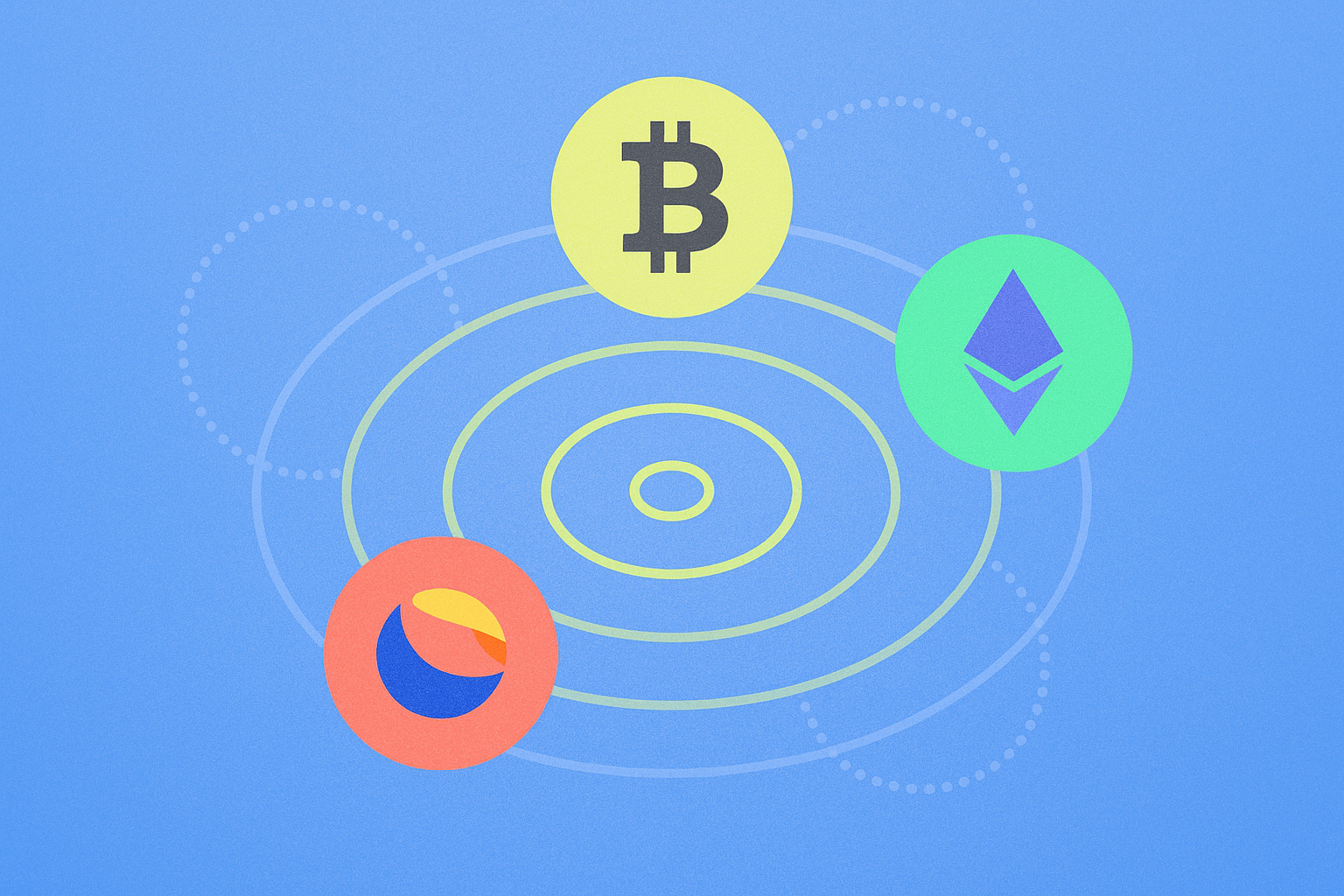
# Article Introduction This comprehensive guide explores cryptocurrency price volatility through historical trends, technical analysis, and practical trading strategies. Discover how **multi-year market cycles**, **support and resistance levels**, and **volatility metrics** shape trading decisions on Gate and beyond. Learn to identify critical price points, understand correlation patterns with Bitcoin and Ethereum, and assess risk through quantifiable volatility measurements. Designed for traders and investors seeking to navigate extreme price swings, this article reveals predictable patterns within crypto volatility while providing actionable frameworks for managing positions during market stress. Whether analyzing LUNA's dramatic price movements or applying the 1% risk rule, readers gain essential tools to distinguish opportunities from risks in volatile cryptocurrency markets.
# What Causes Crypto Price Volatility: Historical Trends, Support Levels & Trading Analysis

Cryptocurrency markets demonstrate distinct volatility patterns that repeat across multiple timeframes, creating recognizable market cycles that traders use to identify key opportunities and risks. Recent historical trends showcase this principle vividly—tokens like LUNA experienced dramatic price swings within just months, declining over 70% annually while simultaneously recording 40% monthly gains, exemplifying the intensity of crypto market cycles.

These historical price trends typically follow predictable phases: rapid accumulation periods, explosive growth phases, euphoric peaks, and painful corrections. Multi-year analysis reveals that cryptocurrency volatility intensifies during specific market conditions, with correction cycles often erasing 50-90% from previous highs. The extreme market sentiment shifts—from euphoria to panic—drive these cyclical patterns more aggressively than traditional assets experience.

Key market cycles emerge from both macroeconomic factors and crypto-specific catalysts. When regulatory news breaks or broader market downturns occur, cryptocurrency volatility spikes dramatically. Conversely, positive sentiment and institutional adoption trigger sustained uptrends with reduced volatility.

Understanding these historical volatility patterns proves essential for traders identifying support levels and resistance zones. Each market cycle creates psychological price points that often hold during subsequent corrections. Technical analysts leverage these multi-year price movement patterns to forecast where assets might find support, making cycle analysis fundamental to effective trading strategy and risk management in cryptocurrency markets.

Support and Resistance Levels: Critical Price Points Driving Trading Decisions

Support and resistance levels serve as fundamental anchors in technical analysis, directly shaping how traders identify profit opportunities and manage risk during periods of crypto volatility. These critical price points represent psychological and historical barriers where buying or selling pressure typically intensifies, making them essential reference points for anyone analyzing cryptocurrency markets.

A support level acts as a price floor where demand historically strengthens, preventing further downward movement and often triggering bullish signals. Conversely, a resistance level functions as a ceiling where supply increases, causing prices to reverse downward. Understanding these price points enables traders to make informed trading decisions rather than reacting emotionally to market swings. Luna's price history demonstrates this dynamic clearly—the asset encountered significant resistance around $0.1340 before experiencing a sharp decline, then found support near $0.0900-$0.1000 during subsequent recovery phases.

These support and resistance levels become particularly crucial during volatile periods when sudden price swings can liquidate unprepared positions. Traders use multiple technical analysis tools to identify these zones, including historical price data, moving averages, and volume patterns visible on exchanges like gate. By recognizing where previous buying and selling activity concentrated, traders anticipate potential reversals and plan entry or exit points accordingly.

The effectiveness of support and resistance levels lies in their self-fulfilling nature—as more traders recognize these price points, their collective actions reinforce these barriers. When prices approach established resistance, selling pressure increases; when approaching support, buying interest intensifies. This creates predictable trading opportunities within the broader context of crypto volatility, allowing disciplined traders to align their decisions with objective technical markers rather than speculation.

Recent Price Movement Analysis: Correlation with Bitcoin and Ethereum Dynamics

The cryptocurrency market's interconnected nature means that altcoins like LUNA frequently mirror broader Bitcoin and Ethereum dynamics. Recent price movement analysis reveals this correlation pattern distinctly, with LUNA's trading behavior reflecting significant shifts in the larger market environment. On October 10, 2025, LUNA experienced a dramatic collapse, plummeting from approximately $0.1347 to $0.0901 in a single trading session—a sharp reminder of how correlated assets respond to systemic market stress.

Following this severe pullback, LUNA demonstrated price recovery patterns typical of altcoins attempting to reestablish support levels amid volatile trading conditions. The December rally proved particularly instructive, with the token surging from $0.07404 to $0.248 between early and mid-December, showcasing the volatility characteristic of smaller-cap cryptocurrencies when Bitcoin and Ethereum momentum shifts favorably.

Current market sentiment has turned cautious, with fear indicators suggesting extreme apprehension among traders. Trading analysis indicates that LUNA currently trades around $0.10367, near critical support regions established during its recent consolidation phase. The 30-day performance of +40.40% contrasts sharply with the one-year decline of -76.33%, highlighting how price movement dynamics shift dramatically based on timeframe perspective and correlation with macro cryptocurrency trends.

For traders monitoring LUNA through gate, understanding these correlation patterns with Bitcoin and Ethereum remains essential for anticipating support level breaks and recovery potential. The token's sensitivity to broader market dynamics underscores why price analysis must always contextualize individual coin movements within the larger digital asset ecosystem framework.

Volatility Metrics and Risk Assessment: Understanding Price Fluctuation Drivers

Volatility metrics provide traders with quantifiable tools to assess and predict price movement patterns in cryptocurrency markets. These measurements track the magnitude and speed of price changes, helping investors gauge market risk exposure. Common metrics include percentage price changes over specific timeframes—24-hour movements, weekly fluctuations, and longer-term trends—alongside trading volume analysis, which reveals the intensity of buying and selling pressure.

Price fluctuation drivers often become visible through volatility spikes in trading data. Terra (LUNA) exemplifies extreme market behavior, experiencing a catastrophic crash on October 10, 2025, when price plummeted 93.3% to record lows of $0.0459, while trading volume surged dramatically to 19.6 million units from typical daily volumes of 1-3 million. This volatility spike reflected massive liquidations and panic selling. Subsequently, LUNA demonstrated significant recovery potential, rebounding to $0.248 by December—representing a 441% recovery that highlighted how volatility metrics serve dual purposes: identifying both risk periods and potential trading opportunities.

Risk assessment frameworks rely on these volatility measurements to calculate position sizing, stop-loss levels, and portfolio allocation strategies. Understanding whether price fluctuations stem from market-wide factors or asset-specific events helps traders distinguish systematic risk from idiosyncratic risk, enabling more informed decision-making on gate and other trading platforms.

FAQ

What causes cryptocurrency volatility?

Crypto volatility stems from market sentiment shifts, regulatory news, macroeconomic factors, trading volume fluctuations, and technological developments. Limited liquidity amplifies price swings. Institutional adoption and geopolitical events also significantly impact price movements.

What is the 1% rule in crypto?

The 1% rule is a risk management strategy where traders risk only 1% of their total capital on a single trade. This limits potential losses and helps preserve funds during market downturns, allowing traders to maintain longevity in volatile crypto markets.

What are the key factors influencing the volatility of cryptocurrency prices and how do they compare to traditional financial assets?

Crypto volatility stems from market sentiment, regulatory news, trading volume, and adoption rates. Unlike traditional assets, crypto operates 24/7 with lower liquidity and younger markets, causing faster price swings. Technological developments and macroeconomic factors also drive significant movements.

Why is the crypto market so volatile today?

Crypto volatility stems from multiple factors: sudden regulatory announcements, macroeconomic shifts, large institutional trades, market sentiment swings, and limited liquidity compared to traditional assets. Technical support and resistance levels also trigger sharp price movements as traders react to key levels.

How do support and resistance levels help predict cryptocurrency price movements?

Support and resistance levels identify key price zones where buying or selling pressure intensifies. When price approaches support, buyers typically step in, preventing further decline. At resistance, sellers emerge, capping upward movement. Traders use these levels to anticipate bounces or breakouts, timing entries and exits for profitable trades.

What are the historical patterns of crypto volatility and how have they changed over time?

Early crypto showed extreme volatility with 50-90% swings. As markets matured, volatility decreased but remains higher than traditional assets. Recent patterns show correlation with macroeconomic factors, regulatory news, and exchange volume. Overall trend indicates stabilization as institutional adoption grows.

What trading strategies can help manage risks during periods of high cryptocurrency volatility?

Use stop-loss orders to limit losses, diversify across multiple assets, reduce position sizes, trade with longer timeframes, and maintain adequate capital reserves. Dollar-cost averaging and hedging strategies also help mitigate volatility risks effectively.

FAQ

What happened to Luna Coin?

Luna experienced significant collapse in 2022 due to UST stablecoin depegging, causing its price to crash from $80 to near zero. The ecosystem faced insolvency, but Luna 2.0 launched as a recovery chain. The project continues evolving with new developments and community rebuilding efforts.

Does Luna Coin have a future?

Yes. Luna Coin demonstrates strong fundamentals with continuous ecosystem development, growing DeFi adoption, and increasing institutional interest. The project's technological innovations and strategic partnerships position it well for long-term growth and expansion in the crypto market.

Is Luna a good crypto to buy?

Luna offers strong fundamentals with growing ecosystem adoption and developer activity. Its innovative blockchain technology and increasing institutional interest make it an attractive investment opportunity with significant growth potential in the Web3 space.

Can Luna reach $1 dollar?

Yes, Luna can reach $1. With continuous ecosystem development, increased adoption, and potential market recovery, Luna has the potential to recover to $1 and beyond. Market conditions and project fundamentals will be key drivers.
* The information is not intended to be and does not constitute financial advice or any other recommendation of any sort offered or endorsed by Gate.

Share

Content

Support and Resistance Levels: Critical Price Points Driving Trading Decisions

Recent Price Movement Analysis: Correlation with Bitcoin and Ethereum Dynamics

Volatility Metrics and Risk Assessment: Understanding Price Fluctuation Drivers

FAQ

FAQ

Related Articles
Pi Network Launch Status and Timeline Update

Pi Network Launch Status and Timeline Update

# Introduction This comprehensive guide details Pi Network's evolution from mobile mining launch in March 2019 through its transformative February 20, 2025 Open Network release. Readers will discover complete timeline information, understand the February 2025 mainnet launch mechanics, and learn how this milestone impacts existing miners and new users. The article examines launch-day price dynamics, ecosystem achievements including 10.14 million migrated pioneers and 100+ operational dApps, and upcoming development phases. Whether you're an established Pi holder, prospective participant, or cryptocurrency enthusiast, this guide provides essential insights into Pi Network's current status, trading availability on Gate, and long-term ecosystem expansion roadmap through 2025 and beyond.
2025-12-27 10:12:27
DEX Aggregator Platform Upgrade: Enhanced Trading Experience
DEX Aggregator Platform Upgrade: Enhanced Trading Experience

This comprehensive guide explores top decentralized platforms optimized for crypto trading, with focus on a major DEX aggregator's recent infrastructure upgrades. The platform empowers traders through real-time market analysis across 130+ blockchain networks, intelligent smart money tracking capabilities, and streamlined execution across 500+ decentralized exchanges. Users benefit from advanced onchain analysis tools that categorize wallet holders, customizable alert systems, and dual interface modes—Easy Mode for newcomers and Meme Mode for high-frequency token trading. Enhanced security features include MEV protection, X Routing technology with 40-millisecond execution speeds, dynamic fraud detection, and audits by leading security firms like CertiK and Hacken. Supporting 25+ blockchain networks with self-custody architecture, this platform bridges the gap between professional traders and newcomers while maintaining robust asset control and security protocols essential for decentralized finance participatio
2026-01-12 16:18:31
How Does XRP's Token Economic Model Differ from Other Cryptocurrencies?

How Does XRP's Token Economic Model Differ from Other Cryptocurrencies?

This article examines XRP's unique token model, highlighting its fixed 100 billion supply and its strategic usage that contrasts with mining-based cryptocurrencies. It addresses the need for institutional stability by detailing Ripple's controlled distribution via escrow, appealing to financial entities seeking reduced volatility. Key insights include XRP's suitability for cross-border transactions and its alignment with regulatory norms that favor institutional investors. Structured logically, the article begins with XRP's supply model, moves through strategic reserves, and concludes with institutional impacts.
2025-12-08 01:11:36
What Is the Current Market Overview for Cardano (ADA) in 2025?
What Is the Current Market Overview for Cardano (ADA) in 2025?

The article provides a comprehensive overview of Cardano's market status as of December 2025, emphasizing its position as the eighth largest cryptocurrency by market cap, valued at $15.21 billion amidst market volatility. Readers will gain insights into ADA's price movements, trading activity, and tokenomics, including a 24-hour trading volume of $643.18 million. The piece presents valuable data on ADA's circulating supply and staked tokens, highlighting its controlled inflationary model's role in fostering investor confidence. It caters to traders, investors, and blockchain enthusiasts keen on understanding Cardano's current market dynamics and potential stability.
2025-12-04 04:30:32
What Are the Key Crypto Derivatives Market Signals in 2026: Futures Open Interest, Funding Rates, and Liquidation Data?

What Are the Key Crypto Derivatives Market Signals in 2026: Futures Open Interest, Funding Rates, and Liquidation Data?

# Article Introduction This comprehensive guide decodes crypto derivatives market signals through three critical metrics: futures open interest, funding rates, and liquidation data. Readers will discover how the $100 billion surge in crypto derivatives reflects institutional dominance, how positive funding rates signal bullish sentiment and short squeeze opportunities, and what the 70/30 long-short ratio with $6.2 million liquidations reveals about market stress. The article addresses essential needs for traders and investors seeking to understand derivatives positioning, manage leverage risk on Gate, and identify market turning points. Structured progressively from market participation indicators to sophisticated position analysis, this guide equips readers with actionable derivatives signals for navigating 2026's evolving crypto landscape.
2026-01-03 04:32:53
Top Cryptocurrencies to Watch for Future Growth in 2026

Top Cryptocurrencies to Watch for Future Growth in 2026

This article explores the promising growth of cryptocurrencies leading up to 2026, highlighting key factors that could drive substantial returns for investors, including technological advancements, institutional adoption, and regulatory clarity. It provides insights into high-potential tokens like SUI, DOGE, ADA, MAV, and SNORT, emphasizing strategies to build balanced portfolios with a mix of core assets and emerging altcoins. Targeting investors and crypto enthusiasts, the article offers a structured approach to identify and capitalize on the most promising digital assets, while also discussing secure trading and storage solutions.
2025-12-21 07:50:52
Recommended for You
What is BULLA coin: analyzing whitepaper logic, use cases, and team fundamentals in 2026

What is BULLA coin: analyzing whitepaper logic, use cases, and team fundamentals in 2026

BULLA coin introduces decentralized accounting and on-chain data management innovation built on BNB Smart Chain, eliminating intermediaries while ensuring real-time transaction verification. The platform addresses critical gaps in cryptocurrency infrastructure by embedding accounting logic directly into smart contracts, enabling transparent audit trails and regulatory compliance. Real-world applications include seamless transaction imports across multiple exchanges, comprehensive crypto portfolio tracking, and secure record-keeping for investors. Trade import tools enhance user experience by automating data categorization and consolidation. Founded in 2021 by blockchain architect Benjamin with support from experienced fintech designers and engineers, BULLA Networks demonstrates active development momentum with continuous smart contract iterations through early 2026. The 2026-2027 strategic roadmap prioritizes network infrastructure expansion and enhanced security protocols, positioning BULLA as a robust decen
2026-02-08 08:20:10
How does MYX token's deflationary tokenomics model work with 100% burn mechanism and 61.57% community allocation?

How does MYX token's deflationary tokenomics model work with 100% burn mechanism and 61.57% community allocation?

This article examines MYX token's innovative deflationary tokenomics, featuring a distinctive 61.57% community allocation and 100% burn mechanism. The community-focused distribution empowers token holders through MYX DAO governance while ensuring value flows back to ecosystem participants. The 100% burn mechanism systematically removes node-generated revenue from circulation, reducing the total supply from one billion tokens and creating genuine scarcity. This supply-driven deflation counters inflation pressures and strengthens long-term holder value without requiring external demand. The combination of broad community distribution and aggressive token elimination creates sustainable deflationary economics. Ideal for investors seeking to understand how MYX Finance aligns community interests with protocol success through structural value preservation and decentralized governance mechanisms on Gate exchange.
2026-02-08 08:12:23
What Are Derivatives Market Signals and How Do Futures Open Interest, Funding Rates, and Liquidation Data Impact Crypto Trading in 2026?

What Are Derivatives Market Signals and How Do Futures Open Interest, Funding Rates, and Liquidation Data Impact Crypto Trading in 2026?

This comprehensive guide decodes cryptocurrency derivatives market signals essential for 2026 trading success. Learn how futures open interest, funding rates, and liquidation data—such as ENA's $17 billion contract volume and $94 million daily position closures—reveal market sentiment and institutional positioning. The article explains how long-short ratios and liquidation heatmaps identify reversal opportunities, while options imbalance signals indicate smart money accumulation strategies. Discover why exchange outflows and funding rate extremes precede major price movements. From analyzing $46.45M ENA outflows to understanding leverage risks, this resource equips traders with actionable intelligence for predicting market turning points. Perfect for beginners and experienced traders leveraging Gate's analytics tools to navigate increasingly complex derivatives markets with informed entry and exit strategies.
2026-02-08 08:08:39
How do futures open interest, funding rates, and liquidation data predict crypto derivatives market signals in 2026?

How do futures open interest, funding rates, and liquidation data predict crypto derivatives market signals in 2026?

This article explores how three critical derivatives metrics—open interest exceeding $20 billion, funding rates shifting positive, and liquidation volume declining 30%—predict crypto derivatives market signals in 2026. The guide reveals institutional participation driving market maturation while positive funding rates signal strengthened bullish momentum. Long-short ratio stabilization at 1.2 with put-call ratio below 0.8 demonstrates sophisticated hedging strategies on Gate and other platforms. Reduced liquidation volumes indicate improved risk management and market resilience. By analyzing how these indicators combine—measuring position sizing, sentiment extremes, and forced selling pressure—traders gain precise tools for identifying trend reversals, leverage exhaustion, and market turning points with 55-65% AI-driven accuracy for 2026.
2026-02-08 08:05:14
What is a token economics model and how does GALA use inflation mechanics and burn mechanisms

What is a token economics model and how does GALA use inflation mechanics and burn mechanisms

This article explores GALA's innovative token economics model, examining how inflation mechanics and burn mechanisms create sustainable ecosystem growth. The guide covers GALA token distribution through 50,000 Founder's Nodes requiring 1 million GALA for 100% daily rewards, establishing long-term community participation. A dual-mechanism approach pairs controlled inflation with strategic annual supply reduction to establish deflationary pressure. The burn mechanism, powered by 100% transaction fee burning on GalaChain combined with NFT royalty enforcement averaging 6.1%, creates continuous supply reduction while incentivizing creator participation. Governance utility empowers node holders to vote on game launches through consensus mechanisms, transforming GALA holders into active stakeholders. Perfect for investors and ecosystem participants seeking to understand how GALA balances token scarcity with ecosystem vitality through integrated economic incentives and community governance on Gate.
2026-02-08 08:03:30
What is on-chain data analysis and how does it reveal whale movements and active addresses in crypto?

What is on-chain data analysis and how does it reveal whale movements and active addresses in crypto?

On-chain data analysis reveals cryptocurrency market dynamics by examining active addresses and transaction metrics that expose whale movements and investor behavior. This comprehensive guide explores how blockchain data serves as a critical market indicator, demonstrating the correlation between large holder activities and price movements—such as FLOKI's 950% surge in whale transactions. The article covers whale movement tracking, holder distribution patterns showing 73.47% concentration among major stakeholders, and on-chain fee trends as cycle indicators. Essential metrics include active addresses reflecting genuine network participation, transaction volumes revealing strategic positioning, and network congestion patterns during market cycles. By tracking these interconnected indicators through platforms like Glassnode and Gate, investors and traders can identify market sentiment shifts, anticipate price movements, and distinguish institutional activity from retail participation, making on-chain analysis i
2026-02-08 08:01:25
# What Causes Crypto Price Volatility: Historical Trends, Support Levels & Trading Analysis