

What Is an Altcoin? Top 10 Altcoins to Know in 2025 | Beyond Bitcoin Beginner's Guide
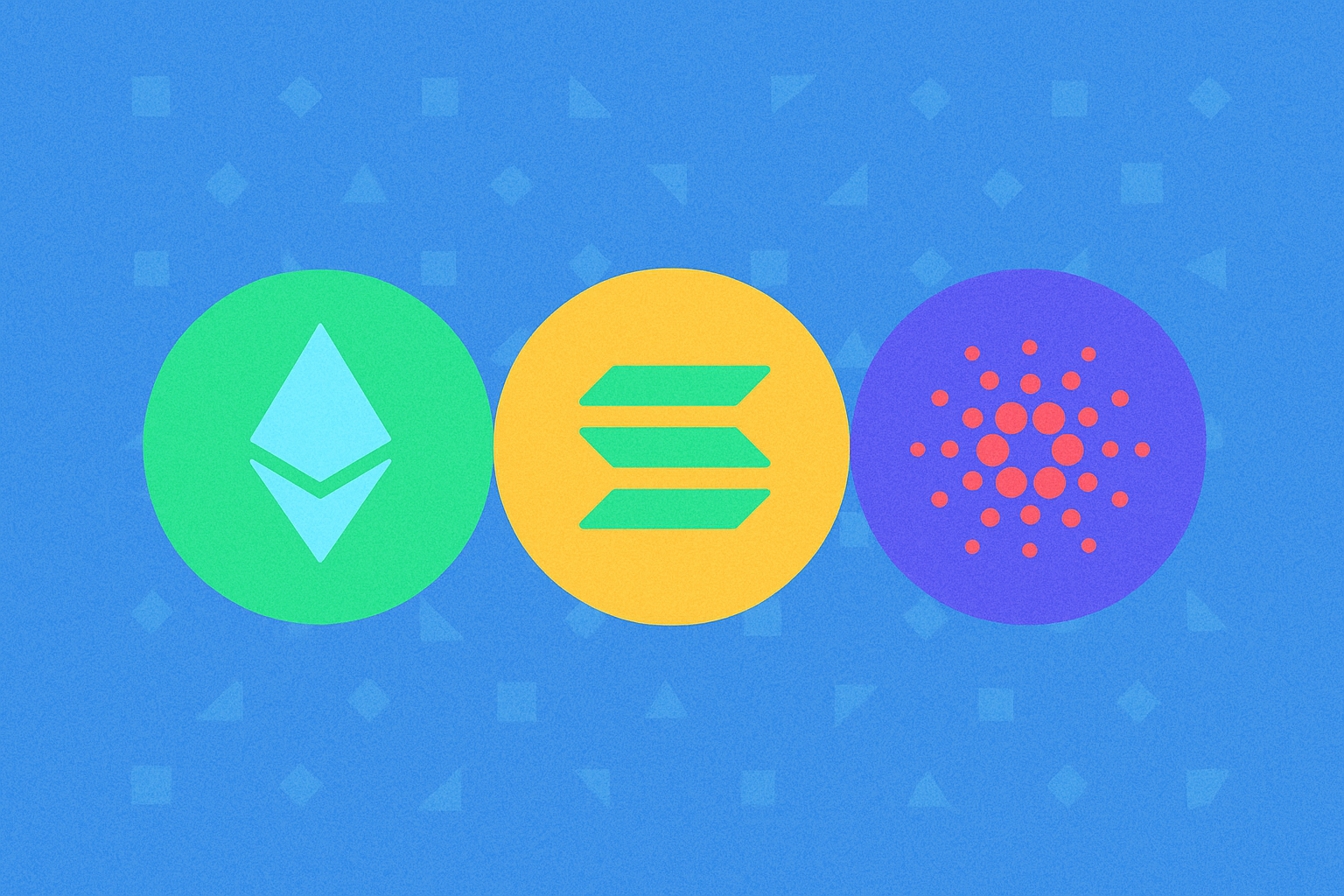
Understanding Altcoins: What They Are and How They Differ from Bitcoin
To understand altcoins properly, we need to clarify some basic terms in the crypto world.
A "coin" is a cryptocurrency that operates on its own dedicated blockchain. Bitcoin operates on the Bitcoin blockchain, Ether on the Ethereum blockchain, and so on. These are native coins to their respective networks.
An "altcoin" is any cryptocurrency that isn't Bitcoin. However, some consider altcoins to be any cryptocurrency that isn't Bitcoin or Ether, since these two are the largest and most established cryptocurrencies.
A "token," meanwhile, is a cryptocurrency that runs on another cryptocurrency's blockchain rather than having its own. For example, many tokens operate on the Ethereum network, using its infrastructure while serving different purposes.
Altcoins generally fall into one of two categories:
- Those that share similar code with Bitcoin but have been modified to include new features
- Those built from scratch with completely different code and operating mechanisms
Most altcoins aim to address certain limitations of Bitcoin, such as transaction speed, energy consumption, privacy features, or versatility in applications. Each altcoin has its own unique value proposition that distinguishes it from Bitcoin and other cryptocurrencies.
Types of Altcoins: From Stablecoins to Memecoins
The altcoin universe is incredibly diverse, with several distinct categories serving different purposes in the crypto ecosystem.
Stablecoins
Stablecoins are designed to minimize price volatility by pegging their value to stable assets like the US Dollar or gold. Examples include USDC, USDT (Tether), and DAI. Unlike most cryptocurrencies, stablecoins aim to maintain consistent value, making them useful for everyday transactions and as a "safe harbor" during market volatility.
Utility Tokens
Utility tokens provide access to services within a specific blockchain network. They're like digital keys that unlock features or services on a platform. XRP, designed for cross-border transactions, and MATIC, which helps with transaction fees on the Polygon network, are examples of utility tokens.
Payment Tokens
These altcoins are specifically designed to be used as currency for exchanging value. They focus on being efficient mediums of exchange with features like fast transaction times and low fees.
Governance Tokens
Governance tokens give holders voting rights in a blockchain project's decision-making. By owning these tokens, you can vote on changes to the protocol, much like having shares in a company gives you voting rights. Maker (MKR) is a notable example, allowing holders to vote on how the MakerDAO platform operates.
Security Tokens
Security tokens represent ownership in an external asset, similar to traditional securities. They might represent shares in a company, a unit of real estate, or other investments. These tokens are typically subject to securities regulations.
Meme Coins
Meme coins started as jokes or social commentary but gained popularity through community support. Dogecoin (DOGE) and Shiba Inu (SHIB) are famous examples that began as internet memes but developed large followings. These coins often have massive or unlimited supplies, leading to lower unit prices.
Play-to-Earn Tokens
These tokens power blockchain-based games where players can earn cryptocurrency rewards through gameplay. Axie Infinity is a prominent example where players breed, raise, and battle fantasy creatures while earning tokens that can be converted to other currencies.
Top 10 Altcoins in 2025: Market Leaders and Their Use Cases
While thousands of altcoins exist, a handful have established themselves as market leaders based on their utility, adoption, and market capitalization. Here are some of the most significant altcoins:
1. Ether (ETH)
Ether stands as the largest altcoin with a substantial market capitalization. Unlike Bitcoin, which primarily serves as digital money, Ether introduced programmable "smart contracts" that automatically execute when conditions are met. This innovation has enabled thousands of applications to be built on its platform, from financial services to games and artwork markets.
2. XRP
Developed by Ripple Labs, XRP aims to enable fast, low-cost international money transfers. It's particularly focused on helping financial institutions improve cross-border payments, offering an alternative to traditional banking systems like SWIFT.
3. Solana (SOL)
Solana has gained popularity for its extremely fast transaction speeds and low costs. Its blockchain can process thousands of transactions per second, making it attractive for applications that need high throughput, like trading platforms and games.
4. Cardano (ADA)
Cardano takes a research-driven approach to blockchain development, with a strong focus on security and sustainability. It uses a proof-of-stake consensus mechanism that requires significantly less energy than Bitcoin's mining approach.
5. Litecoin (LTC)
Often called "the silver to Bitcoin's gold," Litecoin was one of the earliest altcoins, created in 2011. It offers faster transaction confirmation times and a different hashing algorithm than Bitcoin. With a strong track record of over a decade, Litecoin remains popular for everyday payments due to its relatively low fees and widespread acceptance.
6. Dogecoin (DOGE)
What began as a joke based on an internet meme has become one of the most recognized cryptocurrencies globally. Despite its humorous origins, Dogecoin has developed a passionate community and gained mainstream attention through celebrity endorsements. Its accessible price and infinite supply make it popular for tipping and small transactions online.
7. Tether (USDT)
As the largest stablecoin by market capitalization, Tether maintains a value pegged to the US dollar. Each USDT token is backed by reserves intended to match its $1 value, making it crucial for traders who want to move between volatile cryptocurrencies and stable assets without converting back to fiat currencies. It's one of the most traded cryptocurrencies by daily volume.
8. USD Coin (USDC)
USDC is a rapidly growing regulated stablecoin pegged to the US dollar. Created by the Centre consortium (founded by Circle and Coinbase), USDC is known for its transparency, with regular attestations of its dollar reserves. It has become essential infrastructure for decentralized finance applications and cross-border payments.
9. Shiba Inu (SHIB)
Launched in 2020 as an alternative to Dogecoin, Shiba Inu quickly gained a massive following. Despite starting as a meme coin, the project has expanded to include a decentralized exchange (ShibaSwap), NFT platform, and other utilities. Its extremely low per-token price allows investors to own millions or billions of tokens, contributing to its popularity among retail investors.
10. Uniswap (UNI)
Uniswap revolutionized cryptocurrency trading with its automated market maker model. As one of the largest decentralized exchanges, it allows users to trade tokens directly from their wallets without intermediaries, while UNI token holders can participate in governance decisions about the protocol's future.
Each of these altcoins offers different features and benefits compared to Bitcoin, catering to specific use cases and market needs.
Altcoin Dominance and Market Cap: Essential Metrics for Crypto Investors
To make informed decisions about altcoin investments, you need to understand two crucial market metrics: altcoin dominance and market capitalization.
Altcoin Dominance
Altcoin dominance refers to the percentage of the total cryptocurrency market value that belongs to all altcoins combined. It's calculated by:
Altcoin Dominance = (Total Crypto Market Cap – Bitcoin Market Cap) / Total Crypto Market Cap × 100%
When Bitcoin's dominance decreases, altcoin dominance increases, signaling that more money is flowing into alternative cryptocurrencies.
The altcoin dominance chart is a powerful tool for spotting market trends:
- Rising altcoin dominance (typically above 55%) often signals an altcoin season, where alternative cryptocurrencies outperform Bitcoin
- Falling altcoin dominance usually indicates a Bitcoin-focused market where investors are prioritizing the leading cryptocurrency
Historically, altcoin dominance reached its peak during the 2017-2018 bull run when it touched nearly 67%, and again in mid-2021 when it approached 60%. These periods coincided with explosive growth in altcoin prices.
Altcoin Market Cap
The altcoin market cap represents the total value of all altcoins in circulation. It's calculated by multiplying each coin's current price by its circulating supply, then adding these values together (excluding Bitcoin).
The total altcoin market cap represents a significant portion of the entire cryptocurrency market, demonstrating the substantial role altcoins play in the digital asset ecosystem.
Monitoring the altcoin market cap chart provides valuable insights:
- Steady growth in the overall altcoin market cap often indicates sustainable interest in the broader crypto ecosystem
- Sudden spikes might signal excessive speculation or a potential bubble
- Comparing individual altcoin market caps helps you understand their relative importance and adoption levels
Many investors track the ratio between Bitcoin's market cap and the total altcoin market cap to identify potential rotation of capital between these market segments. When capital flows from Bitcoin to altcoins, it often triggers price increases across the altcoin market.
Altcoin Season Index: When and Why Alternative Cryptocurrencies Outperform Bitcoin
In the cryptocurrency market, there's a fascinating phenomenon known as "altcoin season" or "altseason." This term refers to periods when altcoins collectively outperform Bitcoin, often seeing dramatic price increases in a relatively short timeframe.
What Triggers Altcoin Season
Altcoin seasons typically begin after Bitcoin has experienced significant growth and then stabilizes or moves sideways. Investors looking for higher returns may shift some of their funds from Bitcoin to altcoins, decreasing Bitcoin's market dominance and triggering price increases in alternative cryptocurrencies.
How to Identify Altcoin Season
The Altcoin Season Index is a metric that helps investors determine whether the market is in an altcoin season. The index considers:
- Relative Performance: If most altcoins are outperforming Bitcoin over a certain period, it suggests an altcoin season may be underway.
- Bitcoin Dominance: When Bitcoin's share of the total crypto market capitalization decreases, it typically indicates money flowing into altcoins.
- Trading Volume: Increased trading activity in altcoins compared to Bitcoin can signal the start of an altcoin season.
- Social Media Sentiment: Growing interest in specific altcoins on social platforms often precedes price increases.
Historical Altcoin Bull Runs and Their Patterns
Notable altcoin seasons include:
- 2017-2018: Bitcoin's market dominance dropped from 86.3% to 38.69%, coinciding with the ICO (Initial Coin Offering) boom.
- 2020-2021: During the COVID-19 pandemic, retail investors sought opportunities beyond Bitcoin, leading to the rise of meme coins like Dogecoin and the NFT (Non-Fungible Token) market.
Duration of Altcoin Season
Altcoin seasons typically last between a few weeks to a few months, depending on market conditions, investor sentiment, and broader economic factors. They can end as quickly as they begin, with prices potentially falling as rapidly as they rose.
Investing in Altcoins: Potential Rewards and Risk Factors
Like any investment, altcoins come with potential benefits and significant risks that investors should carefully consider.
Pros of Investing in Altcoins
- Improvement Over Bitcoin: Many altcoins were designed to address specific limitations of Bitcoin, such as transaction speed, energy consumption, or functionality. This can give them technical advantages in certain use cases.
- Higher Growth Potential: Since altcoins typically have smaller market capitalizations than Bitcoin, they may offer greater percentage returns if they succeed. A $1,000 investment in a successful small altcoin could potentially multiply much more than the same investment in Bitcoin.
- Diverse Investment Options: With thousands of altcoins available, investors can choose projects that align with specific technologies, industries, or problems they believe in.
- Utility Beyond Currency: Many altcoins offer functionality beyond being a store of value, such as powering decentralized applications or providing governance rights in blockchain projects.
Cons of Investing in Altcoins
- Higher Risk: Altcoins generally carry more risk than Bitcoin. Many projects fail completely, resulting in the loss of investment. The smaller the altcoin, typically the higher the risk.
- Market Volatility: Altcoin prices can be extremely volatile, with possible price swings of 20-30% in a single day. This volatility can make altcoin investments stressful and difficult to time.
- Less Liquidity: Most altcoins have lower trading volumes than Bitcoin, making it potentially difficult to buy or sell large amounts without affecting the price.
- Regulatory Uncertainty: The regulatory landscape for cryptocurrencies is still developing, and future regulations could significantly impact certain types of altcoins, particularly those that might be classified as securities.
- Scams and Failures: The altcoin space has seen numerous scams, fraudulent projects, and failed ventures. Without proper research, investors can easily fall victim to pump-and-dump schemes or projects that never deliver on promises.
How to Research Altcoins: A Framework for Evaluating Cryptocurrency Projects
Given the risks involved with altcoin investments, thorough research is essential before committing your money. Here are key factors to consider when evaluating potential altcoin investments:
1. Understand the Project's Purpose and Problem It Solves
- What real-world problem does the altcoin address?
- Is there an actual need for this solution, or is it solving a non-existent problem?
- How does it compare to existing solutions both in and outside the crypto space?
2. Evaluate the Team
- Research the background and experience of the development team
- Look for transparency about team members' identities and qualifications
- Check if the team has successfully delivered projects in the past
- Examine the number of active developers working on the project
3. Read the White Paper
The white paper is a key document explaining a cryptocurrency's technology, goals, and implementation strategy. When reviewing a white paper, watch for:
- Clear and specific technical explanations
- Well-defined roadmap with realistic timelines
- Transparent tokenomics (how tokens are distributed and used)
- Red flags like vague descriptions, unrealistic promises, or poor writing
4. Analyze Tokenomics
- What is the total supply of tokens?
- How are tokens distributed (team allocation, public sale, etc.)?
- Is there a mechanism for managing inflation?
- Are there lock-up periods for team tokens?
5. Assess Market Metrics
- Market capitalization: The total value of all tokens in circulation
- Liquidity: How easily the token can be bought or sold without affecting price
- Trading volume: How much of the token is being traded daily
- Price history: How the token has performed over time
6. Community and Adoption
- Size and engagement of the community on social media, forums, etc.
- Partnerships with established companies or organizations
- Real-world use and adoption statistics
- Quality of communication from the project team
7. Security and Audits
- Has the code been audited by reputable security firms?
- Has the project experienced any security breaches?
- How decentralized is the network?
By thoroughly examining these aspects, you can make more informed decisions about which altcoins might be worthwhile investments and which ones to avoid.
Altcoin Wallet Guide: Securing Your Cryptocurrency Investments
Properly storing your altcoins is crucial for protecting your investment. Different storage options offer varying levels of security and convenience.
Types of Cryptocurrency Wallets
Hardware Wallets (Cold Storage)
- Physical devices that store your private keys offline
- Examples: Ledger, Trezor, Tangem
- Highest security option, recommended for large holdings
- Protects against online hacking attempts
- Usually costs between $50-$200
Software Wallets
- Desktop Applications: Installed on your computer (e.g., Exodus, Electrum)
- Mobile Apps: Wallet apps on your smartphone (e.g., Trust Wallet, MetaMask mobile)
- Web Wallets: Browser-based wallets (e.g., MetaMask browser extension)
- More convenient than hardware wallets but less secure
Exchange Wallets
- Storing assets directly on the exchange where you purchased them
- Most convenient but least secure option
- Suitable only for small amounts or short-term holding
- Exchange controls your private keys
Paper Wallets
- Physical documents containing your private keys
- Completely offline storage
- Very secure if created properly, but challenging to use
- Not recommended for beginners
Security Best Practices
Regardless of which wallet type you choose, follow these essential security practices:
- Never share your private keys or recovery phrases with anyone
- Write down recovery phrases on paper (not digitally) and store in a secure location
- Use strong, unique passwords for all cryptocurrency-related accounts
- Enable two-factor authentication (2FA) using an authenticator app, not SMS
- Use multiple wallet types – hot wallets for frequent transactions, cold storage for long-term holding
- Keep your software updated to patch security vulnerabilities
- Be cautious of phishing attempts targeting your crypto assets
- Consider using a dedicated device for crypto transactions
- Backup your wallet according to the provider's recommendations
- Start with small test transactions before moving large amounts
As the crypto saying goes: "Not your keys, not your coins." Taking personal responsibility for securing your altcoins is an essential part of participating in the cryptocurrency ecosystem.
Conclusion
The altcoin market continues to evolve since its 2011 beginnings. As the crypto space matures, projects with genuine utility and real-world applications are likely to thrive, while others may fade.
For beginners entering the altcoin world, understanding market dynamics through metrics like altcoin dominance is essential. The cryptocurrency ecosystem offers diverse opportunities for those willing to conduct thorough research and manage risks appropriately. Whether you're looking to understand market trends or seeking to build a diversified portfolio of promising projects, comprehensive research and careful consideration of your investment strategy are key to navigating this dynamic market successfully.
FAQ
What is an Altcoin? How does it differ from Bitcoin?
Altcoins are cryptocurrencies alternative to Bitcoin. Unlike Bitcoin, altcoins feature diverse blockchains, faster transaction speeds, lower fees, and specialized use cases. They employ different consensus mechanisms and tokenomics, offering varied investment opportunities beyond Bitcoin's store-of-value focus.
What are the top 10 altcoins?
Top altcoins include Ethereum, BNB, Solana, XRP, Cardano, Polkadot, Dogecoin, Litecoin, Polygon, and Avalanche. Rankings vary by market cap and trading volume, changing frequently with market conditions and developments.
Which altcoins will skyrocket in 2025?
High-potential altcoins include Ethereum, Solana, Polkadot, and Chainlink, driven by ecosystem growth and adoption. Emerging projects focusing on AI integration and Layer 2 scaling solutions show strong momentum. Monitor projects with innovative technology and increasing transaction volume for optimal opportunities.
How to choose altcoins safely as a beginner?
Start by researching project fundamentals, team credibility, and use cases. Focus on altcoins with strong trading volume, active communities, and transparent development. Diversify your portfolio and only invest what you can afford to lose. Check tokenomics and market cap rankings to identify established projects with real utility.
What are the main risks of investing in altcoins?
Altcoins face high volatility, liquidity risks, and potential project failure. Many lack established use cases, suffer from regulatory uncertainty, and are vulnerable to manipulation. Technology risks, team abandonment, and market sentiment shifts can lead to significant losses. Thorough research is essential before investing.

Pi Network Launch Status and Timeline Update
DEX Aggregator Platform Upgrade: Enhanced Trading Experience
How Does XRP's Token Economic Model Differ from Other Cryptocurrencies?

What Is the Current Market Overview for Cardano (ADA) in 2025?
What Are the Key Crypto Derivatives Market Signals in 2026: Futures Open Interest, Funding Rates, and Liquidation Data?
Top Cryptocurrencies to Watch for Future Growth in 2026

What is BULLA coin: analyzing whitepaper logic, use cases, and team fundamentals in 2026

How does MYX token's deflationary tokenomics model work with 100% burn mechanism and 61.57% community allocation?

What Are Derivatives Market Signals and How Do Futures Open Interest, Funding Rates, and Liquidation Data Impact Crypto Trading in 2026?

How do futures open interest, funding rates, and liquidation data predict crypto derivatives market signals in 2026?

What is a token economics model and how does GALA use inflation mechanics and burn mechanisms
