LCP_hide_placeholder
fomox
MarketsPerpsSpotSwap
Meme
Referral
More
Smart Money Recruitment
Search Token/Wallet
/

What is XCN (Onyxcoin) whitepaper core logic and use cases analysis

2026-01-16 06:45:54
Blockchain
DAO
DeFi
Layer 2
Web 3.0
Article Rating : 3.5
half-star
197 ratings
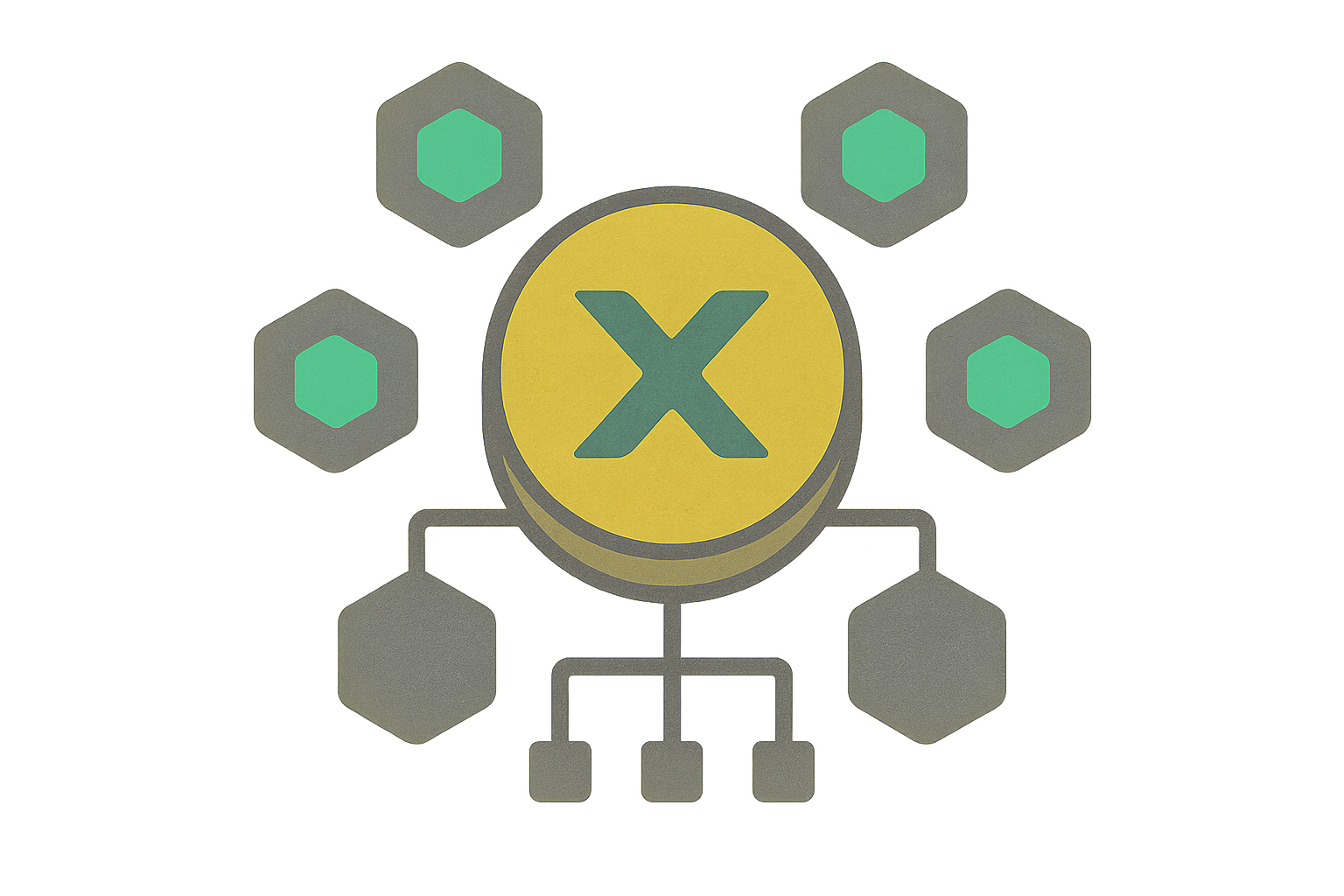
This article provides a comprehensive analysis of XCN (Onyxcoin) whitepaper, examining its role as the foundational utility token powering Web3 blockchain infrastructure. It explores the core token-based economic model featuring deflationary mechanisms, EIP-1559-style fee structures, and Layer 3 architecture that significantly reduces transaction costs. The article details multi-domain use cases across DeFi protocols and dApps, highlighting XCN's flexibility in gas pricing and fee delegation. It emphasizes technical innovation through transparent development cycles integrated with security audits, demonstrates institutional adoption reflected in 119% price surge, and showcases ecosystem-building capabilities aligned with regulatory compliance, positioning XCN as enterprise-grade Web3 infrastructure for global adoption.
What is XCN (Onyxcoin) whitepaper core logic and use cases analysis

Whitepaper Core Logic: Web3 Blockchain Infrastructure Foundation with Token-Based Economic Model

The Onyx Protocol's whitepaper establishes XCN as the foundational asset powering a comprehensive Web3 blockchain infrastructure built on token-based economics. At its core, XCN functions as the native utility and governance token that orchestrates all network operations, from routine transactions to sophisticated smart contract executions. This multifunctional design transforms XCN into more than a simple digital asset—it becomes the operational backbone through which decentralized applications access and interact with the network.

The token-based economic model leverages XCN's role as the primary gas token within the Onyx Protocol's Layer 3 architecture, where dynamic fee mechanisms ensure stable, predictable pricing regardless of network congestion. By implementing EIP-1559-style token economics, the whitepaper demonstrates how deflationary mechanisms through periodic token burns and controlled emissions maintain long-term value stability while managing supply dynamics. This approach directly addresses scalability challenges facing traditional blockchain infrastructure, as XCN's integrated utility enables application-specific fee customization and batch processing that significantly reduces per-transaction costs. The governance structure further reinforces the economic model, granting XCN holders voting rights over protocol-level decisions and development priorities. This alignment of incentives ensures that token holders' interests converge with network sustainability, creating a self-reinforcing ecosystem where demand for XCN's utility drives both technical adoption and economic participation across the Web3 infrastructure.

Use Cases and Application Scenarios: Multi-Domain Deployment from Smart Contracts to DApp Ecosystem

XCN powers transaction execution across Onyx's Layer 3 infrastructure, enabling developers to deploy smart contracts and decentralized applications with significantly reduced overhead compared to traditional blockchain networks. The token functions as the primary gas mechanism, with transaction costs minimized through Layer 3 batching and compression technologies that consolidate multiple operations before settlement on Layer 2, thereby distributing fees across batches.

Developers gain unprecedented flexibility in fee management within the dApp ecosystem. Through dynamic fee adjustments and tiered pricing structures, applications can implement custom gas policies tailored to specific use cases—from high-frequency trading protocols requiring minimal latency to consumer applications where user onboarding friction demands subsidized interactions. This multi-domain deployment capability allows dApps to maintain consistent pricing despite network congestion, as XCN-based gas pricing remains isolated from Ethereum network volatility.

The fee delegation mechanism particularly enhances dApp usability, enabling users to interact with smart contracts without directly holding XCN tokens. Platforms can abstract away gas complexity entirely, absorbing costs through application models that balance user experience with sustainable tokenomics. This architectural approach transforms how decentralized applications scale across diverse industries—from DeFi protocols to enterprise systems—where predictable transaction costs directly correlate with adoption rates. Cross-chain compatibility via bridge infrastructure further extends XCN's utility beyond Onyx's native ecosystem, positioning it as infrastructure for the broader multi-chain application landscape.

Technical Innovation and Roadmap Progress: Transparent Development Cycle with Security Audits and Agile Implementation

The Onyx Protocol demonstrates a commitment to robust technical execution through a transparent development cycle that emphasizes both velocity and security. This approach leverages agile implementation principles to enable rapid feature deployment while maintaining architectural integrity throughout the blockchain infrastructure stack. Security audits form the cornerstone of this methodology, occurring at strategic intervals during the development lifecycle rather than as afterthoughts.

XCN's technical roadmap progress integrates DevSecOps practices, embedding security considerations directly into each sprint cycle. This integration prevents the common pitfall where innovation and compliance operate in opposition, instead positioning them as complementary forces. Regular security audits validate that enhancements to the web3 blockchain infrastructure powered by XCN meet both performance and protection standards. The transparent nature of this cycle allows stakeholders to track technical innovation milestones while maintaining confidence in the platform's security posture. By combining agile methodologies with systematic security reviews, the development cycle balances the need for rapid technical advancement with the non-negotiable requirements of blockchain protocol integrity.

Team Background and Track Record: Institutional Support with Continuous Ecosystem Building Capabilities

XCN's recent 119% surge in early 2026 reflects growing institutional confidence in Onyxcoin's development trajectory and market positioning. This price momentum stems directly from institutional adoption paired with meaningful ecosystem upgrades, signaling that the team's technical capabilities resonate with institutional investors seeking reliable blockchain infrastructure partners. The project's Layer 3 utility framework and deflationary model represent sophisticated engineering that institutional participants recognize as essential for long-term value preservation and network scalability.

The team's continuous ecosystem-building capabilities demonstrate their commitment to maintaining institutional support through consistent innovation. By prioritizing real-world utility and regulatory compliance—notably alignment with the CLARITY Act framework—the Onyxcoin team has positioned XCN as infrastructure that appeals to institutional players navigating complex regulatory environments. This forward-thinking approach to compliance and scalability differentiates the project within the competitive web3 landscape.

However, sustained institutional adoption requires the team to navigate evolving macroeconomic conditions and demonstrate that technical achievements translate into measurable network adoption. The 186.14% year-over-year performance indicates institutional conviction, yet long-term success hinges on the team's ability to execute ecosystem expansion while adapting to market dynamics. Continuous capability development in infrastructure provisioning will determine whether XCN maintains its institutional momentum.

FAQ

What is XCN (Onyxcoin)? What are its main goals and vision?

Onyxcoin (XCN) is a cryptocurrency designed for secure, fast, and convenient global payments. Its primary goal is to enable efficient financial transactions worldwide while providing a reliable payment system for users across the globe.

Onyxcoin白皮书中的核心技术创新点有哪些?

Onyxcoin白皮书的核心技术创新是高性能区块链架构,专为DeFi和Web3设计。它提升了交易速度和扩展性,降低了交易额成本,实现了更高效的链上交互。

What are the main use cases and application areas of XCN?

XCN serves as the native utility token for Chain Protocol's blockchain services, providing discounts, premium access, and payment functionality on the Sequence ledger-as-a-service platform. Additionally, XCN enables on-chain governance through Chain DAO, allowing token holders to participate in community-driven decisions and protocol upgrades.

What is Onyxcoin's consensus mechanism and operating principle?

Onyxcoin employs a hybrid consensus mechanism combining Proof of Stake (PoS) and Byzantine Fault Tolerance (BFT). This design ensures network security, high transaction throughput, and privacy protection for DeFi applications while maintaining decentralization and efficiency.

What are the advantages and differences of XCN compared to other similar cryptocurrency projects?

XCN stands out through exceptional decentralization, the longest PoW chain, superior security, and fixed supply mechanism. These characteristics provide significant competitive advantages in the crypto market.

What is Onyxcoin's token economic model and allocation mechanism design?

XCN employs a balanced distribution model across team, investors, and community. With a max supply of 688.9 billion and circulating 361 billion tokens (52.41%), it implements inflation-deflation mechanisms, strategic token burns, and governance participation. This structure ensures network security while maintaining long-term value stability.

What is XCN (Onyxcoin) development roadmap and future plans?

XCN's roadmap focuses on expanding modular Layer 3 architecture to enhance scalability and transaction efficiency. Future plans include promoting Web3 infrastructure adoption, implementing zero-gas transactions via ERC-4337, and enabling cross-chain interoperability for institutional and developer applications.

* The information is not intended to be and does not constitute financial advice or any other recommendation of any sort offered or endorsed by Gate.

Share

Content

Whitepaper Core Logic: Web3 Blockchain Infrastructure Foundation with Token-Based Economic Model

Use Cases and Application Scenarios: Multi-Domain Deployment from Smart Contracts to DApp Ecosystem

Technical Innovation and Roadmap Progress: Transparent Development Cycle with Security Audits and Agile Implementation

Team Background and Track Record: Institutional Support with Continuous Ecosystem Building Capabilities

FAQ

Related Articles
How Does a Token Economic Model Optimize Governance and Value Distribution?

How Does a Token Economic Model Optimize Governance and Value Distribution?

The article explores how Cyber's token economic model enhances governance and value distribution. It discusses balanced token allocation, with 40% for community engagement, 30% for team development, and 30% for investors, fostering ecosystem growth. The model benefits long-term stakeholders through a 2% quarterly token burn deflationary mechanism and governance rights based on staking duration. Additionally, it highlights value accrual via fee sharing and buybacks, rewarding active participants and promoting token scarcity. This article addresses challenges in decentralized ecosystems, offering insights for blockchain projects and long-term investors.
2025-11-30 01:42:52
Exploring Singapore's Premier Web3 Conference
Exploring Singapore's Premier Web3 Conference

Experience TOKEN2049, the premier Web3 conference in Singapore, renowned for driving innovation and facilitating high-level networking. Hosted at Marina Bay Sands, you'll engage with industry experts and access exclusive opportunities. Explore the latest blockchain trends in a vibrant setting, coinciding with Formula 1. Be sure to attend parallel events and hear insights from influential thought leaders.
2025-12-21 12:14:41
What is the L3 token: interactive crypto education through the Layer3 platform

What is the L3 token: interactive crypto education through the Layer3 platform

Explore Layer3, the groundbreaking platform designed to scale third-layer blockchains. Delve into unified cross-chain identity, the L3 token, advanced staking features, and robust community governance. Engage with interactive crypto quests to earn rewards on Gate and across multiple ecosystems. Ideal for Web3 developers and investors seeking leading-edge solutions.
2026-01-12 18:27:36
What Is Polkadot (DOT) and How Does Its Ecosystem Work in 2025?

What Is Polkadot (DOT) and How Does Its Ecosystem Work in 2025?

The article explores Polkadot's innovative cross-chain interoperability framework and its evolution into the 2025 ecosystem. It discusses the foundational Relay Chain, parachain architecture, and XCM connectivity enabling seamless blockchain interactions. Readers will understand the significance of DOT token utility in governance, staking, and parachain auctions. It highlights technical advancements like Agile Coretime and asynchronous backing that enhance scalability and transaction efficiency. The article targets blockchain developers and crypto enthusiasts, detailing Polkadot 2.0's roadmap and its transformative upgrades scheduled for Q1 2026. Key topics include connectivity with exchanges like Gate and strategic integration with Ethereum.
2025-12-04 05:01:40
Exploring How Cross-Chain Bridges Operate in Blockchain Systems

Exploring How Cross-Chain Bridges Operate in Blockchain Systems

Explore the essentials of cross-chain bridge technology in blockchain. Find out how these bridges facilitate secure token transfers across different networks, driving improved interoperability and liquidity throughout the Web3 ecosystem. This article further examines security issues and highlights best practices for leveraging bridges to maximize the efficiency of DeFi operations.
2025-12-19 03:38:37
Seamless Crypto Transfer Solutions: Exploring Bridge Technology

Seamless Crypto Transfer Solutions: Exploring Bridge Technology

The article explores the process and significance of bridging to Optimism, an Ethereum Layer 2 solution enhancing scalability and reducing fees. It addresses challenges of blockchain isolation by enabling asset transfer across chains, appealing to crypto enthusiasts seeking efficient and secure transactions. Key issues discussed include selecting wallets, managing assets, and understanding decentralized vs. centralized bridge services. The article provides a step-by-step guide, highlighting transaction fees, timelines, and crucial security measures to consider. This comprehensive guide aids users in optimizing cross-chain transfers, emphasizing the potential of a multi-chain ecosystem.
2025-12-01 06:26:05
Recommended for You
What is Spot and Futures in Crypto

What is Spot and Futures in Crypto

This comprehensive guide explores the fundamental distinctions between spot and futures cryptocurrency trading. Spot trading offers immediate settlement with actual asset ownership, ideal for beginners seeking transparency and simplicity without leverage risks. Futures trading enables leveraged positions through derivative contracts, allowing traders to profit from both rising and falling prices while introducing higher complexity and risk through margin requirements and liquidation potential. The article examines key differences including ownership, settlement timeframes, and leverage availability, then evaluates advantages and disadvantages of each method. Ultimately, the choice between spot and futures trading depends on individual risk tolerance, experience level, and investment objectives—while many successful traders utilize both markets strategically.
2026-01-16 09:16:48
Solana vs Ethereum, XRP & Cardano: Complete Comparison Guide
Solana vs Ethereum, XRP & Cardano: Complete Comparison Guide

This comprehensive guide compares four leading blockchain platforms—Solana, Ethereum, XRP, and Cardano—across performance, technology, and investment potential. Solana leads in speed (4,000+ TPS) and ultra-low fees ($0.02), making it ideal for consumer applications and gaming. Ethereum dominates institutional DeFi with $60B+ TVL but faces higher fees ($1-50+). XRP specializes in cross-border payments with regulatory clarity, while Cardano emphasizes academic rigor and security. The article provides performance metrics, investment frameworks, and market outlooks for each platform. No single winner exists; each serves distinct niches—Solana for speed, Ethereum for security, XRP for payments, and Cardano for sustainability. Investors should diversify based on risk tolerance and use-case alignment.
2026-01-16 09:14:01
How to Buy Algorand

How to Buy Algorand

This comprehensive guide explores how to purchase Algorand (ALGO) safely using your credit card on Gate and other secure platforms. It covers three primary acquisition methods: direct credit/debit card purchases through stablecoins, peer-to-peer trading for flexible payment options, and spot market trading for competitive rates. Learn why Algorand stands out as an eco-friendly blockchain with impressive scalability, achieving 1,000 transactions per second at minimal costs. Discover the ALGO token's utility in governance voting, staking rewards, and network participation. Whether you're an environmentally conscious investor or seeking growth potential through institutional adoption, this guide provides essential information on getting started safely with proper wallet setup, security measures, and fee structures to maximize your Algorand investment experience.
2026-01-16 09:11:06
How Many People Own 2 Bitcoin: Exploring Ownership
How Many People Own 2 Bitcoin: Exploring Ownership

This comprehensive guide explores Bitcoin ownership patterns, specifically investigating how many individuals hold at least 2 Bitcoin. The article reveals that approximately 600,000 to 800,000 people worldwide own 2 or more Bitcoin, placing them in an exclusive tier of cryptocurrency holders. Through blockchain analysis and multi-methodological approaches, the content examines wealth distribution dynamics, addressing key questions about Bitcoin adoption, market implications, and future trends. Covering market volatility, institutional influence, regulatory developments, and technological infrastructure maturity, this analysis provides investors and enthusiasts with critical insights into Bitcoin's evolving ownership landscape, highlighting the role of mid-tier holders in market stabilization and ecosystem decentralization.
2026-01-16 09:05:34
When Will Crypto ETFs Be Approved: Latest Timelines and Market Impact
When Will Crypto ETFs Be Approved: Latest Timelines and Market Impact

This comprehensive guide explores the current trajectory of crypto ETF approvals, with particular focus on spot XRP and Dogecoin ETFs anticipated to launch in late 2025. The article examines regulatory milestones including the SEC's September 2025 rule changes enabling generic listing standards and the DTCC's inclusion of five spot XRP ETFs in its active registry. Key filing strategies—including Section 8(a) amendments and removal of delaying provisions—signal accelerated approval timelines, with products potentially launching automatically unless the SEC intervenes within 20-day review periods. The guide analyzes market implications for institutional adoption, liquidity enhancement, and retail accessibility through regulated investment vehicles. Additionally, it addresses remaining regulatory uncertainties, custody infrastructure requirements, and broader implications for digital asset mainstreaming. Investors will gain actionable insights into preparation strategies, risk management, and the transformative
2026-01-16 08:32:41
How to Accept Bitcoin Payments on Cash App?

How to Accept Bitcoin Payments on Cash App?

This comprehensive guide explains how to accept Bitcoin payments through Cash App, a widely-used mobile financial platform. The article walks users through identity verification, enabling Bitcoin functionality, and generating unique receiving addresses for seamless cryptocurrency transactions. It highlights significant benefits including lower transaction fees of 1-1.5% compared to traditional payment methods, access to growing crypto-user demographics, and improved global financial accessibility. Real-world case studies demonstrate 10-15% customer base increases and 70% fee reductions for international freelancers. Statistical data shows 30% of Cash App users engage in crypto transactions, with businesses experiencing 15% average revenue growth. The guide provides practical FAQs addressing daily withdrawal limits, security concerns, and bank account conversions, making Bitcoin payments accessible for mainstream users and businesses on Gate and similar platforms.
2026-01-16 08:28:52