Beginner's Guide to Managing Multi-Chain Assets in Cross-Chain Wallets

What Is a Cross Chain Crypto Wallet? A Beginner's Guide to Multi-Chain Asset Management
A cross-chain crypto wallet is a revolutionary multi-chain tool designed to store, send, receive, and swap digital assets across multiple blockchains from a single, unified interface. Rather than managing separate wallets for different cryptocurrencies like Bitcoin, Ethereum, or Solana, a cross-chain wallet consolidates all these functionalities into one secure hub. This innovation addresses blockchain's persistent "silo" problem by leveraging blockchain interoperability technology, which enables different networks to communicate and interact seamlessly. Users can now access decentralized finance (DeFi), non-fungible tokens (NFTs), and stablecoins without switching between applications or relying on third-party bridges.
What is cross chain crypto wallet and how does it work?
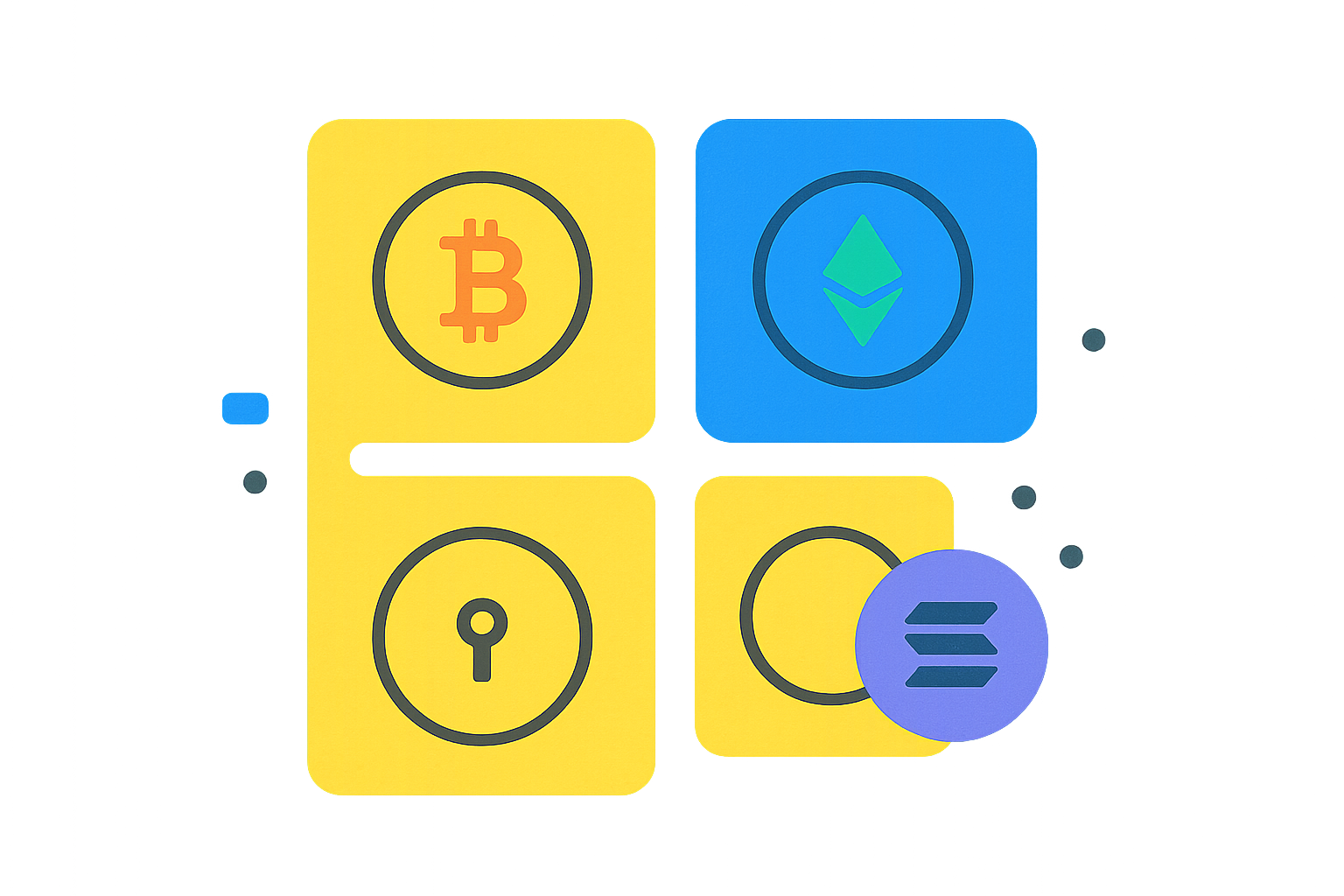
A cross-chain crypto wallet fundamentally differs from traditional single-network wallets by supporting multiple blockchains and enabling interaction between them. Unlike conventional wallets restricted to one network, a cross-chain wallet integrates interoperability protocols that connect various blockchains directly. These wallets accommodate different consensus mechanisms including Proof-of-Work, Proof-of-Stake, and Proof-of-History, unifying them under a single user interface. For instance, users can seamlessly store and transfer tokens between Bitcoin, Ethereum, Polygon, Arbitrum, Solana, and numerous other networks through a single cross-chain wallet application.
The technical infrastructure behind cross-chain crypto wallets relies on remote procedure call (RPC) nodes, application programming interfaces (APIs), and smart contracts to connect with various blockchains. When users initiate a swap transaction, the cross-chain wallet automatically identifies the most efficient and cost-effective route through integrated decentralized exchange (DEX) aggregators. This automated process ensures that transactions execute quickly, securely, and with minimal fees. The entire operation occurs transparently without requiring users to engage with external bridges or switch between multiple applications manually.
What Are the Main Benefits of Using a Cross Chain Crypto Wallet?
Cross-chain wallets deliver substantial practical and performance improvements for cryptocurrency users at all levels. The primary advantage lies in simplified asset management through a unified dashboard that displays and manages all holdings—including tokens, NFTs, and stablecoins—across different blockchains. Real-time portfolio tracking provides users with a comprehensive view of their total cryptocurrency wealth in one location, eliminating the necessity for multiple browser extensions or separate wallet applications.
Another significant benefit involves reduced transaction fees and execution time. Cross-chain wallets intelligently optimize transfers by automatically selecting lower-fee networks such as Polygon, Base, or Arbitrum, resulting in substantial cost savings compared to traditional transfers or third-party bridge services. Users accomplish complex transactions with a single click while maintaining security and decentralization principles.
Furthermore, cross-chain wallets substantially enhance decentralized finance accessibility. These wallets enable users to connect to decentralized applications on any supported network through one secure login credential. Security is reinforced through multi-layer encryption, personal identification number (PIN) protection, and optional multi-party computation (MPC) technology that facilitates keyless access. Users maintain complete control over their assets through either traditional seed phrase wallets or modern MPC wallets, both operating on self-custody principles.
What's the Difference Between Cross Chain and Multi-Chain Crypto Wallets?
While industry professionals often use the terms "cross-chain" and "multi-chain" interchangeably, they describe distinct functional scopes. A multi-chain wallet supports digital assets across multiple blockchains but does not necessarily facilitate transactions between different networks. In contrast, a cross-chain wallet extends functionality by enabling asset transfers, swaps, and decentralized finance interactions directly across multiple networks within a single application interface. This represents true blockchain interoperability—unifying storage, transfer capabilities, and decentralized finance participation through cross-chain technology.
This distinction carries substantial implications for active traders and decentralized finance enthusiasts. Cross-chain capability eliminates friction in the trading process and significantly improves access to liquidity. Users can, for example, instantaneously exchange USDT from the Ethereum network to Arbitrum or Solana without ever exiting the wallet application. This flexibility and efficiency define the modern cross-chain cryptocurrency wallet experience.
How to Create Your First Cross Chain Crypto Wallet
Establishing your first cross-chain cryptocurrency wallet involves a straightforward, multi-step process that prioritizes both security and accessibility. Initially, users set a wallet passcode by opening the wallet application and selecting the "Create Wallet" option. The application prompts users to establish a six-digit PIN that remains linked to their device and authorizes all transactions while protecting the wallet. This PIN operates independently from seed phrases and private keys and must be remembered to prevent permanent wallet loss. If forgotten, users must reinstall the application and reimport their wallet using backup seed phrases or private keys. This foundational step establishes the initial security layer.
Following PIN establishment, the application automatically generates a seed phrase wallet. Users should select the backup option and carefully record their recovery key—either a 12-word or 24-word sequence that provides complete access to the cross-chain wallet. This seed phrase permits wallet restoration on any device if the original device becomes lost or reset. Users must never share this phrase or capture screenshots, instead storing it securely offline in a protected location. Subsequently, users select their preferred wallet type between traditional seed phrase wallets, which provide full self-custody control, and keyless wallets using MPC technology, which leverage Google or Apple login credentials for cloud-based key management without manual backup requirements.
For comprehensive asset organization, users can create additional wallets through the wallet management interface. By tapping the wallet icon and selecting "Add Wallet," users create, rename, and switch between multiple wallet accounts designated for personal use, decentralized finance participation, or non-fungible token storage. Once setup concludes, the cross-chain wallet operates fully across 130+ blockchains, enabling secure asset management, transfers, and swaps from a streamlined, user-friendly platform.
How Safe Are Cross Chain Crypto Wallets?
Cross-chain wallets implement comprehensive security protocols that prioritize user self-custody and asset protection. Security measures encompass biometric verification systems, PIN-based encryption, multi-signature authorization processes, and advanced multi-party computation technology. Critically, only the user maintains access to their funds—no third parties hold control over user assets. However, users must exercise personal responsibility in managing their recovery credentials; if users lose seed phrases before implementing backups, wallet recovery becomes impossible. Users must physically record seed phrases, store them offline, and deliberately avoid cloud storage platforms that present security vulnerabilities.
Despite these considerations, cross-chain wallets provide genuine security assurances for users who maintain proper key control and use official applications. By adhering to security best practices and properly managing credentials, users can confidently utilize cross-chain wallets for long-term asset storage and management.
How to Use a Cross Chain Wallet for Swaps and DeFi Access
Cross-chain wallets facilitate extensive trading capabilities through built-in aggregator systems that connect users to decentralized exchanges across multiple networks. These wallets enable the trading of over one million tokens across 130+ blockchains instantaneously. The built-in DEX aggregator automatically identifies optimal liquidity routes and executes cross-chain swaps through smart contracts, allowing users to exchange tokens such as ETH to SOL or USDC to BNB in seconds with transparent pricing. The process requires no external bridges, simplifying what traditionally constituted complex multi-step procedures.
Beyond simple token exchanges, cross-chain wallets unlock extensive decentralized finance opportunities. Users connect directly to preferred DeFi platforms through their cross-chain wallet to participate in staking, yield farming, lending activities, and non-fungible token trading. This seamless integration eliminates navigation between separate applications and dramatically streamlines decentralized finance participation across all major blockchain networks.
Conclusion
Cross-chain cryptocurrency wallet technology represents a fundamental transformation toward a fully interoperable blockchain ecosystem where users seamlessly control assets across all networks. By integrating security protocols, operational efficiency, and decentralized finance accessibility into unified platforms, cross-chain wallets empower genuine financial independence. These innovative tools serve both cryptocurrency beginners seeking accessible entry points and advanced users requiring sophisticated multi-chain asset management capabilities. Cross-chain wallets establish the foundation for a connected, user-controlled digital finance landscape where blockchain barriers dissolve and financial opportunity becomes universally accessible.
FAQ
What is a cross-chain wallet?
A cross-chain wallet is a cryptocurrency wallet supporting multiple blockchain networks, enabling users to manage and transfer assets across different chains seamlessly in one interface.
How does a cross-chain wallet work and what are its main advantages?
A cross-chain wallet enables you to manage and transfer cryptocurrencies across multiple blockchain networks from a single interface. Main advantages include convenience, elimination of separate wallets per network, seamless asset management, and reduced complexity in multi-chain trading.
Which blockchains does a cross-chain wallet support?
A cross-chain wallet supports multiple blockchains including Ethereum, Binance Smart Chain, Polygon, Arbitrum, Optimism, Avalanche, and Polkadot. It enables seamless token transfers and transactions across different networks without switching wallets.
What are the risks and security considerations when using a cross-chain wallet?
Cross-chain wallets face bridge protocol vulnerabilities and smart contract risks. Key considerations include verifying protocol security, using established services, managing private keys carefully, and monitoring for suspicious activity across chains.
How do I transfer assets between different blockchains using a cross-chain wallet?
Select your source and destination blockchains in your cross-chain wallet, choose the asset to transfer, confirm the transaction, and pay network fees. The wallet's built-in bridge tools handle the secure cross-chain transfer automatically.

Guide to Download and Install the Latest Crypto Wallet Extension in 2025 for Mobile and Desktop

Top Choices for Secure Crypto Storage Solutions in the UK
A Beginner's Guide to Selecting the Ideal Crypto Wallet in 2025

Beginners Guide to Selecting the Top Digital Wallets in 2025
Japan’s Top Choices for Cryptocurrency Wallets
Top Crypto Wallets for Users in Indonesia

What is the current crypto market cap ranking and trading volume overview in 2026?

What Is Crypto On-Chain Data Analysis and How Does It Predict Price Movements

How to Use MACD, RSI, and Bollinger Bands for Crypto Trading Success

What is on-chain data analysis and how does it predict crypto price movements

What is the fundamental analysis of a cryptocurrency project: whitepaper logic, use cases, and team background explained