LCP_hide_placeholder
fomox
MarketsPerpsSpotSwap
Meme
Referral
More
Smart Money Recruitment
Search Token/Wallet
/

Blockchain Compatibility with Avalanche EVM

2025-12-18 22:05:29
Altcoins
Blockchain
Ethereum
Layer 2
Web 3.0
Article Rating : 3.5
half-star
114 ratings
Experience the groundbreaking influence of Avalanche EVM on blockchain compatibility. Enhance your dApps with smooth interoperability between Avalanche and Ethereum, benefiting from reduced fees and exceptional performance. Learn to utilize smart contracts and deploy your projects on the C-Chain. Discover the platform's eco-friendly advantages and speed for Web3 applications. Join the leaders in decentralized finance on Avalanche today with Gate.
Blockchain Compatibility with Avalanche EVM

What Is AVAX? Avalanche Network Explained

The Avalanche (AVAX) network is a groundbreaking development in smart contract blockchain technology. Introduced in 2020 by AVA Labs, this protocol stands out as a high-performance alternative to Ethereum, addressing key challenges like scalability and high transaction fees found in first-generation blockchains.

What Is the Avalanche Crypto Network?

Avalanche is a blockchain protocol leveraging Proof-of-Stake (PoS) consensus and smart contract capabilities, empowering third-party developers to create and deploy decentralized applications (dApps). Unlike other PoS blockchains such as Ethereum, Avalanche features a distinctive multi-chain architecture designed for rapid transaction finality and seamless cross-chain communication.

The concept for Avalanche originated in 2018 when the pseudonymous "Team Rocket" released the initial blueprint for its design. Building on this foundation, Dr. Emin Gün Sirer of Cornell University established AVA Labs in New York to bring these ideas to fruition. Avalanche's mainnet launched in 2020, quickly followed by a highly successful initial coin offering (ICO) for the AVAX token, signaling growing market enthusiasm for the platform.

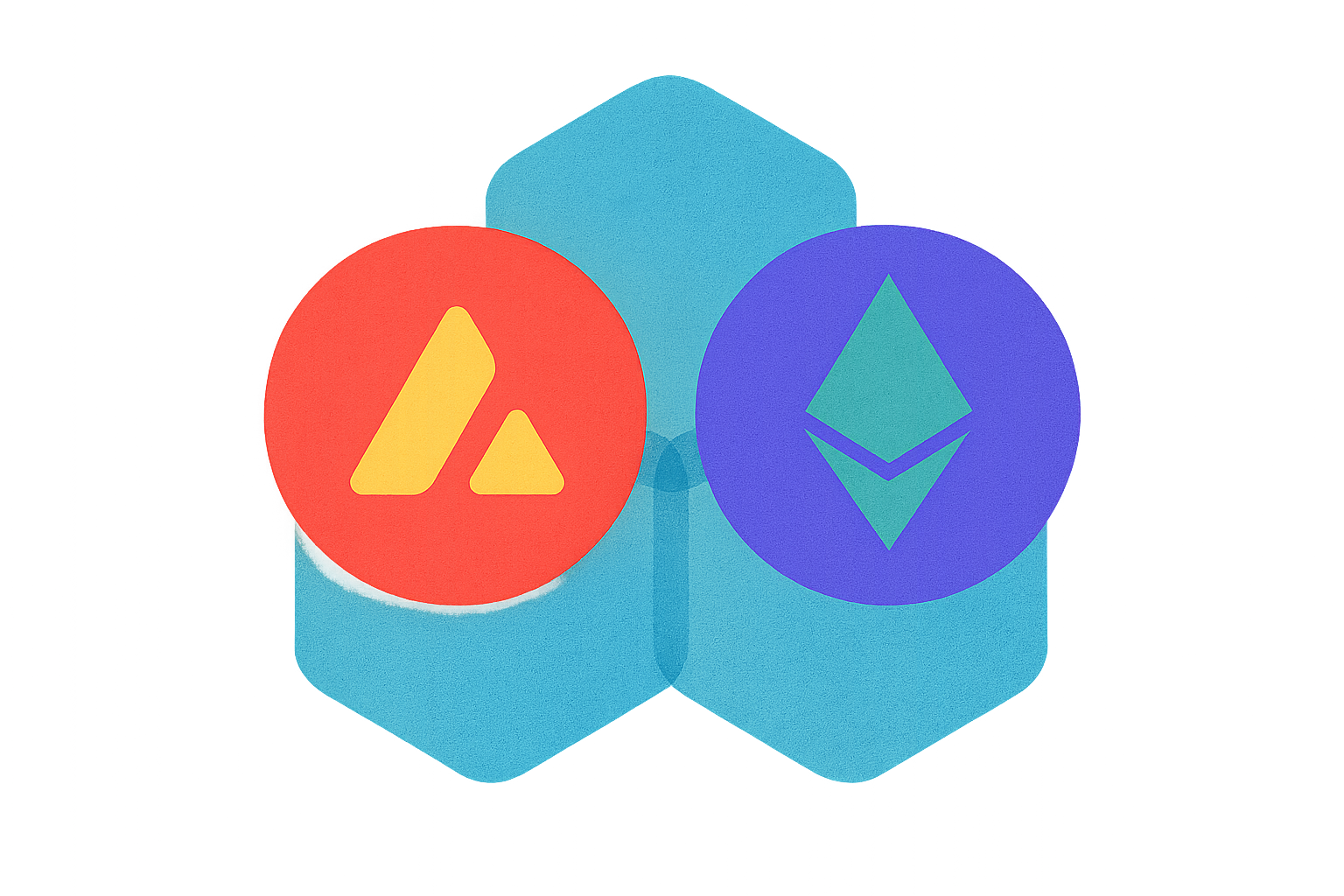
With support for the Ethereum Virtual Machine (EVM) and the Solidity programming language, Avalanche enables developers to easily migrate or deploy dApps across both Avalanche and Ethereum ecosystems. This EVM compatibility positions Avalanche as a vital bridge within the blockchain space, delivering unmatched interoperability.

How Does Avalanche Work? Core Mechanisms Explained

Avalanche's operation is defined by several innovative mechanisms that set it apart from other PoS blockchains like Cosmos (ATOM) and Polkadot (DOT).

Avalanche PoS Consensus Algorithm: Similar to other PoS networks, nodes powering Avalanche must stake the native AVAX token to participate in transaction validation. Validators are required to stake a minimum of 2,000 AVAX to start confirming transactions. Additionally, token holders can delegate their AVAX to validator pools and earn partial staking rewards, provided they contribute at least 25 AVAX.

Rather than recording transactions in a sequential block structure, Avalanche utilizes a Directed Acyclic Graph (DAG) framework to organize transaction data and achieve consensus. Unlike traditional blockchains, DAGs allow simultaneous validation without waiting for previous blocks. Avalanche nodes determine transaction validity using the Snowball algorithm, where validators vote on each transaction until the network reaches consensus.

Avalanche's validation process is also unique in that it does not impose "slashing" penalties for validator errors. While the protocol does not reward AVAX to nodes submitting incorrect data, it does not confiscate staked AVAX from validators’ accounts.

Avalanche's Three-Chain Architecture: One of Avalanche's defining features is its three-layer blockchain structure. Instead of handling all transactions on a single PoS chain, Avalanche delegates specific roles to three interconnected blockchains to prevent bottlenecks:

  • X-Chain: The "exchange" chain, or X-Chain, is the DAG-based PoS layer dedicated solely to AVAX token transfers.
  • C-Chain: The "contract" chain, or C-Chain, provides smart contract functionality. Developers use this layer to build Avalanche dApps or migrate them to Ethereum-compatible networks via Avalanche EVM.
  • P-Chain: The "platform" chain, or P-Chain, is where validators stake AVAX and verify network transactions. Sovereign subnet data is also managed here.

Avalanche Subnets: Avalanche allows Web3 developers to create independent blockchain networks, known as subnets, on the P-Chain. These subnets leverage Avalanche's core security while remaining free to implement custom coding standards and consensus algorithms. Subnet owners can set specific validator selection criteria, enabling permissioned or closed networks when desired.

What Are the Advantages of the AVAX Network?

The AVAX team is focused on building a secure, scalable platform that incorporates and advances EVM capabilities. Like layer 0 projects such as Cosmos, Avalanche aims to serve as a foundational layer bridging gaps in the current crypto landscape.

Speed and Efficiency: Avalanche’s multi-chain design and DAG-based consensus deliver some of the fastest transaction throughput in the industry, processing thousands of transactions per second with finality under three seconds. This performance ensures a seamless, responsive user experience comparable to conventional payment systems.

Low Fees: Avalanche’s architecture supports very low average transaction fees, often just a few cents or less. The affordable cost of value transfer on Avalanche enhances scalability and accessibility for a wider range of users.

Ethereum Compatibility via Avalanche EVM: Avalanche EVM streamlines deployment for Ethereum ecosystem developers, enabling cross-chain bridges for digital assets and dApps. Leading projects like Aave have already integrated with Avalanche. The secure, efficient connection between Avalanche EVM and Ethereum helps developers maximize AVAX’s advantages and extend decentralized services to larger audiences. This dual compatibility supports seamless migration of existing projects.

Eco-Friendly: Avalanche is recognized as one of the most environmentally sustainable blockchains, using minimal energy and producing an extremely low carbon footprint. According to the Crypto Carbon Ratings Institute, Avalanche consumes only 0.0005% of the energy required for comparable Bitcoin transactions, addressing growing concerns over crypto’s environmental impact.

What Is AVAX? Avalanche Token Overview

The AVAX token is the native cryptocurrency of Avalanche, serving multiple roles within its ecosystem. Users need AVAX to pay network fees and access services on Avalanche dApps and subnets. Network nodes stake AVAX to validate transactions and earn AVAX rewards as incentives for maintaining network integrity.

AVAX also functions as a governance token, allowing holders to vote on proposals to enhance the Avalanche network directly from their crypto wallets. This decentralized governance model empowers the community to shape the protocol’s future direction.

Since Avalanche's launch, a wide range of exchanges have listed AVAX trading pairs. To find the latest platforms supporting AVAX, users can consult price aggregators like CoinMarketCap or CoinGecko by searching for "Avalanche" or "AVAX." These sites offer up-to-date information on trading volumes, real-time prices, and exchange availability.

Conclusion

The Avalanche network is a major leap forward for smart contract blockchains, delivering robust solutions to scalability and cost issues that hinder platforms like Ethereum. With its innovative three-chain architecture, unique DAG consensus, and EVM compatibility, Avalanche stands out as a top choice for developers and users prioritizing speed, efficiency, and low fees.

Its minimal environmental impact and ability to process thousands of transactions per second at extremely low cost make Avalanche especially attractive in the rapidly changing crypto ecosystem. The Avalanche EVM is a strategic asset, enabling Ethereum developers to transition projects while leveraging Avalanche’s superior performance. The AVAX token is central to the ecosystem, serving as both payment and staking incentive, as well as a governance tool for network evolution. As blockchain adoption accelerates, Avalanche and its EVM are poised to play a critical role in advancing Web3 and decentralized finance.

FAQ

Is Avalanche an EVM?

Avalanche is not an EVM, but it is fully EVM-compatible. It supports Ethereum smart contracts and allows seamless interoperability with the Ethereum ecosystem.

How do I obtain my EVM wallet address?

Open MetaMask, click your profile icon, and choose "Copy Address." This is your EVM wallet address.

Is AVAX built on Ethereum?

No, AVAX operates on the Avalanche blockchain, not on Ethereum. Avalanche is a modular, EVM-compatible network offering near-instant finality and high throughput.

Is AVAX’s C-Chain an EVM?

Yes, Avalanche’s C-Chain is EVM-compatible. It is the primary chain used for dApps and supports smart contract deployment.

* The information is not intended to be and does not constitute financial advice or any other recommendation of any sort offered or endorsed by Gate.

Share

Content

What Is the Avalanche Crypto Network?

How Does Avalanche Work? Core Mechanisms Explained

What Are the Advantages of the AVAX Network?

What Is AVAX? Avalanche Token Overview

Conclusion

FAQ

Related Articles
Exploring the Concept of Modular Blockchain Architecture

Exploring the Concept of Modular Blockchain Architecture

The article explores modular blockchain architecture, highlighting its transformative impact on scalability, flexibility, interoperability, and upgradability of blockchain systems. It delves into the distinct components of modular blockchain, such as consensus, data storage, execution, and networking layers, each optimized independently. Applications across finance, supply chain, and healthcare showcase its real-world potential. Challenges like technical complexity and security concerns are analyzed. The article positions modular blockchain as a crucial innovation for decentralized systems, emphasizing its adaptability and continuous evolution. Key themes include modular blockchain, layered architecture, scalability, blockchain applications, and decentralized systems.
2025-12-19 09:25:22
Innovative Blockchain Solutions by Monad Labs

Innovative Blockchain Solutions by Monad Labs

The article explores Monad's innovative Layer-1 blockchain solutions aimed at addressing scalability challenges, focusing on EVM compatibility and advanced consensus mechanisms. It highlights the benefits of faster transactions, lower fees, and developer-friendly ecosystem while also discussing potential challenges such as technical complexity and decentralization concerns. Readers will understand Monad's distinctiveness compared to other solutions like Ethereum and Solana, get insights into its future development, and find ways to engage with the Monad community. Key themes include scalability, security, and developer adoption.
2025-10-28 13:46:56
Exploring Monad: Innovations in Blockchain Technology
Exploring Monad: Innovations in Blockchain Technology

Explore Monad, a groundbreaking L1 blockchain emphasizing high-speed processing and EVM compatibility, achieving 10,000 TPS. Founded by Monad Labs in 2022, it tackles scalability and fee issues in existing systems. Popular for its Ethereum compatibility, Monad leverages innovative tech like MonadBFT and MonadDB to ensure efficient operations. While offering low fees and rapid development, it faces challenges in decentralization and tech complexity. Ideal for developers seeking fast, cost-effective blockchain solutions, Monad's success hinges on balancing innovation with core blockchain principles.
2025-10-28 08:14:52
What is Monad (MON)? A Deep Dive Into the Layer 1 Blockchain's Whitepaper Logic, Use Cases, and 10,000 TPS Technology

What is Monad (MON)? A Deep Dive Into the Layer 1 Blockchain's Whitepaper Logic, Use Cases, and 10,000 TPS Technology

# Article Overview: What is Monad (MON)? Monad is an EVM-compatible Layer 1 blockchain delivering 10,000 TPS throughput through parallel execution architecture and MonadBFT consensus. This comprehensive guide explores how Monad achieves unprecedented performance while maintaining full developer compatibility, making it ideal for traders, developers, and institutional investors seeking high-speed blockchain solutions. The article examines Monad's groundbreaking technical architecture, $90M TVL ecosystem traction, MIT-led team credentials from Jump Trading, and strategic token economics with 50.6% lock until 2029. Readers will understand Monad's competitive advantages over Ethereum, Solana, and Polygon, discover real-world use cases in gaming and DeFi, and learn MON token staking opportunities on Gate. Whether you're evaluating Layer 1 investments or building next-generation dApps, this deep dive provides essential insights into why Monad represents a fundamental breakthrough in blockchain scalability.
2026-01-07 03:11:41
Exploring Advanced Blockchain Technology in Monad

Exploring Advanced Blockchain Technology in Monad

Explore how Monad, a Layer-1 blockchain, redefines scalability and performance while maintaining EVM compatibility. Monad addresses Ethereum's limitations with parallel processing techniques, enabling 10,000 transactions per second. Delve into Monad's components, such as MonadBFT, Deferred Execution, and MonadDB, that contribute to its high throughput and lower fees. Understand Monad's strengths, like enhanced developer adoption and potential challenges such as decentralization trade-offs. Ideal for blockchain enthusiasts and developers seeking faster, cost-effective decentralized applications, this article offers an in-depth analysis of Monad's potential impact.
2025-11-05 06:12:19
Exploring Monad: Understanding the Innovative Blockchain Technology
Exploring Monad: Understanding the Innovative Blockchain Technology

The article delves into Monad, a high-performance EVM-compatible Layer 1 blockchain, addressing the critical blockchain scalability bottleneck. Highlighting Monad’s capability of achieving 10,000 transactions per second via its parallel execution model, it demonstrates seamless EVM compatibility for Ethereum developers. By combining advanced technical architecture with substantial backing, Monad presents a promising solution for high-performance decentralized applications. The piece navigates the technical components, potential use cases, and roadmap, catering to developers and blockchain enthusiasts seeking enhanced scalability solutions. Key insights into Monad’s significant advancements underscore its role in the future of blockchain technology.
2025-12-22 14:23:30
Recommended for You
Why Do All Crypto Exchanges Move Up and Down Simultaneously?
Why Do All Crypto Exchanges Move Up and Down Simultaneously?

This comprehensive guide explores why cryptocurrency prices move synchronously across all major exchanges. The article examines the interconnected global crypto network where price movements cascade in milliseconds through arbitrage trading, algorithmic systems, and dominant cryptocurrencies like Bitcoin and Ethereum. Learn how arbitrage traders exploit price discrepancies to maintain market equilibrium, how trading algorithms amplify synchronized movements, and why stablecoins create additional interconnection layers. Discover practical strategies for navigating synchronized market movements through multi-exchange diversification, technical analysis, and risk management. Whether you trade on Gate or other platforms, understanding these market dynamics is essential for optimizing trading outcomes in today's highly correlated cryptocurrency ecosystem.
2026-01-14 21:24:36
Are There Any Taxes on Cryptocurrencies in the Netherlands?
Are There Any Taxes on Cryptocurrencies in the Netherlands?

This comprehensive guide navigates cryptocurrency taxation in the Netherlands, where digital assets are classified as Box 3 investments subject to presumed return taxation rather than capital gains tax. The article explains how Belastingdienst values holdings at January 1st annually and applies progressive tax rates, making compliance essential for avoiding penalties. Readers will learn practical reporting requirements, detailed record-keeping strategies, and real-world calculations. The guide addresses common questions about mining income, declaration obligations, and distinguishes Dutch tax policies from other EU countries. With 8% of Dutch residents holding cryptocurrencies valued at €1.3 billion, understanding these tax implications is crucial for informed investment decisions and regulatory compliance.
2026-01-14 21:22:24
Bitcoin BTC and Ethereum ETH Price Predictions (Long-term Analysis)
Bitcoin BTC and Ethereum ETH Price Predictions (Long-term Analysis)

This comprehensive analysis examines the long-term price outlook for Ethereum and Bitcoin by combining fundamental and technical analysis to provide actionable investment insights. It covers macroeconomic factors, institutional adoption trends, blockchain innovation, and geopolitical influences shaping crypto market dynamics. Technical analysis includes support/resistance levels, moving averages, MACD, RSI indicators, and price pattern recognition for both assets. Ethereum demonstrates strong fundamentals with $800 million institutional accumulation, $8 billion ETF inflows, and network upgrades enhancing scalability. Bitcoin benefits from potential interest rate cuts and corporate adoption expansion. The article projects Ethereum reaching $4,950 in bullish scenarios, while analyzing oscillation patterns between key support and resistance zones. FAQ sections address long-term price predictions, macroeconomic impacts, and blockchain development effects on crypto valuations through 2030-2035 timeframes.
2026-01-14 21:18:04
How Many Bitcoins Mined Per Day?

How Many Bitcoins Mined Per Day?

This comprehensive guide examines daily Bitcoin production, revealing that approximately 900 bitcoins are mined daily based on the current 6.25 BTC block reward and 10-minute average block time. The article explores Bitcoin's mining mechanics, detailing how cryptographic puzzles secure transactions and how the protocol's halving events systematically reduce rewards every four years. It analyzes critical factors influencing mining profitability, including mining difficulty adjustments, network hash rate dynamics, operational costs, and regulatory environments. The content addresses economic implications of daily issuance on market dynamics, supply-demand relationships, and long-term network sustainability as block rewards approach depletion by 2140. Essential for investors and enthusiasts, this guide provides foundational knowledge for understanding Bitcoin's predictable scarcity model, mining economics, and cryptocurrency ecosystem participation.
2026-01-14 21:12:26
What Is the Price of 1 Hamster Kombat (HMSTR) Token in Rubles After Listing
What Is the Price of 1 Hamster Kombat (HMSTR) Token in Rubles After Listing

Discover the latest price of the Hamster Kombat (HMSTR) token in Russian rubles on Gate. View real-time exchange rates, price charts, and details on buying HMSTR for Russian investors and traders in 2024.
2026-01-14 21:09:08
Why Is a Pound of Gold Only 12 oz: Crypto Asset Insights

Why Is a Pound of Gold Only 12 oz: Crypto Asset Insights

This comprehensive guide explains why a pound of gold contains only 12 troy ounces, stemming from the medieval troy weight system used exclusively for precious metals trading. Unlike the common avoirdupois pound (16 ounces), troy measurement ensures standardized global gold pricing, with one troy ounce equaling approximately 31.1 grams. Understanding this distinction is critical for cryptocurrency and precious metal investors to avoid costly valuation errors—misunderstanding can lead to a 25% undervaluation. As tokenized gold products grow 40% year-over-year on blockchain platforms, precise measurement standards become essential for accurate portfolio management. The article addresses common misconceptions, provides practical trading tips, and highlights how mastering troy ounce standards helps investors confidently navigate both traditional and digital asset markets, particularly when engaging with gold-backed cryptocurrencies on platforms like Gate.
2026-01-14 21:03:54