Can Stellar Lumens Reach $100?


Introduction
The world of cryptocurrency continues to captivate investors with its potential for substantial returns and transformative impact on global finance. Among the diverse array of digital currencies, Stellar Lumens (XLM) has emerged as a notable player, distinguished by its mission to revolutionize cross-border transactions and financial inclusion. A question that frequently arises among investors and crypto enthusiasts is: Can Stellar Lumens reach $100?
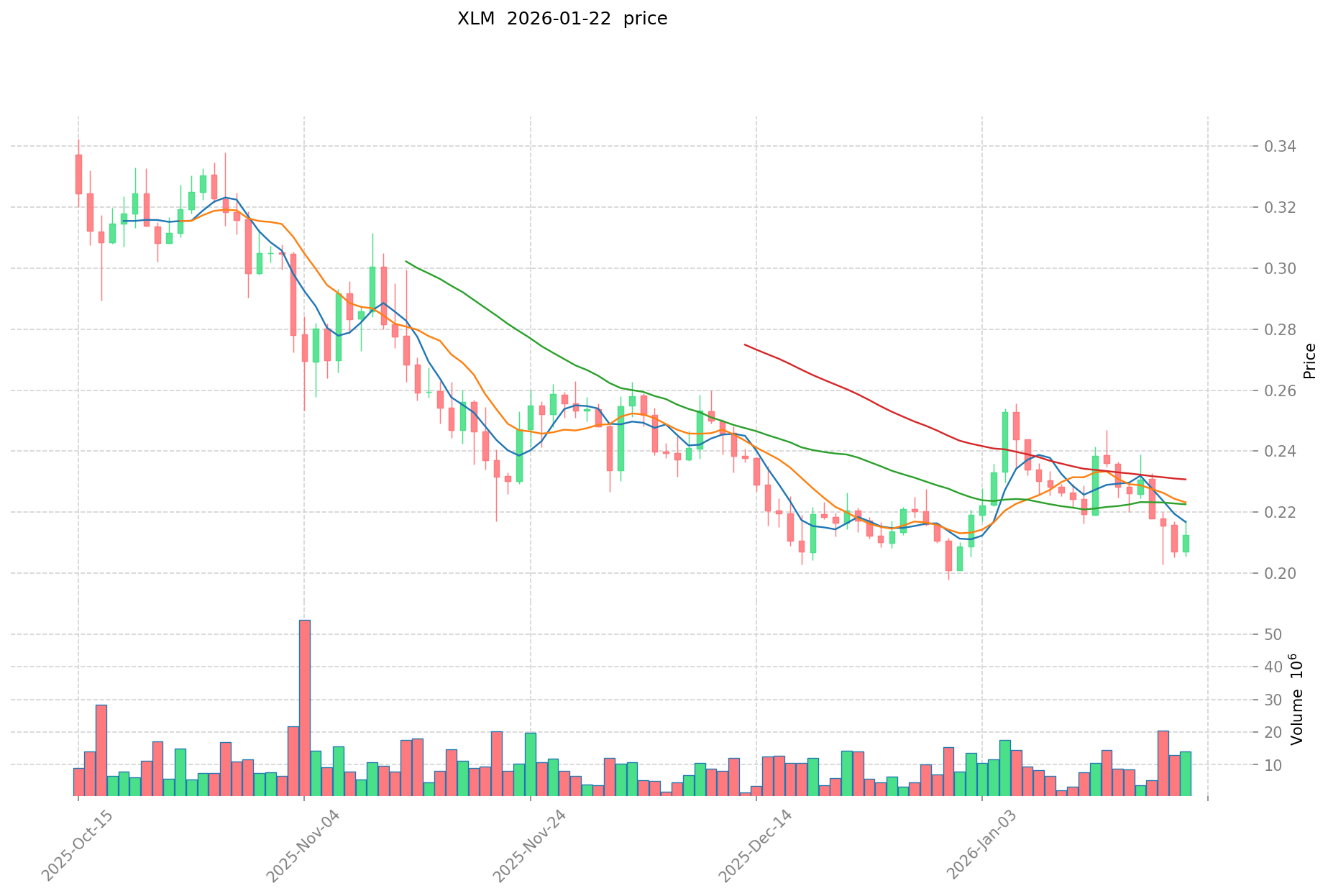
This ambitious price target has sparked considerable debate within the cryptocurrency community. To assess the feasibility of XLM reaching this milestone, we must examine multiple factors including its technological infrastructure, market dynamics, historical performance, adoption trends, and future growth potential. Understanding these elements provides crucial insights into whether this price projection is realistic or merely speculative optimism.
Concept Introduction
Stellar Lumens represents the native digital currency of the Stellar network, a blockchain-based platform specifically engineered to facilitate rapid, cost-effective international payments. Founded in 2014 by Jed McCaleb, who previously co-founded Ripple, Stellar was created with a clear vision: to establish a decentralized financial infrastructure that seamlessly connects traditional banking systems with cutting-edge blockchain technology.
The currency itself, Lumens (trading symbol: XLM), serves multiple critical functions within the Stellar ecosystem. It provides essential liquidity for cross-border transactions, acts as a bridge currency between different fiat currencies, and helps secure the network by preventing spam transactions through minimal transaction fees. This multi-faceted utility distinguishes XLM from many other cryptocurrencies that serve primarily as stores of value.
Stellar's core innovation lies in its unique consensus protocol, which fundamentally differs from the energy-intensive proof-of-work mechanisms employed by Bitcoin and other early cryptocurrencies. This efficient approach enables the network to process transactions in seconds rather than minutes or hours, making it particularly attractive for financial institutions, payment processors, and individuals seeking to transfer value across international borders without the delays and costs associated with traditional banking systems.
The platform's architecture supports the creation of custom tokens, facilitating the digitization of various assets including fiat currencies, commodities, and even real estate. This versatility has positioned Stellar as a comprehensive solution for the evolving digital economy.
Historical Background or Origin
Since its launch, Stellar has pursued an aggressive strategy of forging partnerships with established financial institutions and innovative payment service providers. This collaborative approach has been instrumental in the network's evolution and credibility within the traditional finance sector. Notable milestones include a landmark partnership with IBM to facilitate cross-border payments in the South Pacific region, as well as collaborations with several central banks exploring the implementation of central bank digital currencies (CBDCs).
Throughout its development, XLM has experienced the characteristic price volatility common to cryptocurrency markets, yet it has consistently maintained its position among the top digital assets by market capitalization. This resilience demonstrates the sustained interest and confidence in Stellar's long-term vision and technological capabilities.
The price trajectory of Stellar Lumens has been shaped by various factors including broader cryptocurrency market trends, regulatory developments across different jurisdictions, technological upgrades to the network, and the announcement of significant partnerships. During the cryptocurrency boom of late 2017 and early 2018, XLM reached its all-time high near $0.93, driven by widespread market enthusiasm and speculation.
Over the following years, the price corrected alongside the broader market downturn, but Stellar continued to focus on building real-world utility and expanding its network of partners. This commitment to fundamental development, rather than mere price speculation, has helped establish Stellar's reputation as a serious blockchain project with genuine use cases.
Understanding this historical context is essential for evaluating future price potential, as it reveals patterns of market behavior, the impact of technological milestones, and the relationship between network adoption and token valuation.
Working Mechanism
Stellar's operational framework represents a significant departure from traditional blockchain architectures. Unlike Bitcoin, which requires energy-intensive mining operations for transaction validation, Stellar employs the Stellar Consensus Protocol (SCP), a federated Byzantine agreement system that enables faster transaction processing while consuming minimal energy resources.
This consensus mechanism allows financial institutions and other entities to establish "anchors" on the Stellar network. Anchors function as trusted intermediaries that hold deposits in traditional currencies and issue corresponding credits on the Stellar blockchain. This innovative structure creates bridges between different currencies and financial systems, enabling near-instantaneous currency conversions at minimal cost.
For example, when a user wants to send US dollars to a recipient who needs to receive euros, the Stellar network can automatically find the most efficient path for conversion, potentially using XLM as a bridge currency. This entire process occurs within seconds and at a fraction of the cost charged by traditional international wire transfer services or remittance providers.
The ecosystem's functionality extends beyond simple payment processing. Stellar supports the development of decentralized applications (dApps), token issuance for various purposes including stablecoins and asset-backed tokens, and smart contract capabilities through its Soroban platform. These features contribute to XLM's utility and create multiple sources of demand for the token.
Additionally, the network's built-in decentralized exchange allows for seamless trading between different assets issued on Stellar, further enhancing liquidity and usability. This comprehensive infrastructure positions Stellar as more than just a payment network—it's a complete financial ecosystem designed for the digital age.
Benefits or Advantages
Stellar Lumens offers numerous compelling advantages that distinguish it from both traditional financial systems and competing cryptocurrency platforms. The primary benefits center around transaction speed, cost efficiency, and accessibility—factors that are increasingly critical in our globalized, digital economy.
Transaction speed represents one of Stellar's most significant advantages. Financial transfers that traditionally require multiple business days to settle can be executed on the Stellar network within 3-5 seconds. This dramatic improvement in settlement time has profound implications for businesses managing cash flow, individuals sending remittances to family members abroad, and financial institutions seeking to modernize their payment infrastructure.
Cost efficiency is equally impressive. While traditional international wire transfers can cost $25-50 or more, and remittance services often charge percentages of the transfer amount, Stellar transactions cost a fraction of a cent. This minimal fee structure makes the network economically viable even for small-value transactions, opening up new possibilities for micropayments and financial services previously considered impractical.
Accessibility and financial inclusion form the philosophical foundation of Stellar's mission. The platform is designed to serve unbanked and underbanked populations worldwide, providing access to financial services without requiring traditional banking relationships. This democratization of finance has the potential to bring millions of people into the formal economy.
The open-source nature of Stellar's codebase ensures continuous development and improvement by a global community of developers. This collaborative approach enhances security, scalability, and feature development, ensuring the network can adapt to evolving market needs and technological advances.
For businesses, Stellar offers a compelling value proposition: the ability to expand into international markets with minimal friction, reduced transaction costs, and improved customer experience. These attributes make Stellar Lumens an increasingly attractive option for enterprises seeking to modernize their payment infrastructure and embrace digital transformation.
Financial Analysis or Predictions
Assessing whether Stellar Lumens could realistically reach $100 requires rigorous analysis of market capitalization dynamics, supply economics, adoption trajectories, and macroeconomic factors. This evaluation must balance optimistic potential with realistic constraints.
In recent years, XLM has maintained a total supply of approximately 50 billion tokens, with roughly half in active circulation. For XLM to achieve a $100 price point, the market capitalization would need to reach $5 trillion (based on circulating supply) or $2.5 trillion (based on total supply). To put this in perspective, this valuation would exceed the current market capitalization of the entire cryptocurrency market and rival the GDP of major economies.
This mathematical reality presents a significant challenge to the $100 price target. However, several factors could theoretically drive substantial price appreciation:
First, widespread institutional adoption could dramatically increase demand for XLM. If major financial institutions, payment processors, and central banks integrate Stellar for cross-border settlements and CBDC infrastructure, the utility value of XLM would increase substantially. Network effects would amplify this adoption, as each new participant makes the network more valuable for all users.
Second, the tokenomics of XLM include mechanisms that could reduce circulating supply. The Stellar Development Foundation has historically conducted token burns, and transaction fees (though minimal) are permanently removed from circulation. Over time, these deflationary pressures could impact supply dynamics.
Third, macroeconomic factors such as currency devaluation, inflation concerns, and geopolitical instability could drive increased interest in alternative financial systems and digital assets. If Stellar positions itself as critical infrastructure for the digital economy, it could benefit from these broader trends.
Market sentiment and speculative investment cycles also play crucial roles in cryptocurrency valuations. Past bull markets have demonstrated that when network adoption increases and retail enthusiasm surges, prices can appreciate dramatically beyond what fundamental analysis might suggest. The 2017-2018 crypto boom, for instance, saw numerous assets achieve valuations that seemed impossible just months earlier.
However, realistic price predictions must account for market maturation, regulatory developments, and competition from other blockchain platforms. While $100 may represent an extremely ambitious long-term target, more moderate price appreciation remains plausible if Stellar continues expanding its network and demonstrating real-world utility.
Investors should monitor key indicators including partnership announcements, transaction volume growth, developer activity, and regulatory clarity as signals of future price potential. Technical analysis of historical price patterns, support and resistance levels, and trading volume can also provide insights into shorter-term price movements.
Historical Insights
Examining Stellar Lumens' historical price performance provides valuable context for understanding its future potential and the factors that drive its valuation. The token's price history reflects both the broader cryptocurrency market cycles and Stellar-specific developments.
During the cryptocurrency boom of late 2017 and early 2018, XLM experienced explosive growth, reaching its all-time high near $0.93 in early January 2018. This surge was driven by widespread market enthusiasm, increased retail participation in cryptocurrency markets, and growing awareness of Stellar's technological capabilities and partnership announcements. The price appreciation during this period demonstrated XLM's capacity for significant gains during favorable market conditions.
The subsequent market correction throughout 2018 and 2019 saw XLM decline along with the broader cryptocurrency market, illustrating the strong correlation between Bitcoin's price movements and altcoin valuations. This pattern has remained consistent throughout Stellar's history, with XLM generally following Bitcoin's directional trends while occasionally outperforming during periods of positive Stellar-specific news.
Over the following years, several events have influenced XLM's price trajectory. The announcement of the IBM partnership generated positive momentum, as did the launch of various projects building on the Stellar network. Conversely, broader market downturns, regulatory concerns, and competitive pressures from other blockchain platforms have periodically weighed on the token's valuation.
Despite price volatility, Stellar has continued focusing on fundamental development rather than short-term price speculation. This commitment to building real-world utility has helped maintain the project's credibility and long-term investor confidence. The network has consistently processed millions of transactions, demonstrating genuine adoption and use cases beyond mere speculation.
Analyzing these historical patterns reveals important insights: XLM's price is highly sensitive to overall cryptocurrency market sentiment, significant partnerships and technological milestones can drive substantial price appreciation, and long-term value creation depends on continued network adoption and real-world utility.
For investors considering XLM's potential to reach $100, this historical context suggests that while dramatic price increases are possible during bull markets, achieving such an ambitious target would require unprecedented adoption levels and fundamental shifts in how global finance operates.
Conclusion or Future Outlook
The question of whether Stellar Lumens can achieve a $100 valuation extends far beyond simple price speculation—it encompasses the broader transformation of global financial systems and the role blockchain technology will play in shaping the future of money and payments.
While the mathematical requirements for XLM to reach $100 present substantial challenges, the future of Stellar Lumens remains promising within a more realistic framework. As central banks worldwide continue exploring digital currencies, financial institutions seek more efficient cross-border payment solutions, and consumers demand faster, cheaper international transfers, Stellar's unique positioning offers significant advantages that could drive increased adoption and value appreciation.
The network's technological infrastructure, proven track record of partnerships with established financial institutions, and commitment to financial inclusion create a foundation for long-term growth. If Stellar successfully captures even a modest percentage of the global payments market, the value proposition for XLM could strengthen considerably.
However, several hurdles remain. Competition from other blockchain platforms, regulatory uncertainties across different jurisdictions, the need for continued technological innovation, and the challenge of achieving widespread adoption all present obstacles to dramatic price appreciation. Additionally, the tokenomics and supply dynamics of XLM mean that reaching extreme price targets like $100 would require market capitalization levels that currently seem improbable.
For potential investors and enthusiasts, the key takeaway is that investing in Stellar Lumens, like any cryptocurrency, demands comprehensive due diligence and realistic expectations. Understanding market dynamics, monitoring technological progress, staying informed about regulatory developments, and maintaining a long-term perspective are essential for navigating the volatile cryptocurrency landscape.
The possibilities for Stellar Lumens remain as expansive as the evolving world of digital finance itself. While $100 may represent an aspirational rather than realistic near-term target, the network's fundamental value proposition and potential for growth in a digitizing global economy suggest that XLM could continue playing a significant role in the future of finance. Investors should focus on the project's real-world utility, adoption metrics, and technological developments rather than fixating solely on price targets, as these fundamentals will ultimately determine Stellar's long-term success and value.
FAQ
What is Stellar Lumens (XLM)? What are its main uses?
Stellar Lumens is a blockchain platform designed for fast, low-cost cross-border payments and asset transfers. XLM serves as the native currency, facilitating transactions between different fiat currencies and digital assets globally. Its main purposes include enabling remittances, tokenizing assets, and providing infrastructure for decentralized finance applications.
What is XLM's all-time high price? What conditions are needed for it to reach $100?
XLM's all-time high was approximately $0.88 in January 2018. To reach $100, XLM would need massive institutional adoption, significant use case expansion in cross-border payments, and substantial increase in overall market capitalization and trading volume.
What are the technical advantages of Stellar Lumens? How does it differ from other cryptocurrencies?
Stellar Lumens excels in fast, low-cost cross-border payments with 3-5 second settlement times. Its federation protocol enables seamless asset transfers between networks. Unlike competitors, Stellar prioritizes accessibility and financial inclusion with minimal transaction fees, making it ideal for remittances and institutional adoption.
What are the main factors affecting XLM price?
XLM price is influenced by network adoption, market sentiment, Bitcoin correlation, Stellar ecosystem development, trading volume, regulatory changes, and macroeconomic conditions. Strong partnerships and use cases in cross-border payments drive positive momentum.
What are the risks of investing in Stellar Lumens?
Stellar Lumens faces market volatility risks, regulatory uncertainty, and competition from other blockchain platforms. Network adoption fluctuations and technological changes can impact value. As with all cryptocurrencies, price can be highly unpredictable and investments carry substantial risk.
What are professional analysts' price predictions for XLM in the future?
Analysts project XLM could reach $10-50 by 2028, driven by Stellar's growing adoption in cross-border payments and partnerships. Some bullish forecasts suggest potential for higher levels, though predictions vary based on market conditions and blockchain adoption rates.
How is the adoption rate and market prospect of Stellar Lumens?
Stellar Lumens demonstrates strong adoption growth driven by its focus on cross-border payments and financial inclusion. With increasing institutional interest and expanding partnership ecosystem, XLM shows promising market potential for significant value appreciation in the coming years.
How Does XRP's Token Economic Model Differ from Other Cryptocurrencies?

What is the Core Logic of Stellar (XLM)'s Whitepaper and How Does it Impact Its Future?

Understanding Litecoin's Features and Use Cases
How Does Bitcoin Cash (BCH) Compare to Bitcoin in Terms of Holdings and Fund Flows?
What Is Zcash (ZEC) Fundamentals: Analyzing White Paper Logic, Use Cases, and Technology Innovation in 2026

How Does Competitor Benchmarking Analysis Improve Market Strategy?

How to Make Passive Income from XRP: Comprehensive Guide

Western Union Develops Stablecoin-Based Prepaid Card and Proprietary USDPT Token

What Does IDO Mean in Crypto?

How to Stake XRP on Ledger Safely

Is Crypto Arbitrage Legal?