
fomox
MarketsPerpsSpotSwap
Meme
Referral
More
Search Token/Wallet
/

Cryptocurrency trading with Japanese candlesticks
2025-12-29 09:22:20
Crypto Trading
Crypto Tutorial
Investing In Crypto
K-line
Spot Trading
Article Rating : 4
60 ratings
Master cryptocurrency trading with Japanese candlesticks. Explore candlestick fundamentals, learn how to interpret them, and analyze trading patterns on Gate. This complete guide delivers practical examples and strategies for both novice and seasoned traders.
Cryptocurrency trading with Japanese candlesticks

Japanese Candlesticks: What Are They, and How Do You Read and Analyze Candlestick Charts?

Japanese Candlesticks: A Beginner’s Guide

Japanese candlesticks are a visual method for tracking asset price movements on charts. Originating in 18th-century Japan for rice price analysis, this technique is now used across the entire financial sector, including digital asset trading platforms. Each candlestick represents price changes for a specific time period—such as one minute, one hour, one day, or any selected timeframe.

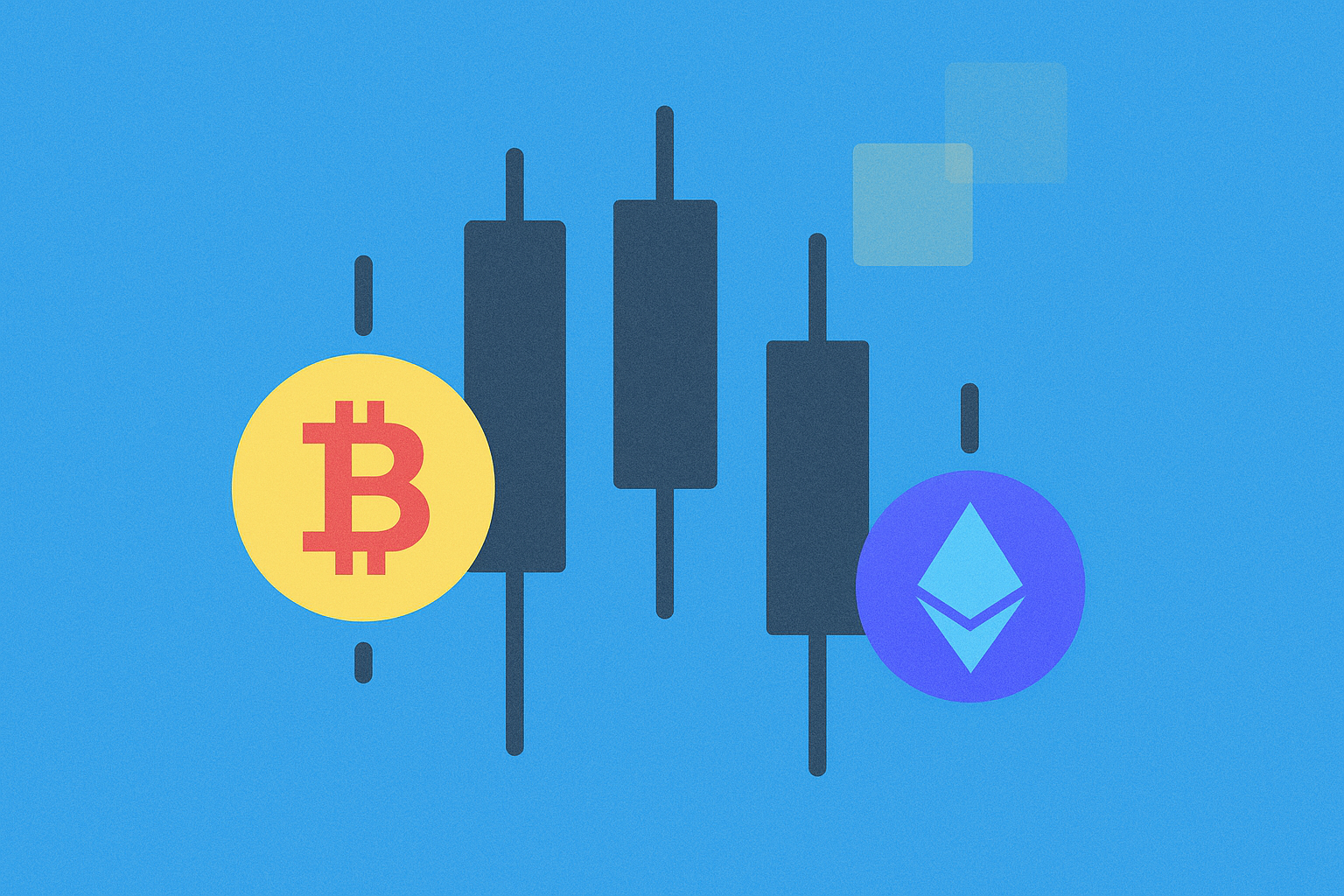
A Japanese candlestick has several essential components. The body is a rectangle that displays the range between the period’s opening and closing prices. A green (or white) body means the closing price is higher than the opening price—a bullish signal. A red (or black) body means the closing price is lower than the opening price—a bearish signal. Wicks (or shadows) are thin lines above and below the body, indicating the highest and lowest prices reached during the period.

For example, on an hourly Bitcoin chart, if the opening price was $42,000 and the closing price was $43,500, the candlestick will be green, with its body spanning the $42,000 to $43,500 range. If the hourly high was $44,000 and the low was $41,500, the wicks will mark those extremes.

Several factors drive the popularity of Japanese candlesticks. First, they’re easy to read—even for traders just starting technical analysis. Second, each candlestick provides a complete and informative snapshot of price action for its period. Third, Japanese candlesticks are highly versatile and can be used to analyze any financial asset—from digital currencies and stocks to commodities and forex pairs.

The Function of Japanese Candlesticks on Charts

Japanese candlesticks play a crucial role in helping traders make informed decisions based on technical analysis. Far from decorative, they offer powerful insights into market behavior.

Their first key function is showing price dynamics. Candlesticks clearly illustrate how an asset’s price changed during a specific timeframe, enabling traders to quickly gauge trend direction—whether it’s bullish (upward) or bearish (downward). The wick’s length indicates volatility: long wicks mean sharp price swings, while short wicks imply relative stability. The candlestick body’s size reflects the strength of market movement—a large body signals strong momentum; a small body points to weak momentum.

Second, candlesticks reflect market psychology. Each candlestick tells the story of market participants’ actions. A long green candlestick means buyers are in control and demand is climbing. A long red candlestick signals sellers dominance and increasing supply. Candlesticks with small bodies and long wicks are especially revealing—they highlight market indecision and fierce competition between bulls and bears over price setting.

Third, candlesticks form the foundation for pattern analysis. Certain combinations create patterns with predictive value for future price direction. Patterns like Hammer, Shooting Star, Bullish Engulfing, and others help traders spot signals for trend reversal or continuation.

How to Read Japanese Candlesticks: Step-by-Step

To leverage Japanese candlesticks effectively in technical analysis, you must learn to interpret them correctly. The following steps outline the analysis process:

Step one: Select the right timeframe. Most platforms offer intervals from one minute to one month. Your choice should match your trading strategy. For short-term trades, use 1-, 5-, or 15-minute timeframes. For medium-term, 1-hour and 4-hour intervals are optimal. For long-term investing and analysis, choose daily, weekly, or monthly charts.

Step two: Analyze the candlestick body. A green body means prices are rising and buyers are active for that period. A red body means prices are falling and sellers are dominant. A small body of any color signals market indecision and a lack of clear direction.

Step three: Evaluate the wicks. A long upper wick indicates buyers tried to push prices higher but failed, causing a retreat. A long lower wick means sellers attempted to drive prices down, but buyers pushed back and prices recovered. If wicks are absent or very short, it suggests a strong trend with little resistance.

Step four: Compare sequences of candlesticks. Examine several consecutive candlesticks. Multiple green candles in a row point to an uptrend. Multiple reds signal a downtrend. Alternating green and red candlesticks reflect sideways movement with no clear direction.

Key Candlestick Patterns: Analysis Essentials

Candlestick patterns are specific combinations of Japanese candlesticks that often predict future price direction. Patterns may involve one, two, or three candlesticks.

Single-candle patterns use only one candlestick. The Hammer pattern features a small body (either green or red) and a long lower wick, signaling a bullish reversal after a downtrend. This pattern suggests sellers drove prices down, but buyers stepped in with strong support, pushing the close far above the low.

The Shooting Star pattern signals the opposite. It has a small body and a long upper wick, pointing to a bearish reversal after an uptrend. Sellers tried to take control, but despite resistance, the close ended far below the period’s high.

The Doji pattern forms when the opening and closing prices are nearly equal, resulting in an almost nonexistent or tiny body. This pattern reveals market indecision and often comes before a sharp move in either direction. Confirmation from the following candlestick is recommended when interpreting Doji.

Two-candle patterns analyze two consecutive candlesticks. The Bullish Engulfing pattern features a red candle followed by a larger green candle that completely engulfs the previous one’s price range—a strong bullish signal, suggesting upward momentum. The Bearish Engulfing pattern is the reverse: a green candle followed by a larger red candle covering the earlier range, signaling a potential price drop.

Three-candle patterns involve three consecutive candlesticks. The Morning Star comprises a red candle, a small candle (often a Doji), and a green candle—indicating a bullish reversal after a downtrend. The Evening Star mirrors this, but in reverse order: green, small, then red, signaling a bearish reversal after an uptrend.

Practical Candlestick Analysis

Applying Japanese candlestick insights to trading requires a structured approach and clear steps.

Step one: Open the price chart for your chosen asset. Select the trading pair and switch to candlestick chart mode.

Step two: Identify the main trend. Use broader timeframes like 4-hour or daily charts. Study the sequence of candlesticks: if green dominates, the trend is upward; if red dominates, it’s downward. Watch the direction of highs and lows as well.

Step three: Search for candlestick patterns. On shorter timeframes such as 1-hour, look for Hammer or Shooting Star patterns for short-term trades. On daily charts, identify Engulfing patterns for longer-term positions.

Step four: Confirm signals with additional indicators. Candlestick analysis is most effective when combined with technical indicators. The Relative Strength Index (RSI) helps validate overbought or oversold conditions. MACD provides insight into trend strength and direction. Support and resistance levels pinpoint optimal entry and exit points.

Step five: Make your trading decision. If you spot a Bullish Engulfing pattern in an uptrend and RSI is rising, that may signal it’s time to open a long (buy) position. If you see a Bearish Engulfing pattern in a downtrend, it may be a signal to open a short (sell) position or close an existing long.

Conclusion

Japanese candlesticks remain one of the most fundamental and effective tools for technical analysis on financial markets. Their enduring popularity comes from simplicity, informativeness, and universal applicability to all asset classes. Mastering candlestick reading and pattern analysis gives traders a competitive edge when making trading decisions. However, Japanese candlesticks deliver the most value when combined with additional technical indicators and sound risk management practices. Ongoing practice and refining analytical skills empower traders to use candlestick analysis successfully in reaching their financial goals.

FAQ

What are Japanese candlesticks in plain language?

Japanese candlesticks are charting tools used to analyze cryptocurrency prices. Each candlestick displays the opening, closing, highest, and lowest prices for a set time period. A green candlestick signals price gains; a red candlestick signals losses. They’re the main tool for forecasting price movements.

What are Japanese candlesticks?

Japanese candlesticks are a graphical method for displaying crypto asset prices over a specific period. Each candlestick shows the opening, closing, high, and low prices. Green means price is rising, red means it’s falling. This tool helps traders analyze trends and make informed trading decisions.

How do you use Japanese candlesticks?

Japanese candlesticks illustrate the opening, closing, high, and low prices for a period. Green signals upward movement; red signals downward movement. Study candlestick patterns to identify trends and entry points when trading cryptocurrencies.

What types of Japanese candlestick patterns are there?

The main Japanese candlestick patterns include: Hammer, Inverted Hammer, Doji Star, Engulfing, Piercing, Cloud Cover, Three White Soldiers, and Three Black Crows. Each pattern can signal potential changes in price direction on the cryptocurrency market.

* The information is not intended to be and does not constitute financial advice or any other recommendation of any sort offered or endorsed by Gate.

Share

Content

Japanese Candlesticks: A Beginner’s Guide

The Function of Japanese Candlesticks on Charts

How to Read Japanese Candlesticks: Step-by-Step

Key Candlestick Patterns: Analysis Essentials

Practical Candlestick Analysis

Conclusion

FAQ

Related Articles
Moving Average Convergence Divergence (MACD Indicator) │ Technical Analysis in Cryptocurrency Investing

Moving Average Convergence Divergence (MACD Indicator) │ Technical Analysis in Cryptocurrency Investing

A beginner's guide to MACD signal utilization. This tutorial covers how to identify Golden Cross and Dead Cross patterns, strategies for effective application, and methods for integrating MACD with other technical indicators. Master MACD signal analysis to strengthen your crypto trading on Gate.
2026-01-04 03:04:17
Moving Average Convergence Divergence (MACD Indicator) | Applying Technical Analysis in Cryptocurrency Investment
Moving Average Convergence Divergence (MACD Indicator) | Applying Technical Analysis in Cryptocurrency Investment

A comprehensive beginner’s guide to the MACD indicator. Explore fundamental concepts like the golden cross, dead cross, and divergence, along with actionable trading strategies. Discover in detail how to apply the technical analysis techniques required for cryptocurrency investing using Gate.
2026-01-05 12:19:00
MACD指標是什麼?

MACD指標是什麼?

本文深入探討MACD指標(平滑異同移動平均線指標),此為加密貨幣交易中最常用的趨勢追蹤工具。文章系統介紹MACD的三個核心組成元素(快線DIF、慢線DEA及柱狀圖),闡述黃金交叉與死亡交叉的形成機制與實戰應用,並深度解析背離現象、柱狀圖變化及零軸位置等進階技巧。無論您是在Gate進行短線波段操作或中長期投資,本指南均提供完整策略框架與風險管理建議,幫助您精準識別買賣時機,優化交易決策。
2026-01-11 23:22:33
Decoding the KDJ Indicator: A Comprehensive Guide

Decoding the KDJ Indicator: A Comprehensive Guide

"Decoding the KDJ Indicator" is a comprehensive guide for traders and analysts, focusing on the KDJ as a short-term analysis tool in financial markets. It explains the indicator's components: K-line, D-line, and J-line, and their roles in identifying overbought and oversold conditions. The article highlights key usage rules and signals like Golden and Death Crosses, and divergence detection. It also discusses the practical application of KDJ in day trading and crypto markets, guiding readers on decision-making with it and addressing FAQs for deeper understanding. Suitable for traders seeking clearer insights into price movements and market sentiment.
2025-11-26 09:10:48
Understanding Bullish Candlestick Patterns for Effective Trading Strategies

Understanding Bullish Candlestick Patterns for Effective Trading Strategies

Understand bullish candlestick patterns and enhance trading strategies by decoding market trends. This article covers what candlestick patterns are, focusing on bullish, bearish, and continuation patterns to identify market sentiment. Readers will learn how to read and apply these patterns, benefiting both novice and experienced traders. Structured logically, each section builds understanding, culminating in a comprehensive view to inform trading decisions effectively. Keywords like candlestick patterns, bullish trends, and market sentiment are optimized for quick readability and scanning.
2025-10-29 08:17:49
How to Interpret MACD and RSI Signals for Cryptocurrency Trading?

How to Interpret MACD and RSI Signals for Cryptocurrency Trading?

This article offers a comprehensive guide to interpreting MACD and RSI signals, essential for optimizing cryptocurrency trading strategies. It explores the fundamentals of these indicators and their application in analyzing trends and momentum. The piece addresses the challenges of false signals by integrating volume analysis, providing a robust trading framework. Targeted at traders, especially those in Gate, the article enhances decision-making by combining technical indicators and market data effectively. Keywords such as MACD, RSI, and volume are emphasized for readability and quick understanding.
2025-12-04 03:56:42
Recommended for You
What Causes Crypto Price Volatility and How to Analyze Support and Resistance Levels

What Causes Crypto Price Volatility and How to Analyze Support and Resistance Levels

This comprehensive guide explores cryptocurrency price volatility and technical analysis fundamentals essential for traders. The article identifies core volatility drivers including macroeconomic conditions, regulatory shifts, and blockchain ecosystem developments, then demonstrates how to identify support and resistance levels through historical price patterns. Readers learn to analyze volatility metrics like ATR and Bollinger Bands alongside BTC/ETH correlation patterns to understand market behavior. The guide provides practical trading strategies that synchronize support/resistance zones with volatility indicators for optimized entry and exit timing. Designed for traders on platforms like Gate, this content combines theoretical frameworks with real-world examples, including position sizing strategies and alert systems. Whether you're analyzing price bounces at support levels or breakouts at resistance, this resource equips you with actionable technical analysis skills to navigate crypto market volatility e
2026-01-12 03:23:33
Altcoin Season Coming: How to Spot the Next Altcoin Bull Market?

Altcoin Season Coming: How to Spot the Next Altcoin Bull Market?

This comprehensive guide identifies key indicators signaling the upcoming altcoin surge, featuring the Altcoin Season Index (ASI), declining Bitcoin dominance below 60%, and institutional capital inflows driving the current bull market. The article examines how capital systematically rotates from Bitcoin through Ethereum into smaller altcoins, examining leading tokens like XRP, Solana, and meme coins as important momentum signals. Key sections cover risk management strategies, profit-taking frameworks, and practical tools including TradingView and DeFiLlama for tracking real-time market shifts. Investors learn optimal portfolio allocation methods combining blue-chip assets with growth-oriented altcoins and controlled speculative positions, supported by multi-chain wallet platforms for efficient asset management across blockchain networks. The guide balances opportunity identification with critical risk warnings about liquidation, rug pulls, and late-cycle entry dangers, providing actionable frameworks for nav
2026-01-12 03:23:13
What are the key differences between competing cryptocurrencies in the same market segment

What are the key differences between competing cryptocurrencies in the same market segment

This comprehensive guide examines key differences between competing cryptocurrencies within the same market segment across four critical dimensions. First, it analyzes performance metrics including transaction speed, scalability, and energy efficiency—essential factors determining user adoption and network utility. Second, it compares market valuation trends and active user bases during 2025-2026, using real data to illustrate how market cap fluctuations correlate with genuine adoption momentum. Third, it explores differentiation strategies through technological innovations and competitive advantages, demonstrating how multichain architecture and automated optimization create compounding benefits. Finally, it tracks market share dynamics between dominant players and emerging challengers, showing how tokenomics scarcity models and governance mechanisms reshape competitive positioning. Whether evaluating DeFi tokens on Gate or Layer 1 blockchains, this framework enables investors and developers to identify sust
2026-01-12 03:21:29
How does Fed policy and inflation data affect cryptocurrency prices
How does Fed policy and inflation data affect cryptocurrency prices

This article explores how Federal Reserve policy decisions and inflation data directly shape cryptocurrency market dynamics. When the Fed raises rates, borrowing costs increase and Bitcoin and Ethereum typically experience downward pressure as investors shift away from risk assets. CPI report releases trigger immediate price swings within 24-48 hours, with higher inflation readings strengthening rate-hike expectations while lower data sparks rallies. The article also examines traditional market spillover effects, where S&P 500 corrections and gold rallies serve as leading indicators for cryptocurrency sentiment shifts. For traders monitoring crypto markets on Gate, understanding these macroeconomic relationships provides critical frameworks for anticipating price movements and optimizing portfolio positioning around major economic announcements and Fed decisions.
2026-01-12 03:19:26
What is the fundamental analysis of crypto projects: whitepaper logic, use cases, and team background explained
What is the fundamental analysis of crypto projects: whitepaper logic, use cases, and team background explained

This comprehensive guide to crypto project fundamental analysis equips investors with essential evaluation frameworks across four critical dimensions. First, understand whitepaper core logic by analyzing problem-solving mechanisms and economic models—how projects address real inefficiencies and sustain participation through tokenomics. Second, assess real-world use cases by examining practical applications, market demand, and adoption metrics across industry verticals, ensuring genuine utility beyond speculation. Third, evaluate technical innovation and roadmap execution through GitHub activity, audit reports, and milestone achievement rates to gauge team capability. Finally, scrutinize team background and track records by verifying founder experience, previous successful launches, exchange listings, and regulatory compliance. The guide demonstrates analysis through DeXe.network's sophisticated token economy and multi-exchange presence. Includes practical FAQ addressing whitepaper interpretation, team evaluat
2026-01-12 03:17:48
What is crypto exchange net flow and how does it affect token price movements?

What is crypto exchange net flow and how does it affect token price movements?

This article explores crypto exchange net flow as a critical metric for predicting token price movements. Exchange net flow measures capital movement between exchanges and external wallets, serving as a leading indicator of market sentiment and selling pressure. The guide covers three core dynamics: how inflow and outflow trends reveal institutional positioning before price shifts, how whale accumulation patterns and holding concentration metrics influence volatility, and how on-chain staking lockups create artificial scarcity affecting liquidity constraints. Using NEAR Protocol as a case study, the article demonstrates real-world applications where 24-48 hour price movements can be anticipated by monitoring these metrics on platforms like Gate. Traders and investors gain practical insights into distinguishing organic price discovery from whale-driven volatility, while understanding the inverse relationship between locked token volumes and exchange net flows. The comprehensive FAQ section addresses calculatio
2026-01-12 03:16:03
