Discover the Future of Perpetual Trading with Innovative Protocols

What is Aster DEX? Next-Generation Sustainable Trading Protocol
Aster DEX represents a significant evolution in the decentralized finance ecosystem, particularly within the perpetual derivatives trading space. Following its token launch and subsequent endorsement by industry leaders, Aster has rapidly established itself as a formidable competitor in the market, challenging established platforms and introducing innovative solutions to enhance capital efficiency and user experience.
Introduction to Aster
Aster is a decentralized perpetual derivatives exchange (Perp DEX) built primarily on BNB Chain and incubated by YZi Labs. The project was formed through the merger of Astherus and APX Finance in late 2024, creating a next-generation perpetual DEX designed to compete with industry-leading platforms such as Hyperliquid. The protocol's mission is to simplify and enhance the DeFi experience by combining yield generation products to optimize user capital efficiency.
The project achieved its Token Generation Event (TGE) on September 17, 2025, at 10:00 UTC with the ticker ASTER. Within hours of launch, prominent industry figures publicly endorsed the project, immediately attracting significant attention from the crypto community and driving exceptional price appreciation exceeding 500%. This rapid adoption underscores market confidence in Aster's potential and innovation.
Aster has demonstrated impressive metrics that validate its market position. The protocol's Fully Diluted Valuation (FDV) stands at approximately $12.1 billion, while trading volume has reached substantial levels—a milestone that demonstrates strong market traction. The Total Value Locked (TVL) has surpassed $1.7 billion, with consistent trading volumes demonstrating strong user adoption and platform activity.
Core Features and Products
Aster's ecosystem extends beyond a simple perpetual trading platform, incorporating multiple complementary products designed to create a comprehensive DeFi experience. The protocol combines its core Perp DEX with earning opportunities and a yield-generating stablecoin, positioning itself as a full-service DeFi solution.
Perpetual DEX Platform
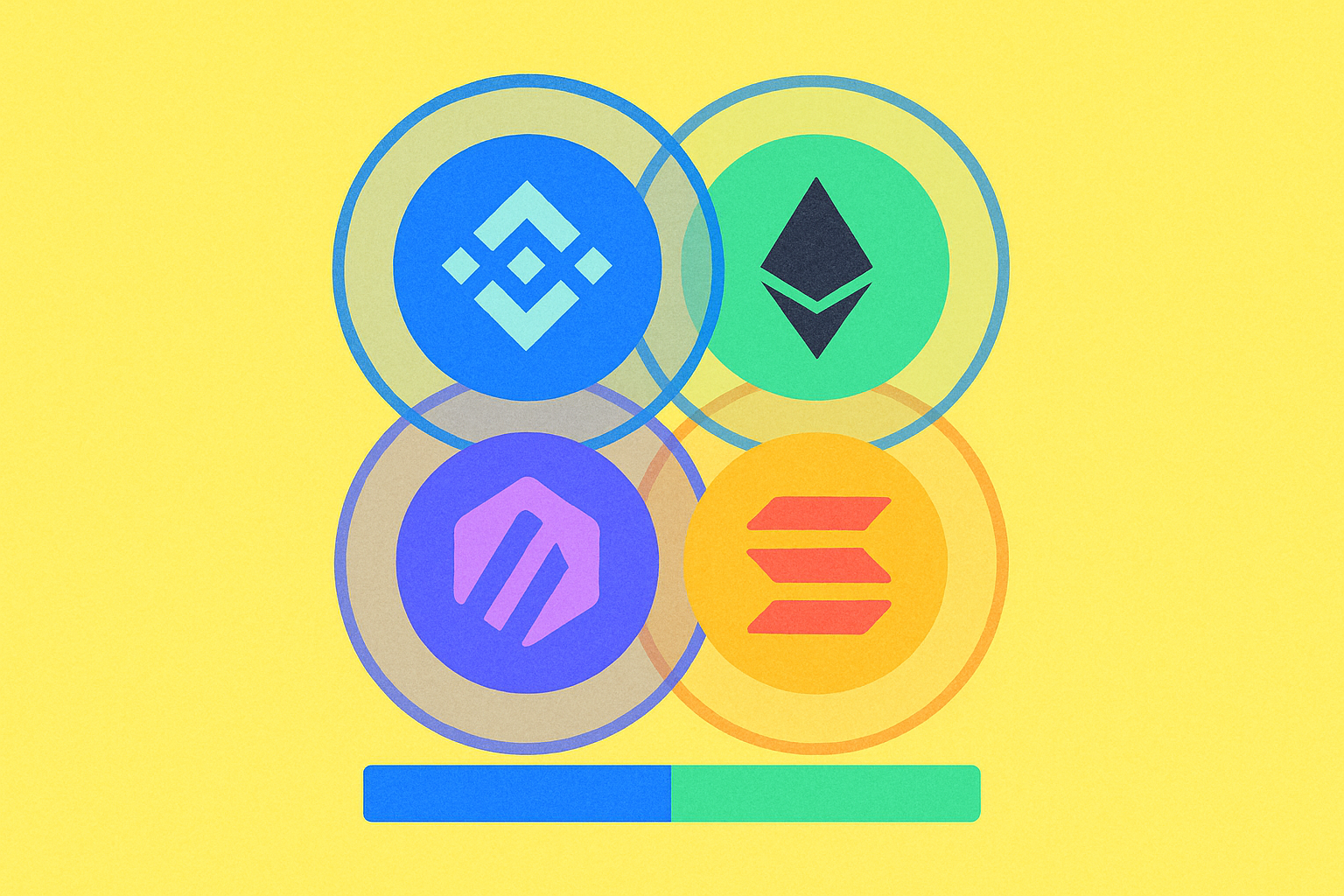
The Aster Perpetual DEX focuses on cross-chain sustainable trading capabilities spanning multiple blockchain networks including BNB Chain, Solana, Ethereum, and Arbitrum. The protocol aggregates liquidity across these chains, eliminating the need for third-party bridges while supporting diverse crypto assets.
The DEX offers two distinct trading modes tailored to different user segments:
Easy Mode is designed for casual traders seeking simplicity and accessibility. This mode features an intuitive user interface requiring no initial margin, offering leverage up to 1001x, and incorporating MEV protection through aggregated oracle price feeds from multiple leading oracle providers. A circuit breaker mechanism activates when price deviations exceed 1%, protecting users from extreme volatility. Profit caps are implemented according to leverage settings: 500x leverage enables 500% ROI, while 1001x leverage provides 300% ROI.
Professional Mode serves advanced traders requiring sophisticated tools. This mode includes real-time order books, technical charting capabilities, and advanced position management tools. It supports multi-chain execution with competitive fee structures (0.01% maker fee / 0.035% taker fee), providing professional traders with competitive advantages.
Spot Trading
Aster Spot enables users to directly purchase tokens using USDT, functioning similarly to major digital asset trading platforms. Currently, the offering supports asset selections including BTC, ETH, USD1, and ASTER, with potential expansion planned as the ecosystem develops.
Earning Services
The Earn product allows users to stake assets and generate passive income, effectively converting idle capital into productive yield-bearing positions. Supported assets include asBNB, asCAKE, asBTC, and the protocol's native stablecoin USDF. These liquid staking tokens enable users to stake underlying assets (such as BNB to receive asBNB) and subsequently deploy them for yield generation or integration with other DeFi strategies.
Yield-Generating Stablecoin (USDF)
USDF represents an innovative approach to stablecoin design, maintaining a 1:1 peg with USDT while actively generating returns. Unlike traditional stablecoins that merely store value or provide liquidity, USDF enhances capital efficiency through a delta-neutral strategy combining three key components:
Collateralization requires users to deposit USDT or crypto assets such as BNB to mint USDF, with these assets locked as backing collateral. Delta-neutral positioning minimizes price volatility risk through strategic derivatives positioning, ensuring peg stability while capturing arbitrage and funding opportunities. Yield generation deploys collateral through multiple channels including lending and staking across DeFi protocols, and capturing positive funding rates on the Perp DEX (such as shorting when funding rates are positive).
This sophisticated structure enables USDF to deliver annual yield rates reaching 15% while functioning as a stable, dollar-pegged asset. This approach fundamentally transforms how stablecoins can deliver utility beyond store-of-value functions.
Aster Chain
Aster is developing its proprietary blockchain—Aster Chain—designed to balance on-chain transparency with user privacy protection. Currently in development phase with limited access, Aster Chain implements a unique architecture separating transaction intent from execution. All transactions are recorded on-chain for transparency, while transaction details undergo cryptographic verification and validation using zero-knowledge proofs. This design protects sensitive trader information and reduces order sniping risks, a prevalent issue on various derivatives trading platforms.
Token Economics
ASTER Token Specifications
The ASTER token operates on BNB Chain with the following characteristics:
- Name: Aster
- Symbol: ASTER
- Network: BNB Chain
- Total Supply: 8,000,000,000
- Contract Address: 0x000Ae314E2A2172a039B26378814C252734f556A
ASTER has been listed on major centralized exchanges, providing liquidity and accessibility.
Token Distribution
The token allocation reflects a community-focused distribution model:
Airdrops constitute 53.5% of total supply, with 8.8% unlocked at TGE and remaining portions vesting linearly over 80 months. Ecosystem and Community represent 30%, with linear vesting over 20 months supporting long-term protocol development. Treasury accounts for 7%, maintained in complete lockup until governance approval authorizes deployment. Team tokens comprise 5%, subject to 1-year cliff periods followed by 40-month linear vesting, aligning team incentives with long-term success. Liquidity and Listing represent 4.5%, fully unlocked at TGE to ensure market liquidity.
Additionally, Aster commits to allocating a portion of protocol revenues toward token buybacks, creating deflationary mechanisms and supporting token value appreciation.
Token Utility
ASTER tokens serve multiple functions within the ecosystem:
- Community Rewards: Incentivizing active participation and protocol engagement
- Staking: Enabling users to generate returns through token staking mechanisms
- Governance: Facilitating decentralized decision-making regarding protocol parameters and development direction
Team, Investors and Partners
Development Team
Aster has been developed by professionals with substantial expertise in DeFi and derivatives trading sectors. This expertise manifests through sophisticated protocol design and rapid execution.
Strategic Investors
Aster (formerly Astherus) was selected by YZi Labs for inclusion in its Batch 7 incubation program, a selection validating the project's technical potential and sustainable business model. This partnership provides institutional credibility and strategic support.
Key Partners
Ceffu provides secure asset custody services for Aster Earn, ensuring maximum security for user funds within hybrid DeFi strategies. Oracle Integration involves Aster implementing price information from multiple leading oracle providers, ensuring accuracy, transparency, and robust protection against on-chain price manipulation. Multi-chain Infrastructure includes deployment across major blockchain networks: BNB Chain as the primary network, Arbitrum as a leading Ethereum Layer-2 solution, with planned expansion to Ethereum and Solana to strengthen multi-chain vision.
Development Roadmap
Aster's roadmap reflects ambitions to evolve from a specialized Perp DEX into a comprehensive DeFi ecosystem, culminating in a Layer-1 blockchain optimized for derivatives trading:
Q4 2024 involved the merger of Astherus and APX Finance, combining Astherus's yield products with APX's perpetual trading expertise to form Aster.
Q1 2025 saw the launch of AsterEX Easy and Professional versions on BNB Chain, with Easy Mode offering on-chain trading with up to 1001x leverage, no margin requirements, multi-oracle support, and simplified operations, while Professional Mode provided order book functionality, low fees, and advanced risk management tools.
Q2 2025 introduced Arbitrum integration and launched the Spectra Rewards program. Arbitrum expansion reduced transaction fees and accelerated settlement, while the Spectra program offered Au Points for Earn and staking users and Rh Points for Perp traders, accumulating toward future ASTER token airdrops.
Q3 2025 involved ASTER token issuance and expansion to Ethereum and Solana networks. The native ASTER token facilitates payments, staking, governance, and airdrops, while multi-chain deployment captures broader liquidity access.
Q4 2025 and beyond marks the advancement of AsterLayer, a Layer-1 blockchain specifically optimized for derivatives and yield, incorporating zero-knowledge proof integration for scalability and security, with native blockchain explorers enhancing transparency and user experience.
Competitive Landscape
Aster operates within a dynamic competitive environment encompassing multiple specialized platforms:
Hyperliquid maintains market leadership in on-chain Perp DEX trading volume through high-speed order books and professional trader-focused user experience. Its primary weakness lies in single-chain dependency, presenting multi-chain opportunities for Aster.
GMX demonstrated market prominence through its GLP pool model and attractive liquidity provider yields. However, market volatility exposed LP risks and eroded returns, creating opportunities for Aster to implement more sustainable liquidity mechanisms.
Avantis represents emerging Perp DEX platforms attracting retail traders through superior user experience and intuitive interfaces. Despite insufficient liquidity depth, its accessibility raises user experience standards, pressuring Aster to determine whether competing on simplicity or focusing on professional traders offers greater advantage.
Orderly operates as a B2B infrastructure layer providing perpetual liquidity, with rapid growth and embedding across numerous frontends. Aster risks market share loss if limited to B2C models, making dual B2C+B2B strategies more viable.
SynFut focuses on permissionless Perp listings enabling any participant to create derivative markets. While driving rapid product growth, liquidity dilution and low-quality assets present risks that Aster can mitigate through high-quality Perp pair curation.
Aevo originated on Ethereum, combining options and futures for professional trader targeting. While demonstrating complexity strength, potential accessibility limitations for retail traders create opportunities for Aster to capture intermediate segments offering both accessibility and advanced features.
Conclusion
Aster is emerging as a formidable challenger within the Perpetual DEX landscape, distinguished not merely by trading infrastructure but through integrated earning products and yield-generating stablecoin innovation. By leveraging Astherus and APX Finance strengths while advancing toward proprietary Layer-1 objectives, Aster positions itself beyond conventional exchange functionality toward next-generation DeFi ecosystem status. The protocol's market adoption, comprehensive product suite, multi-chain architecture, and strategic partnerships collectively demonstrate the potential to reshape derivatives trading and DeFi engagement for diverse user segments. As the ecosystem matures and roadmap milestones progress, Aster is positioned to significantly influence the trajectory of decentralized perpetual trading markets.
What does aster mean?
Aster is a decentralized cryptocurrency token designed to provide utility within the Web3 ecosystem. The name symbolizes growth and innovation, reflecting the project's mission to expand blockchain adoption and empower users through decentralized technologies.
What does aster mean in texting?
In texting, aster typically refers to the asterisk symbol (*), used for emphasis, censoring, or to correct previous messages. In crypto context, Aster is a blockchain platform token designed for decentralized applications and smart contracts.

Optimal Multi-Monitor Setup for Efficient Trading

A Guide to Perpetual Trading on Decentralized Platforms
ZK-Rollup Based Perpetual Trading Platform with Reliable Matching and Secure Liquidations
Ultimate Guide to Trading on Decentralized Exchanges

Discover the Future of Perpetual Trading with Advanced Web3 Protocols

Khám Phá Sàn Giao Dịch Phi Tập Trung Tốt Nhất: Tìm Hiểu về Nền Tảng Dydx

What Are the Biggest Smart Contract Vulnerabilities and Crypto Exchange Security Risks in 2026?
Identifying Fake Customer Service Scams
What Does On-Chain Data Analysis Reveal About Whale Movements and Active Addresses in Crypto Markets

The Sandbox (SAND): A Blockchain-Based Virtual Gaming Metaverse

What Do Crypto Derivatives Market Signals Tell Us About Future Price Movements: Futures Open Interest, Funding Rates, and Liquidation Data Explained