ERC-20 Token: A Comprehensive Guide

Introduction to ERC-20 Tokens
Unlike Bitcoin, which functions primarily as a straightforward digital currency, Ethereum is a revolutionary open-source project that empowers developers to create and deploy decentralized applications (DApps). This platform unlocks boundless possibilities for blockchain innovation. Despite Ethereum’s numerous strengths, the network also faces technical challenges. For example, Ethereum is susceptible to congestion during periods of high activity, especially when processing large volumes of simultaneous transactions. Consequently, transaction fees (gas fees) and confirmation wait times can become elevated, which may negatively impact the user experience.
To resolve these issues and enhance ecosystem efficiency, the Ethereum community developed the ERC-20 token standard (Ethereum Request for Comment 20). This standard was purpose-built to improve operational efficiency and make development on the Ethereum blockchain easier, more structured, and predictable. With ERC-20, developers can create tokens that are compatible and interoperable across the entire Ethereum ecosystem.
What Is an ERC-20 Token?
ERC-20 tokens are fungible digital assets that operate on the Ethereum blockchain. This technical standard offers a framework for developers to build smart contracts on Ethereum, enabling consistent and standardized token creation and usage.
The ERC-20 standard comprises a set of rules and technical specifications that developers must strictly adhere to, ensuring that issued tokens are fully compatible with the Ethereum ecosystem. Adherence to this standard is vital, as it lets users and developers seamlessly engage with various services, applications, and protocols on Ethereum without compatibility concerns.
Each ERC-20 token serves a distinct role in the ecosystem and can be freely exchanged throughout the Ethereum network. The introduction of the ERC-20 standard has greatly simplified development, allowing token creators to interact smoothly across different apps and tokens. This fosters a more integrated and efficient environment for blockchain application development.
History of the ERC-20 Token Standard
Fabian Vogelsteller, a key developer within the Ethereum community, was the original proponent of the ERC-20 token concept, which ultimately became an industry standard. He submitted his groundbreaking proposal through Ethereum’s GitHub page, a collaborative platform where developers discuss and advance Ethereum protocols.
The proposal carried the label “Ethereum Request Comment” and was numbered “20” as it was the twentieth submission on the page. After rigorous review and broad approval from the Ethereum developer community, Vogelsteller’s proposal was officially implemented as an “Ethereum Improvement Proposal” (EIP). In practice, however, the standard is most widely recognized as “ERC-20.”
Since its adoption in 2015, all smart contract tokens built on Ethereum have been required to comply with these established guidelines and specifications. The implementation of ERC-20 marked a pivotal milestone in Ethereum’s evolution, paving the way for thousands of token projects now active on the platform.
How ERC-20 Tokens Work
The ERC-20 standard is designed for seamless integration with smart contracts—predefined agreements that automatically execute once specific conditions are met. Smart contracts powered by the Ethereum Virtual Machine (EVM) function much like sophisticated vending machines, programmed to carry out predetermined actions under certain circumstances without manual intervention.
The token creation process begins when developers follow the established instructions and guidelines. Upon satisfying all technical requirements, ERC-20 tokens can be generated and issued on the Ethereum network. These tokens are fungible, meaning each token is identical in value and utility to others of its kind, similar to traditional fiat currency.
Beyond facilitating frictionless digital asset exchanges within the Ethereum ecosystem, ERC-20 tokens deliver additional utility to holders. For example, they can grant governance rights, enabling holders to participate in protocol decision-making. ERC-20 tokens also serve as a source of passive income through mechanisms such as staking and yield farming.
Benefits of ERC-20 for the Ethereum Network
The introduction of the ERC-20 standard has fundamentally transformed Ethereum and the broader cryptocurrency market. This standard has revolutionized the creation, distribution, and utility of tokens. Key benefits of ERC-20 tokens include:
Interoperability
Interoperability is critical in the crypto industry and has often impeded mass adoption. Difficulty exchanging assets across multiple blockchains creates complexity and delays, slowing global blockchain adoption. ERC-20 solves this by allowing tokens that follow its standard to communicate and exchange assets easily and efficiently.
Holding an ERC-20 token for a specific project enables you to exchange it with tokens from other projects without undergoing complex conversions. This interoperability improves communication between protocols, accelerates token transfers, and reduces costs, creating a more integrated and liquid ecosystem.
Advanced Security
ERC-20 tokens benefit from Ethereum’s robust infrastructure and standardized protocols, inheriting network-level security features such as decentralization (eliminating single points of failure), immutability (ensuring records cannot be altered), and transparency (enabling public audits).
These strong security measures effectively prevent bad actors from manipulating critical aspects like token supply, transfer mechanisms, withdrawal processes, and transaction validation. This multi-layered security builds confidence among users and investors, minimizing risk throughout the ecosystem.
Transparency
Consistent with blockchain’s foundational principles, the ERC-20 system is engineered for full transparency. Every transaction detail—including transferred amounts and sender/recipient addresses—is permanently recorded on the Ethereum blockchain, with public access for real-time tracking.
This transparency supports transaction authenticity and token validity, providing owners and developers with higher security and trust. Independent verification of each transaction reduces fraud risk and boosts accountability across the ecosystem.
High Liquidity
ERC-20 tokens offer exceptional liquidity, as they are readily bought and sold on both centralized and decentralized exchanges. Their broad availability makes them attractive to investors seeking to profit from crypto market volatility.
High liquidity allows token holders to swiftly convert assets or exit positions with minimal slippage, creating a more efficient and appealing market for both short-term traders and long-term holders.
Customizable and User-Friendly
Token creators enjoy extensive flexibility when customizing ERC-20 tokens to support their specific goals. They can define total supply, add unique functions, select decimal precision, and choose a representative ticker symbol.
With nearly unlimited customization options, ERC-20 tokens also remain highly user-friendly. They can be created, managed, and transferred using tools and wallets like MetaMask, MyEtherWallet, and other leading platforms. Simple interfaces and broad accessibility encourage participation from users of all technical backgrounds, fueling innovation and wider adoption in the blockchain space.
Drawbacks of the ERC-20 Token Standard
Despite the many advantages of ERC-20 tokens, several inherent limitations should be considered:
Limited Flexibility
ERC-20 was designed to maximize compatibility and stability across the Ethereum ecosystem, but this standardization also restricts certain advanced functionalities. For instance, ERC-20 tokens may not be suitable for complex use cases that require more sophisticated features.
Developers seeking specialized capabilities or greater flexibility may find these constraints limiting, prompting the creation of alternative token standards such as ERC-777 and ERC-1155, which offer expanded features for specific requirements.
High Transaction Fees
One major challenge with ERC-20 tokens is transaction cost. Every transaction on Ethereum requires a gas fee, which fluctuates based on network demand.
During periods of high activity, gas fees can increase sharply, making transactions prohibitively expensive for ordinary users—especially for small-value transfers. This unpredictability complicates budgeting and planning, and may discourage investors with limited capital or users who frequently conduct small transactions.
Lack of Universal Acceptance
While ERC-20 enjoys broad support in the crypto industry, not all exchanges accept or support these tokens. Certain platforms, for technical or regulatory reasons, do not list ERC-20 tokens.
This can restrict token liquidity and limit access for users seeking to trade or utilize ERC-20 assets. Lack of universal acceptance may also impact token valuation and adoption, particularly for new projects establishing market presence.
Popular ERC-20 Tokens
Since Fabian Vogelsteller’s ERC-20 proposal was adopted, thousands of tokens have emerged following this standard. Notable ERC-20 tokens in the crypto ecosystem include:
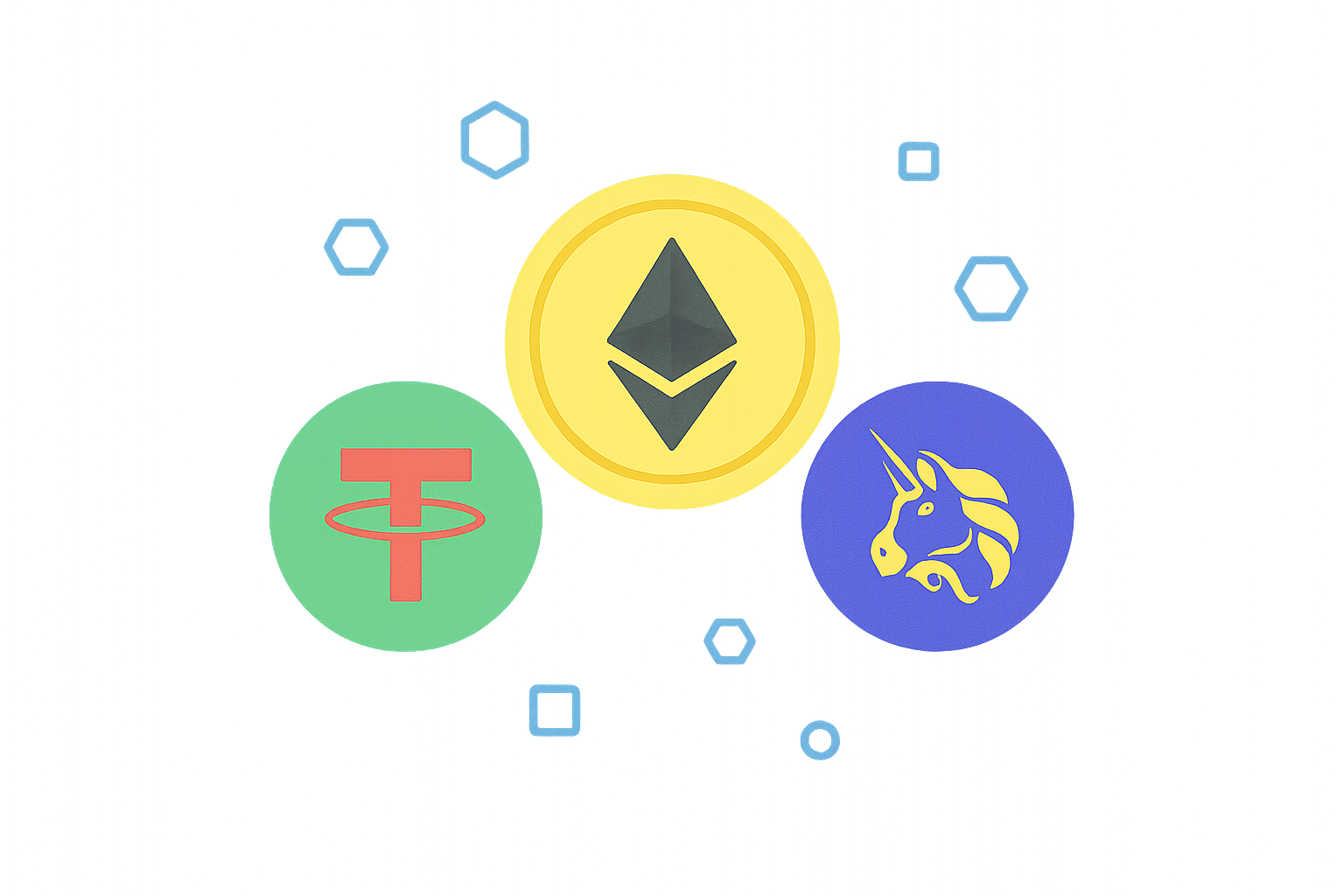
Tether
Tether (USDT) is a stablecoin on Ethereum built as an ERC-20 token. It is designed for fast transactions and lower fees compared to traditional fiat transfers. Tether is pegged to the US dollar at a 1:1 ratio, meaning each USDT token is intended to maintain parity with one US dollar.
The Tether team claims to uphold this ratio by backing every circulating token with an equivalent amount of US dollars and other liquid assets in secure, segregated accounts. Tether is widely used for rapid, efficient fund movement across exchanges and is among the most popular trading pairs. Its stability makes Tether a safe haven for traders seeking protection from crypto market volatility.
Uniswap
Uniswap is a groundbreaking decentralized exchange (DEX) running as an ERC-20 protocol on Ethereum. $UNI is Uniswap’s native governance token, central to the platform’s ecosystem. Uniswap leverages an Automated Market Maker (AMM) model that fundamentally changes crypto trading.
Unlike centralized exchanges with traditional order books, Uniswap operates without a central authority. Instead, liquidity pools funded by providers facilitate trades, enabling decentralized, transparent, and permissionless transactions without identity verification.
Leading Exchange Platforms
Many major centralized exchanges have issued their own ERC-20 tokens, providing utility within their ecosystems such as trading fee discounts, access to premium features, governance rights, and other advantages for holders.
As these tokens grow in popularity, their availability and acceptance have expanded across both decentralized and centralized exchanges. They often rank among the highest-volume crypto assets, with substantial market capitalizations reflecting strong adoption and community trust.
Other ERC Token Standards
While ERC-20 is the most widely used Ethereum token standard, developers have introduced alternatives to address its limitations or fulfill specialized needs. Key ERC token standards include:
ERC-777
ERC-777 builds on ERC-20 with advanced features, such as urgent recovery if private keys are lost—a significant benefit in crypto. It also enhances privacy and anonymity through hooks that let smart contracts respond to token transfers. ERC-777 is backward compatible with ERC-20, simplifying upgrades for projects seeking new capabilities.
ERC-721
ERC-721 was created for non-fungible tokens (NFTs). While ERC-20 tokens are fungible and cannot represent unique assets, ERC-721 enables use cases where each token is distinct. It is the foundation for the fast-growing NFT industry, supporting digital representations of unique items like art, collectibles, game assets, and virtual properties.
ERC-223
ERC-223 addresses the risk of lost tokens when sent to incompatible contract addresses. In ERC-20, tokens sent to contracts unable to accept them are lost permanently. ERC-223 introduces a mechanism for contracts to reject inappropriate transfers, preventing accidental loss and improving gas efficiency for certain transactions.
ERC-1155
ERC-1155 is an innovative multi-token standard that lets developers issue multiple types of tokens—both fungible and non-fungible—within a single smart contract. It delivers outstanding flexibility, batch transfers for lower transaction costs, and improved data storage efficiency. ERC-1155 is especially popular in gaming and applications with diverse digital assets.
FAQ
What is an ERC-20 Token and how does it work?
An ERC-20 token is a protocol standard for creating tokens on Ethereum. It enables digital assets to be traded and transferred among users. The standard defines rules for interaction and compatibility throughout the Ethereum ecosystem.
How do I create and deploy an ERC-20 token on Ethereum?
Write a Solidity smart contract, compile the code, deploy using a wallet with ETH, and mint your token. Use tools like Remix or Hardhat for a streamlined workflow.
How does ERC-20 differ from other token standards such as ERC-721 and ERC-1155?
ERC-20 tokens are fungible, while ERC-721 tokens are unique NFTs and non-fungible. ERC-1155 combines both features and allows for more efficient batch transactions.
What security risks should you consider when using or creating ERC-20 tokens?
Main risks include incompatibility with standards and missing return values, which can result in locked tokens. Always use wrapper contracts for compatibility and verify function standards to prevent permanent loss.
How can you securely send, receive, and store ERC-20 tokens?
Use a reputable ERC-20 wallet to manage your tokens. Always verify the recipient address before sending, and keep your private keys safe and protected.

Enhancing Cross-Chain Connectivity with Advanced Bridge Solutions

Discovering Ethereum Contract Addresses: A Comprehensive Guide
Understanding Blockchain Network Infrastructure: The Role of Nodes

Exploring MetaMask's Compatibility with Different Blockchain Networks

Understanding Cryptographic Hash Functions in Digital Security
Understanding Blockchain Hashing: Essential Algorithms Explained

How Long is the Cooldown for Security Contracts

Do I Have to Verify My Identity on Cash App?
Why is Cash App Asking Me to Verify My Identity?
What is the Biggest Benefit of Bitcoin and Why

How Many Days a Year Is the Stock Market Open