Exploring Atomic Swap Technology for Cross-Chain Crypto Transactions

Atomic Swaps
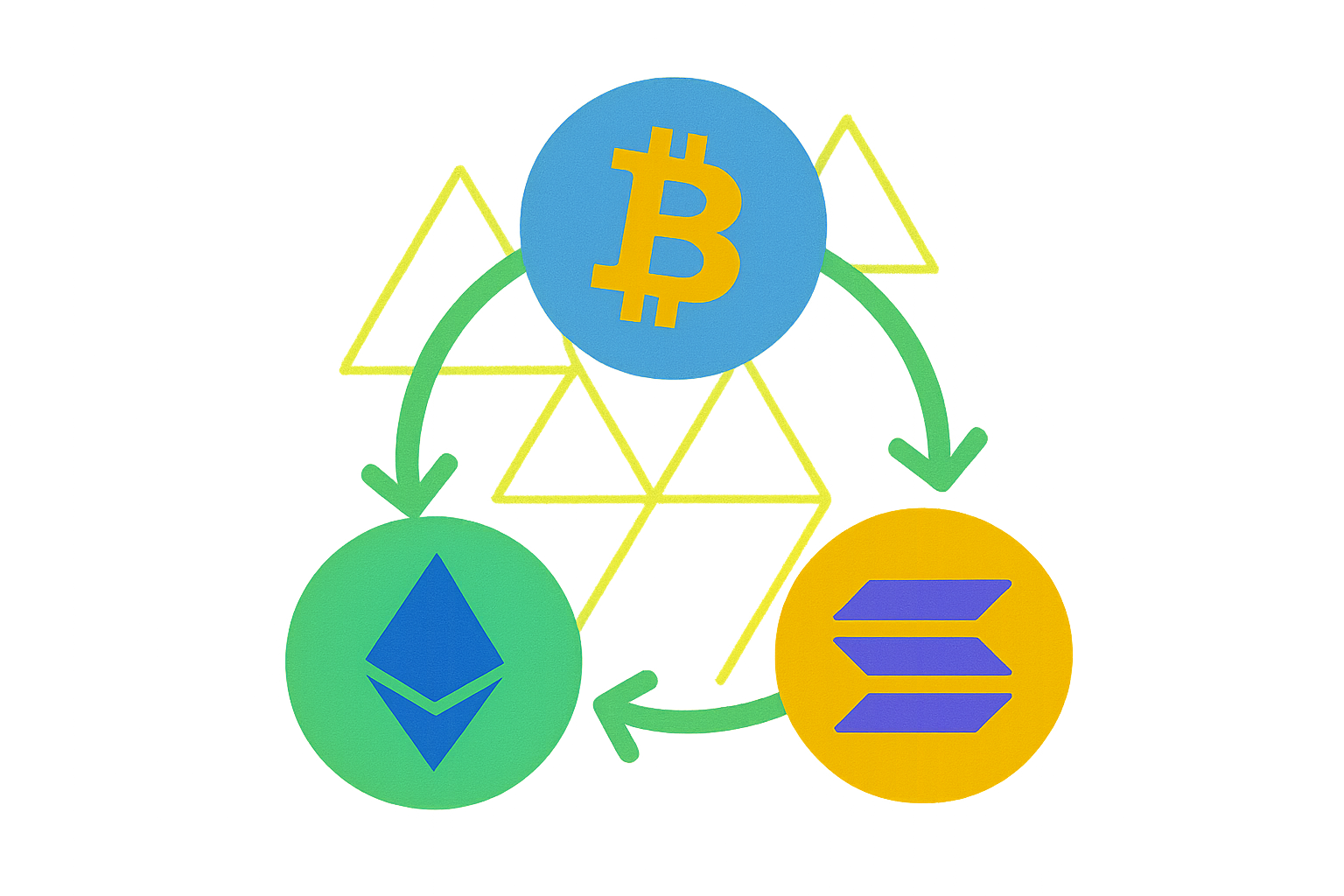
Atomic swaps, also known as cross-chain swaps or atomic cross-chain trading, refers to the process of exchanging one cryptocurrency for another between two parties without the need for a centralized intermediary, such as a cryptocurrency exchange. Through the use of cryptographic protocols and smart contracts, atomic swaps allow users to trade different cryptocurrencies securely and in a decentralized manner. These trustless transactions ensure that both parties fulfill the agreed terms simultaneously.
History of Atomic Swaps
The concept of atomic swaps dates back to 2013, when computer scientist Tier Nolan first proposed the idea on a Bitcointalk forum. Nolan outlined the foundational principles of cross-chain trading, introducing the use of cryptographic protocols to enable secure, trustless, and decentralized cryptocurrency exchanges. His proposal was revolutionary in that it eliminated the need for centralized third parties, which were vulnerable to security breaches, system failures, and operational downtime.
As blockchain technology evolved, the atomic swap concept gained significant traction within the cryptocurrency community. Developers and enthusiasts recognized the immense potential of enabling direct peer-to-peer trading between different cryptocurrencies without intermediaries. This recognition led to extensive research and development efforts aimed at refining the concept and transforming atomic swaps from theoretical possibility into practical reality. The continuous evolution of the technology has paved the way for more sophisticated implementations and broader adoption across various blockchain networks.
How Do Atomic Swaps Work?
Atomic swaps utilize a sophisticated combination of cross-chain trading mechanisms and cryptographic protocols, specifically Hash Time-Locked Contracts (HTLCs), to facilitate secure and trustless exchanges of cryptocurrencies between two parties. The process begins with cross-chain trading, which enables the exchange of cryptocurrencies operating on separate and distinct blockchains in a completely trustless manner.
At the core of atomic swap crypto technology are Hash Time-Locked Contracts (HTLCs), specialized smart contracts that ensure transactions either complete in their entirety or not at all, preventing partial or incomplete exchanges. An HTLC is a time-bound smart contract involving a cryptographic hash function that locks the funds involved in the swap. These funds can only be unlocked by providing the correct secret key, known as a preimage, within a specified timeframe.
The HTLC process works as follows: When two parties agree to an atomic swap, they create and sign HTLCs on each of their respective blockchains. Each party locks the agreed-upon amount of their cryptocurrency using the same hash function. The first party then shares the secret preimage with the second party, who must use it to unlock the funds on their blockchain within the specified timeframe. Once the second party unlocks the funds, the first party can use the revealed preimage to unlock the funds on their own blockchain, completing the swap. If the preimage is not provided within the given timeframe, the HTLC expires, and the funds are automatically returned to their original owners.
Atomic swap crypto transactions can be executed in two ways: on-chain and off-chain. On-chain atomic swaps are executed directly on the blockchains involved and require both blockchains to support the same scripting language and HTLCs. Off-chain atomic swaps leverage second-layer solutions, such as the Lightning Network, to facilitate faster and more scalable transactions through payment channels.
Is Atomic Swap Safe?
Atomic swaps are generally considered highly safe due to their reliance on cryptographic protocols and smart contracts, particularly Hash Time-Locked Contracts (HTLCs). The cryptographic nature of HTLCs ensures that transactions are executed in an all-or-nothing manner, eliminating the risk of partial transactions or fund loss. This mechanism provides a mathematical guarantee that both parties will either complete the swap successfully or have their funds returned.
One of the key security advantages of atomic swap crypto technology is that it allows users to maintain complete control over their private keys and funds throughout the entire transaction process. Unlike centralized trading platforms, which act as custodians of users' funds and present attractive targets for hackers, atomic swaps eliminate this central point of failure. Users never need to deposit their cryptocurrencies into a third-party wallet or trading platform, significantly reducing exposure to security breaches, platform hacks, or custodial mismanagement. This self-custody model aligns with the fundamental principles of blockchain technology and provides users with enhanced security and autonomy over their digital assets.
What Are the Different Types of Atomic Swaps?
There are two main types of atomic swaps: on-chain and off-chain atomic swaps. Both types aim to facilitate secure and trustless exchanges of cryptocurrencies between different blockchains, but they differ significantly in terms of their execution methodology and underlying technology infrastructure.
On-chain atomic swaps involve transactions that are directly executed and recorded on the respective blockchains of the cryptocurrencies involved. These swaps require both blockchains to support the same scripting language and be compatible with Hash Time-Locked Contracts (HTLCs). Every transaction is permanently recorded on both blockchains, providing complete transparency and immutability. However, on-chain swaps are subject to the same limitations as the underlying blockchains, including network congestion, slower confirmation times, and higher transaction fees during periods of high activity.
Off-chain atomic swaps utilize second-layer solutions, such as the Lightning Network, which enable transactions to occur off the main blockchain. This approach provides significantly faster, more scalable, and cheaper transactions compared to on-chain atomic swaps. Off-chain solutions create payment channels between parties, allowing multiple transactions to occur without recording each one on the main blockchain. Only the opening and closing of channels are recorded on-chain, dramatically reducing network load and transaction costs.
Both on-chain and off-chain atomic swap crypto implementations contribute to the broader goal of enabling secure, decentralized, and trustless exchanges of digital assets. They promote greater interoperability between different blockchain networks and cryptocurrencies, helping to create a more connected and efficient cryptocurrency ecosystem.
Advantages of Atomic Swaps
Atomic swap crypto technology offers numerous significant advantages that make it an attractive alternative to traditional centralized cryptocurrency trading platforms. First and foremost is decentralization and trustless exchange. Atomic swaps promote decentralization by eliminating the need for centralized intermediaries, allowing users to maintain complete control of their assets throughout the transaction process. The trustless nature is enabled through HTLCs, which guarantee that swaps either take place in their entirety or not at all, minimizing fraud risk and ensuring no funds are lost.
Enhanced security is another critical advantage of atomic swap crypto. Unlike centralized trading platforms that hold large amounts of user funds and are frequent targets for hackers, atomic swaps allow users to retain control over their private keys and funds throughout transactions. Since transactions are executed directly between parties, the risk of losing funds due to platform hacks or security breaches is significantly reduced.
Atomic swaps also provide reduced transaction fees compared to centralized trading platforms. Traditional platforms typically charge fees for deposits, withdrawals, and trading, which can accumulate quickly for frequent traders. Atomic swaps, requiring no intermediary, either have non-existent fees or significantly lower costs.
Increased privacy is another notable benefit. Centralized trading platforms often require identity verification processes such as Know Your Customer (KYC) and Anti-Money Laundering (AML) regulations, which can compromise user privacy. Atomic swaps enable direct peer-to-peer exchanges, allowing users to maintain a higher degree of anonymity throughout the transaction process.
Finally, atomic swap crypto technology offers faster transaction times. Centralized platforms often suffer from delays due to system overload, server downtime, or manual processing. Atomic swaps leverage smart contracts and cryptographic protocols to execute transactions directly between parties. Off-chain atomic swaps using solutions like the Lightning Network can provide near-instantaneous transactions, making them highly efficient for exchanging digital assets.
Disadvantages of Atomic Swaps
Despite their numerous advantages, atomic swap crypto implementations face several significant challenges and limitations. Compatibility requirements represent one of the primary limitations. For an atomic swap to occur, both cryptocurrencies must support the same scripting language and hash functions, as well as be compatible with HTLCs. This means that not all cryptocurrencies can be swapped using atomic swaps, potentially limiting the variety of trading pairs available to users and restricting the technology's universal applicability.
Scalability concerns remain a persistent challenge, particularly for on-chain swaps. Since on-chain atomic swaps require transactions to be recorded and verified on respective blockchains, they may face the same scalability issues affecting individual blockchains, such as network congestion or slow confirmation times. While off-chain atomic swaps using second-layer solutions like the Lightning Network can help mitigate these concerns, they still face limitations regarding widespread adoption and ease of use.
Liquidity issues can be a significant concern for atomic swap crypto platforms, especially in the early stages of adoption. Centralized trading platforms typically provide higher liquidity due to the large number of users and diverse trading pairs they support. In contrast, atomic swaps rely on direct peer-to-peer exchanges, which may have lower liquidity if there are fewer participants or limited trading pairs available. Low liquidity can lead to price slippage and reduced trading efficiency, posing a challenge to widespread adoption. As the technology matures and more users adopt atomic swaps, liquidity continues to improve, but it remains a consideration that must be addressed.
A Real-World Example of Atomic Swaps
A landmark moment in atomic swap crypto history occurred in September 2017, when Litecoin creator Charlie Lee successfully executed one of the first recorded on-chain atomic swaps between two major cryptocurrencies: Litecoin (LTC) and Bitcoin (BTC). This historic event demonstrated the practical viability of atomic swap technology and its potential for facilitating decentralized, trustless exchanges between different blockchain networks.
In this groundbreaking transaction, Lee utilized specialized tools to conduct the atomic swap. The process involved creating and signing Hash Time-Locked Contracts (HTLCs) on both the Litecoin and Bitcoin blockchains. The transaction was successfully completed once both parties revealed their respective preimages and unlocked the funds on their respective blockchains, proving that the theoretical concept could work in practice.
Since this initial successful atomic swap crypto demonstration, the technology has gained significant momentum, with numerous projects and platforms emerging that focus on enabling cross-chain transactions using atomic swap technology. Notable examples include various decentralized trading platforms that provide infrastructure for atomic swap-based trading, and the Lightning Network, which aims to facilitate off-chain atomic swaps for faster, more scalable transactions. These developments have continued to advance the technology and expand its practical applications within the cryptocurrency ecosystem.
Future of Atomic Swaps
The future of atomic swap crypto technology appears highly promising, with the potential to fundamentally transform how digital assets are traded and exchanged. Several key factors are expected to influence the development and adoption of atomic swaps in the coming years.
Increasing cross-chain interoperability will be crucial. As the number of blockchain networks and cryptocurrencies continues to grow, the demand for seamless, trustless cross-chain transactions continues to rise significantly. This growing demand drives further research and development in atomic swap technology, leading to more sophisticated and user-friendly implementations.
The adoption of second-layer solutions plays a vital role in overcoming scalability challenges associated with on-chain atomic swaps. Solutions such as the Lightning Network can provide faster and more cost-effective transactions, further encouraging the use of atomic swap crypto for cryptocurrency exchanges and making them more practical for everyday use.
Improved user experience will be essential for mainstream adoption. As atomic swap technology matures, more user-friendly interfaces and platforms continue to emerge, making atomic swaps a more viable alternative to centralized trading platforms for mainstream users. Simplifying the technical complexity and improving accessibility remains critical to widespread adoption.
Regulatory developments will also influence the future of atomic swaps. The regulatory landscape for cryptocurrencies and digital asset trading continues to evolve. As atomic swap crypto technology gains popularity, regulators may introduce new rules and guidelines to govern their use. These regulations could significantly influence the adoption and growth of atomic swaps, depending on their nature and scope.
Finally, integration with decentralized finance (DeFi) presents exciting opportunities. The growth of the DeFi sector offers potential for atomic swap integration in various financial applications. By enabling trustless, decentralized exchanges, atomic swap crypto technology can potentially play a key role in the expansion of DeFi platforms and services, contributing to a more robust and interconnected decentralized financial ecosystem.
Conclusion
Atomic swap crypto technology represents a transformative innovation with the potential to revolutionize cryptocurrency trading by enabling direct, decentralized, and trustless exchanges between different digital assets. This innovative approach offers numerous compelling benefits, including enhanced security through self-custody, reduced transaction fees by eliminating intermediaries, increased privacy through peer-to-peer transactions, and faster transaction times, all while adhering to the core principles of blockchain technology and decentralization.
However, atomic swaps also face important limitations and challenges that must be addressed for widespread adoption. These include compatibility requirements between different blockchain networks, scalability concerns particularly for on-chain implementations, and liquidity considerations in the current stage of development. As the technology continues to evolve and mature, these challenges are being progressively addressed through technological innovations, increased adoption, and the development of more sophisticated second-layer solutions.
The successful execution of early Bitcoin-Litecoin atomic swaps demonstrated the practical viability of this technology, and since then, numerous platforms and projects have emerged to further develop and implement atomic swap capabilities. As more platforms adopt atomic swap crypto technology and as cross-chain interoperability becomes increasingly important in the evolving cryptocurrency ecosystem, atomic swaps are positioned to play a crucial role in creating a more decentralized, secure, and efficient trading environment.
For cryptocurrency enthusiasts and investors, understanding and embracing atomic swap crypto technology is essential as it continues to develop. By reducing reliance on centralized trading platforms and promoting the true spirit of blockchain technology, atomic swaps contribute to building a more resilient, transparent, and user-controlled cryptocurrency ecosystem. As we look to the future, atomic swaps stand as a testament to the innovative potential of blockchain technology and its ability to create more equitable and efficient systems for exchanging digital value.
FAQ
Is atomic swap safe?
Yes, atomic swaps are generally considered safe. They use cryptographic protocols and smart contracts to ensure secure, trustless exchanges between different cryptocurrencies without intermediaries.
Can atomic swaps be traced?
Atomic swaps are designed for user anonymity, making them difficult to trace. However, traceability may vary depending on the specific implementation and blockchain involved.
How to use atomic swaps?
Use a hash timelock contract to deposit tokens on both blockchains. The swap executes automatically when conditions are met, enabling secure peer-to-peer exchanges without intermediaries.

Effortless Cross-Chain Trading with Atomic Swaps
Top Platforms for Secure and Private Trading

Top Decentralized Exchange Platforms for 2023
Effortless Cross-Chain Trading with Atomic Swaps

Exploring Decentralized Finance Opportunities

The Future of Cryptocurrency Transfers: Cross-Chain Trading Solutions

MPC Wallet: Experience a new level of secure and seamless crypto asset management

Roam Listing Details: Launch Date, Price Predictions, and How to Buy $ROAM

DePIN: Hardware Set to Transform Web3

MACD指標是什麼?

Bitget Wallet Valued at $300 Million After Investment from Mainstream Exchange, Boasts 10 Million Users