Exploring Cross-Chain Bridge Technology for Solana and Ethereum Integration

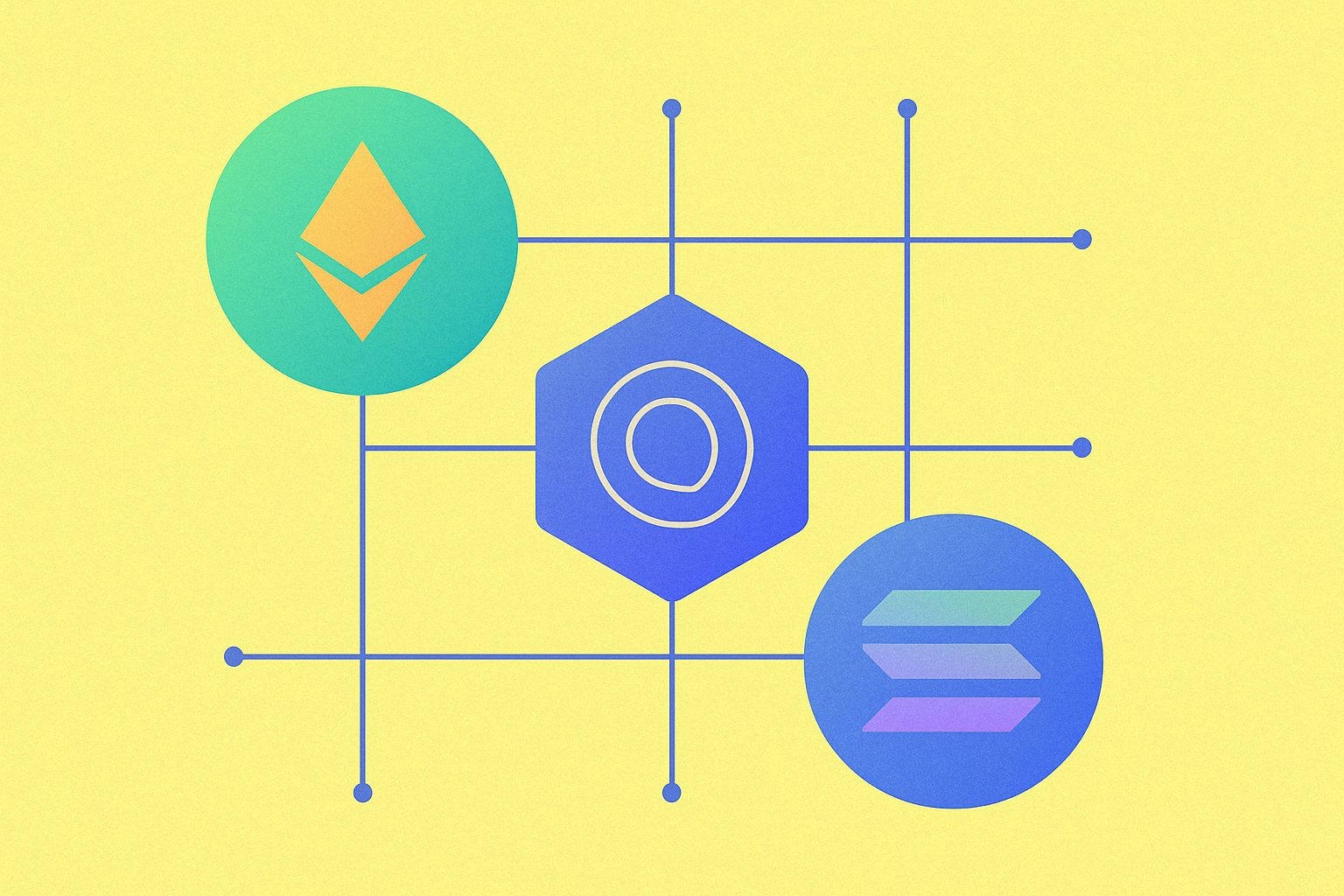
Wormhole — Cross-Chain Bridge Solution
Opening up the benefits of high-performance blockchain networks to multi-chain ecosystems
Solana, in partnership with Certus One, introduces Wormhole, a pioneering bidirectional cross-chain bridge designed to connect Ethereum and ERC20 tokens to SPL tokens, the native token standard of the Solana blockchain. This innovative bridge addresses a critical challenge in the blockchain ecosystem: enabling seamless asset transfer across networks while maintaining the performance advantages of each chain.
Solana was architected from the ground up to solve blockchain scalability issues, enabling projects to leverage cryptographic security while benefiting from the speed, throughput, and cost efficiency required by modern web applications. The Wormhole bridge extends these capabilities beyond Solana's native ecosystem, allowing existing Ethereum-based projects, platforms, and communities to access high-speed and low-cost infrastructure without requiring complete codebase rewrites.
As noted by Anatoly Yakovenko, President of the Solana Foundation: "Smart contract chains are universal computers, and all universal computers can talk to each other, fundamentally making block space on any layer-1 fungible with block space on any other layer-1." This philosophy underpins Wormhole bridge's design, which prioritizes interoperability as a means to unlock network effects and enable the most efficient allocation of computational resources.
The practical implications are substantial. Consider a scenario where significant value is locked in an Ethereum smart contract. Network constraints—evidenced by high gas fees and congestion—create friction for transactions. By bridging to a high-throughput network, users can execute transactions at high speed with minimal costs, while maintaining the option to settle back to Ethereum if desired. This approach enables teams to leverage multiple chains simultaneously, accessing the community of one network while benefiting from the performance characteristics of another, without requiring migration of their entire ecosystem.
The Wormhole Bridge Flow
The Wormhole bridge operates through a decentralized mechanism powered by cross-chain oracles called guardians. These guardians are operated by a distributed set of node operators, including major validators and key ecosystem stakeholders whose economic incentives are strongly aligned with the participating blockchain ecosystems.
ERC20 tokens to SPL tokens: When users bridge ERC20 tokens from Ethereum to Solana, guardians collectively observe and certify the token lockup event on the Ethereum network. Upon reaching consensus (requiring 2/3+ majority signatures from all guardian nodes), the locked tokens trigger an automatic mint of equivalent SPL tokens on the Solana network. This mechanism ensures that the original ERC20 tokens remain locked and secure while their representation circulates on Solana.
SPL tokens to ERC20 tokens: The reverse process follows an analogous flow. When users bridge SPL tokens back to Ethereum, guardians certify the token burn event on Solana. Upon achieving consensus, the corresponding locked ERC20 tokens are released on the Ethereum network. This bidirectional architecture ensures that token supplies remain synchronized across chains and that no duplicate or unaccounted assets circulate in the ecosystem.
The guardian consensus model is leaderless by design—all participating nodes perform identical computations upon observing an on-chain event and sign a so-called Validator Action Approval using their individual cryptographic keys. Automatic validation occurs only when a 2/3+ supermajority has independently verified and cryptographically signed the same event, triggering the corresponding mint or burn across all Wormhole bridge contracts on all connected chains.
Addressing Multi-Chain DeFi Challenges
Decentralized Finance has experienced sustained growth over recent years, with billions in value locked in smart contracts. However, this momentum faces a significant constraint: network congestion on major blockchains and escalating transaction fees create substantial friction that prevents capital deployment and inhibits user adoption.
While retail early-adopters may tolerate high transaction costs and extended confirmation times, institutional capital allocators require reliable risk management and execution certainty. Counterparty risk in DeFi is naturally mitigated through simultaneous delivery mechanics; however, execution risk—the inability to enter or exit positions due to network congestion or prohibitive fees—remains a substantial barrier. When transaction costs consume significant percentages of trade value or confirmation delays extend for multiple minutes, institutional participation becomes economically unfeasible.
The Wormhole bridge enables DeFi platforms to leverage high-performance blockchain characteristics while maintaining settlement optionality on other base chains. This architectural flexibility applies across multiple use cases: payment gateways can use the Wormhole bridge to convert tokens for faster transaction settlement; gaming platforms can eliminate latency bottlenecks by converting to high-throughput standards for rapid processing while optionally maintaining multi-chain finality; identity platforms can achieve faster credential verification and processing.
The fundamental requirement for Web3 mainstream adoption is performance parity with centralized alternatives. Applications requiring extended confirmation delays or substantial transaction fees cannot compete effectively with existing web2 infrastructure. The Wormhole bridge addresses this constraint by removing friction from cross-chain operations while preserving the security guarantees and consensus finality of all connected blockchains.
Conclusion
Wormhole bridge represents a critical advancement in blockchain interoperability, addressing one of the most pressing challenges facing decentralized finance and Web3 applications: the need to combine the security and community assets of established networks with the performance capabilities of high-throughput chains. By enabling seamless, bidirectional asset movement without requiring full ecosystem migration, the Wormhole bridge empowers developers and users to access the optimal performance characteristics of multiple blockchains simultaneously.
The decentralized guardian consensus model ensures security and alignment of incentives while the leaderless architecture eliminates single points of failure. As blockchain adoption accelerates and user expectations converge with web2 performance standards, cross-chain bridges like Wormhole will prove essential infrastructure for enabling the next generation of scalable, user-friendly decentralized applications. Rather than forcing artificial choices between security, community, and performance, the Wormhole bridge enables teams to leverage the full spectrum of blockchain capabilities available across the ecosystem.
FAQ
What is Wormhole Bridge and how does it work?
Wormhole Bridge enables seamless asset transfers between different blockchains using a secure protocol. It ensures fast and reliable cross-chain transactions by moving digital assets across networks through its multichain transfer technology.
Which blockchain networks does Wormhole Bridge support?
Wormhole Bridge supports 23+ blockchain networks including Ethereum, Solana, Binance Smart Chain, Polygon, Aptos, Avalanche, and Arbitrum, enabling seamless cross-chain token transfers.
How do I use Wormhole Bridge to transfer tokens between different chains?
Connect your wallet, select source and destination chains, enter the token amount, approve the transaction, and confirm. Your tokens will be locked on the source chain and minted on the destination chain within minutes.
What are the security features and risks of using Wormhole Bridge?
Wormhole uses 19 decentralized Guardians to secure cross-chain transactions. Key security feature: proof-of-authority validation across 21+ chains. Main risk: potential censorship if one-third of Guardians collude maliciously.
What is the difference between Wormhole Bridge and other cross-chain bridges like Stargate or LayerZero?
Wormhole supports 20+ blockchains enabling token transfers and cross-chain messaging. Stargate specializes in Ethereum and layer-2 solutions with liquidity pooling. LayerZero offers generic message passing for NFTs and smart contracts across multiple chains.

Guide to Cross-Chain Bridge Solutions for Seamless Blockchain Connectivity

Enhancing Ethereum and Solana Connectivity Through Cross-Chain Solutions

Effortlessly Transfer ETH to Solana Using Cross-Chain Bridging

Seamless Ethereum to Solana Transfers: Explore Cross-Chain Bridge Solutions

Explore Cross-Chain Solutions for Seamless Solana Integration
How will ICP compete against its rivals in performance and market share by 2030?
How Can You Measure Crypto Community Activity and Ecosystem Growth in 2026
What are the biggest crypto security risks and smart contract vulnerabilities in 2026
What Drives Crypto Price Volatility: Historical Trends, Support Resistance Levels, and BTC ETH Correlation Analysis
How does macroeconomic policy and inflation impact cryptocurrency prices in 2026
Task-to-Earn: Explore the Scroll Ecosystem and Unlock Your Share of 10,000 USD Plus NFT Airdrops