Exploring Ethereum Classic: A Guide to Hard Fork Events
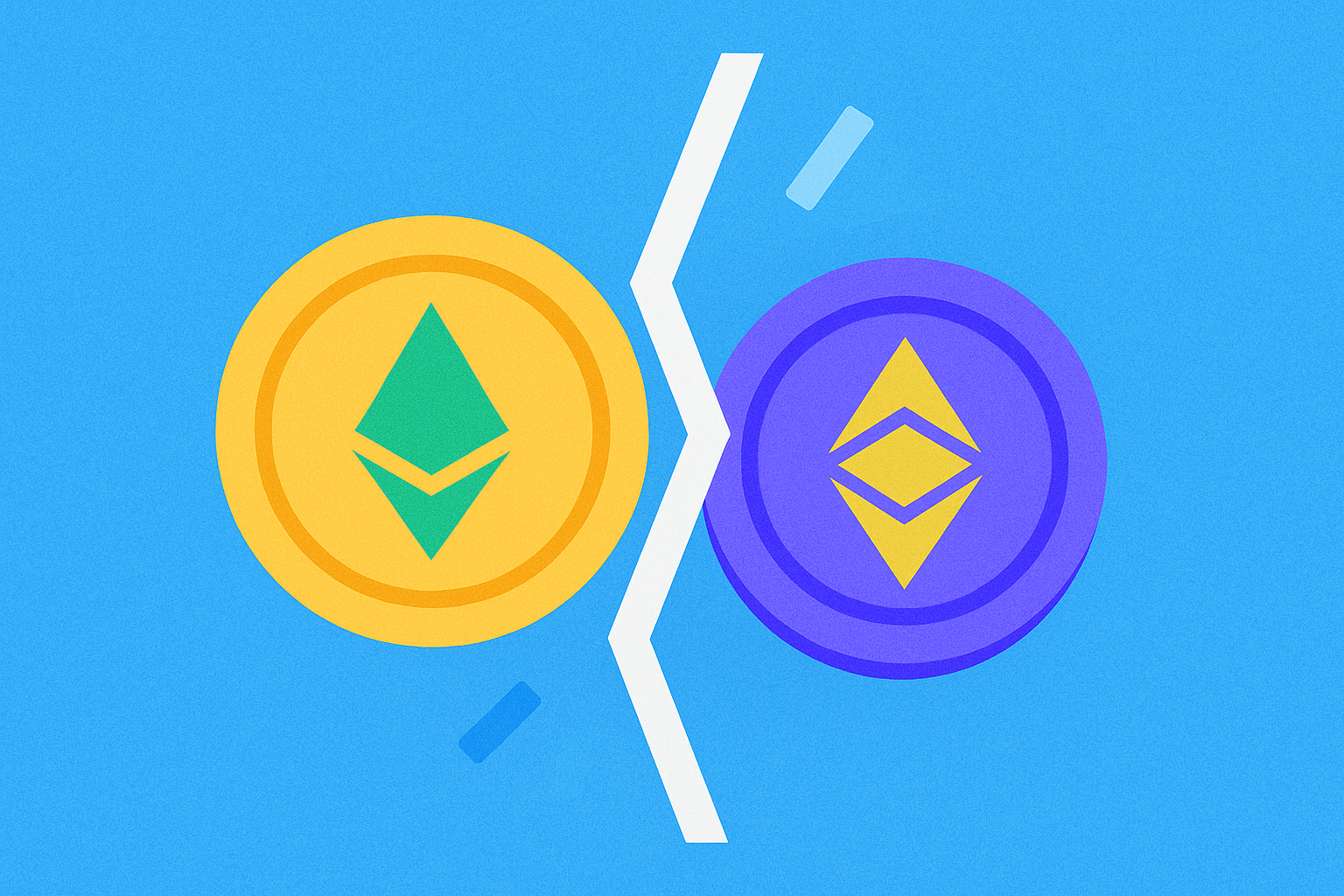
The Crypto Crossroads: Explaining Hard Forks in Blockchain
Blockchain technology operates on decentralized networks where consensus among developers and community members is crucial for maintaining system integrity. However, disagreements and conflicts sometimes emerge within cryptocurrency communities regarding the direction and technical specifications of blockchain protocols. When these disputes cannot be resolved through conventional means such as decentralized autonomous organizations (DAOs) or governance token voting mechanisms, hard forks may become the inevitable outcome. While hard forks often carry negative connotations, they represent a fundamental mechanism for blockchain evolution and can, in certain circumstances, lead to innovative improvements and more successful networks than their predecessors.
What are hard forks in crypto?
A hard fork represents a fundamental and irreversible modification to a blockchain's underlying code structure, resulting in a permanent split of the network into two separate chains. This type of upgrade fundamentally alters the consensus rules and technical specifications that govern how the blockchain operates. When a hard fork occurs, all nodes participating in the network face a critical decision: they must either update their software to comply with the new protocol standards or continue operating on the original chain with the legacy code.
The defining characteristic of hard forks is their backward incompatibility. Unlike gradual upgrades that allow older versions to coexist with newer ones, hard forks create an absolute divide where nodes running the old software cannot validate transactions or communicate with nodes using the updated protocol. This incompatibility results in two distinct blockchains, each with its own native cryptocurrency, separate transaction history, unique technical specifications, and independent validation procedures. The two networks operate completely independently after the fork, with no ability to reconcile or merge back together.
Hard forks versus soft forks: Key differences
Understanding the distinction between hard forks and soft forks is essential for comprehending blockchain upgrade mechanisms. Soft forks represent a more conservative approach to blockchain updates, introducing changes that maintain backward compatibility with previous versions of the protocol. When a soft fork is implemented, nodes that have not upgraded their software can still participate in the network and process transactions, though they may not have access to new features or optimizations introduced by the upgrade.
The relationship between old and new software versions in a soft fork can be compared to smartphone operating system updates. Devices running older versions continue to function and can still perform core operations, but they lack access to the enhanced features and improvements available in the latest version. Soft forks achieve this compatibility by modifying specific elements of the blockchain infrastructure without altering the fundamental consensus rules. These upgrades typically add new functionality or impose additional restrictions rather than removing or fundamentally changing existing rules.
A prominent example of a successful soft fork implementation is Bitcoin's Segregated Witness (SegWit) upgrade, which was activated in 2017. This update reorganized how transaction data was stored within each block, separating signature information from transaction data to improve efficiency and scalability. Despite these significant changes, SegWit maintained backward compatibility, allowing non-upgraded nodes to continue participating in the Bitcoin network without requiring mandatory software updates.
What causes hard forks?
Hard forks emerge from various circumstances, ranging from carefully planned technical upgrades to contentious community disputes that prove impossible to resolve through consensus. The underlying causes typically involve fundamental disagreements about the blockchain's technical direction, philosophical values, or operational priorities. These conflicts can be so severe that compromise becomes impossible, leading different factions within the community to pursue separate visions through independent blockchain networks.
One of the most notable examples of a dispute-driven hard fork occurred in 2017 with the creation of Bitcoin Cash (BCH) from the Bitcoin network. This fork resulted from an intense debate regarding Bitcoin's block size limit, which determines the maximum amount of transaction data that can be included in each block. One faction supported the SegWit soft fork solution, which aimed to improve scalability while maintaining the 1 MB block size limit. Conversely, the Bitcoin Cash supporters argued that significantly increasing the block size was necessary to accommodate growing transaction volumes and maintain low fees. Unable to reach consensus, the community split, with Bitcoin Cash implementing an 8 MB block size limit on its forked chain.
Security breaches and vulnerabilities represent another critical catalyst for hard fork decisions. The Ethereum network experienced this scenario following the infamous DAO hack in 2016, where attackers exploited a vulnerability in a decentralized crowdfunding protocol and stole approximately $60 million worth of cryptocurrency. The Ethereum community faced an agonizing decision: either accept the theft as an immutable part of the blockchain's history or implement a hard fork to reverse the malicious transactions and restore funds to affected users. After extensive debate, the majority of the community supported executing a hard fork, creating what is now the main Ethereum blockchain with the restored funds. Meanwhile, a minority who opposed altering transaction history continued operating the original chain, which became known as Ethereum Classic (ETC). The ETC fork exemplifies how fundamental philosophical differences about blockchain immutability can lead to permanent network splits, with both chains continuing to operate independently years after the fork event.
What are accidental hard forks?
Not all hard forks result from deliberate planning or community disputes. Accidental hard forks represent unintended network splits that occur due to technical malfunctions, software bugs, or synchronization issues between nodes. While these accidental forks produce the same result as intentional hard forks—creating two separate, incompatible blockchain networks—they occur unexpectedly and without the awareness or consent of the community.
Accidental hard forks typically stem from software implementation errors, network communication failures, or conflicting interpretations of protocol rules by different node operators. These situations can arise when nodes running slightly different versions of the software process the same transaction or block differently, leading to a divergence in the blockchain state. The consequences of accidental hard forks can be severe, potentially causing confusion, temporary loss of consensus, and security vulnerabilities until the issue is identified and resolved.
To minimize the risk and impact of accidental hard forks, blockchain development teams implement rigorous monitoring systems and preventive measures. Node operators continuously track network activity for signs of consensus failures or unexpected chain splits. Development teams employ comprehensive testing procedures, including extensive quality assurance protocols and third-party code audits, to identify potential bugs before deploying updates to the main network. Additionally, sophisticated tracking mechanisms help detect anomalies in real-time, enabling rapid response to emerging issues before they escalate into full-scale accidental hard forks.
Pros and cons of hard forks
Hard forks carry a complex reputation within the cryptocurrency ecosystem, often associated with controversy and community division. However, these fundamental protocol changes can deliver significant benefits when implemented thoughtfully and with broad community support. Understanding both the advantages and drawbacks of hard forks, including notable examples like the ETC fork, provides essential context for evaluating their role in blockchain evolution.
Advantages of Hard Forks
Hard forks provide developers with maximum flexibility to introduce revolutionary features and use cases that would be impossible through backward-compatible upgrades. By fundamentally restructuring the blockchain's infrastructure, programmers can implement innovations that dramatically enhance network efficiency, scalability, and functionality. In the rapidly evolving cryptocurrency market, the ability to make radical changes through hard forks may prove essential for maintaining competitive relevance and adapting to emerging technological demands.
From a security perspective, hard forks offer a powerful mechanism for addressing critical vulnerabilities and recovering from major security breaches. When hackers successfully exploit weaknesses to steal funds or manipulate transaction data, a hard fork enables developers to essentially reset the blockchain, implementing enhanced security measures and potentially restoring lost assets to affected users. This capability to rewrite transaction history, while controversial, provides a last-resort option for communities facing catastrophic security failures.
Additionally, hard forks can serve as a resolution mechanism for irreconcilable community conflicts. When debates within a cryptocurrency community reach an impasse with no acceptable compromise, a hard fork allows dissenting factions to pursue their distinct visions without forcing one group to abandon their principles or interfering with the original blockchain's operation. The ETC fork demonstrates this principle, as it allowed proponents of immutability to maintain their philosophical stance while the main Ethereum chain proceeded with fund recovery. While this outcome typically represents a failure to maintain community unity, it provides a clear path forward that prevents prolonged, destructive conflicts.
Disadvantages of Hard Forks
The most significant drawback of hard forks is the community fragmentation they inevitably create. By establishing separate, incompatible blockchains, hard forks disrupt harmony, diminish collaborative synergy, and potentially undermine the network effects that make cryptocurrencies valuable. The contentious debates surrounding hard forks frequently generate sharp divisions, forcing developers, miners, and users to choose sides, which can damage relationships and fragment resources that would otherwise strengthen a unified network.
Hard forks also introduce considerable confusion for cryptocurrency traders and users, particularly when forked chains share similar names and branding. For example, the relationships between Bitcoin and Bitcoin Cash, or Ethereum and Ethereum Classic, can confuse newcomers to the cryptocurrency space. The ETC fork created lasting confusion about which chain represented the "true" Ethereum, with both networks claiming legitimacy based on different principles. This confusion is compounded when development communities lack clear, consistent communication strategies for distinguishing between the original and forked chains. Users may accidentally send funds to incorrect addresses or invest in the wrong cryptocurrency due to naming similarities.
Finally, hard forks create significant security risks for both resulting chains. When a blockchain splits, the total network resources—including computational power, node operators, and developer attention—are divided between two networks. This division reduces the decentralization and security of both chains, particularly affecting the smaller or less popular fork. The ETC fork experienced this challenge, as the smaller network initially faced security vulnerabilities due to reduced hashing power compared to the main Ethereum chain. Networks with reduced hashing power or fewer validating nodes become more vulnerable to 51% attacks, where malicious actors can gain control of the network with relatively modest resources compared to what would be required to attack a unified, larger network.
How to avoid hard forks
Given the irreversible nature and potential negative consequences of hard forks, blockchain developers typically employ various strategies to prevent reaching circumstances where a fork becomes the only viable option. While some situations may ultimately require hard forks—as demonstrated by historical events like the ETC fork—proactive measures can significantly reduce the likelihood of contentious splits and help communities navigate disagreements more effectively.
Community Engagement and Clear Communication
Transparent, consistent communication forms the foundation for preventing misunderstandings and building consensus within blockchain communities. Developers who regularly share updates through social media platforms, community forums, and direct communication channels create an environment of transparency that helps align community members around shared objectives. These ongoing discussions enable all network participants—including developers, node operators, miners, and users—to stay informed about proposed changes and contribute their perspectives during the decision-making process.
Effective communication strategies ensure that information flows smoothly throughout decentralized networks, making it easier to identify and address potential concerns before they escalate into major conflicts. When community members feel informed and included in discussions, they are more likely to understand the rationale behind proposed changes and find acceptable compromises rather than resorting to contentious hard forks.
Decentralized Governance Protocols
On-chain governance mechanisms, such as DAOs and governance tokens, provide structured frameworks for inclusive decision-making within blockchain communities. These tools give stakeholders direct voting rights on protocol proposals and the ability to influence the network's direction through democratic processes. By distributing decision-making power across the entire community rather than concentrating it among a small group of developers, governance protocols help ensure that proposed changes reflect the collective will of network participants.
When users feel that their voices matter and that they play a meaningful role in shaping the blockchain's future, they develop stronger commitment to maintaining network unity. This sense of ownership and validation reduces the likelihood that dissatisfied factions will pursue hard forks, as community members recognize that they have legitimate channels for addressing concerns and advocating for their preferred solutions within the existing governance structure.
Testnet Deployment
Testnets provide invaluable environments for evaluating proposed upgrades before implementing them on the main blockchain. These simulated networks allow developers to experiment with protocol changes, identify potential issues, and assess the practical implications of modifications without risking the security or stability of the production network. Through extensive testing on testnets, development teams can iterate through multiple implementation approaches, comparing their benefits and drawbacks to determine the optimal solution.
The evidence and data gathered from testnet deployments serve another crucial purpose: providing concrete information that developers can share with the broader community when seeking consensus on proposed changes. Rather than debating abstract concepts, community members can evaluate actual performance metrics, security assessments, and functionality demonstrations from testnet implementations, leading to more informed decision-making and reducing the likelihood of disputes based on speculation or misunderstanding.
Emergency Response Plans
Comprehensive contingency protocols, also known as emergency response plans, equip blockchain communities with structured procedures for addressing disputes and managing crises effectively. These plans outline specific steps for resolving conflicts as they emerge, including mediation processes, escalation procedures, and decision-making frameworks. Additionally, emergency response plans identify potential security vulnerabilities and establish fallback measures to mitigate their impact if conflicts cannot be resolved.
Even in situations where consensus proves impossible and a network split becomes inevitable, well-prepared contingency plans help minimize disruption and protect users during the transition. By anticipating potential challenges and preparing coordinated responses, communities can navigate even contentious hard forks more smoothly, ensuring that both resulting chains maintain operational stability and security despite the division.
Conclusion
Hard forks represent one of the most powerful and controversial mechanisms for blockchain evolution, capable of introducing revolutionary innovations while simultaneously threatening community unity and network security. These fundamental protocol splits arise from various circumstances, ranging from carefully planned technical upgrades to irreconcilable philosophical or technical disputes within cryptocurrency communities. The ETC fork stands as a prominent historical example, demonstrating how hard forks can emerge from fundamental disagreements about core blockchain principles such as immutability versus pragmatic intervention.
While hard forks carry significant risks—including community fragmentation, user confusion, and security vulnerabilities—they also provide essential capabilities for addressing critical security failures, implementing radical improvements, and allowing incompatible visions to coexist on separate chains. The distinction between hard forks and soft forks highlights the spectrum of upgrade options available to blockchain developers, with soft forks offering backward-compatible changes that maintain network unity while hard forks enable more fundamental transformations at the cost of creating permanent splits.
Understanding these differences helps stakeholders make informed decisions about the appropriate approach for specific situations and the trade-offs involved in each type of upgrade. The lessons from significant fork events, particularly the ETC fork which continues to operate as an independent blockchain years after its creation, illustrate both the challenges and opportunities that network splits present to cryptocurrency communities.
Successful blockchain communities employ multiple strategies to avoid unnecessary hard forks, including fostering transparent communication, implementing decentralized governance mechanisms, conducting thorough testing on testnets, and preparing comprehensive emergency response plans. These proactive measures help build consensus, address concerns before they escalate, and ensure that when hard forks do occur, they result from genuine necessity rather than preventable misunderstandings or inadequate conflict resolution processes.
Ultimately, hard forks serve as both a testament to blockchain technology's flexibility and a reminder of the challenges inherent in maintaining decentralized consensus. As the cryptocurrency ecosystem continues maturing, the lessons learned from historical hard forks—both successful and contentious, including the ETC fork and others—will inform better practices for protocol governance and help communities navigate future disagreements more effectively while preserving the innovative spirit that drives blockchain technology forward.
FAQ
Is Ethereum Classic a hard fork?
Yes, Ethereum Classic is a hard fork from Ethereum, created in 2016 after a DAO exploit. It maintains the original unaltered blockchain and uses proof-of-work consensus with its own currency, ETC.
Why is ETC so cheap?
Ethereum Classic has lower market demand and smaller ecosystem compared to Ethereum. Limited developer adoption, smaller trading volume, and perception of lower security contribute to its lower valuation in the market.
Why was Ethereum forked?
Ethereum was forked to implement major technical upgrades and improvements proposed through Ethereum Improvement Proposals (EIPs). The most significant fork was for the Ethereum 2.0 upgrade, which transitioned the network from Proof of Work to Proof of Stake consensus mechanism.
What if I invested $1,000 in Ethereum in 2015?
Your $1,000 investment in Ethereum at launch in 2015 would be worth approximately $4.8 million today. Ethereum's value has experienced extraordinary growth, making early investors significant returns over the past decade.

Explore ENS Domains on Ethereum

Discover the Benefits of Using Ethereum Name Service Domains

Web3.js Fundamentals: Essential Library for Web3 Developers
Enhancing Cross-Chain Connectivity with Advanced Bridge Solutions

Discovering Ethereum Contract Addresses: A Comprehensive Guide
Understanding Blockchain Network Infrastructure: The Role of Nodes
How does Federal Reserve policy affect Polkadot (DOT) price and crypto market volatility in 2026?

What Will Be the Price of Pi Coin in 2030?

How Active is DUSK Network Community and Ecosystem in 2026? Twitter Followers, Developer Contributions, and DApp Growth Revealed
How do DUSK exchange inflows and whale holdings impact token price and market sentiment in 2026?

How does BNB compare to Ethereum and Solana in 2026: Market share, performance, and competitive advantages explained