

Exploring Nostr: The Future of Decentralized Social Networking
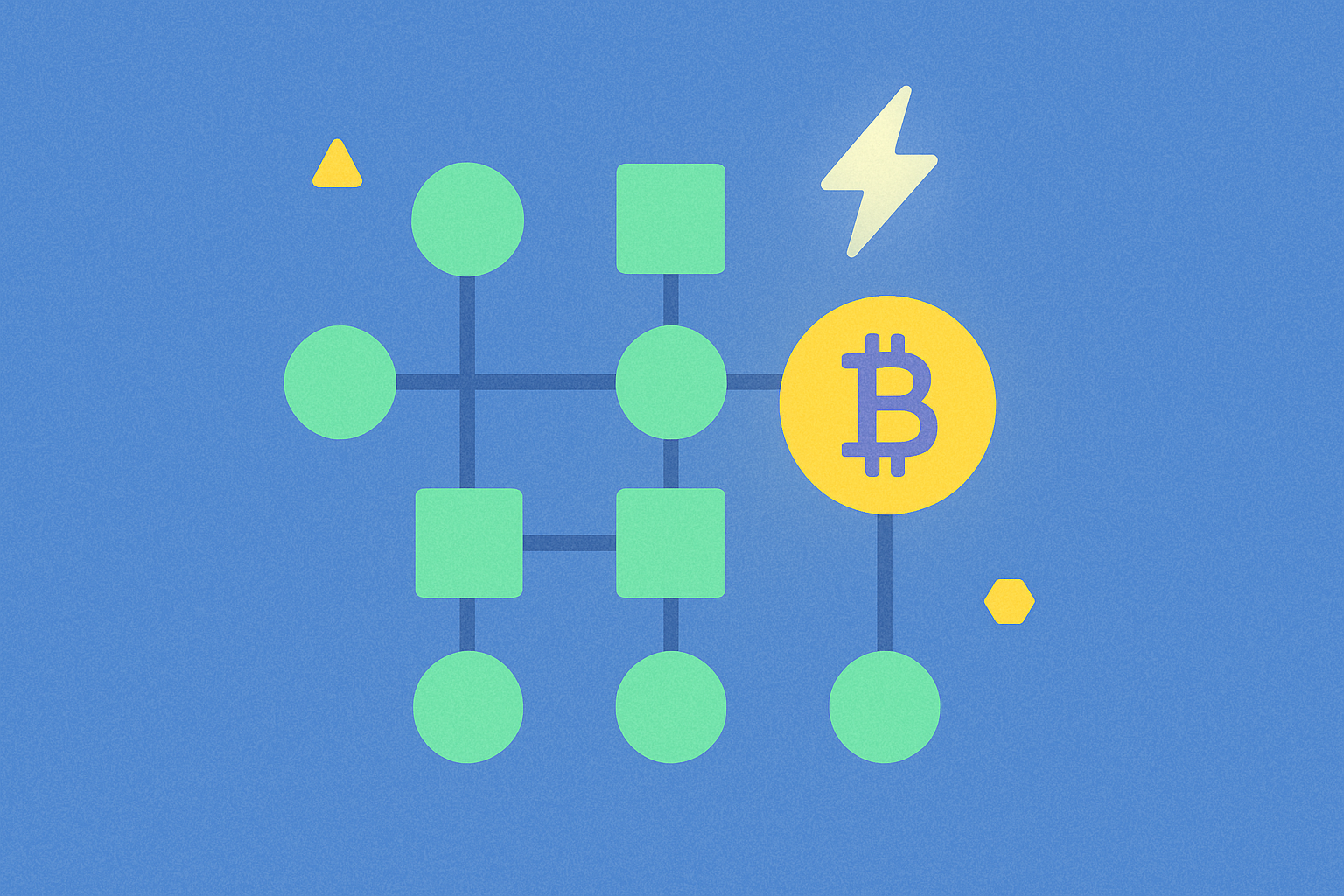
What is Nostr? The censorship-resistant social media protocol explained
Nostr (Notes and Other Stuff Transmitted by Relays) represents a significant innovation in decentralized social media technology. Launched in late 2020, this protocol offers a censorship-resistant alternative to traditional centralized platforms. Unlike conventional social networks, Nostr enables users to connect to independently operated servers (relays) distributed worldwide, utilizing public and private key pairs similar to Bitcoin for enhanced security and privacy. This architecture fundamentally differs from centralized platforms and even other decentralized solutions like Mastodon, providing users with unprecedented control over their digital identity and communications through the Nostr protocol.
How has Nostr evolved recently?
Since its launch in 2020, Nostr has undergone substantial development and refinement. A pivotal milestone was the integration of Bitcoin's Lightning Network, introducing a feature called "zaps" that enables seamless sending and receiving of Bitcoin payments through Nostr clients such as Damus. This integration not only expands financial functionality but also helps prevent spam attacks through small transaction fees.
The Nostr protocol has gained significant momentum through high-profile endorsements, most notably from Jack Dorsey, former CEO of Twitter (now X), who contributed substantial support in Bitcoin to advance Nostr's development. After leaving BlueSky, Dorsey continues to champion Nostr, accelerating its adoption and development within the decentralized social media landscape.
The platform's account creation process utilizes a secure public/private key pair system, eliminating the need for traditional usernames and passwords, making Nostr particularly attractive to privacy-conscious users. The developer community has grown substantially, actively contributing through Nostr Implementation Possibilities (NIPs), which propose and document protocol enhancements and new features. This collaborative ecosystem continues to strengthen and evolve, demonstrating Nostr's commitment to creating a truly decentralized, censorship-resistant social network.
How is Nostr different from Mastodon?
Nostr distinguishes itself from other decentralized platforms like Mastodon through several fundamental architectural and operational differences that make the Nostr protocol unique.
Regarding network structure, Mastodon operates on a federated model with independent servers (instances) that communicate with each other. Users join specific instances for community participation and moderation, with these instances interconnected to allow cross-server interaction. In contrast, Nostr employs a client-relay design where users create identities using public/private key pairs. Messages are transmitted to relays that store and broadcast them, allowing users to switch relays while maintaining their identity and history, providing greater flexibility and user control through the Nostr network.
For identity and moderation, Mastodon assigns each instance its own identity with separate moderation handling. Instance administrators can block users or entire instances, centralizing control within each instance. Nostr takes a different approach where your public key serves as your identity, with moderation handled client-side. Users independently choose who to follow or block, preventing any single entity from controlling content moderation on the Nostr protocol.
In terms of protocol complexity and flexibility, Mastodon is built on the ActivityPub protocol, which supports numerous features but can be complex to implement fully. While feature-rich, this approach sacrifices some scalability and simplicity. Nostr prioritizes simplicity, ease of use, and flexibility as a lightweight protocol, extending its versatility beyond social media to applications like microblogging and bulletin boards.
Content durability differs significantly between the two platforms. On Mastodon, instances store content, meaning if an instance goes offline, its content may be lost unless shared with other instances. Nostr's messages are self-contained and signed with the author's private key, allowing anyone to store and share messages, making content more durable and resistant to censorship within the Nostr ecosystem.
The user experience also varies: Mastodon offers a traditional social media experience with profiles, posts, replies, hashtags, and timelines, resembling a decentralized version of X. Nostr provides a flexible structure for different applications, with the user experience depending on which client is used to interact with the network, allowing for innovation in user interface design and functionality.
How does Nostr enhance privacy and security in social networking?
Nostr implements multiple mechanisms to ensure secure communication and protect user data, making it an exceptional choice for privacy-conscious individuals seeking decentralized alternatives.
The platform's decentralized structure employs a client-relay model, allowing users to connect to multiple relays. This Nostr architecture ensures that even if one relay goes offline or is compromised, data remains secure and accessible through other relays. The absence of a single point of failure enhances network resilience against attacks and censorship.
Public-key cryptography forms the foundation of Nostr's security. When creating an account, users generate a public/private key pair. The public key serves as the user's identity on Nostr, while the private key signs messages, ensuring only the rightful owner can send messages under that identity. This system guarantees message authenticity and prevents tampering.
Encrypted communication is achieved by encrypting messages using the recipient's public key, ensuring only the intended recipient can read them. This encryption protects privacy during information transfer, a fundamental feature that distinguishes Nostr from many traditional social networks and messaging platforms.
User-controlled data represents another crucial privacy feature. Unlike platforms that collect and monetize user data, Nostr gives users complete control over their information. This commitment to privacy addresses growing concerns about data exploitation.
The platform's resistance to censorship stems from its decentralized nature. Without a central authority controlling or blocking content across the entire Nostr network, users can freely share information without censorship risk from a single entity. If one relay blocks content, users can simply switch to alternative relays.
The Nostr protocol's flexibility and simplicity make it easier for developers to create secure applications while ensuring adaptability to evolving security needs.
How to create a Nostr account
Establishing a Nostr account is a straightforward process that can be completed in several simple steps.
First, choose a Nostr client that fits your needs. Popular options include Damus for iOS, Amethyst for Android, and various other emerging clients tailored to different platforms and use cases within the Nostr ecosystem.
Next, generate a key pair by opening the installed client and following the prompts to create a public/private key pair. Your public key functions as your username on Nostr, while your private key serves as your password, establishing your unique identity on the Nostr network.
Securing your private key is essential because if lost, there is no way to reset it. Write it down and store it in a safe place, or use a secure digital vault to ensure your Nostr account remains secure and accessible only by you.
Connect to relays by configuring relay URLs in the client settings. Relays broadcast your messages and enable interaction with the Nostr network, forming the communication backbone of your Nostr experience.
Finally, start using Nostr by exploring the network, posting content, following users, and engaging with the community. This marks your full integration into the Nostr protocol and the beginning of your decentralized social media experience.
How does Nostr support decentralized messaging and payments?
Beyond its primary function as a decentralized social network, Nostr supports direct messaging and Bitcoin payments, enhancing user privacy and functionality.
For decentralized messaging, Nostr enables users to send and receive secure and private messages using public-key cryptography. Each user possesses a public and private key pair, with the public key serving as the user ID on Nostr and the private key signing messages so only intended recipients can read them. This reduces surveillance risk, making Nostr more secure than traditional messaging platforms.
Bitcoin integration for payments is seamlessly implemented, particularly through the Lightning Network for quick and efficient transactions. Users can send Bitcoin tips or payments directly within the platform, with Nostr's decentralized framework ensuring these transactions are completed securely and privately.
Practical applications include messaging and texting, where Nostr functions as a messaging protocol allowing global, secure communication free from centralized control. For social media, Nostr enables users to engage with social media applications without tracking or censorship while maintaining greater control over shared information. Additionally, Nostr can function as a decentralized identity system where users authenticate themselves using cryptographic keys rather than traditional login methods.
What are the challenges and opportunities for Nostr?
As Nostr continues to expand, it faces both significant challenges and promising opportunities that will shape its future trajectory in the decentralized social media landscape.
Challenges include scalability concerns, as maintaining efficient and fast communication across numerous relays becomes crucial with growing Nostr user numbers. The network must handle increased load without performance degradation. Regulatory issues present another challenge, as global regulatory environments create complexity for decentralized networks. Complying with data protection laws while maintaining Nostr's decentralization principles requires careful navigation. Security vulnerabilities have also emerged, as demonstrated by spam attacks affecting decentralized platforms. These networks' interconnection through "bridges" has been exploited, pointing to vulnerabilities within the Nostr ecosystem that require addressing.
Opportunities abound in innovation in decentralization, where Nostr's open protocol enables developers to create new applications leveraging its decentralized foundations. This can foster a vibrant Nostr ecosystem of highly functional and specialized applications drawing from decentralization's various benefits. Mainstream adoption represents another significant opportunity, as growing interest in privacy and data security makes Nostr appealing to users frustrated with centralized platforms. With greater awareness of the Nostr protocol and continued user experience enhancements, there's substantial opportunity to reach audiences beyond traditional Web2 platforms. Integration with Bitcoin offers unique opportunities for decentralized finance, with the platform's Bitcoin use supporting secure transactions and preventing spam through small message-sharing fees on the Nostr network.
Conclusion
Nostr represents a significant advancement in decentralized social networking, offering a secure and censorship-resistant alternative to traditional platforms. Through its innovative client-relay model and public/private key pair authentication system, Nostr successfully bridges conventional social networking with Web3 technology. The platform's comprehensive feature set demonstrates the practical applications of decentralized technology, with Bitcoin Lightning Network integration enabling seamless cryptocurrency transactions and tipping within the Nostr ecosystem.
Since its 2020 launch, Nostr has evolved considerably, driven by improved Bitcoin integration and high-profile support from Jack Dorsey, former X (Twitter) CEO. This backing has accelerated growth, attracting developers and users to realize the Nostr protocol's benefits. With strong foundational support and a proven development track record, Nostr is well-positioned to continue disrupting the conventional social network model through its emphasis on privacy and security via decentralized architecture and public-key cryptography. As digital communities increasingly seek alternatives to centralized platforms, Nostr's commitment to user control, data privacy, and censorship resistance positions it as a compelling solution for the future of social networking in the decentralized era.
FAQ
What does Nostr mean?
Nostr stands for 'Notes and Other Stuff Transmitted by Relays'. It's an open protocol for decentralized, censorship-resistant message transmission using cryptographic signatures.
Is Nostr free to use?
Yes, Nostr is free to use. It's an open protocol that anyone can access without cost. However, some Nostr clients may charge for premium features.
Is Nostr a blockchain?
No, Nostr is not a blockchain. It's a decentralized communication protocol without a native token or payment processing system.
How is Nostr different from Twitter?
Nostr is decentralized, censorship-resistant, and uses an open protocol. Users communicate freely without platform control, unlike Twitter's centralized structure.

Understanding Cross-Chain Solutions: A Guide to Blockchain Interoperability

Understanding Bitcoin's Supply Limit: How Many Bitcoins Exist?

Ultimate Guide to Top Crypto Exchange Aggregators for Efficient Trading

What Is the Current Market Overview for Cryptocurrencies in December 2025?

How Does Solana (SOL) Compare to Ethereum and Bitcoin in 2025?

How Does On-Chain Data Analysis Reveal Bitcoin Market Trends in 2025?

What is BULLA coin: analyzing whitepaper logic, use cases, and team fundamentals in 2026

How does MYX token's deflationary tokenomics model work with 100% burn mechanism and 61.57% community allocation?

What Are Derivatives Market Signals and How Do Futures Open Interest, Funding Rates, and Liquidation Data Impact Crypto Trading in 2026?

How do futures open interest, funding rates, and liquidation data predict crypto derivatives market signals in 2026?

What is a token economics model and how does GALA use inflation mechanics and burn mechanisms
