Exploring the Real-World Applications of Blockchain Utility Tokens

Utility Tokens 101
Utility tokens represent a significant evolution in the cryptocurrency ecosystem, expanding beyond the original vision of digital currencies as mere payment systems. While pioneering cryptocurrencies like Bitcoin and Litecoin focused primarily on peer-to-peer value transfer, utility tokens have emerged as a distinct category of cryptos with utility designed to power decentralized applications and provide specific functionalities within blockchain-based platforms.
Crypto Coins Versus Tokens: A Brief Overview
Understanding the fundamental distinction between coins and tokens is essential for navigating the cryptocurrency landscape. A coin represents a native digital asset that operates on its own blockchain infrastructure. Bitcoin exemplifies this concept perfectly—it exists on the Bitcoin blockchain and serves critical functions including value transfer, transaction fee payment, and network node incentivization.
In contrast, tokens are secondary digital assets built on top of existing blockchain networks. They do not possess their own independent blockchains but instead leverage the security and infrastructure of established coin networks. For instance, tokens created on the Ethereum blockchain must adhere to specific token standards such as ERC-20 for fungible tokens or ERC-721 for non-fungible tokens (NFTs). This dependency on existing blockchain infrastructure provides tokens with robust security while enabling developers to focus on creating innovative applications and use cases. The flexibility of tokens allows for diverse applications ranging from governance voting mechanisms to virtual property ownership in metaverse environments and digital representations of real-world assets.
What are Utility Tokens?
Utility tokens are purpose-built digital assets designed to provide specific functionality within decentralized protocols and applications. Unlike traditional cryptocurrencies focused solely on value exchange, these cryptos with utility grant holders access to particular services, products, or features within their respective ecosystems. The defining characteristic of a utility token is its functional role beyond mere price speculation—developers must demonstrate that their token serves an essential purpose within their platform's operation.
The creation and deployment of utility tokens typically involve smart contracts, which are self-executing programs containing predefined instructions and automated code. These smart contracts enable developers to design, launch, and manage their tokens without requiring intermediary oversight for transaction monitoring. Each utility token's smart contract address contains comprehensive information about token issuance, distribution, and complete transaction history, all publicly accessible through blockchain explorers.
The distribution model for utility tokens often involves pre-mining, where developers create the entire token supply upfront and release them through initial coin offerings (ICOs). Project teams typically allocate portions to core team members, early supporters, and advisors before making tokens available to retail investors. Transparency tools such as Etherscan for Ethereum-based tokens and aggregator platforms like CoinMarketCap enable traders to verify current token allocation and distribution metrics.
A Few Examples of Utility Tokens
Examining real-world examples helps clarify the practical applications and diverse use cases of cryptos with utility across the cryptocurrency ecosystem:
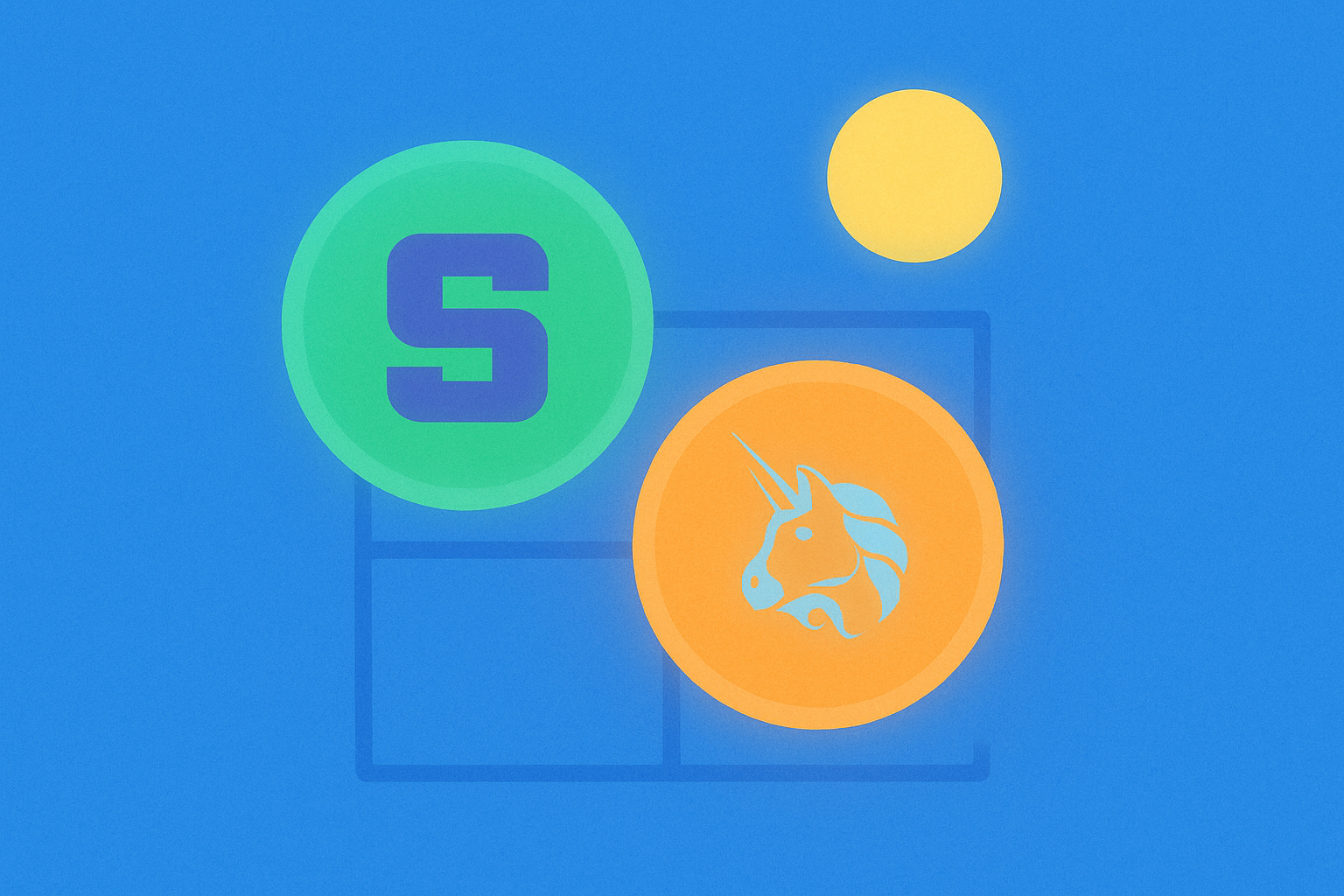
The Sandbox (SAND) operates as the native token for an Ethereum-based metaverse gaming platform developed by Animoca Brands. Within this virtual world, SAND tokens serve as the primary in-game currency, enabling users to purchase virtual goods and services, develop digital land, and participate in immersive online experiences. Players earn SAND tokens by completing quests and engaging with the platform's ecosystem.
Uniswap (UNI) functions as a governance token for a popular decentralized trading platform that operates across Ethereum and compatible blockchains including Polygon, Arbitrum, and Optimism. UNI token holders possess voting rights on protocol proposals, allowing them to influence the platform's future development and operational parameters. This governance mechanism exemplifies how utility tokens can facilitate decentralized decision-making processes.
Lido Finance (LDO) serves as the governance token for a decentralized staking protocol that enables users to stake cryptocurrencies on proof-of-stake blockchains like Ethereum. LDO holders can vote on proposals affecting the platform's operations, fee structures, and technical implementations, demonstrating the token's utility in protocol governance and community-driven development.
ChainLink (LINK) powers a decentralized oracle network that bridges blockchain and non-blockchain data sources. LINK tokens incentivize network nodes to maintain security, transmit accurate information, and validate transactions. Users requiring oracle services must pay fees in LINK tokens, establishing a clear utility function tied directly to the platform's core service offering.
Basic Attention Token (BAT) introduces a novel approach to digital advertising within the Brave browser ecosystem. Users earn BAT tokens for viewing advertisements, which they can subsequently use to tip content creators or support preferred online platforms. This model creates a token-based attention economy that rewards user engagement while supporting content creation.
How do Crypto Traders Buy Utility Tokens?
Acquiring utility tokens involves multiple pathways depending on trader preferences and platform participation. The most straightforward method involves purchasing tokens through cryptocurrency trading platforms that list specific utility tokens. Comprehensive aggregator websites like CoinMarketCap and CoinGecko provide detailed information about which trading platforms offer trading pairs for hundreds of utility tokens, accessible through their respective Exchanges tabs.
Beyond traditional platform purchases, many decentralized applications reward active participants with utility tokens. Blockchain-based games such as The Sandbox, Axie Infinity, and Decentraland distribute tokens to players who complete in-game challenges, battles, or quests. These play-to-earn mechanisms enable users to accumulate tokens through platform engagement rather than direct purchase.
Decentralized finance (DeFi) protocols offer another acquisition avenue through yield farming and liquidity provision programs. Traders who deposit cryptocurrency into DeFi platforms for lending or liquidity provision often receive utility tokens as rewards. While these methods require greater time investment, technical knowledge, and risk tolerance, they represent legitimate strategies for building utility token portfolios through active ecosystem participation.
Conclusion
Utility tokens represent a transformative development in the cryptocurrency sector, expanding blockchain technology's applications far beyond simple value transfer. By providing specific functionalities within decentralized platforms—from governance rights and in-game currencies to service access and protocol participation—these cryptos with utility enable developers to create comprehensive blockchain-based ecosystems with intrinsic token utility. The distinction between coins and tokens, while technical, remains crucial for understanding how different digital assets operate within the broader cryptocurrency landscape. As the examples of SAND, UNI, LDO, LINK, and BAT demonstrate, utility tokens power diverse applications across gaming, decentralized finance, data oracles, and digital advertising. For crypto traders and enthusiasts, understanding utility tokens' fundamental characteristics, use cases, and acquisition methods proves essential for participating in the evolving Web3 ecosystem. As blockchain technology continues to mature, utility tokens will likely play an increasingly central role in enabling decentralized applications and services that define the future of digital interaction and commerce.
FAQ
What crypto has utilities?
Utility tokens offer access to specific services within their ecosystems. They often enable staking for rewards and governance participation.
Does crypto have utility?
Yes, crypto has utility. It enables decentralized finance, smart contracts, and cross-border transactions. Many projects offer real-world applications, from supply chain management to digital identity verification.
What is Elon Musk's favorite crypto coin?
Elon Musk has shown strong support for Dogecoin, often tweeting about it and calling it his favorite. However, he also owns Bitcoin and has expressed interest in Ethereum.
Discover Somnia: Comprehensive Guide to SOMI Cryptocurrency

Understanding DApps: The Ultimate Guide to Decentralized Applications
Understanding GameFi: A Beginner's Guide to Blockchain Gaming
Top Smartphones for Secure Crypto Storage

Discover Exciting Upcoming NFT Projects in the Digital Art World
Top Utility Tokens for Promising Blockchain Projects
What is Fuel Network (FUEL)? Everything You Need to Know about FUEL
What Is BNB Chain?

All You Need To Know About Yescoin
How to Buy Baron ($BARRON) Coin: What is Baron Trump Cryptocurrency?
What Is AI Dev Agent (AIDEV)? No-Code Platform for Building Products