Exploring ZK-Rollups: The Ultimate Zero-Knowledge Technology Guide in Web3
What are ZK Rollups?
ZK rollups represent a cutting-edge layer-2 scaling solution for blockchain networks, particularly Ethereum. As the cryptocurrency ecosystem evolves, the demand for faster, cheaper, and more efficient transaction processing has driven innovation in blockchain technology. ZK rollups have emerged as one of the most promising technologies to address Ethereum's scalability challenges while maintaining the security and decentralization that make blockchain networks valuable.
What is a Crypto Rollup?
A crypto rollup is fundamentally a collection of cryptocurrency transactions that are processed and validated off the main blockchain network. The concept behind rollups involves bundling multiple transactions together into a single batch, similar to rolling up several documents into one package. This off-chain processing approach serves two critical purposes in blockchain scalability.
First, rollups significantly reduce the computational burden on the main blockchain by handling transaction verification and organization through separate software systems. This off-chain processing alleviates congestion on layer-1 networks like Ethereum, allowing the main chain to focus on final settlement and security. Second, rollup protocols employ advanced compression techniques to condense large amounts of transaction data into compact formats that maximize the efficient use of block space on the main blockchain.
The operational framework of rollups involves layer-2 protocols periodically submitting batches of verified transactions to the layer-1 blockchain for final confirmation. To maintain decentralization and trustlessness, these layer-2 solutions utilize smart contracts as communication bridges with their associated layer-1 networks. This architecture delivers substantial benefits including faster transaction confirmation times, higher throughput capacity, and dramatically lower transaction fees compared to processing directly on the main chain. By diverting user activity to layer-2 networks, rollups also prevent extreme bottlenecks and congestion on layer-1 blockchains during periods of high demand.
What is a ZK Rollup?
A ZK rollup, short for zero-knowledge rollup, distinguishes itself through its unique cryptographic verification process. The "zero-knowledge" terminology refers to the mathematical proofs that processors must generate before submitting transaction bundles to the main blockchain. In this system, specialized computers on the ZK rollup network perform complex off-chain computations to validate and organize cryptocurrency transactions.
The defining characteristic of a ZK rollup is the validity proof that accompanies each batch of transactions sent to the main chain. This validity proof serves as cryptographic evidence that the processor has correctly organized and verified the transaction history according to the protocol's rules. When layer-1 validator nodes receive these transaction batches, they possess "zero knowledge" about the actual transactions themselves. However, the validity proof demonstrates that immense computational work was performed off-chain to ensure the accuracy and legitimacy of the transaction data.
This process can be understood through an analogy: imagine a king's official seal on a royal decree. Recipients of the decree first verify the authenticity of the seal before accepting the document's contents. Similarly, layer-1 blockchains verify the mathematical validity of the proof before accepting and recording the transaction data on the distributed ledger. This cryptographic verification provides strong security guarantees without requiring the main chain to re-process every individual transaction.
How Does a ZK Rollup Work?
The operational mechanism of a ZK rollup shares conceptual similarities with Bitcoin's proof-of-work consensus mechanism, though with important distinctions. In proof-of-work systems, miners deploy high-powered computing equipment to solve computationally intensive cryptographic puzzles, creating an economic barrier against fraudulent behavior and ensuring the integrity of the blockchain's transaction history. ZK rollup processors similarly must perform substantial computational work to generate validity proofs for their transaction batches.
However, the critical difference lies in where this verification occurs. While proof-of-work mining happens directly on the Bitcoin blockchain with all network participants validating each block, a ZK rollup's processing takes place entirely off the primary blockchain network. The ZK processors compress transaction data off-chain, generate the necessary validity proofs, and then submit only the compressed data along with proofs to the main chain through smart contract interfaces.
This architectural separation allows a ZK rollup to inherit the security properties of the underlying layer-1 blockchain while dramatically improving scalability. The main chain validators need only verify the validity proof rather than re-executing every transaction, significantly reducing the computational load on the network. Despite this efficiency gain, the cryptographic nature of validity proofs ensures that the security guarantees remain comparable to processing transactions directly on the layer-1 network.
ZK Rollups Versus Optimistic Rollups
Optimistic rollups represent an alternative layer-2 scaling approach that processes cryptocurrency transactions off-chain before submitting them to layer-1 blockchains. The fundamental distinction between a ZK rollup and optimistic rollups lies in their verification philosophies and timing.
Optimistic rollups operate under an assumption of honesty, hence the "optimistic" designation. Rather than pre-screening every transaction with validity proofs, optimistic rollups initially accept all transaction data as legitimate. This approach relies on "fraud proofs" rather than "validity proofs" for security. Network participants monitor submitted transactions and can challenge any suspicious activity by flagging it for review. When a challenge occurs, the network initiates a dispute resolution process to determine the validity of the contested transactions.
To maintain security and discourage malicious behavior, optimistic rollup protocols implement economic incentive structures. Participants typically must stake cryptocurrency as collateral when submitting transactions or initiating fraud proof challenges. If the system determines that a participant submitted invalid transactions, their staked collateral is forfeited and awarded to the party who identified the fraud. Conversely, frivolous challenges result in the challenger losing their stake.
The trade-off with optimistic rollups involves time versus computational efficiency. Transaction finality on optimistic rollups requires a challenge period, during which network participants can dispute transactions. This period can extend to over a week in some implementations, even for legitimate transactions with no issues. However, this extended timeline enables optimistic rollups to operate with lower computational requirements since they don't need to generate validity proofs for every transaction batch.
In contrast, a ZK rollup provides faster finality because transactions are pre-verified through validity proofs before submission to the main chain. However, this speed comes with higher computational demands for generating the cryptographic proofs. The choice between a ZK rollup and optimistic rollups often depends on specific use case requirements, with ZK rollups favoring scenarios where transaction finality speed is critical, while optimistic rollups may be preferred when lower computational overhead and greater flexibility are priorities.
Pros and Cons of ZK Rollups
ZK rollups represent a significant advancement in blockchain scalability technology, but understanding their advantages and limitations is essential for informed decision-making by traders, developers, and users.
Advantages of ZK Rollups
The maximum security provided by a ZK rollup stands as its most compelling advantage. Unlike optimistic rollups that rely on game-theoretic assumptions and challenge periods, ZK rollups employ rigorous cryptographic validity proofs for every transaction batch. This mathematical verification ensures that network participants always submit pre-screened, verified data to the layer-1 blockchain, providing security guarantees comparable to the main chain itself.
A ZK rollup also delivers substantial reductions in network fees through efficient data compression. By consolidating thousands of individual transactions into compact batches that occupy minimal space on layer-1 blockchains, a ZK rollup dramatically reduces the cost per transaction. This compression capability helps make blockchain technology more accessible and economically viable for a broader range of use cases and users.
Furthermore, a ZK rollup significantly enhances transaction throughput for networks like Ethereum. By processing validation off-chain and submitting only compressed data with validity proofs, ZK rollups enable blockchains to handle much higher transaction volumes in less time. The offloading of computation-intensive validation processes from the main chain also reduces congestion risk during periods of high network activity.
Disadvantages of ZK Rollups
Despite their advantages, ZK rollups face several challenges that developers and users should consider. While a ZK rollup offers cost savings compared to layer-1 transactions, it requires more computational power than some alternative solutions like optimistic rollups. The intensive calculations needed to generate validity proofs result in slightly higher fees on ZK rollup networks compared to certain competing layer-2 solutions.
The technical precision required by a ZK rollup also creates integration challenges. The stringent mathematical requirements make ZK rollups less flexible than alternatives for complex applications. Developers often find it more straightforward to port existing Ethereum decentralized applications to optimistic rollup platforms than to re-engineer their projects to accommodate a ZK rollup system. This compatibility issue can slow adoption and increase development costs.
Additionally, the intensive hardware requirements for operating as a ZK processor create potential centralization concerns. The high computational demands and specialized equipment needed mean fewer individuals and organizations can participate as processors compared to more accessible systems like optimistic rollups. This smaller pool of processors could theoretically concentrate power and influence, potentially compromising the decentralization principles that underpin blockchain technology.
Examples of ZK Rollup Projects
Several prominent projects are pioneering the practical implementation of ZK rollup technology, each bringing unique approaches and capabilities to the ecosystem.
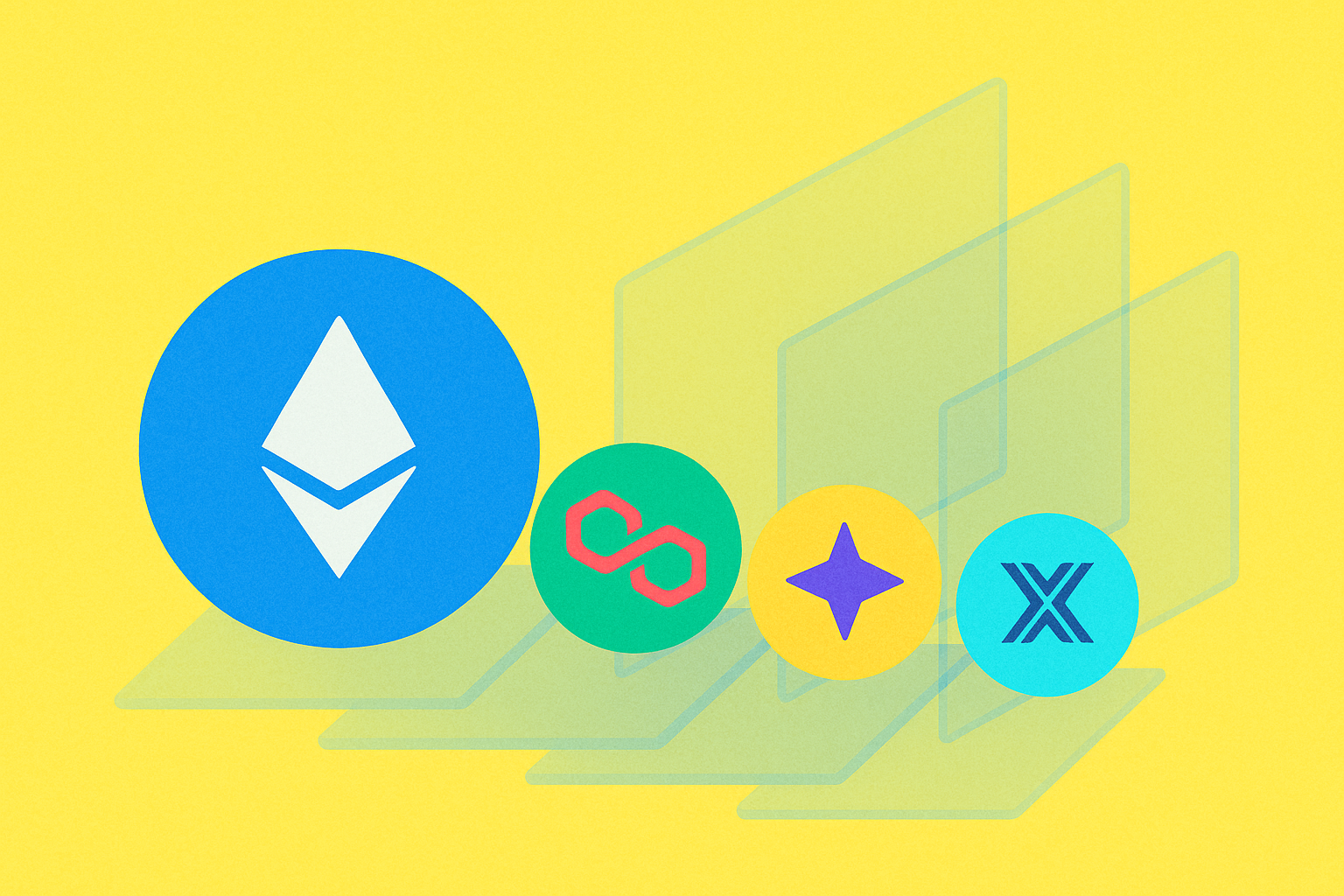
Polygon, formerly known as the Matic Network, has established itself as a comprehensive layer-2 scaling solution for Ethereum. While Polygon gained initial recognition for its proof-of-stake sidechain, the platform has expanded to offer zkEVM (zero-knowledge Ethereum Virtual Machine) solutions. This technology brings the security and speed advantages of a ZK rollup to the broader Ethereum ecosystem, enabling developers to build scalable applications without sacrificing security or decentralization.
StarkWare Industries has developed two distinct ZK rollup solutions tailored for different developer needs. StarkEx operates as a permissioned software-as-a-service platform, providing established decentralized application creators with tools to integrate ZK technology into their existing systems. StarkNet, in contrast, functions as a permissionless platform that any developer can access to incorporate a ZK rollup functionality into their designs. This dual-approach strategy allows StarkWare to serve both enterprise clients requiring customized solutions and independent developers seeking open access to ZK technology.
Immutable X has carved out a specialized niche by focusing ZK rollup technology on blockchain gaming and non-fungible token trading. The platform powers popular games like "Gods Unchained" and "Illuvium," demonstrating how a ZK rollup can provide the security guarantees of Ethereum's decentralized network while delivering the fast transaction speeds and low fees necessary for gaming and NFT marketplaces. This focused approach showcases the practical applications of ZK technology in specific high-demand sectors of the cryptocurrency ecosystem.
Conclusion
A ZK rollup represents a transformative technology in blockchain scalability, offering a powerful solution to the persistent challenges of transaction speed, cost, and throughput that have hindered mainstream blockchain adoption. By leveraging sophisticated cryptographic validity proofs and off-chain computation, a ZK rollup enables networks like Ethereum to process significantly higher transaction volumes while maintaining robust security guarantees and decentralization principles.
The technology's ability to compress vast amounts of transaction data and provide instant finality makes a ZK rollup particularly suitable for applications requiring both high throughput and strong security assurances. While ZK rollups face challenges including higher computational requirements, integration complexity, and potential centralization concerns related to processor participation, ongoing development and optimization continue to address these limitations.
As prominent projects like Polygon, StarkWare, and Immutable X demonstrate real-world implementations across diverse use cases from DeFi to gaming and NFTs, ZK rollups are proving their viability as a cornerstone technology for Web3's future. The endorsement from influential figures like Ethereum co-founder Vitalik Buterin further underscores the technology's potential to become the leading layer-2 scaling solution. As the technology matures and becomes more accessible to developers, a ZK rollup is positioned to play a central role in enabling blockchain networks to achieve the scale necessary for mass adoption while preserving the security and decentralization that make blockchain technology valuable.
FAQ
What is a zk proof example?
A zk proof example is the Ali Baba Cave scenario, where one person proves they know a secret without revealing it. This demonstrates zero-knowledge proof principles, ensuring privacy in cryptographic protocols while maintaining mathematical certainty.
What does a zk stand for?
zk stands for zero knowledge, a cryptographic technique that proves possession of information without revealing the actual data, enabling secure and private transactions.
How does zero-knowledge proof work?
Zero-knowledge proof allows a prover to demonstrate knowledge of a statement to a verifier without revealing any underlying information. Only the truth of the statement is confirmed, keeping all sensitive details hidden.
What are the practical applications of ZK proofs in blockchain?
ZK proofs enable blockchain scalability, accelerate transactions, and ensure privacy without exposing sensitive data. Key applications include secure voting systems, healthcare data sharing, identity verification, and financial transaction protection while maintaining confidentiality and security.
What are the advantages and limitations of zero-knowledge proofs?
Advantages: Enhanced privacy by revealing only necessary proof without exposing underlying data, reduced data exposure, and stronger security. Limitations: Complex implementation, high computational overhead, and steep learning curve for developers.
What is Layer 2

What is the Difference Between Brevis Network and Other ZK Competitors in Performance and Cost?

Exploring the Future of Privacy with Zero-Knowledge Proofs in Blockchain
ZK Rollups Explained: Enhancing Blockchain Scalability Through Zero-Knowledge Solutions

Exploring Linea Network: The Future of Layer 2 Scaling Solutions

Discover Advanced Layer 2 Scaling Solutions with zkEVM Technology

Aptos Mainnet Launch and Noteworthy Ecosystem Projects

Decentralized Perpetual Exchange GMX Integrates Leading Multi-Chain Wallet for Enhanced Trading Access

What is TON PUNKS?

Polymarket: A Decentralized Prediction Market Platform

Leading Web3 Wallet Launches K-NFT Week to Strengthen Presence in Asian Markets