
fomox
MarketsPerpsSpotSwap
Meme
Referral
More
Become a Smart Money on Tracker
Search Token/Wallet
/

How do cryptocurrency exchanges compare: market share, performance, and competitive advantages in 2026?


2026-01-13 02:59:47
Crypto Trading
Cryptocurrency market
Futures Trading
Spot Trading
Stablecoin
Classificação do artigo : 3.5
half-star
156 classificações
This comprehensive guide examines cryptocurrency exchange dynamics in 2026, analyzing market leaders including Binance, Coinbase, Gate, and Kraken. Binance maintains dominant market leadership with 42.3% global spot trading market share, while Coinbase emerges as a strong second player emphasizing regulatory clarity and institutional access. The article evaluates critical performance metrics including trading volume, transaction speed, and user base growth across platforms. It details competitive differentiation through security features, tiered fee structures, and regulatory compliance strategies. The analysis reveals significant market consolidation trends driven by institutional adoption and strengthening regulatory frameworks. Key findings show liquidity concentrating on well-capitalized, compliance-focused exchanges rather than dispersing across smaller platforms. The guide addresses how regional regulations reshape competitive positioning and explores emerging challenges from decentralized exchanges and
How do cryptocurrency exchanges compare: market share, performance, and competitive advantages in 2026?

Major cryptocurrency exchanges market share comparison: Binance, Coinbase, gate, and Kraken dominance in 2026

The cryptocurrency exchange landscape in 2026 remains highly concentrated, with Binance maintaining commanding market leadership through unprecedented trading volumes and infrastructure scale. Binance's 42.3% global spot trading market share as of Q3 2025 represents approximately four times the volume of its nearest competitors, solidifying its position as the market's dominant force. This dominance reflects not only raw trading volume but also the exchange's comprehensive product ecosystem, from perpetual futures to launchpad offerings for early-stage tokens.

Coinbase has emerged as the second major player, demonstrating impressive growth momentum with trading volumes surging 28% year-over-year to reach $234 billion. The exchange distinguishes itself through explicit government licensing and regulatory clarity, appealing particularly to institutional investors and users prioritizing compliance. Coinbase's strategic positioning emphasizes perpetual contracts, prediction markets, and stablecoin infrastructure as key growth drivers throughout 2026.

Gate has secured a meaningful position in the derivatives segment, capturing 4.13% of the derivatives market share while maintaining robust spot trading volumes. The exchange supports multiple blockchain networks, providing users with favorable withdrawal economics compared to single-network platforms. Kraken rounds out the dominant quartet, earning marginally higher security audit scores than Binance despite smaller trading volumes. Both Kraken and Coinbase benefit from transparent regulatory frameworks, though they trade volume advantages for enhanced compliance certainty. This market structure reflects fundamental trade-offs: no single exchange optimizes all dimensions of volume, fees, security, and regulatory clarity simultaneously.

Performance metrics analysis: trading volume, transaction speed, and user base growth across leading platforms

Trading volume remains the primary indicator of exchange performance and market maturity in 2026. Leading platforms demonstrated exceptional activity throughout 2025, with Tradeweb reporting $63 trillion in December trading volume alone, while institutional players like Cboe's options exchanges achieved monthly averages of 21.4 million contracts. Retail-focused platforms also showed strength, with Capital.com recording $656 billion in client trading volumes during Q1 2025. These figures underscore how trading volume concentration among top exchanges reflects their dominance in capturing market activity.

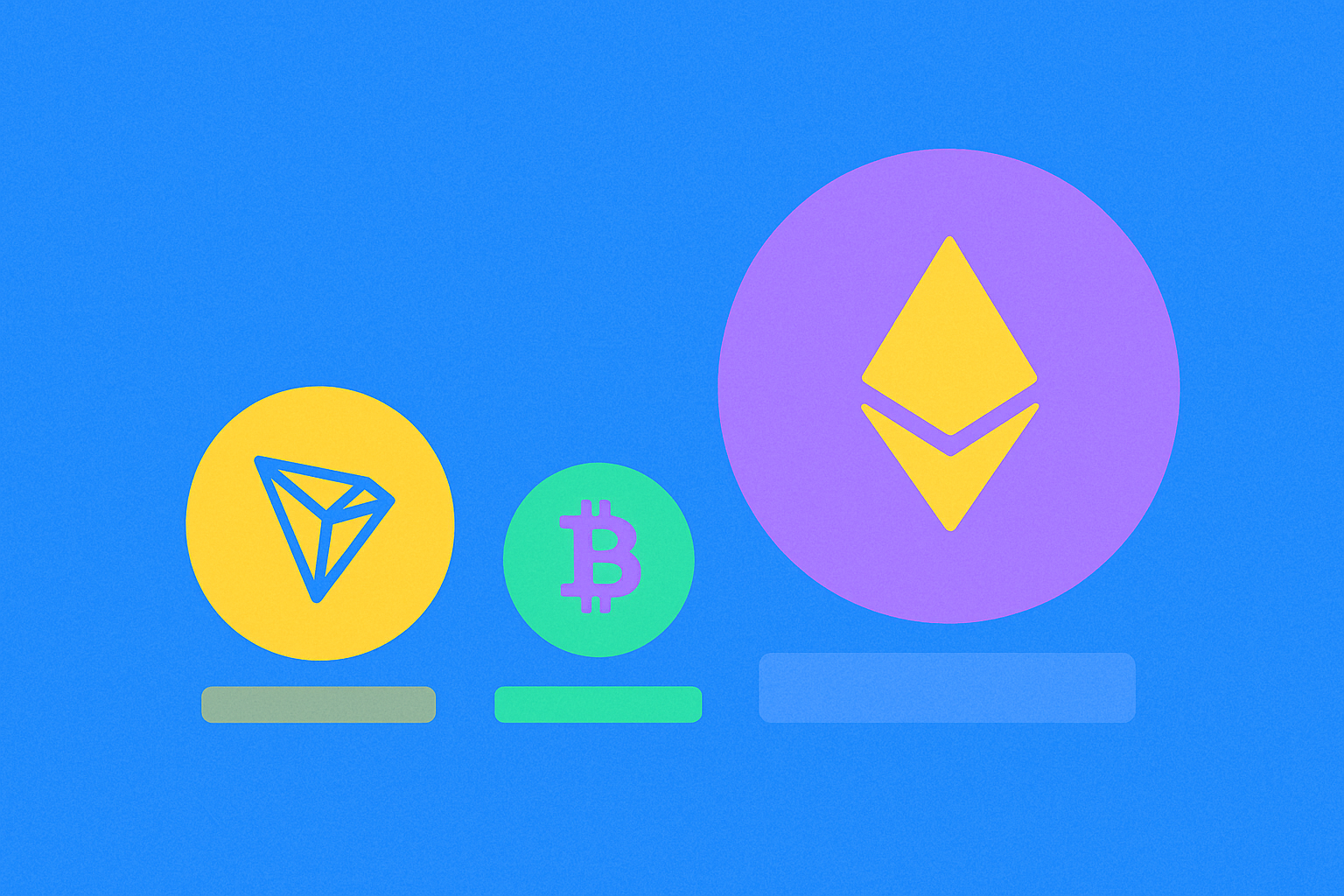
Transaction speed has emerged as a critical differentiator in competitive advantage. Speed metrics reveal significant performance disparities across platforms: Tron leads with throughput exceeding 100 transactions per second, while Ethereum processes approximately 16.77 TPS, and Bitcoin operates at 3.14 TPS. These transaction speed capabilities directly impact user experience and settlement efficiency, influencing which platforms attract high-frequency traders and institutional clients seeking rapid order execution.

User base growth demonstrates market expansion potential, with the industry growing from approximately 8,000 active companies in 2023 to a projected 20,000 by 2030. This trajectory reflects increasing mainstream adoption and institutional participation. Notably, user growth correlates with emerging technology trends, particularly AI and machine learning integration for insights, suggesting that platforms offering advanced analytical capabilities alongside core trading functions capture disproportionate user acquisition.

Differentiated competitive advantages: security features, fee structures, and regulatory compliance strategies

Leading cryptocurrency exchanges distinguish themselves through three interconnected pillars that shape their market positioning and user trust. Security features represent the foundational differentiator, with top-tier platforms implementing enterprise-grade encryption, multi-signature protocols, and cold storage solutions. Industry-standard certifications such as SOC 2 Type II, ISO 27001, and Security+ compliance demonstrate an exchange's commitment to protecting user assets and data integrity.

Fee structures vary significantly among exchanges, creating distinct competitive advantages for different user segments:

Structure Type Use Case Typical Range
Flat Fee Model Institutional traders Fixed per-transaction rate
Tiered Pricing Volume-based users 0.02%-0.5% scaling
Subscription Tiers Active traders Monthly membership
Usage-Based Casual traders Variable with activity

Regulatory compliance strategies have become decisive competitive factors. Leading platforms maintain continuous compliance across SEC/EDGAR filing requirements, GDPR data protection standards, and PCI DSS payment security protocols. Advanced exchanges employ AI-driven compliance automation to maintain real-time evidence collection, continuous monitoring, and audit-ready documentation across multiple frameworks simultaneously. This proactive compliance infrastructure reduces regulatory risk and builds institutional confidence, positioning compliant exchanges as preferred trading destinations for both retail and professional traders seeking long-term stability and security.

Market share shifts and emerging challengers reshaping the cryptocurrency exchange landscape

The cryptocurrency exchange landscape in 2026 is experiencing profound structural shifts driven by institutional capital flows and strengthening regulatory frameworks. Rather than dispersing across numerous platforms, liquidity is increasingly concentrating on fewer, better-capitalized venues that can meet institutional standards and compliance requirements. This consolidation represents a significant departure from earlier market dynamics where smaller cryptocurrency exchanges could thrive through specialization alone.

Institutional adoption has emerged as the primary catalyst reshaping market share distribution. Capital allocators now gravitate toward cryptocurrency exchanges demonstrating sustainable business models and generating authentic revenue rather than relying on speculative trading volumes. Regulatory developments across the U.S., UK, and Hong Kong have accelerated this trend by establishing clearer operational requirements that favor well-resourced platforms. Traditional centralized exchanges maintaining strong compliance infrastructure have captured disproportionate market share as a result.

Simultaneously, emerging challengers are carving distinct niches rather than competing directly with market leaders. Decentralized exchanges continue gaining traction among crypto purists, while some traditional finance brokers are integrating cryptocurrency trading into existing FX platforms, creating hybrid models. This divergence suggests the exchange landscape will stratify into multiple segments serving different investor classes rather than consolidate into a single dominant structure. Projects emphasizing real revenue generation through sustainable mechanisms are outcompeting those relying on transactional volume alone, fundamentally altering competitive dynamics and market share allocation patterns.

FAQ

What are the largest global cryptocurrency exchanges in 2026 and what are their respective market shares?

In 2026, the three largest exchanges dominate the market with combined share exceeding 70%. These leading platforms handle daily trading volumes surpassing 100 billion USD, serving over 50 million global users collectively.

How do major cryptocurrency exchanges compare in terms of transaction speed, fees, and liquidity?

Major platforms differ significantly: Standard trading fees range from 0.10% to 0.60% for maker/taker orders. Withdrawal fees vary by network conditions. Liquidity depth varies, with larger platforms offering deeper order books and tighter spreads. Platform coins provide 20-25% fee discounts. Compliance levels differ across jurisdictions, affecting service availability and security standards.

What are the competitive advantages of different cryptocurrency exchanges, and how do they differentiate their market positioning?

Exchanges compete on fees, regulatory compliance, and user experience. Leaders dominate through trading volume and product range, while others attract users via lower fees and advanced features. Compliance expertise, security measures, and geographic coverage drive distinct market positions.

How is the security of cryptocurrency exchanges assessed, and what are the main risks and protective measures in 2026?

Security assessment relies on multi-factor authentication, cold storage, and AI-powered monitoring systems. Main 2026 risks include advanced fraud schemes and cyber attacks. Key protective measures include hardware wallets, real-time anomaly detection, and enhanced encryption protocols.

What are the differences between centralized and decentralized exchanges in terms of market share and performance?

CEX maintains dominant market share with superior liquidity and user experience. DEX market share grows steadily, with spot trading reaching 19% and perpetual futures at 13.3% by Q3 2025. DEX offers zero fees and self-custody advantages, while CEX provides better fiat on-ramps and institutional products.

How do different regions' regulatory policies on cryptocurrency exchanges vary, and how does this impact the competitive landscape of exchanges?

Regional regulatory policies vary significantly, with strict jurisdictions limiting exchange operations while permissive regions attract more platforms. This creates fragmented global competition, driving exchanges to establish presence in crypto-friendly areas and adapt compliance strategies to maintain market share across different markets.

By 2026, exchanges are evolving beyond trading platforms toward long-term business models. Key trends include stablecoin innovation, real-world asset tokenization, privacy-enhanced solutions, and AI-driven services. New platforms may emerge by specializing in niche assets, blockchain-native derivatives, or decentralized finance integration.

* As informações não se destinam a ser e não constituem aconselhamento financeiro ou qualquer outra recomendação de qualquer tipo oferecido ou endossado pela Gate.

Partilhar

Conteúdos

Major cryptocurrency exchanges market share comparison: Binance, Coinbase, gate, and Kraken dominance in 2026

Performance metrics analysis: trading volume, transaction speed, and user base growth across leading platforms

Differentiated competitive advantages: security features, fee structures, and regulatory compliance strategies

Market share shifts and emerging challengers reshaping the cryptocurrency exchange landscape

FAQ

Artigos relacionados
What are the compliance and regulatory risks in cryptocurrency and how do they impact trading in 2026

What are the compliance and regulatory risks in cryptocurrency and how do they impact trading in 2026

This comprehensive guide examines compliance and regulatory risks shaping cryptocurrency trading in 2026. The article analyzes SEC regulatory enforcement, mandatory KYC/AML protocols on trading platforms like Gate, and audit transparency standards that establish operational reliability. It explores how regulatory events drive market volatility patterns affecting trading strategies, and addresses critical compliance obligations including tax reporting, custody requirements, and jurisdiction-specific frameworks across major regions. The detailed FAQ section clarifies regulatory differences between the US, EU, and Asia, explains derivatives restrictions, and provides essential guidance for both retail and institutional traders. Understanding these compliance dynamics has become essential for navigating the increasingly regulated cryptocurrency market while managing legal and financial risks effectively throughout 2026.
2026-01-12 05:15:03
Spot vs Futures: A Cryptocurrency Trading Comparison
Spot vs Futures: A Cryptocurrency Trading Comparison

This article delves into cryptocurrency trading, comparing spot and futures trading. It explains crypto futures as contractual agreements for price speculation, detailing their mechanics, evolution, and types. The piece highlights benefits like flexibility, liquidity, and diversification, while underscoring risks such as market volatility and leverage exposure. Geared towards traders evaluating strategic approaches, it aids in understanding the complex financial instrument landscape. FAQs offer insights into trading choices and preferences, enabling swift comprehension and decision-making. Keywords include crypto futures, spot trading, leverage, and market volatility.
2025-11-22 13:43:37
Is Cryptocurrency Day Trading Permissible?

Is Cryptocurrency Day Trading Permissible?

The article explores the dynamics of cryptocurrency day trading, emphasizing the development of effective trading strategies to leverage market volatility. It addresses the legality of day trading crypto across various jurisdictions, focusing on regulatory compliance. Targeted towards active traders, it highlights the pros and cons of crypto day trading, including continuous market access and potential risks. Structured guidance is provided on forming personalized trading strategies, selecting platforms like Gate, and avoiding common pitfalls. Legal considerations and proper risk management form the core of sustainable trading practices.
2025-12-20 00:41:04
Differences Between USDT-M Futures and Coin-M Futures

Differences Between USDT-M Futures and Coin-M Futures

# Article Introduction This comprehensive guide explores USDT-M Futures and Coin-M Futures trading on Gate, two distinct derivative products designed for different investment strategies in Web3. USDT-M Futures offers intuitive profit calculation in stablecoins with hundreds of trading pairs, ideal for traders holding USDT seeking diversified leverage exposure. Coin-M Futures enables cryptocurrency holders to trade using their assets as collateral, maximizing capital efficiency during bull markets while maintaining long-term positions. The article compares key differences including settlement methods, fee structures, and risk profiles, helping traders select the optimal futures product based on their asset holdings, risk tolerance, and investment objectives. Whether you prioritize stable settlement or cryptocurrency-denominated returns, this guide provides actionable insights for navigating Gate's futures markets.
2026-01-01 13:01:42
What are the trading hours for the US cryptocurrency market?

What are the trading hours for the US cryptocurrency market?

Explore 24/7 cryptocurrency market hours in the US. Find out when Bitcoin and Ethereum trading opens, understand time zones, master optimal trading strategies, and learn how to trade on Gate to maximize your profits. This is a complete guide for traders.
2025-12-31 14:10:45
Crypto Market X-Ray: What Stablecoin Flows, Trading Volumes, and Funding Rates Reveal About Investor Sentiment

Crypto Market X-Ray: What Stablecoin Flows, Trading Volumes, and Funding Rates Reveal About Investor Sentiment

# Article Introduction This comprehensive guide reveals how stablecoin flows, trading volumes, and funding rates work together to decode crypto market sentiment with precision. By analyzing liquidity movements across Gate exchanges, measuring trading conviction through volume patterns, and tracking perpetual futures positioning, investors gain a data-driven framework for smarter decision-making. Whether you're a short-term trader seeking volatility clues or a long-term investor identifying accumulation opportunities, these three interconnected indicators eliminate emotional bias and expose real market dynamics. Learn the sentiment trifecta that separates professional traders from the crowd, transforming raw market data into actionable trading strategies for Bitcoin, Ethereum, and altcoin markets.
2025-12-31 16:12:08
Recomendado para si
What is MITO market overview: $14.20M market cap, $2.51M 24H trading volume, and $0.072 current price

What is MITO market overview: $14.20M market cap, $2.51M 24H trading volume, and $0.072 current price

This article provides a comprehensive market overview of MITO, a mid-tier cryptocurrency with a $14.20M market cap and 196.27M circulating supply. The token demonstrates moderate liquidity with $2.51M in 24-hour trading volume on platforms like Gate, positioning it as an accessible entry point compared to mega-cap assets. Trading at $0.072 with a 2.52% daily gain, MITO reflects stable market positioning within defined price ranges of $0.0717 to $0.07577. As the governance token for Mitosis liquidity protocol, MITO separates voting rights from liquidity management, enhancing holder control and long-term ecosystem alignment. The article explores market fundamentals, technical price dynamics, purchasing methods, investment risks, and competitive advantages, providing investors with essential insights into MITO's role in the modular DeFi landscape and its growth prospects.
2026-01-13 04:46:04
How to track whale movements and active addresses with on-chain data analysis in 2026?
How to track whale movements and active addresses with on-chain data analysis in 2026?

This article provides a comprehensive guide to tracking whale movements and active addresses using on-chain data analysis in 2026. It explores how active address metrics reveal genuine network participation and user engagement trends beyond price speculation. The guide covers monitoring whale distribution patterns to identify market sentiment, analyzing transaction volume dynamics and protocol health indicators, and introduces practical tools for real-time whale tracking. By combining multiple on-chain metrics—including exchange inflows, accumulation patterns, and fee structures—traders can distinguish organic ecosystem growth from temporary market fluctuations. The article addresses common analysis pitfalls while outlining emerging AI-powered tools and data integration solutions, enabling informed investment decisions based on transparent blockchain activity rather than surface-level indicators.
2026-01-13 04:44:28
How do crypto tokens compare to Bitcoin in market cap and trading performance?

How do crypto tokens compare to Bitcoin in market cap and trading performance?

This comprehensive guide analyzes how crypto tokens compare to Bitcoin across market capitalization and trading performance metrics. Bitcoin dominates with $2+ trillion market cap and 60% market share, while altcoins collectively drive 50% of trading volume but struggle for meaningful dominance. The analysis reveals Bitcoin's relative price stability—with volatility declining to 42.21—contrasting sharply with volatile altcoins like EDU and Cardano. Layer-2 solutions and utility tokens challenge Bitcoin's first-mover advantage through enhanced scalability and functional use cases. The article explores market share dynamics showing Bitcoin's leadership persists through institutional adoption and regulatory clarity, while emerging token ecosystems expand on Gate and other platforms. Whether evaluating Ethereum, stablecoins, or small-cap tokens, this guide provides essential frameworks for comparing trading performance, liquidity depth, and investment risk relative to Bitcoin's established position as digital gol
2026-01-13 04:42:30
How to interpret MACD, RSI, and volume divergence signals in technical analysis: A comprehensive 2026 guide

How to interpret MACD, RSI, and volume divergence signals in technical analysis: A comprehensive 2026 guide

This comprehensive 2026 guide equips traders with essential technical analysis skills to interpret MACD, RSI, and volume divergence signals effectively. The article addresses traders seeking reliable confirmation methods for trend reversals and breakout validation across multiple timeframes. It explores how divergence occurs when price movements contradict indicator signals, offering powerful reversal confirmation through MACD momentum tracking, RSI overbought/oversold levels, and volume-price analysis. The guide covers moving average crossovers for trend-following strategies, quantitative metrics for distinguishing genuine breakouts from false signals, and practical multi-indicator confirmation protocols. Traders learn to combine these three indicators with volume validation to achieve superior trade accuracy, reduce false signal exposure by approximately 70%, and implement systematic confluence methodology for both intraday and swing trading on Gate exchange platforms.
2026-01-13 04:40:15
What is Tron (TRX) fundamental analysis: whitepaper logic, use cases, and technology innovation explained
What is Tron (TRX) fundamental analysis: whitepaper logic, use cases, and technology innovation explained

This article provides a comprehensive fundamental analysis of TRON (TRX), examining its DPoS consensus architecture, technical innovations, and market positioning. TRON's whitepaper establishes a high-performance blockchain optimized for stablecoin transfers, hosting 42% of USDT's global supply with $7.9 trillion in annual transaction volumes. The platform achieved a 60% energy consumption reduction through smart contract optimization, significantly enhancing scalability and sustainability. Under Justin Sun's leadership since 2017, TRON has cultivated a thriving ecosystem with 950+ weekly active developers and 7,000+ certified developers through TRON Academy. The article explores TRON's competitive advantages over Ethereum and Solana, including ultra-low fees and throughput exceeding 1,000 TPS. Market analysts project TRX trading within $0.30–$0.60 range through 2026, reflecting strong adoption fundamentals and institutional capital influx potential for decentralized applications on the TRON network.
2026-01-13 04:38:03
How does TRX price volatility compare to Bitcoin and Ethereum in 2026?

How does TRX price volatility compare to Bitcoin and Ethereum in 2026?

This article provides a comprehensive volatility analysis of TRX compared to Bitcoin and Ethereum through 2026. TRX currently trades at $0.30 with forecasts ranging $0.30–$0.60, demonstrating 1.59% volatility—lower than Ethereum but higher than Bitcoin's established stability. The analysis reveals TRX's distinct market position: 1.33 times more volatile than Bitcoin yet 1.55 times less risky than Ethereum, offering investors a balanced risk profile. Key technical zones between $0.27–$0.40 determine price movement, with critical resistance at $0.30 and support at $0.27. The article examines volatility drivers specific to TRON's ecosystem, including stablecoin demand and transaction volume, distinguishing them from macroeconomic factors affecting major cryptocurrencies, and projects TRX will maintain elevated yet gradually stabilizing volatility as adoption expands on Gate and across the TRON blockchain in 2026.
2026-01-13 04:35:59