

LCP_hide_placeholder
fomox
MarketsPerpsSpotSwapMeme Referral
More
Smart Money Recruitment
Search Token/Wallet
/

How Does Polkadot (DOT) Compare to Its Competitors in 2025: Market Share, Performance & Key Metrics

2026-01-19 06:09:41
Altcoins
Blockchain
DeFi
Layer 2
Article Rating : 4.5
half-star
165 ratings
This comprehensive analysis evaluates Polkadot's competitive positioning within the Layer-1 blockchain landscape throughout 2025. The article examines DOT's market capitalization reaching $3.3 billion, trading dynamics, and network activity metrics while comparing Polkadot's parachain architecture against competitors like Ethereum, Solana, and Avalanche. Key highlights include Polkadot's 1,023 validators, innovative cross-chain interoperability through XCM, and technological differentiation via Polkadot 2.0 upgrades. The analysis reveals DOT's paradoxical market trajectory: expanded market share metrics alongside underperformance versus broader cryptocurrency markets. Critical factors shaping competitive advantage include Polkadot's tokenomics reform capping supply at 2.1 billion tokens, robust developer engagement with 3,593 contributors, and strategic focus on trustless interoperability. Designed for investors, developers, and blockchain enthusiasts, this guide provides actionable insights into Polkadot's m
How Does Polkadot (DOT) Compare to Its Competitors in 2025: Market Share, Performance & Key Metrics

Market Position and Key Performance Metrics: Polkadot's Market Cap, Transaction Volume, and Network Activity in 2025

Polkadot maintained a strong competitive standing throughout 2025, consistently ranking among the top 25 cryptocurrencies by market capitalization. As of early 2026, DOT's market cap reached approximately $3.3 billion, with projections suggesting potential growth to $5 billion under favorable market conditions. The network's market position reflects its significance within the broader digital asset landscape, despite facing headwinds comparable to other established blockchain platforms.

Transaction dynamics revealed robust engagement within the Polkadot ecosystem. Trading volume frequently exceeded 30-day averages by significant margins, with several trading sessions recording spikes of 35-55% above baseline volumes. This elevated activity underscored sustained investor interest and validated breakouts above critical technical resistance levels, demonstrating the market's continued responsiveness to Polkadot developments.

Network activity metrics painted a more nuanced picture of ecosystem health. Q1 2025 data showed total ecosystem transactions reached 137.1 million, though this represented a 36.9% quarter-over-quarter decline from previous periods. Core Polkadot Chain processed 11.4 million transactions, accounting for 8.3% of total ecosystem activity. Despite transaction volume moderation, developer engagement remained stable, with over 3,593 developers contributing to Polkadot's infrastructure over the preceding year. Active addresses declined moderately, yet ecosystem-level usage remained elevated relative to historical baselines, suggesting sustained structural support beneath surface-level transaction fluctuations.

Competitive Landscape Analysis: How Polkadot Stacks Against Leading Layer-1 Blockchain Competitors

Polkadot operates in a highly competitive Layer-1 blockchain landscape where multiple platforms vie for developer adoption and transaction volume. Unlike Ethereum's established smart contract ecosystem with over $50 billion in total value locked, Polkadot differentiates itself through its innovative parachain architecture and shared security model powered by the Relay Chain. This structure enables independent blockchains to connect seamlessly while leveraging collective network security—a capability that distinguishes Polkadot from traditional Layer-1 competitors.

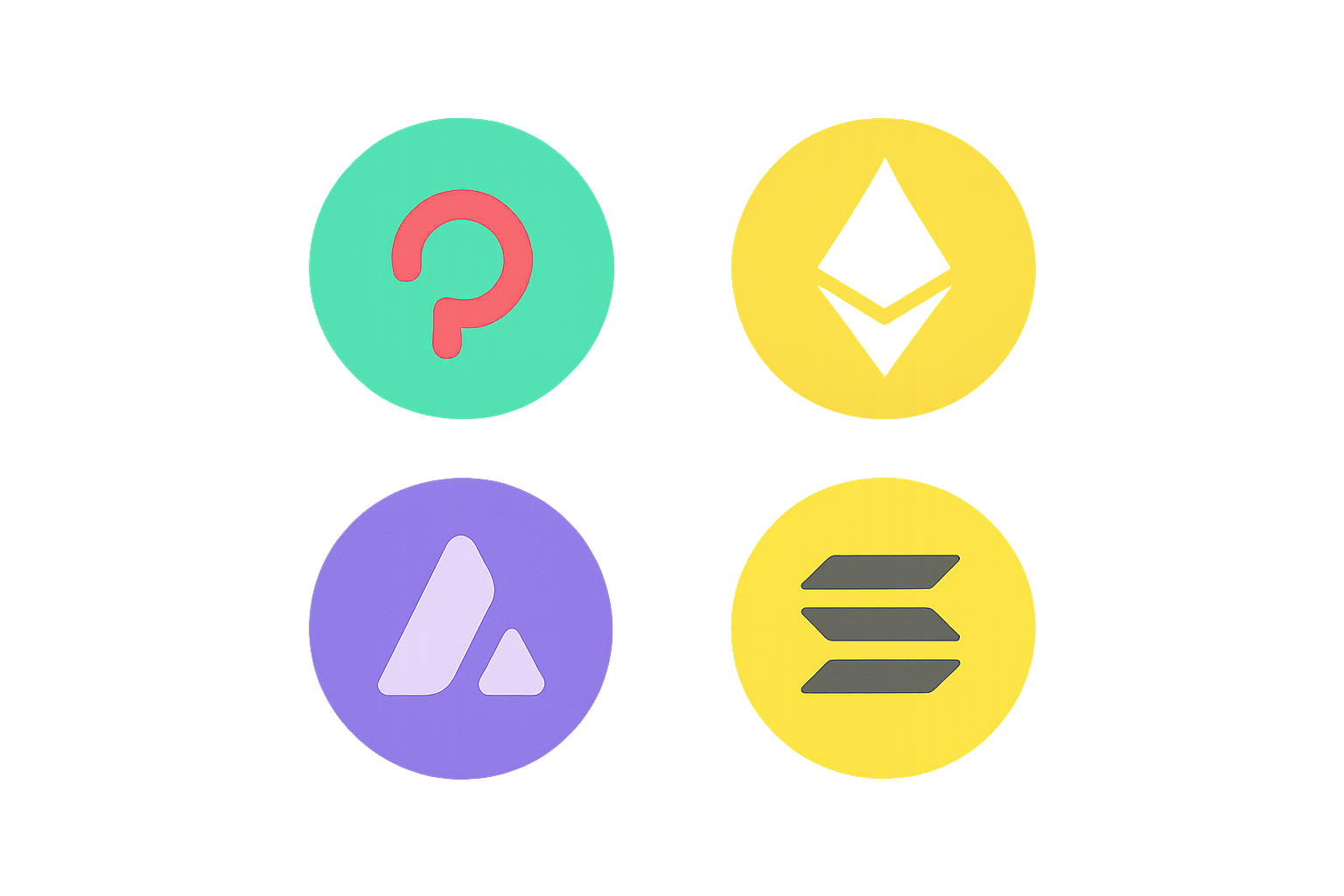
When examining throughput capabilities, Solana leads with transaction speeds reaching 65,000 TPS, while Polkadot emphasizes scalability through interoperability rather than raw speed alone. Avalanche takes a different approach with its subnet model, where validators independently confirm blockchains without the shared security mechanisms Polkadot provides through its relay chain architecture. Cardano and NEAR Protocol each offer distinct advantages in governance and developer tools respectively, yet lack Polkadot's native cross-chain communication framework through XCM.

In 2025, Polkadot maintained competitive positioning with 1,023 validators supporting its network, contributing to robust decentralization metrics. While Solana dominates in developer activity and Ethereum retains institutional preference for established applications, Polkadot's strategic focus on trustless interoperability and customizable blockchain features positions it as the platform of choice for projects requiring sophisticated cross-chain functionality and specialized blockchain requirements.

Differentiation Advantages: Polkadot's Unique Value Propositions and Technological Edge Over Rivals

Polkadot's architecture fundamentally distinguishes it through a modular, multichain design centered on interoperability—enabling independent blockchains to exchange information and transactions seamlessly through its relay chain infrastructure. This cross-chain connectivity positions Polkadot as a central Web3 meeting point, unlike competitors offering isolated ecosystems. The protocol allows parachains to specialize in specific use cases while maintaining synchronized security, creating unprecedented network flexibility that resonates with developers seeking scalable solutions.

A structural advantage emerges from Polkadot's tokenomics reform. Beginning March 2026, DOT's supply will be capped at 2.1 billion tokens, introducing scarcity dynamics absent in competing protocols. This deflationary model, combined with parachain bonding, governance participation, and staking mechanisms, creates genuine utility-driven demand. The hard cap transforms DOT from inflationary tokens into a deflationary asset, theoretically supporting long-term value appreciation as ecosystem adoption accelerates.

Polkadot 2.0 and the JAM (Join-Accumulate-Machine) upgrade represent transformative technological milestones. These enhancements dramatically improve transaction speed, lower barriers for Ethereum developers migrating to Polkadot, and introduce elastic scaling capabilities. The technical roadmap demonstrates Polkadot's commitment to addressing scalability and developer experience—critical factors distinguishing mature infrastructure from lesser competitors in the increasingly competitive blockchain landscape.

Market Share Dynamics: Polkadot's Growth Trajectory and Competitive Position Changes Throughout 2025

Throughout 2025, Polkadot demonstrated a paradoxical market dynamic that reveals the complexity of cryptocurrency market share assessment. While DOT's market share technically expanded in certain metrics, the token significantly underperformed the broader cryptocurrency market during the same period, according to CoinDesk's technical analysis. This divergence signals deeper challenges in Polkadot's competitive positioning relative to alternative blockchain networks. By mid-January 2026, DOT maintained approximately 0.099% global market dominance, ranking 36th by market capitalization with a valuation near $3.27 billion. However, this snapshot masks the volatility defining 2025's trajectory. Trading volume surged dramatically on specific occasions, with 5.75 million tokens moving at 134% above daily averages, yet these spikes failed to translate into sustained competitive gains. The fundamental issue stemmed from investor hesitation regarding the Polkadot ecosystem's real-world utility and value capture mechanisms. Despite engineering excellence and an engaged developer community, DOT's price performance lagged significantly behind market-wide movements, reflecting structural skepticism about whether Polkadot could convert technological advantages into measurable economic adoption. This performance gap suggests that raw market share figures don't fully capture Polkadot's competitive position, which depends increasingly on demonstrating parachain activity, user engagement, and tangible DeFi integration throughout 2026.

FAQ

Polkadot (DOT) 在2025年的市场份额和排名如何?与以太坊相比有什么优劣势?

Polkadot市场份额稳步增长,2025年市值可能达150-200亿美元。优势:跨链互操作性强、扩展性优异;劣势:生态建设不如以太坊成熟、开发者基数较小。

What are the unique advantages of Polkadot's cross-chain interoperability technology compared to competitors like Cosmos and Avalanche?

Polkadot's shared global state and relay chain model enable parallel chains to share consensus and computation directly, unlike Cosmos's independent zones or Avalanche's separate subnets. This unified architecture provides stronger interconnectivity and coordinated finality.

How do Polkadot's key performance indicators (TPS, transaction fees, security) compare to other Layer 1 blockchains in 2025?

Polkadot delivers competitive TPS through parachain architecture, maintains low transaction fees, and ensures robust security via Proof of Stake consensus. It rivals Solana and Avalanche in scalability while offering superior interoperability across multiple blockchains.

What is the current state of Polkadot's ecosystem development? What are the mainstream applications and projects deployed on it?

Polkadot's ecosystem includes key projects like Centrifuge for RWA, Bittensor for decentralized AI, and peaq for DePIN. Notable applications span DeFi, gaming, and infrastructure with ongoing development of Coretime and cross-chain bridges enhancing interoperability and adoption.

What are the main risks and opportunities of investing in Polkadot (DOT) in 2025?

Key risks include market volatility and regulatory uncertainty. Major opportunities lie in Polkadot 2.0 upgrades, enhanced scalability through Core Time mechanism, improved interoperability via JAM Protocol, and growing ecosystem adoption with 25% active address growth. DOT's governance model and staking rewards present strong long-term value potential.

* The information is not intended to be and does not constitute financial advice or any other recommendation of any sort offered or endorsed by Gate.

Share

Content

Market Position and Key Performance Metrics: Polkadot's Market Cap, Transaction Volume, and Network Activity in 2025

Competitive Landscape Analysis: How Polkadot Stacks Against Leading Layer-1 Blockchain Competitors

Differentiation Advantages: Polkadot's Unique Value Propositions and Technological Edge Over Rivals

Market Share Dynamics: Polkadot's Growth Trajectory and Competitive Position Changes Throughout 2025

FAQ

Related Articles
What Is Polkadot (DOT) and How Does Its Ecosystem Work in 2025?

What Is Polkadot (DOT) and How Does Its Ecosystem Work in 2025?

The article explores Polkadot's innovative cross-chain interoperability framework and its evolution into the 2025 ecosystem. It discusses the foundational Relay Chain, parachain architecture, and XCM connectivity enabling seamless blockchain interactions. Readers will understand the significance of DOT token utility in governance, staking, and parachain auctions. It highlights technical advancements like Agile Coretime and asynchronous backing that enhance scalability and transaction efficiency. The article targets blockchain developers and crypto enthusiasts, detailing Polkadot 2.0's roadmap and its transformative upgrades scheduled for Q1 2026. Key topics include connectivity with exchanges like Gate and strategic integration with Ethereum.
2025-12-04 05:01:40
What Is Sui Network and How Does Its Fundamentals Compare to Other Layer 1 Blockchains?

What Is Sui Network and How Does Its Fundamentals Compare to Other Layer 1 Blockchains?

The article explores the Sui Network, highlighting its unique object-centric data model and utilization of the Move programming language, setting it apart from traditional blockchains. It examines Sui's ecosystem growth with over 500 projects and significant TVL, driven by technical scalability and developer engagement. The analysis addresses market performance, showcasing SUI's impressive growth potential by 2025. Targeted at blockchain enthusiasts, developers, and investors, this piece offers insights into Sui's technological strengths, ecosystem expansion, and market opportunities, emphasizing its competitive advantages within the evolving blockchain landscape.
2025-10-28 09:03:13
Exploring the Architecture of Sei Blockchain Network

Exploring the Architecture of Sei Blockchain Network

Exploring the Sei Blockchain Network showcases a Layer-1 blockchain designed for decentralized crypto trading and asset management. Sei offers fast and efficient parallel transaction processing, addressing DEX challenges like slow speeds and liquidity issues. Key features include twin-turbo consensus, EVM compatibility, and cross-chain interoperability. Sei V2 enhances performance, supporting more users and reducing costs. Targeted users include developers, traders, and community members seeking a rapid, low-fee experience. With a focus on scalability, security, and governance, Sei provides a robust platform for DeFi applications.
2025-11-30 09:06:15
Understanding Sei Blockchain: A Comprehensive Guide to Sei Crypto

Understanding Sei Blockchain: A Comprehensive Guide to Sei Crypto

Sei Blockchain, a Layer-1 solution within the Cosmos ecosystem, revolutionizes decentralized trading with high-speed, parallelized transactions. This comprehensive guide explores Sei's features such as twin-turbo consensus, interoperability, and Sei V2 upgrades, enhancing user experience and scalability for developers, traders, and community members. Sei's EVM compatibility broadens access for Ethereum developers, while its governance model supports decentralization and community engagement. Key topics include user onboarding steps, SEI token roles, and investment insights. Ideal for those seeking efficient DeFi and low-fee transactions, Sei offers compelling advantages and opportunities in the crypto space.
2025-11-20 08:52:57
What Is SEI Network and How Does Its Twin-Turbo Consensus Work?
What Is SEI Network and How Does Its Twin-Turbo Consensus Work?

The article explores SEI Network's pioneering Twin-Turbo consensus mechanism, achieving unprecedented transaction speeds and throughput. It delves into SEI's central order book architecture, optimized for DeFi applications, and highlights its growth in TVL, revealing significant advancements in its ecosystem. With the recent Giga upgrade, SEI introduces a permissionless EVM-compatible chain, enhancing performance metrics compared to traditional EVM chains. The content is structured to guide readers through SEI's technical breakthroughs, market potential, and infrastructure innovations, catering to DeFi developers and investors interested in high-performance blockchain solutions.
2025-10-31 02:37:30
What is Bitcoin Hyper ($HYPER) and How Does it Differ from Bitcoin?

What is Bitcoin Hyper ($HYPER) and How Does it Differ from Bitcoin?

The article explores the technological advancements of Bitcoin Hyper ($HYPER) as a Layer-2 solution enhancing Bitcoin with faster transactions and smart contract capabilities. It contrasts $HYPER's market performance, highlighting trading interest versus limited utility. Challenges faced by Hyperlane due to volatility and unclear roadmaps are examined. Analysts provide varied $0.21-$3.05 price predictions for 2030, reflecting adoption scenarios. Ideal for investors and crypto enthusiasts, the article provides insight into $HYPER's potential role in Bitcoin's evolution within cryptocurrency ecosystems.
2025-12-07 02:11:32
Recommended for You
What is XDC Network's whitepaper core logic, use cases, and 2025 roadmap for fundamental analysis?

What is XDC Network's whitepaper core logic, use cases, and 2025 roadmap for fundamental analysis?

XDC Network is an enterprise-grade Layer-1 blockchain built specifically for tokenized finance and trade settlement. The whitepaper reveals a hybrid blockchain architecture powered by XDPoS consensus, achieving 2,000 transactions per second with 3-second finality—addressing the $2.5 trillion global trade finance market's demands. Three core use cases drive adoption: real-world asset tokenization, cross-border payments with near-zero costs, and supply chain finance automation. The 2025 roadmap delivered transformative milestones including Stargate Bridge integration for cross-chain compatibility, native USDC support reaching $27 million, and 94.5% active address growth. Strategic partnerships with UK-regulated exchange Archax and ISO 20022 compliance validation demonstrate institutional-grade credibility. XDC positions itself as the preferred infrastructure for compliance-demanding institutions seeking blockchain benefits without regulatory friction, backed by experienced leadership and proven enterprise deplo
2026-01-19 08:04:10
Falling Flag Pattern in Cryptocurrency Trading

Falling Flag Pattern in Cryptocurrency Trading

This comprehensive guide explores the falling flag pattern, a critical technical analysis tool for cryptocurrency traders seeking to capitalize on market opportunities. The article covers pattern identification, visual characteristics, and practical trading strategies while addressing common trader challenges. Falling flag patterns signal bullish trend continuation following temporary downward consolidation, yet require careful confirmation through volume analysis and additional indicators to avoid false signals. The guide examines entry and exit strategies, compares falling flags with other chart patterns, and evaluates both advantages and disadvantages. By combining falling flag analysis with risk management tools and complementary technical indicators on Gate exchange platforms, traders can enhance decision-making and improve profit potential. This resource equips both novice and experienced traders with actionable insights for recognizing and trading these patterns effectively in volatile cryptocurrency m
2026-01-19 08:03:50
How does WLD token exchange inflow and outflow affect Worldcoin price movements and market concentration
How does WLD token exchange inflow and outflow affect Worldcoin price movements and market concentration

This comprehensive analysis examines how WLD token exchange inflows and outflows directly shape Worldcoin's price dynamics and market concentration patterns. The article explores critical mechanics including exchange flow redistribution effects on holder concentration, the $148.6 million open interest correlation with price volatility, and liquidity depth concentration across major exchanges like Gate. It reveals how institutional positioning, leverage ratios, and funding rates amplify price swings through derivative markets rather than organic demand. The guide addresses long-short position imbalances that trigger cascading liquidations, analyzes on-chain transaction flows as predictive indicators, and provides actionable frameworks for monitoring market health through holder distribution metrics. Essential reading for traders seeking to understand market microstructure and predict WLD price movements through exchange flow analysis.
2026-01-19 08:01:31
How Does IOTA Price Fluctuate Between $0.083 and $0.095 in 2026?

How Does IOTA Price Fluctuate Between $0.083 and $0.095 in 2026?

This article provides a comprehensive analysis of IOTA price consolidation between $0.083-$0.095 during January 2026, revealing a controlled market environment with 1.56% daily growth despite mixed technical signals. It examines critical support and resistance levels that shape price dynamics, analyzing how the $0.089 support barrier and key moving averages create a technical framework for trading. The piece explores IOTA's market positioning as a Layer-1 blockchain asset with $12.45 million trading volume, demonstrating its correlation with Bitcoin and Ethereum movements. Additionally, it addresses investor concerns through FAQs covering IOTA's Tangle technology, risk factors, and long-term growth potential. Whether trading on Gate or analyzing IOTA's 2026 prospects, readers gain actionable insights into price prediction strategies and technical entry-exit opportunities within the forecasted range.
2026-01-19 07:57:43
How does token economics model work: allocation, deflation, burning, and governance explained

How does token economics model work: allocation, deflation, burning, and governance explained

This comprehensive guide explores how token economics models operate through allocation, deflation, burning, and governance mechanisms. Using BabyDoge Coin as a primary case study, the article demonstrates a sophisticated tokenomics framework where 10% transaction fees reward holders and fund ecosystem development, creating sustainable value distribution. The deflationary mechanics incorporate 43% initial supply reduction and continuous token burns, strengthening scarcity and long-term value proposition. Governance operates through decentralized community participation on platforms like Gate, enabling token holders to collectively guide protocol direction. The article addresses critical questions about tokenomics importance, allocation ratios, burning mechanisms, and supply control effects on project sustainability. Essential reading for crypto investors seeking to understand how token models align stakeholder interests, maintain transparency, and drive long-term ecosystem growth through incentive alignment.
2026-01-19 07:52:29
What are the key derivatives market signals for crypto trading in 2026: funding rates, open interest, and liquidation data explained

What are the key derivatives market signals for crypto trading in 2026: funding rates, open interest, and liquidation data explained

This comprehensive guide decodes critical derivatives market signals essential for 2026 crypto trading success. Explore how funding rates and open interest dynamics reveal trader sentiment and position concentration across Gate and other major platforms. Master long-short ratios and options data interpretation to anticipate market directional bias. Understand liquidation cascades mechanism—where October 2025's $19 billion liquidation demonstrated systemic leverage risks—and learn sophisticated risk management strategies. Discover how to set appropriate leverage limits, implement stop-loss orders, and use hedging techniques on Gate to protect capital. Whether analyzing funding rate spikes, open interest surges, or liquidation concentration zones, this guide equips traders with actionable frameworks for identifying market turning points and managing derivatives exposure effectively in volatile conditions.
2026-01-19 07:49:48