How Does Zcash (ZEC) Compare to Monero (XMR) and Dash (DASH) in the Privacy Coin Market?
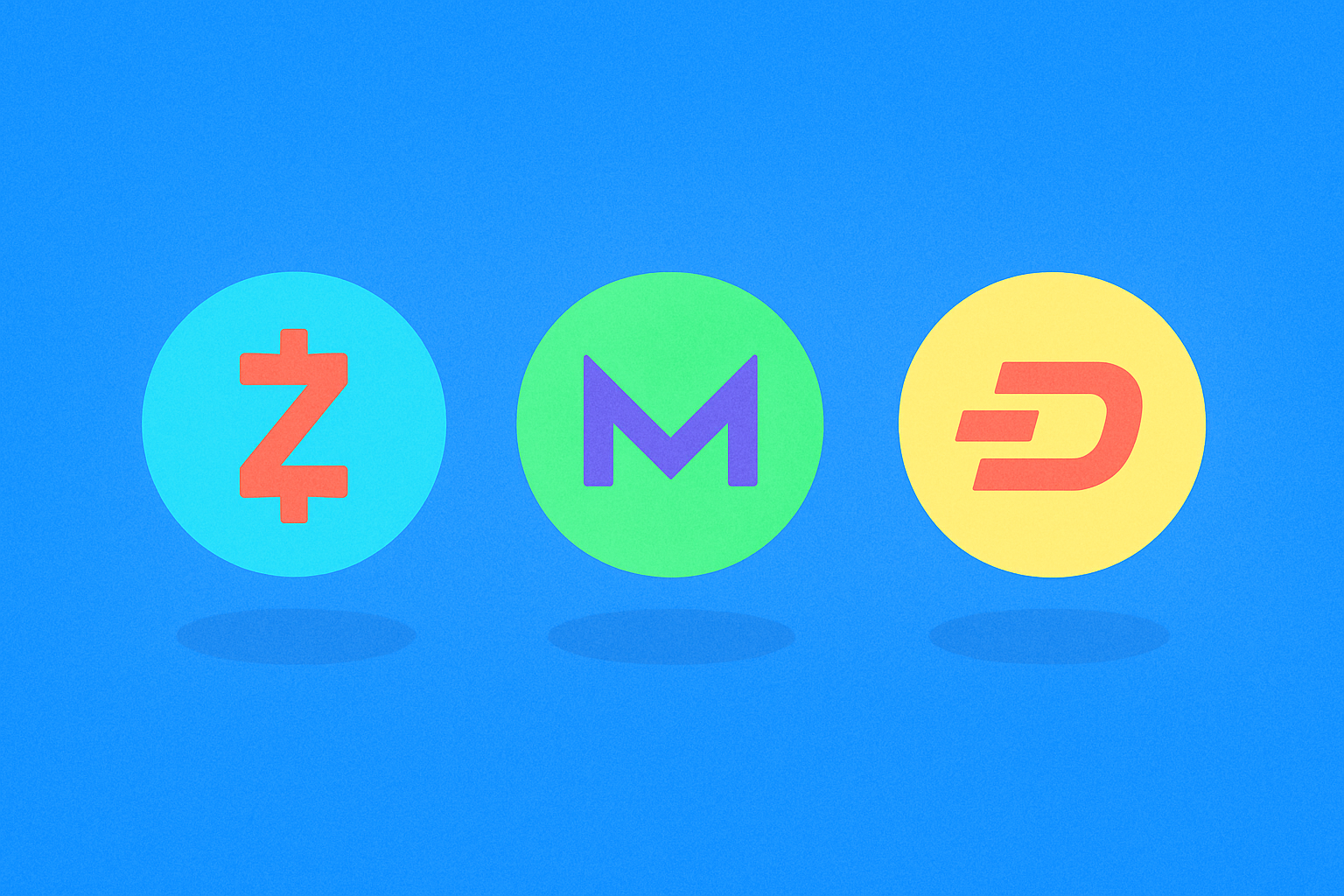
Privacy Technology Trade-off: Zcash's Optional zk-SNARKs vs Monero's Mandatory Ring Signatures and Dash's CoinJoin
Privacy coin technologies represent fundamentally different approaches to transaction confidentiality. Zcash employs zk-SNARKs as an optional privacy layer, allowing users to choose between transparent and shielded transactions on a per-transaction basis. This optional model creates flexibility but requires active user participation to achieve privacy protection. Monero enforces mandatory ring signatures and RingCT across all transactions, automatically hiding sender, receiver, and transaction amounts without user choice. Dash implements CoinJoin through PrivateSend, mixing multiple transactions to obscure their origins and destinations, though this approach leaves transaction amounts visible on the blockchain.
| Privacy Technology | Anonymity Model | User Control | Transaction Complexity |
|---|---|---|---|
| Zcash (zk-SNARKs) | Optional | Selective | High |
| Monero (Ring Signatures) | Mandatory | Automatic | Medium |
| Dash (CoinJoin) | Optional | Selective | Low |
Adoption metrics reveal significant differences in real-world implementation. Zcash's shielded pool expanded to 4.98 million ZEC by November 2025, representing approximately 23 percent of total circulating supply, demonstrating growing acceptance of optional privacy mechanisms. Dash achieved 77 percent transaction concealment through PrivateSend in 2025, indicating strong user preference for this simpler mixing approach. However, Monero maintains the strictest privacy guarantees through enforced anonymity, though facing regulatory headwinds on centralized platforms. Transaction fees and blockchain bloat differ substantially, with zk-SNARKs generating larger transactions than ring signatures or CoinJoin mixing, impacting long-term network scalability and user costs. These trade-offs between usability, compliance integration, and privacy strength continue shaping each coin's market positioning and regulatory acceptance throughout 2025.
Market Performance Divergence: ZEC's 200% Monthly Surge Driven by Regulatory Concerns While XMR Maintains Steady Privacy Leadership
The 2025 cryptocurrency market witnessed a significant divergence between two major privacy coins, with Zcash experiencing exponential growth while Monero maintained its steady position as the privacy sector's established leader.
| Metric | ZEC | XMR |
|---|---|---|
| Monthly Surge (Oct 2025) | 200% | Steady |
| Peak Price (Nov 2025) | $750 | $455 |
| Market Cap | $7.2B | $6.3B |
| Shielded Transactions | 70% of volume | 100% mandatory |
| Daily Transactions | Volatile | Up 35% YoY |
Zcash's remarkable trajectory from $50 in September to $550 in October, further climbing to $750 in November, reflected a fundamental market shift toward regulatory alignment. Institutional investors increasingly favored ZEC's optional privacy model, which complies with anti-money laundering requirements while maintaining advanced cryptographic protections through Halo 2 zk-SNARKs technology.
Conversely, Monero demonstrated resilience through organic adoption metrics. Its usage surged 570% despite facing stricter regulatory scrutiny and multiple exchange delistings. The network's daily transactions increased 35% year-over-year, with a stable market capitalization near $6.3 billion, indicating sustained user demand for mandatory privacy features.
The divergence fundamentally stems from regulatory positioning. ZEC's flexible architecture attracted compliance-conscious institutional capital seeking privacy without regulatory friction. Monero maintained its core value proposition of default privacy, appealing to users prioritizing financial confidentiality over market accessibility. Analysis of on-chain metrics revealed that ZEC's 70% shielded transaction adoption, combined with declining visible supply, created compelling market dynamics that diverged sharply from Monero's traditional metrics-driven valuation.
Adoption Barriers and Future Outlook: Shielded Transaction Rates and Exchange Delisting Risks Across Privacy Coin Competitors
Privacy coin adoption faces substantial barriers despite growing institutional interest. Zcash's shielded transaction rate has reached 70% of total volume, with approximately 23% of total supply held in the shielded pool, representing significant privacy adoption progress. However, exchange delisting risks remain a critical headwind for the sector.
| Privacy Model | Transaction Privacy | Market Accessibility | Adoption Rate |
|---|---|---|---|
| Monero | Mandatory (all transactions) | Limited by delistings | Declining post-delistings |
| Zcash | Selective (user choice) | Higher institutional appeal | 70% shielded volume |
Regulatory scrutiny continues to pressure privacy-focused cryptocurrencies, with multiple platforms restricting trading due to compliance concerns. Monero has experienced significant transaction declines following exchange delistings in 2025, while Zcash's optional privacy model provides regulatory flexibility that appeals to institutional investors. Grayscale's Zcash Trust reached $85 million in assets under management, signaling robust institutional confidence despite regulatory uncertainty. The expansion of the shielded pool to approximately 4.82 million ZEC demonstrates sustained participation without corresponding fee increases, indicating infrastructure resilience. The contrast between Zcash's institutional adoption trajectory and Monero's exchange restrictions suggests that regulatory-compliant privacy solutions may establish stronger market positions. Wallet support improvements, particularly through platforms like Ledger and Zashi, facilitate broader shielded transaction adoption. While delisting risks persist for all privacy coins, Zcash's balanced approach to privacy and compliance positioning appears better positioned to navigate future regulatory landscapes while maintaining technical innovation.
FAQ
What is ZEC coin?
ZEC is the symbol for Zcash, a privacy-focused cryptocurrency using advanced cryptography for optional anonymity. It introduced shielded addresses to encrypt transaction data on the blockchain. ZEC is mined through solving complex puzzles.
Is ZEC coin a good investment?
ZEC coin demonstrates strong potential as an investment due to its advanced privacy technology, growing institutional adoption, and limited supply mechanics. With increasing regulatory clarity and expanding use cases, ZEC is positioned for significant long-term appreciation.
Why is the ZEC coin going up?
ZEC is rising due to dynamic fees optimization, increased whale accumulation, and growing institutional interest. Rising trading volume and market momentum are driving the rally.
Does ZEC have a future?
Yes. ZEC's privacy features and November 2025 halving event drive long-term potential. Strong market interest supports sustained demand and growth.
How Does On-Chain Data Analysis Reveal ZEC's Privacy Adoption in 2025?

What Is the Current State of the Crypto Market in 2025?

How Will Pi Network's Market Cap Evolve by 2030?
What Is the Current Market Overview of Stellar (XLM) in 2025?

What is the Current Market Overview of FET: Price, Market Cap, and Volume in 2025?
How Has LUNA's Price Fluctuated in the Crypto Market Overview?
What is the current crypto market cap ranking and trading volume overview in 2026?

What Is Crypto On-Chain Data Analysis and How Does It Predict Price Movements
How to Use MACD, RSI, and Bollinger Bands for Crypto Trading Success

What is on-chain data analysis and how does it predict crypto price movements

What is the fundamental analysis of a cryptocurrency project: whitepaper logic, use cases, and team background explained