How Long Did It Take Bitcoin To Reach $1000
The Dawn of Bitcoin
Satoshi Nakamoto introduced Bitcoin in 2008 as a revolutionary decentralized digital currency through a groundbreaking whitepaper. This document outlined a transformative vision of peer-to-peer transactions that could operate without the need for traditional financial intermediaries such as banks or payment processors.
 The concept challenged centuries of established financial systems by proposing a trustless, cryptographically secured network.
January 2009 marked a historic moment when the first Bitcoin block, known as the genesis block or Block 0, was successfully mined. This inaugural block awarded a modest 50 BTC to its creator, establishing the foundation for what would become a global financial phenomenon. The genesis block contained a hidden message referencing a newspaper headline about bank bailouts, symbolizing Bitcoin's purpose as an alternative to traditional banking systems.
Despite its groundbreaking technological concept, Bitcoin's initial value was essentially nonexistent in monetary terms. Early transactions were more experimental in nature, serving to test the network's functionality rather than establish market value. The most famous example occurred in May 2010, when programmer Laszlo Hanyecz spent 10,000 BTC to purchase two pizzas from Papa John's. This transaction, facilitated through a Bitcoin forum, effectively set Bitcoin's first tangible real-world value at approximately $0.004 per coin. This event, now celebrated annually as "Bitcoin Pizza Day," demonstrated the currency's potential for practical use while highlighting how dramatically its value would evolve.
The Early Growth of Bitcoin
Bitcoin began drawing serious attention from technology enthusiasts and early adopters in early 2011, shortly after it achieved price parity with the US Dollar. This milestone represented more than just a numerical achievement; it signified a psychological breakthrough that transformed Bitcoin from a cryptographic experiment into a potentially viable alternative currency. The shift was not driven merely by speculative curiosity but by an emerging appreciation of blockchain technology's revolutionary potential to reshape financial systems.
The Linux Foundation's announcement in 2011 that it would accept Bitcoin donations added significant legitimacy to the nascent cryptocurrency. As a respected open-source organization, the Linux Foundation's endorsement signaled to the technology community that Bitcoin was worthy of serious consideration. This move encouraged other organizations and individuals to explore Bitcoin as both a donation mechanism and a store of value.
By February 2011, Bitcoin had reached the symbolic $1 threshold, sparking widespread interest across tech forums, online communities, and financial circles. This achievement was amplified by media coverage that introduced Bitcoin to audiences beyond its initial cryptography-focused community. The embrace of Bitcoin by early adopters was fueled by multiple compelling factors: its potential to provide financial freedom from traditional banking systems, opportunities for speculative investment in an emerging asset class, and the promise of privacy-focused transactions that could protect user identity in an increasingly surveilled digital world.
During this period, the Bitcoin ecosystem began to mature with the establishment of more sophisticated exchanges and wallet services. These developments made it easier for newcomers to acquire and store Bitcoin, contributing to growing adoption rates and increased trading volume.
The Ascent to $100
The next significant chapter in Bitcoin's price history was its dramatic climb to the $100 mark in April 2013, representing a hundredfold increase from its value just two years earlier. This milestone was driven by a confluence of economic, political, and technological factors that converged to create unprecedented demand for the cryptocurrency.
First, the lingering effects of the 2008 global financial crisis had fundamentally undermined public trust in traditional banking institutions and government monetary policies. Many individuals sought alternative financial systems that could operate independently of central bank control and fractional reserve banking practices. Bitcoin's decentralized architecture offered an attractive solution to these concerns, positioning it as "digital gold" that could serve as a hedge against inflation and economic instability.
Second, the Cyprus banking crisis in March 2013 served as a pivotal catalytic moment for Bitcoin adoption. When Cypriot authorities imposed capital controls and proposed confiscating a portion of bank deposits to fund a bailout, citizens experienced firsthand the risks of centralized financial systems. This event drove many Europeans to seek refuge in Bitcoin as a means of preserving wealth beyond the reach of government intervention. Media coverage of Cypriots turning to cryptocurrency created global awareness and sparked similar concerns in other nations facing economic challenges.
Interest in Bitcoin surged dramatically during this period, and the cryptocurrency experienced what was then an unprecedented price rally. Fueled by extensive media coverage across mainstream news outlets and the increasing adoption of Bitcoin on digital platforms and exchanges worldwide, it reached entirely new audiences beyond the technology sector. The establishment of more secure wallet solutions, including hardware wallets and multi-signature security features, allowed users to store their digital assets with greater confidence. This improved security infrastructure contributed to higher levels of trust in the Bitcoin ecosystem and encouraged larger investments from individuals who had previously been hesitant due to security concerns.
The Journey to $1,000
November 2013 marked a historic moment when Bitcoin finally crossed into the four-digit threshold, peaking at over $1,000 on several major exchanges. This represented an astronomical increase from its origins just four years earlier and captured global attention from financial institutions, governments, and mainstream media outlets. The ascent to this milestone was not without considerable drama and volatility, with prices fluctuating wildly as the market attempted to establish Bitcoin's true value.
Bitcoin's growing valuation during this period reflected broader acceptance of cryptocurrencies as a viable mode of exchange and investment vehicle. What began as a niche interest among cryptography enthusiasts had evolved into a global phenomenon attracting attention from venture capitalists, hedge funds, and retail investors seeking exposure to this emerging asset class. The psychological significance of the $1,000 price point cannot be overstated—it transformed Bitcoin from an experimental technology into a serious financial instrument worthy of institutional consideration.
Several cryptocurrency exchanges began listing Bitcoin during this period, significantly broadening its accessibility to international audiences. Platforms emerged as trusted services, offering sophisticated trading solutions and innovative features that made Bitcoin transactions more seamless and secure for average investors who lacked technical expertise. These exchanges implemented improved user interfaces, customer support systems, and regulatory compliance measures that helped legitimize the cryptocurrency market in the eyes of skeptical observers.
Bitcoin's extreme volatility during the ascent to $1,000 was closely monitored by financial analysts and often critiqued by traditional finance experts. Skeptics pointed to the lack of comprehensive regulation, the potential for market manipulation, and the inherent price instability as evidence that Bitcoin was an unsustainable speculative bubble. Meanwhile, proponents highlighted the cryptocurrency's potential to enable device-specific and technology-driven global finance that could operate 24/7 without geographic restrictions or intermediary fees. This debate between critics and advocates would continue to shape public perception and regulatory approaches in subsequent years.
Factors Behind the Rise
Bitcoin's remarkable journey to the $1,000 milestone was not attributable to a single event or catalyst, but rather resulted from a complex confluence of technological, economic, social, and political factors that reinforced one another:
-
Technological Innovations: Significant developments in blockchain technology fundamentally improved Bitcoin's usability and appeal. The creation of more user-friendly wallet applications with intuitive interfaces made cryptocurrency accessible to non-technical users. Improvements in transaction processing speeds and the implementation of new protocols enhanced the network's capacity to handle growing transaction volumes. These technological advances demonstrated that Bitcoin could scale to meet increasing demand while maintaining security and decentralization.
-
Media Coverage: News outlets across the globe began reporting extensively on Bitcoin's dramatic price fluctuations, creating a feedback loop that further drove public interest and speculative investment. Stories about early Bitcoin adopters becoming millionaires captured public imagination and attracted new participants hoping to replicate that success. This media attention transformed Bitcoin from an obscure technical project into a cultural phenomenon that penetrated mainstream consciousness.
-
Regulatory Discussions: While initially viewed unfavorably or dismissed entirely by regulatory authorities, serious discussions around blockchain technology and cryptocurrency regulation began to emerge. Government hearings and policy debates, despite their critical tone, paradoxically validated Bitcoin's presence and acknowledged its potential impact on financial systems. This regulatory attention, even when skeptical, signaled that Bitcoin had achieved sufficient significance to warrant official consideration.
-
Merchant Adoption: An increasing number of businesses, ranging from small online retailers to larger enterprises, started accepting Bitcoin as payment for goods and services. This growing merchant adoption increased Bitcoin's practical utility beyond speculative trading and enhanced its perceived legitimacy as a genuine currency. Each new merchant announcement generated publicity and demonstrated real-world use cases that supported Bitcoin's value proposition.
-
Network Effects: As more individuals acquired and used Bitcoin, the network became more valuable to all participants. This self-reinforcing dynamic, common to many technologies and currencies, created momentum that accelerated adoption rates and contributed to price appreciation.
Looking Forward
Understanding how Bitcoin climbed to the $1,000 milestone provides valuable insights into the complex dynamics that drive digital currency valuations and adoption patterns. The journey from essentially worthless to a four-digit valuation in less than five years demonstrated Bitcoin's potential as both a monetary asset and a groundbreaking technological innovation that could challenge established financial paradigms.
This historical ascent revealed several important lessons about cryptocurrency markets. It showed that Bitcoin's value derives from a combination of technological utility, network effects, macroeconomic conditions, and collective belief in its potential as an alternative financial system. The volatility experienced during this period highlighted both the opportunities and risks inherent in emerging asset classes that lack traditional valuation frameworks.
In subsequent years, Bitcoin has continued to evolve, facing new challenges related to regulatory frameworks, technological scalability, environmental concerns about energy consumption, and competition from thousands of alternative cryptocurrencies. The focus has shifted toward questions of how cryptocurrencies can adapt to regulatory requirements while maintaining their decentralized ethos, how technological improvements can address scalability limitations, and how the market can mature beyond purely speculative dynamics.
Therein lies the enduring allure of Bitcoin and blockchain technologies—boundless potential paired with an unpredictability that keeps both institutional investors and technology enthusiasts firmly engaged. The narrative that began with Bitcoin's climb to $1,000 has expanded into a broader story about the future of money, the role of decentralization in modern society, and the ongoing tension between innovation and regulation. Each new development in this space adds another chapter to a story that continues to unfold in unexpected and fascinating ways.
FAQ
How long did it take Bitcoin to reach $1000 from its genesis?
Bitcoin first broke through $1000 on November 30, 2013, reaching $1156.14. This took approximately 4 years and 11 months from Bitcoin's creation in January 2009, marking the beginning of its first major bull market.
When did Bitcoin reach $1000?
Bitcoin first reached $1000 in December 2013. It took approximately 4 years and 9 months from Bitcoin's inception in January 2009 to achieve this milestone price level.
What are the major price milestones in Bitcoin's history (such as $1,000, $10,000, $100,000)?
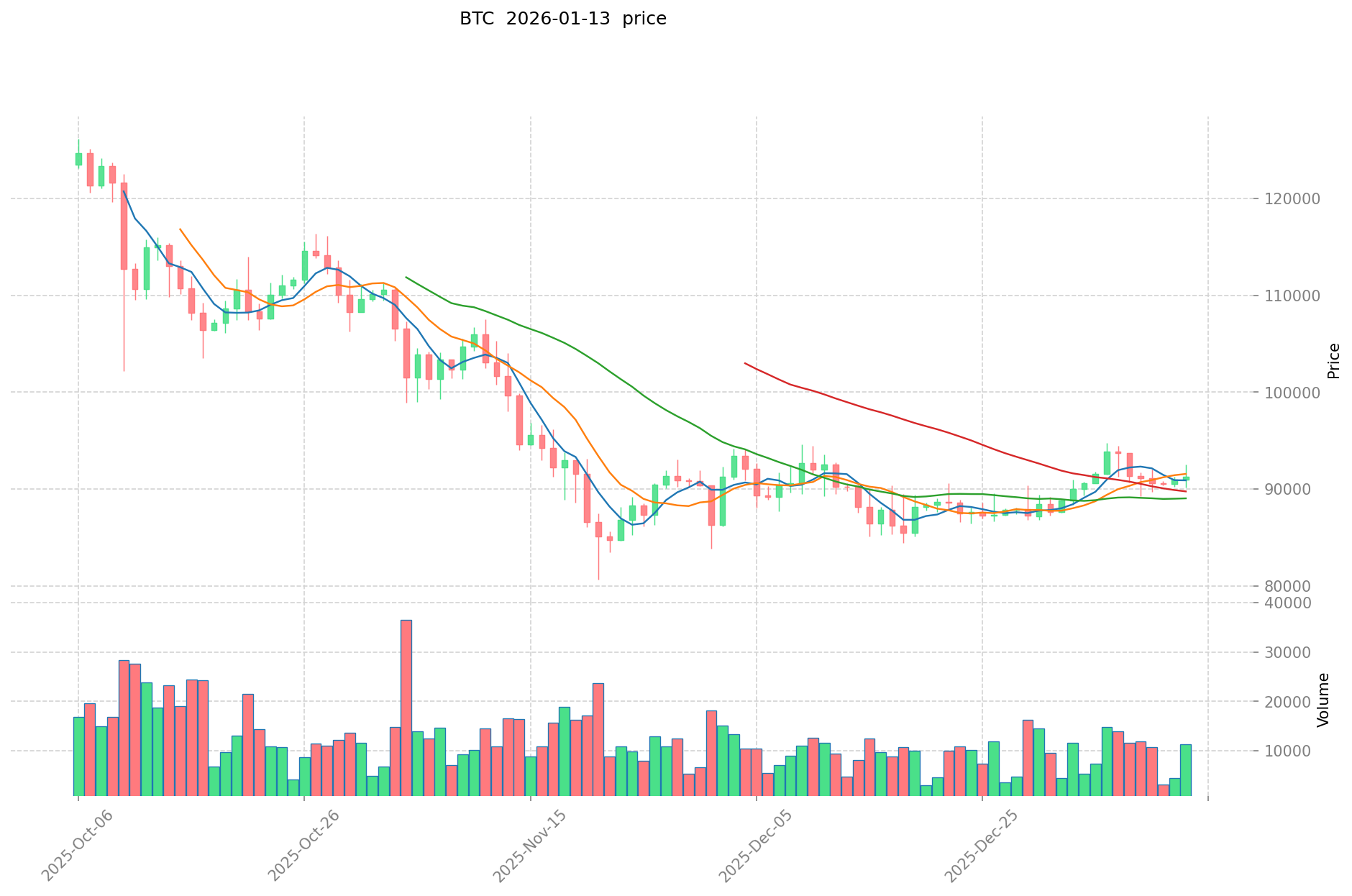
Bitcoin reached $1,000 in 2013, $10,000 in 2017, $20,000 in late 2017, $60,000 in 2021, and $69,000 in 2023. In 2024, it surpassed $70,000, and by 2025 approached $100,000, marking significant milestones in its growth trajectory.
How did Bitcoin's price trend before the 2017 surge, and what drove it to reach $1000?
Bitcoin surpassed $1000 in early 2017, driven by increased global market attention and investor confidence. Prior to this, Bitcoin gained 160% in 2016. Key factors included growing institutional interest and rising cryptocurrency adoption worldwide.
How long did it take Bitcoin to go from $1000 to $10000, and what does this indicate?
Bitcoin took approximately one year to rise from $1000 to $10000. This demonstrates Bitcoin's remarkable appreciation potential and the increasing mainstream adoption driving significant value growth during this period.

How Does Macroeconomic Policy Impact Cryptocurrency Prices?

What Causes Bitcoin's Price Volatility and How Can Investors Manage Risk in 2025?
Understanding the Length of the Crypto Winter: Insights and Predictions
How Has Bitcoin's Price Volatility Evolved Since 2020?
How does the Federal Reserve policy impact BIBI's price volatility?

How Does Macroeconomic Policy Influence Cryptocurrency Prices?

What Happened to SafeMoon on Trust Wallet

How to Send Bitcoin Lightning on Cash App

What Happens if You Blow a Funded Account?

Is cryptocurrency mining legal in Venezuela?
Can I Buy OSRS Membership With Gold: Complete Guide