LCP_hide_placeholder
fomox
MarketsPerpsSpotSwapMeme Referral
More
Smart Money Recruitment
Search Token/Wallet
/

How to analyze on-chain data metrics for cryptocurrency networks in 2026

2026-01-19 07:44:02
Blockchain
Crypto Insights
DeFi
Layer 2
Macro Trends
Article Rating : 4.5
half-star
122 ratings
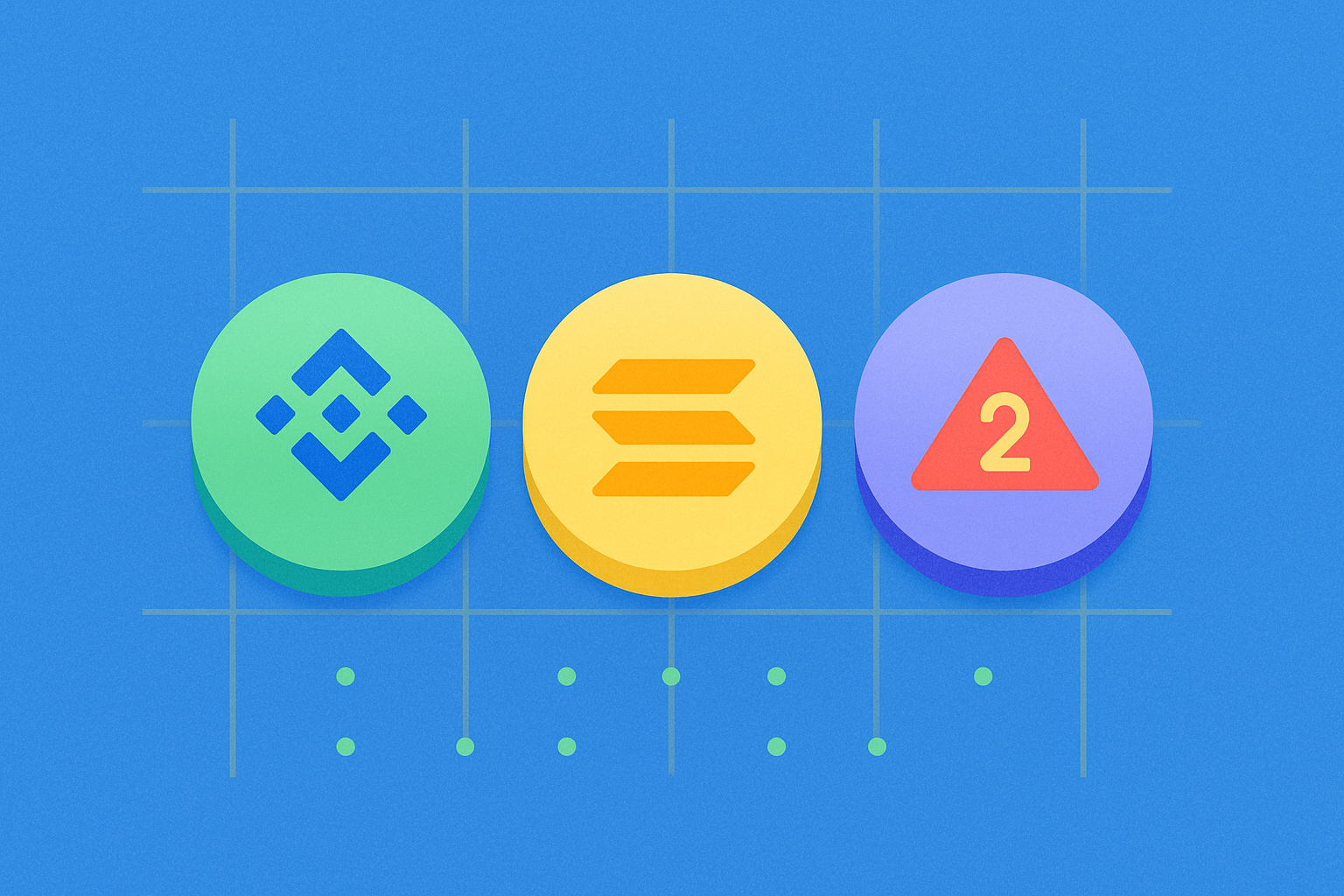
This comprehensive guide explores essential on-chain data metrics for analyzing cryptocurrency networks in 2026. The article addresses critical questions for investors and analysts seeking to understand genuine network adoption beyond price movements. It systematically examines active addresses tracking user growth across major blockchains like BNB Chain and Solana, analyzes transaction volume and gas fee dynamics to assess network health, and reveals whale distribution patterns that influence market volatility. The guide compares cost efficiency across Layer 2 solutions and alternative chains, providing practical fee benchmarks for different use cases. Additionally, it demonstrates how to leverage on-chain data for identifying market trends, detecting manipulation, and making informed investment decisions. Through detailed metrics analysis and real-world examples, readers gain actionable insights into blockchain ecosystem performance and user behavior patterns essential for navigating cryptocurrency markets.
How to analyze on-chain data metrics for cryptocurrency networks in 2026

Active Addresses and Network Growth: Tracking User Adoption Across Major Blockchain Networks

Understanding active addresses represents a fundamental approach to evaluating network growth and user adoption across blockchain ecosystems. This metric tracks the number of unique wallet addresses that initiate transactions within a specific timeframe, typically measured on a daily or monthly basis. By monitoring these figures, analysts can assess genuine user engagement rather than relying solely on price movements or market sentiment.

The 2025-2026 data reveals striking differences in network adoption patterns across major blockchains. BNB Chain emerged as the leader with 58 million monthly active addresses by September 2025, significantly surpassing Solana's 38.3 million monthly active users. Ethereum maintained robust engagement with approximately 8 million monthly active addresses, while smaller networks like Ronin showed 581.3K monthly addresses, demonstrating how on-chain metrics expose true utility-driven adoption rates. Solana's daily active addresses fluctuated between 3-7 million throughout the period, reflecting the network's volatility despite substantial user interest.

These active address metrics directly correlate with ecosystem maturity and infrastructure development. Networks experiencing genuine growth demonstrate consistent user retention alongside new address creation. Ronin's 1.4 million new wallets added in 2025 with a 93% increase in daily active addresses exemplifies how targeted initiatives and technical upgrades drive network adoption. By analyzing these on-chain metrics systematically, cryptocurrency analysts can distinguish between speculative activity and sustainable user growth patterns.

Transaction Volume and Fee Dynamics: How Network Utilization Impacts Gas Costs in 2026

Understanding how transaction volume shapes gas fee behavior is essential for analyzing blockchain economics in 2026. As more users interact with a network, the collective demand for block space increases, creating direct pressure on transaction costs. During periods of elevated network utilization, users competing for limited space in each block must bid higher gas fees to prioritize their transactions, establishing a dynamic relationship between volume and cost. Ronin exemplifies this principle while maintaining exceptional efficiency—despite recording significant transaction volume increases, its average gas fees remained near-trivial at $0.38 per transaction in 2026. This demonstrates how infrastructure optimization can decouple volume from cost escalation. Analyzing transaction volume metrics reveals network health and congestion patterns; sustained high volume with stable fees indicates robust capacity, while sudden volume spikes accompanied by fee increases signal constraint periods. For on-chain data analysts, tracking daily transaction counts alongside corresponding gas price movements provides predictive insight into network utilization trends. Networks designed with sufficient throughput, like gaming-focused blockchains, prove more resilient to volume fluctuations. By correlating historical transaction volume data with fee structures, analysts can identify optimal transaction timing and anticipate periods when gas costs might spike. This relationship fundamentally drives user experience and adoption rates across cryptocurrency networks.

Whale Distribution and Large Holder Behavior: Identifying Concentration Patterns and Market Movements

Understanding whale distribution and large holder behavior provides critical insights into cryptocurrency network dynamics and potential market movements. Current on-chain analysis reveals that holder concentration remains significant, with the top 1% controlling 40% of the total supply, while the top 5% and top 10% hold 60% and 70% respectively. Within individual networks like RON, 81% of the top 100 wallets maintain substantial holdings, demonstrating pronounced concentration patterns.

Early 2026 data shows whales shifting toward accumulation strategies across major cryptocurrencies. Large holders acquiring Bitcoin and XRP tokens indicate conviction in these assets' long-term value, contrasting with retail profit-taking behavior. This behavioral divergence between whales and smaller investors creates distinct market dynamics. Whale activity involving exchange transfers suggests potential selling pressure, as movement of large amounts to trading platforms often precedes liquidation events.

The concentration of holdings among top addresses directly correlates with price volatility. Single large sell orders from whale wallets can generate sharp price movements, making these addresses crucial for on-chain analysis. Simultaneously, staking reward distribution among large holders—such as RON's structure allocating 25% to staking incentives—further consolidates wealth among established participants. Monitoring these distribution patterns and behavioral shifts enables analysts to anticipate market turning points and understand the underlying forces driving cryptocurrency network valuations.

Fee Trend Analysis: Comparing Cost Efficiency Across Layer 2 Solutions and Alternative Chains

Analyzing transaction costs across blockchain ecosystems reveals significant disparities in fee efficiency during 2026. Layer 2 solutions have emerged as the primary strategy for reducing expenses on Ethereum, with zkSync Era demonstrating the most competitive pricing at $0.07 per transaction, while Arbitrum and Optimism range between $0.10 and $0.20. These platforms substantially outperform Ethereum Layer 1's $0.30 to $0.50 transaction costs, making them attractive for users seeking lower operational expenses.

Alternative chains present another cost-efficiency avenue. Solana continues to lead with minimal transaction fees, followed by Polygon and BNB Smart Chain, which maintain competitive fee structures. Ronin, transitioning toward Ethereum Layer 2 infrastructure, currently averages $0.38 per transaction, reflecting its gaming-focused architecture.

Blockchain Solution Avg. Transaction Fee Use Case
zkSync Era $0.07 General transactions
Ethereum L1 $0.30-$0.50 High-security transfers
Arbitrum $0.10-$0.20 Smart contracts
Solana <$0.01 High-throughput activities
Ronin $0.38 Gaming transactions

Network congestion directly impacts fee dynamics across these ecosystems. Higher throughput capacity on Layer 2 networks reduces bottlenecks compared to traditional Layer 1 blockchains, enabling more predictable pricing. NFT minting costs exemplify this divergence—Polygon charges under $0.01 while Ethereum Layer 1 averages $0.10, demonstrating how infrastructure selection fundamentally influences user economics and adoption patterns across cryptocurrency networks.

FAQ

What is on-chain data and why is it important for cryptocurrency investors?

On-chain data represents all transactions and activities recorded on blockchain networks. It is crucial for crypto investors because it provides authentic insights into market trends, network health, and user behavior, enabling informed investment decisions based on real network activity rather than speculation.

What are the main metrics for analyzing on-chain cryptocurrency data in 2026 (such as transaction volume, position distribution, whale activity, etc.)?

Key metrics include transaction volume, holder distribution, whale activity, TVL, market capitalization, and developer activity. These indicators reveal market trends, investor behavior, and network health to guide investment decisions.

What tools or platforms can be used to view and analyze on-chain data metrics for cryptocurrency networks?

Popular tools include Glassnode for comprehensive on-chain analytics, Etherscan for Ethereum data, DefiLlama for DeFi metrics and TVL tracking, Dune Analytics for customizable dashboards, CoinMetrics for asset comparison, and OpenSea for NFT data analysis.

Monitor LTH-NUPL to gauge long-term holder sentiment, use SSR ratio (Bitcoin market cap to stablecoin supply) to assess buying power, and track VDD Multiple comparing short-term versus long-term Bitcoin spending patterns to identify market cycle tops and bottoms for signal timing.

On-chain wallet address analysis and token flow tracking help assess project health by revealing transaction activity, liquidity distribution, and ownership concentration. High liquidity and decentralized ownership indicate stable projects, while monitoring these metrics provides insights into market trends and potential risks.

What are the applications of on-chain data analysis in detecting money laundering and market manipulation in 2026?

On-chain data analysis in 2026 enables real-time behavioral detection of money laundering and market manipulation, reducing false positives by 30-40% compared to traditional rule-based monitoring. This technology significantly improves investigation efficiency, lowers operational costs, and provides analysts with more actionable intelligence for compliance enforcement.
* The information is not intended to be and does not constitute financial advice or any other recommendation of any sort offered or endorsed by Gate.

Share

Content

Active Addresses and Network Growth: Tracking User Adoption Across Major Blockchain Networks

Transaction Volume and Fee Dynamics: How Network Utilization Impacts Gas Costs in 2026

Whale Distribution and Large Holder Behavior: Identifying Concentration Patterns and Market Movements

Fee Trend Analysis: Comparing Cost Efficiency Across Layer 2 Solutions and Alternative Chains

FAQ

Related Articles
What is the difference between top cryptocurrency competitors: market cap, performance, and user adoption in 2026

What is the difference between top cryptocurrency competitors: market cap, performance, and user adoption in 2026

This article analyzes the competitive landscape of leading cryptocurrencies in 2026, examining market cap dominance, performance metrics, and user adoption trends. Bitcoin commands $2.1 trillion in market cap with 56.79% dominance, while Ethereum holds $850 billion as the second-largest asset. The article compares transaction speeds across top competitors—Solana processes 65,000+ TPS versus Bitcoin's 7 TPS—and highlights energy efficiency advantages of Proof-of-Stake systems. User adoption metrics reveal market share redistribution through active addresses and trading volume analysis. The content identifies three critical differentiation strategies: Layer 2 solutions for scalability, DeFi integration for ecosystem expansion, and regulatory compliance for institutional credibility. Essential reading for investors, traders, and stakeholders evaluating cryptocurrency competitive positioning through 2026.
2026-01-10 04:21:23
How Can On-Chain Data Analysis Reveal Crypto Market Trends in 2025?

How Can On-Chain Data Analysis Reveal Crypto Market Trends in 2025?

This article explores how on-chain data analysis illuminates crypto market trends by focusing on three key aspects: active address surges signaling market recovery, transaction volume milestones driven by institutional adoption, and centralization concerns due to wallet distribution patterns. Discover how these metrics indicate evolving market dynamics, offer insights into liquidity and price stability, and highlight the need for strategic investments. The content is tailored for investors, developers, and financial analysts seeking to understand current blockchain utilization and its economic implications, emphasizing core metrics for informed decision-making.
2025-11-29 01:59:11
How Does Sui&#39;s On-Chain Data Compare to Other Layer 1 Blockchains in 2025?

How Does Sui&#39;s On-Chain Data Compare to Other Layer 1 Blockchains in 2025?

This article evaluates Sui&#39;s performance and growth compared to other Layer 1 blockchains, emphasizing its scalability and low-cost transaction model. Discover how Sui&#39;s active addresses, transaction volumes, and reduced whale concentration mark its maturation and retail adoption. Key topics include Sui&#39;s daily transaction achievements, tokenomics, and increased institutional confidence. Ideal for stakeholders interested in emerging blockchain advancements, it underscores Sui&#39;s position as a thriving platform with robust user engagement and expanding DeFi infrastructure.
2025-12-08 01:19:53
What Do Derivatives Market Signals Reveal About MON Token&#39;s Future Price in 2030?

What Do Derivatives Market Signals Reveal About MON Token&#39;s Future Price in 2030?

The article delves into the current and future market dynamics of the MON token, focusing on its impressive debut following Monad&#39;s mainnet launch and subsequent price volatility. It explores derivatives market signals reflecting cautious sentiment despite significant liquidity, indicative of broader macroeconomic complexities. Readers will gain insights into the challenges that potential macro and geopolitical uncertainties pose on MON&#39;s 2030 price trajectory. Suitable for investors and analysts, the structured analysis equips stakeholders with critical knowledge to navigate MON&#39;s unpredictable market environment. Key themes include Monad&#39;s mainnet impact, derivatives market sentiment, and 2030 price uncertainties.
2025-12-06 03:55:18
How does SUI price volatility compare to Bitcoin and Ethereum in 2026?

How does SUI price volatility compare to Bitcoin and Ethereum in 2026?

# Article Overview: SUI Price Volatility vs Bitcoin and Ethereum in 2026 This comprehensive analysis examines SUI's price volatility profile compared to Bitcoin and Ethereum throughout 2026, revealing SUI's emerging stability as institutional adoption accelerates. The article addresses investor concerns about comparative risk levels, price prediction accuracy, and optimal trading strategies across Layer 1 blockchains. Structured in four key sections, it progresses from current price action and technical levels, through correlation analysis, to 2026 price trajectory forecasts. Readers will discover why SUI's contained volatility (demonstrated by its -0.83% movement despite a $78.9M token unlock) positions it as a resilient alternative to Bitcoin and Ethereum's extreme swings, supported by institutional catalysts like Bitwise's ETF filing on Gate and growing DeFi ecosystem expansion targeting the $10 price milestone.
2026-01-01 03:48:39
How Does SUI&#39;s 75% Weekly Surge Affect Its Holdings and Capital Flow?

How Does SUI&#39;s 75% Weekly Surge Affect Its Holdings and Capital Flow?

The article explores the impact of SUI&#39;s 75% weekly surge on its holdings and capital flow, highlighting the $62.86 million net inflow and significant growth in contract open interest. It examines factors driving SUI’s market confidence, such as institutional and whale concentration, while showcasing the token&#39;s DeFi adoption through a 10% increase in Total Value Locked (TVL) to $1.46 billion. Readers interested in cryptocurrency market dynamics, from investors to analysts, will find insights on SUI&#39;s price action, institutional involvement, and strategic growth trajectory within the blockchain space.
2025-10-28 09:04:52
Recommended for You
Will Wink Coin Reach $1: A Comprehensive Analysis

Will Wink Coin Reach $1: A Comprehensive Analysis

This comprehensive guide explores Wink Coin's potential to reach $1 by analyzing market dynamics, technological innovations, and community engagement within the blockchain gaming ecosystem. The article examines how decentralized gaming adoption drives token demand, reviews technological enhancements like faster transactions and improved features, and assesses community support including institutional interest. It addresses critical challenges including volatile market conditions, evolving regulatory landscapes, and competitive pressures from other gaming platforms. By evaluating Wink's strategic positioning on the blockchain, ecosystem partnerships, and tokenomics through Gate exchange platforms, readers gain insights into the requirements for substantial price appreciation. The guide concludes that achieving $1 requires synchronized efforts: continuous innovation, sustained community backing, mainstream adoption, favorable market conditions, and effective regulatory navigation within the rapidly evolving dec
2026-01-19 09:22:10
Flagged Transactions

Flagged Transactions

This comprehensive guide explores flagged accounts in cryptocurrency trading and financial systems. Flagged transactions are activities marked by regulatory bodies and automated systems for suspicious or non-compliant behavior, serving as essential fraud prevention mechanisms under AML and CTF regulations. The article traces the evolution from manual monitoring to sophisticated AI and machine learning systems that detect complex patterns across industries including banking, e-commerce, and cryptocurrency exchanges. It highlights critical use cases where transaction flagging protects institutional assets and market integrity, particularly on platforms like Gate where exchanges implement rigorous compliance protocols. The guide addresses practical concerns through FAQs covering consequences, timelines for resolution, and preventive measures. Understanding flagged accounts helps traders maintain compliance while ensuring their funds remain secure during the review process.
2026-01-19 09:19:17
What Is Prime Core Technologies

What Is Prime Core Technologies

Prime Core Technologies are fundamental building blocks that power blockchain and cryptocurrency innovation, encompassing consensus mechanisms, smart contracts, scalability solutions, and privacy enhancements. This comprehensive guide explores how these technologies address critical challenges in decentralized systems through advanced protocols like Proof of Stake, Layer-2 solutions, and zero-knowledge proofs. Prime Core Technologies deliver substantial benefits including enhanced security through cryptographic techniques, dramatically improved scalability handling thousands of transactions per second, greater operational efficiency with cost reductions of 30-70%, and sophisticated privacy protections for sensitive data. Designed for businesses, developers, and enterprises seeking to leverage blockchain infrastructure, this guide examines key components and their real-world applications across DeFi, supply chain management, and digital identity. Whether you're exploring blockchain adoption or optimizing exist
2026-01-19 09:15:40
What does a mining farm sound like?

What does a mining farm sound like?

Explore noise levels at mining farms—from 70–90 dB to advanced noise reduction technologies. Discover how liquid cooling and soundproofing affect mining efficiency. This complete guide is designed for investors and farm operators on Gate.
2026-01-19 09:09:32
What Is a Decentralized Exchange?

What Is a Decentralized Exchange?

A comprehensive look at decentralized exchanges (DEX): how they operate, their advantages, a comparison with centralized exchanges (CEX), and an overview of leading DEX platforms including Uniswap and SushiSwap. Includes a safety guide for newcomers trading on decentralized platforms in the Web3 ecosystem.
2026-01-19 09:02:58
Is Crypto Mining Legal in Kenya?

Is Crypto Mining Legal in Kenya?

This article evaluates Bitcoin mining profitability in Kenya by examining the legal framework and regulatory environment. Cryptocurrency mining is legal in Kenya under Central Bank of Kenya oversight, requiring registration with the Financial Reporting Centre and compliance with anti-money laundering regulations. The article explores how legal clarity has attracted significant foreign and domestic investment, including solar-powered mining facilities that combine profitability with renewable energy adoption. It analyzes the sector's economic contributions through job creation, technology transfer, and ancillary business growth. Real-world examples demonstrate infrastructure development and sector maturation. The analysis covers regulatory requirements, tax obligations, risk management, and Kenya's competitive positioning in African blockchain development. Key insights address investor concerns about compliance, operational costs, and long-term viability. The comprehensive FAQ section clarifies mining legality
2026-01-19 08:21:14