Introductory Guide to DeFi Altcoins: Exploring the Basics
DeFi Tokens: A Beginner-Friendly Guide
Decentralized finance (DeFi) represents a revolutionary approach to trading, lending, and borrowing digital assets without relying on centralized intermediaries. Despite being in its early development phase, DeFi activity has experienced exponential growth. The statistics are remarkable: from January 2020 to January 2023, the number of unique crypto wallets engaging in DeFi activities surged from over 100,000 to more than 6.6 million. According to Chainalysis, on-chain trading volume in DeFi exceeded centralized crypto trading platforms between 2021 and 2022, reaching an impressive $224 billion in cryptocurrency transactions. To leverage this growth and build stronger online communities, many DeFi protocols have launched their own cryptocurrencies, known as decentralized finance tokens or DeFi altcoins, primarily on blockchains like Ethereum.
What is DeFi?
Decentralized Finance, commonly abbreviated as DeFi, is a specialized sector within the cryptocurrency industry that focuses on delivering financial products and services without intermediaries. Unlike traditional financial systems that require users to submit personal information to centralized entities such as banks, brokerage firms, or fintech companies, DeFi applications enable users to trade, lend, and borrow cryptocurrencies directly. These protocols operate as applications built on top of decentralized computer networks, also known as blockchains, with Ethereum being one of the most prominent platforms.
The backbone of DeFi applications is smart contract technology. Smart contracts are self-executing coded programs on blockchains that automatically perform predetermined tasks when specific conditions are met. For instance, when a user wants to exchange ETH for a stablecoin like USDC on a decentralized platform, the smart contract detects the ETH deposit and automatically transfers the equivalent amount of USDC to the user's crypto wallet. This automation enables secure peer-to-peer cryptocurrency transfers without human intervention, which is why DeFi applications are often referred to as decentralized applications, or dApps.
What Are DeFi Coins and Tokens?
In the broadest sense, a DeFi cryptocurrency encompasses any digital asset utilized within DeFi applications, whether classified as a coin or a token. Understanding what is DeFi altcoins requires distinguishing between these two terms, as they represent fundamentally different concepts in the cryptocurrency ecosystem.
A coin is an integral component of a standalone blockchain network. For example, Ethereum's native cryptocurrency, ETH, qualifies as a coin because it operates within the Ethereum blockchain as the network's official payment method. When users interact with DeFi protocols built on Ethereum, they require ETH to cover transaction costs, commonly known as gas fees. While ETH isn't exclusively designed for DeFi applications, its essential role in Ethereum-based dApps like Uniswap, Aave, and Sushi has led some to consider it a DeFi coin.
Conversely, a DeFi token or DeFi altcoin is a cryptocurrency issued on top of an existing blockchain infrastructure, such as Ethereum, Cardano, or Solana, and is specifically associated with a particular DeFi project. Developers create DeFi altcoins to introduce special functionalities to their platforms, including governance voting rights or reward mechanisms. These tokens typically fall under the broader category of utility tokens because they serve specific purposes within their respective Web3 ecosystems beyond mere price speculation. Although DeFi altcoins may be traded on various cryptocurrency platforms at fluctuating prices, their primary value lies in their practical applications within their native crypto ecosystems.
What Are Some Popular DeFi Cryptocurrencies?
The DeFi landscape continuously evolves with new projects launching regularly, making it challenging to track all emerging DeFi coins and tokens. Nevertheless, several DeFi altcoins have established dominant positions and continue to exert significant influence in the DeFi sector.
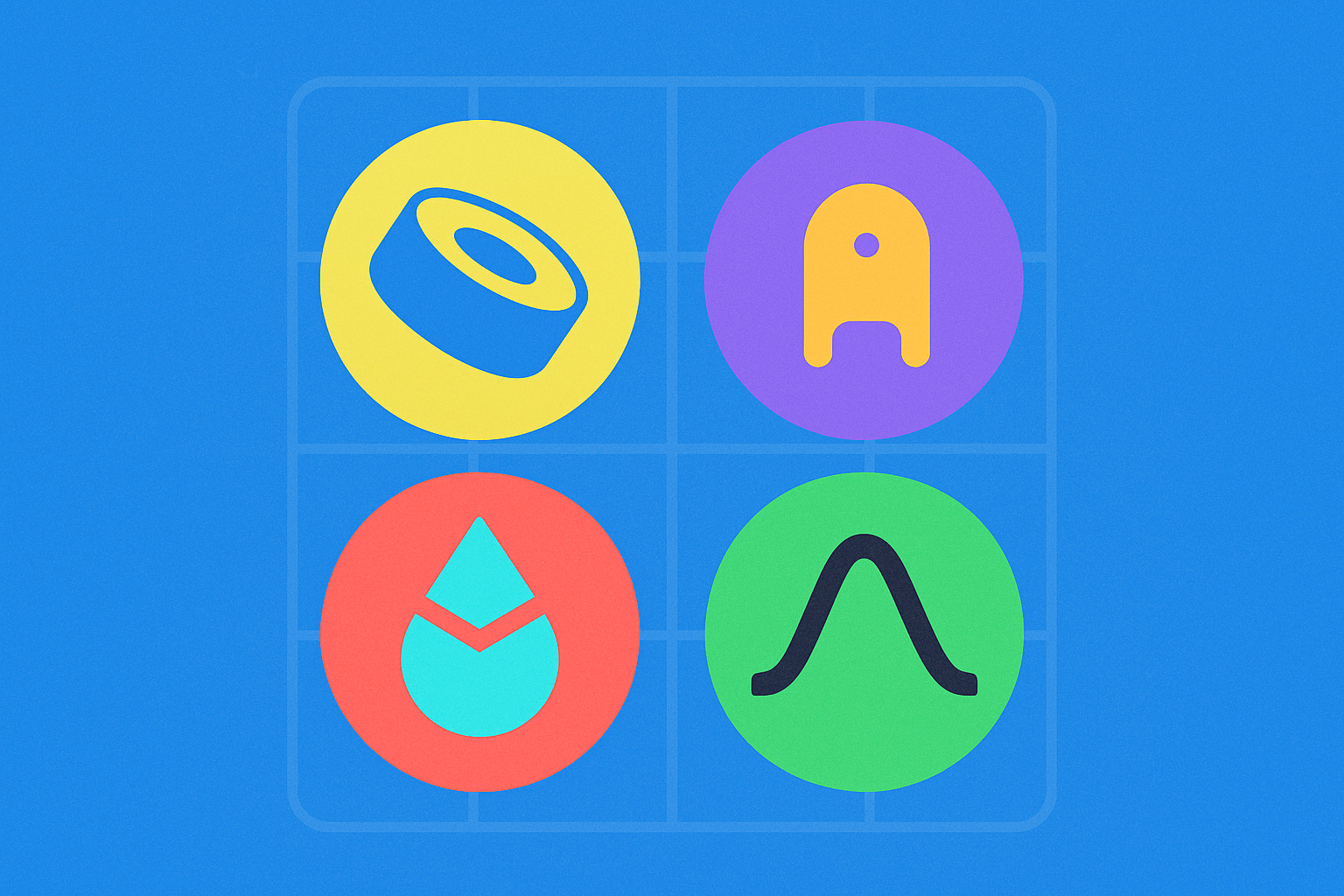
Sushi (SUSHI) is a decentralized platform on Ethereum that was deliberately modeled after Uniswap's design. Created by pseudonymous developers Chef Nomi and 0xMaki, Sushi copied Uniswap's code and incentivized users to switch protocols by offering substantial rewards in SUSHI tokens. Beyond serving as an incentive mechanism, SUSHI grants holders voting rights on governance proposals affecting the Sushi DeFi platform. This DeFi altcoin exemplifies how governance tokens empower community participation.
Aave (AAVE) operates as a peer-to-peer cryptocurrency lending and borrowing protocol on the Ethereum blockchain. Similar to other governance tokens, AAVE's primary purpose is to provide holders with voting power on protocol governance proposals. The platform also features a Safety Module where community members can deposit AAVE tokens. Contributors to the Safety Module receive token rewards, though Aave retains the authority to reduce up to 30% of each participant's stake during emergencies to protect the protocol. This DeFi altcoin demonstrates the multifaceted utility that such tokens can offer.
Lido DAO (LDO) is a DeFi platform specializing in helping traders earn interest on proof-of-stake cryptocurrencies like Ethereum. The proof-of-stake algorithm allows computers on the network to lock, or stake, their cryptocurrency to earn rewards. Lido also issues derivative tokens representing deposited assets, such as Lido Staked Ethereum (StETH), which function as receipts for platform depositors. The LDO cryptocurrency serves as Lido DAO's governance token, enabling holders to vote on protocol upgrades and improvements.
Curve Finance (CRV) is an Ethereum-based decentralized platform that specializes in low-volatility cryptocurrency trading pairs. Unlike platforms offering speculative altcoins, Curve Finance primarily lists stablecoins and wrapped tokens. The platform has issued the CRV governance token to empower community members to participate in decision-making regarding the future direction of the Curve protocol.
Where do Crypto Traders Buy DeFi Cryptocurrencies?
Traders are not limited to DeFi platforms when acquiring DeFi altcoins for their portfolios. While earning or purchasing DeFi coins and tokens directly through decentralized platforms, decentralized wallets, and other DeFi dApps is certainly possible, many mainstream cryptocurrency trading platforms also offer DeFi-related cryptocurrencies.
The process begins by visiting cryptocurrency price aggregator websites such as CoinMarketCap or CoinGecko. These platforms provide comprehensive information about various cryptocurrencies and DeFi altcoins. Traders can navigate to the dedicated DeFi Token tab or search for specific ticker symbols to access detailed information about particular DeFi cryptocurrencies. Once a cryptocurrency of interest is identified, visiting the official website of that cryptocurrency is recommended to gain a thorough understanding of its characteristics, including market capitalization, tokenomics, and practical applications.
These cryptocurrency websites typically include a trading platforms tab that lists all centralized platforms and decentralized venues offering trading pairs for that particular token. After reviewing the available options, traders can select the platform they feel most comfortable using and either create an account on a centralized platform or link their crypto wallet to a decentralized venue to complete their desired DeFi token transaction.
Conclusion
DeFi tokens and DeFi altcoins represent a fundamental component of the decentralized finance ecosystem, serving purposes that extend beyond simple price speculation. Understanding what is DeFi altcoins and the distinction between DeFi coins and tokens is essential for anyone looking to participate in this rapidly growing sector. While coins like ETH serve as the foundation of blockchain networks, DeFi altcoins built on these networks provide specific utilities within their respective DeFi protocols, including governance rights and reward mechanisms. Popular DeFi cryptocurrencies such as SUSHI, AAVE, LDO, and CRV have demonstrated the diverse applications and value propositions that DeFi altcoins can offer. As the DeFi sector continues to mature and expand, with trading volumes on decentralized platforms growing substantially and user adoption increasing exponentially, DeFi altcoins are likely to play an increasingly important role in shaping the future of decentralized financial services. Whether acquired through decentralized platforms or mainstream cryptocurrency trading venues, these DeFi altcoins provide users with opportunities to participate in governance, earn rewards, and contribute to the evolution of a more open and accessible financial system.
FAQ
What are DeFi altcoins?
DeFi altcoins are alternative cryptocurrencies designed for decentralized finance applications. They enable financial services like lending, borrowing, and trading without intermediaries, operating on blockchain networks with smart contract functionality.
What is the difference between Altcoin and DeFi?
Altcoins are alternative cryptocurrencies beyond Bitcoin, focused on various use cases and often speculation-driven. DeFi (Decentralized Finance) refers to blockchain-based financial protocols enabling lending, trading, and asset management without intermediaries. DeFi is a category of altcoins emphasizing utility and financial infrastructure.
Is DeFi coin a good investment?
Yes, DeFi coins offer strong investment potential through high yield opportunities, growing adoption, and innovative financial protocols. Early investors have seen significant returns as DeFi market expands rapidly with increasing transaction volume and user engagement.
Is DeFi illegal in the US?
No, DeFi is not illegal in the US. It operates within existing legal frameworks, though regulatory agencies continue to develop oversight policies. Users can legally participate in DeFi activities.
How do DeFi altcoins work and what are their main use cases?
DeFi altcoins operate on blockchain networks enabling decentralized financial services. Main use cases include lending/borrowing, yield farming, liquidity provision, governance, and payment settlement. They eliminate intermediaries, offer higher returns, and provide financial access without traditional banking requirements.
What are the risks associated with investing in DeFi altcoins?
DeFi altcoins face smart contract vulnerabilities, malicious attacks, regulatory uncertainties, and extreme market volatility. Impermanent loss affects liquidity providers, while rug pulls and flash loan exploits pose significant threats. Always conduct thorough due diligence.

Explore Cross-Chain Solutions with Avalanche Bridging

Exploring Cross-Chain Bridges for Sui Network

Introduction to Directed Acyclic Graphs (DAGs)

Effortless Cross-Chain Asset Transfers

Exploring ApeSwap: Your DeFi Gateway to Yield Farming on BSC
Understanding the Internet Computer Protocol: A Comprehensive Guide
Bitcoin vs. Ethereum: Which Crypto is the Better Long-Term Investment?

Aptos Mainnet Launch and Noteworthy Ecosystem Projects

Decentralized Perpetual Exchange GMX Integrates Leading Multi-Chain Wallet for Enhanced Trading Access

How can I access my wallet’s private key or mnemonic phrase?
What is TON PUNKS?