Investing in Memecoins: A


What Are Memecoins? A Comprehensive Beginner’s Guide to the Most Popular Meme Cryptocurrencies
Definition and Key Features of Memecoins
Memecoins are cryptocurrencies inspired by internet memes, pop culture phenomena, or humorous concepts. Unlike mainstream cryptocurrencies such as Bitcoin or Ethereum, which focus on solving technical problems or utility creation, memecoins derive their value primarily from social sentiment, community participation, and speculative trading.
Core features that define memecoins include a strong cultural foundation, vibrant and humorous community engagement, limited or no utility beyond tradability, high price volatility, and significant social media influence on value. Memecoins typically lack backing by tangible assets, relying on belief, hype, speculation, and hope. While ‘memecoin’ is sometimes used interchangeably with ‘shitcoin’—referring to cryptocurrencies with little or no value—some memecoins have reached substantial market capitalizations, underscoring their real impact on the crypto landscape.
History and Evolution of Memecoins
Memecoins originated in late 2013 with the launch of Dogecoin, created as a joke based on the popular Doge meme by software engineers. This sparked the creation of many more memecoins, with the market experiencing exponential growth in token offerings.
Major milestones in memecoin evolution include the emergence of Dogecoin (2013–2014), which gained significant backing from prominent figures beginning in 2021 and reached a $62 billion market cap. Influential personalities drove memecoin popularity through social media in 2021–2022, leading to surges in trading volumes. Regulatory scrutiny in 2021 saw countries raising concerns about memecoins as part of restrictions on purpose-lacking digital assets, while other jurisdictions investigated aggressive promotional practices.
Political trends in 2024–2025 triggered renewed attention, with memecoins like Fartcoin exceeding $2 billion in valuation and public figures launching high-market-cap tokens in short timeframes. In 2025, some governments announced official national memecoins, though some lost significant value post-launch. This trajectory shows how memecoins have evolved from simple jokes to influential players in the crypto market.
How Memecoins Work
Memecoins operate much like other cryptocurrencies, leveraging blockchain technology to enable decentralized and secure transactions without a central authority. Users can buy, hold, or trade memecoins on various exchanges, with prices driven mainly by supply and demand.
Key mechanisms include memecoin tokens being built on existing blockchains and then marketed, with several blockchains favored by creators in recent years. Token creation generally lacks a specific use case beyond trading, yet these coins are popular with traders, often achieving daily trading volumes in the billions.
Community involvement is fundamental—memecoins mobilize fans around specific themes or humorous content, frequently driving viral marketing campaigns and rapid popularity. Many memecoins use smart contracts to offer features like staking or exclusive rewards for the community. Navigating the memecoin market requires an understanding of crypto trends and risk management, given their volatility.
Blockchain choice affects transaction speed, gas fees, and the size of developer and trader communities. Memecoins on certain blockchains are popular for their low fees and fast processing, ideal for rapid trading and community engagement. Technical specifications vary by blockchain—Ethereum-based memecoins follow ERC standards, while alternatives use their own token frameworks.
Most Popular Memecoins in the Market
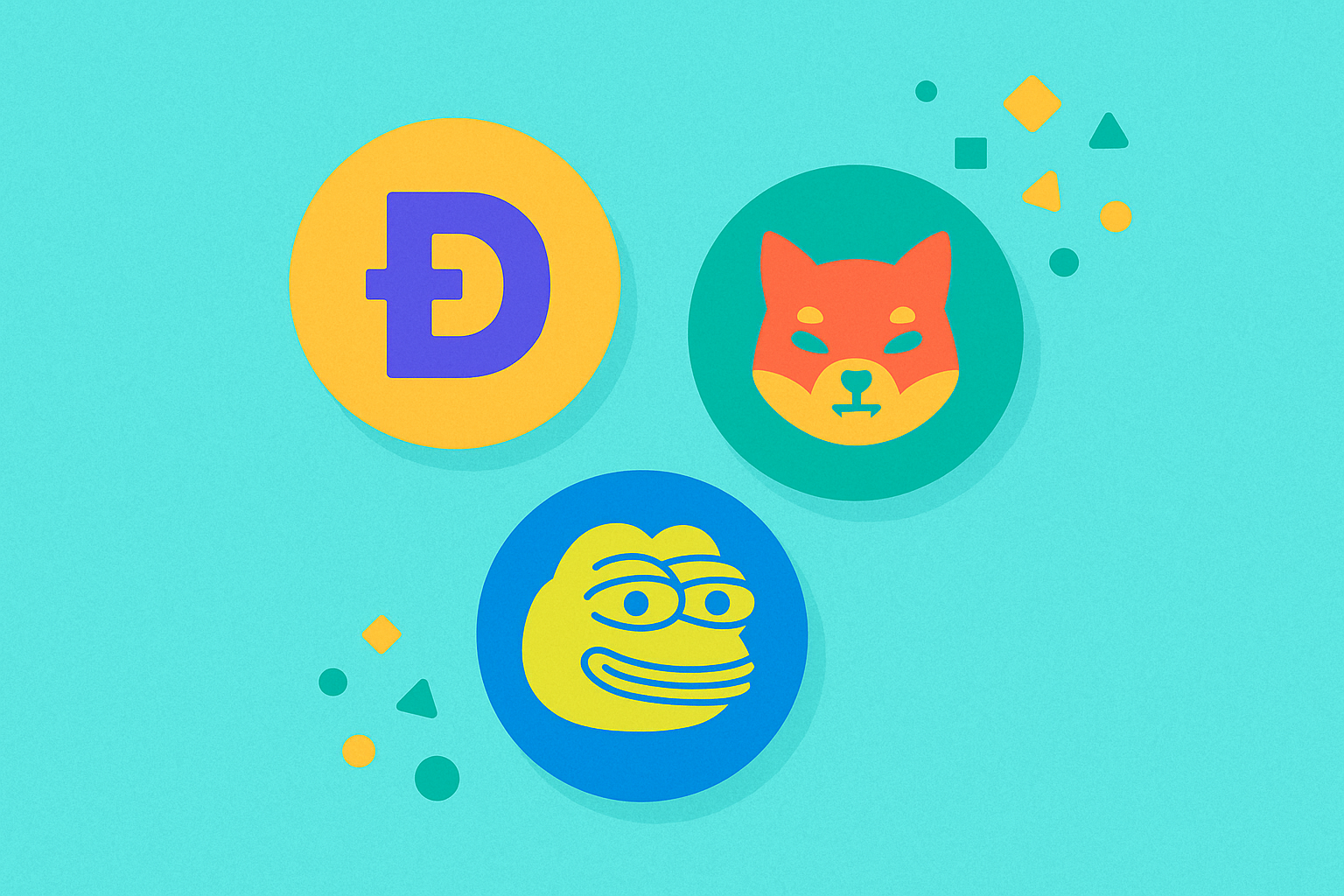
The memecoin sector has seen explosive growth, with some tokens reaching staggering market caps. Dogecoin, launched as a joke in 2013 but propelled to prominence by a dedicated community and celebrity support, has hit $62 billion in market capitalization, ranking among the top 10 cryptocurrencies.
Shiba Inu debuted in August 2020 as a Dogecoin competitor, leveraging specific blockchain technology to enable smart contracts and decentralized finance. Pepe, relaunched in 2023 as a nod to a famous meme, quickly became a serious digital asset with a multi-billion-dollar circulation.
Celebrity-driven memecoins often debut with lofty market caps, though some investors experience sharp losses. Tokens launched by relatives of public figures have suffered extreme price swings and substantial devaluation in short periods.
Newer memecoins have drawn attention in certain blockchain communities, some reaching billion-dollar valuations. Influencer- and social media-driven memecoins saw significant valuations before rapid decline and accusations of manipulation. Nationally endorsed memecoins and those promoted by government leaders reflect growing adoption in the public sector. Memecoins based on viral global memes continue gaining traction with their playful themes among crypto enthusiasts.
Pros and Cons of Investing in Memecoins
Investing in memecoins presents both opportunities and risks that demand careful consideration. Understanding these factors is vital for informed decision-making in this volatile sector.
Key advantages include the potential for high returns due to viral marketing and strong communities, with some coins reaching multi-billion-dollar market caps in days or weeks. Joining user communities offers valuable networking and learning in crypto. Memecoins usually have lower costs than traditional cryptocurrencies, making them accessible to beginners. Investing in memecoins can help newcomers learn about blockchain and crypto markets in a controlled-risk setting.
Main drawbacks include extreme price swings, making memecoins unsuitable for stable, long-term investment strategies. The space is rife with project shutdowns, manipulative pricing, and scams, posing major financial risks. Most memecoins lack practical uses beyond trading, limiting their long-term value. Less popular coins may suffer from low liquidity, complicating exits without moving the price. Regulatory positions on memecoins vary and can shift, impacting the market.
Memecoin investment is speculative and carries high risk. Only invest what you can afford to lose, and research thoroughly before participating.
How to Create a Memecoin
Launching your own memecoin is now easier than ever thanks to platforms and tools that automate the process. Creating a memecoin requires no advanced programming or blockchain development skills—many websites can handle the technical steps in minutes.
Step-by-step, you’ll first connect your crypto wallet and ensure you have some funds for blockchain and service fees. Choose a token name, symbol (often with a character limit), and desired decimal places—typically nine for memecoins. Enter your total supply, upload a PNG logo, and prepare a description with social and website links. Select the ‘meme’ tag, click ‘Create Token,’ approve the transaction, and wait for your token to be minted.
Certain blockchains are especially popular for memecoin creation, offering user-friendly interfaces and low costs. Data shows millions of memecoins launched yearly across platforms—thousands daily on some exchanges.
Success after launch depends on building a community and sustaining interest. Marketing strategies include developing a compelling website, creating social media profiles for promotion, building a presence in crypto forums, considering airdrops or giveaways, and sharing clear information about your project’s goals and roadmap.
While technically simple, memecoin creation does involve critical legal considerations. Regulators have opined that typical memecoin transactions do not constitute securities offerings under most laws, but tokens disguised as memecoins to skirt regulation are an exception. Fraudulent behavior in memecoin sales may trigger federal or state enforcement. Some jurisdictions have specific rules for crypto creation and distribution—check your local laws before proceeding.
How to Buy Memecoins
If you’d rather buy memecoins than create them, numerous crypto exchanges make purchasing easy. Start by opening an account on your chosen platform, registering via their app or website, and completing KYC verification for full access.
Exchanges offer multiple purchase methods: credit/debit cards for new users, P2P/OTC trading for direct peer-to-peer transactions, international bank transfers for stablecoin deposits followed by spot trading, and third-party services for spot trades.
For smooth trading, buy stablecoins such as USDT first, then use them for memecoin purchases in the spot trading section. After funding your account, access the spot market to place buy orders. Exchanges support several order types: Limit Orders (set your price, execute at or better), Market Orders (buy at current price, subject to slippage), Stop-Limit Orders (trigger price then limit order), and OCO Orders (combine stop-limit and limit; one cancels when the other executes).
After purchasing memecoins, store them on the exchange, transfer to an external wallet for long-term holding, swap for other cryptocurrencies, or stake for passive income. Practice robust security: use strong, unique passwords, enable two-factor authentication, transfer substantial holdings to cold wallets, research thoroughly before investing, and only risk what you can afford to lose given high volatility.
The Future of Memecoins
The future of memecoins remains highly speculative and hotly debated in the crypto community. Their unpredictable nature makes forecasts tough, but several trends and factors will likely shape their trajectory.
As the industry matures, curated memecoin lists help investors navigate a crowded market, ranking tokens by market cap, trading volume, and community size. ‘Best’ memecoin is subjective and speculative, but investors often consider developer activity, community engagement, exchange listings, and historic price performance. The rankings are dynamic, with new projects regularly overtaking old favorites.
Memecoins have carved out a dynamic niche in crypto, offering humorous and unconventional alternatives to traditional digital assets. Their appeal lies in innovative features and diverse use cases that attract wide audiences. Developers continually launch new memecoins, expanding the ecosystem and integrating coins/tokens into established exchanges.
Emerging trends include personality-driven tokens—memecoins linked to celebrities or public figures that could gain further momentum. Government adoption, with official national memecoins and endorsements, signals possible experimentation with memecoins for various purposes. Institutional interest is rising, with major asset managers considering memecoin-related investment products despite skepticism about fundamentals, suggesting memecoins are penetrating broader financial markets.
Recently, regulators have clarified that typical memecoin transactions do not involve securities offerings in most jurisdictions. Memecoins are often bought for entertainment, social interaction, or cultural purposes, with value driven by market demand and speculation. Regulatory stances vary globally: some countries restrict memecoins as unregulated digital assets, while others investigate promotions. Mature markets may see nuanced regulatory frameworks, offering clearer guidance for creators and investors.
Integration with traditional finance opens new possibilities. Future memecoins could deliver more practical use cases, expanding value beyond speculation. Ties to gaming, social media, and other digital ecosystems may broaden utility. Advances in blockchain technology could enhance memecoin functionality, security, and sustainability. Critics compare memecoins to past speculative bubbles, cautioning that many lack genuine utility or satisfy real needs—ongoing skepticism fuels debate on memecoin viability as investments.
Conclusion
Memecoins blend internet culture with cryptocurrency, offering an easy entry point to digital assets. From Dogecoin’s origins to tokens launched by celebrities and governments, memecoins have become increasingly sophisticated despite their unconventional roots.
At heart, memecoins thrive on community engagement rather than technical utility; while volatile, many have reached impressive market capitalizations. The sector’s evolution includes support from public figures and even government-issued tokens, highlighting memecoins’ broad reach across industries.
For investors, potential high returns come with significant risk. Diligent research, risk management, and investing only what you can afford to lose are essential. Whether you’re buying established memecoins or launching your own, understanding the underlying mechanics and community dynamics is key to success.
As regulations evolve and markets mature, memecoins may find new uses beyond speculation. Their future will depend on innovation, active communities, and regulatory clarity, shaping their role in the ever-changing crypto ecosystem.
FAQ
What is a memecoin?
A memecoin is a cryptocurrency inspired by internet memes and online communities. Most begin as humorous or experimental projects with large supplies, but some grow into genuine ecosystems with real value and strong communities.
Which meme coin could reach $1?
Memecoins with high trading volumes and strong communities have a chance to hit $1. Those with low market caps and rising adoption are best positioned. Growth depends on market momentum and sustained community interest.
Are memecoins a good investment?
Memecoins offer high upside potential thanks to strong communities and viral marketing. Growing adoption and trading volume create substantial opportunities for price appreciation. Join the rapidly expanding memecoin trend in the crypto space.
How much is a meme coin worth?
A meme coin’s value is driven by market demand, liquidity, and community sentiment. Prices range from fractions of a cent to thousands of dollars, depending on the project. True value comes from user adoption, transaction volume, and the long-term growth prospects of its supporting community.
What are the main risks of investing in memecoins?
Main risks include extreme volatility, low liquidity, market manipulation, and abrupt project failures. Adoption relies on unstable trends and values can evaporate quickly.
How do memecoins differ from regular cryptocurrencies?
Memecoins are rooted in memes and internet culture, prioritizing community and entertainment over technical innovation. They often feature unlimited token supply, rapid growth, and high volatility—unlike regular cryptocurrencies, which tend to be more stable and utilitarian.

Investing in Wall Street Pepe: Purchase Guide, Launch Timeline, and Price Insights
What Are Meme Coins? Leading Meme Coins and a Basic Guide to Trading Meme Coins

Comprehensive Lil Pepe Token Presale Overview: Key Insights and Preparation for Listing

Discover Puff: The Viral Chef Cat Meme Coin on Solana Platform

Discover How to Track Grok Token Price Trends Efficiently

Beginner's Guide to Understanding Memecoins

Wallet Launches A "Custom Mainnet" Feature to Simplify the Process of Adding New Mainnets

What Is Sui Crypto: Beginner's Guide to Sui Blockchain, Token, and Price

How to Use Technical Indicators Like MACD, RSI, and Bollinger Bands for Crypto Trading Signals
What is GalaChain? The Platform for Web3 Gaming and Entertainment
How Does Cryptocurrency Price Volatility Affect Bitcoin and Ethereum Correlation in 2026