Is Ethereum a Good Investment? Complete Analysis & Expert Guide
What Is Ethereum and Why Invest in It?
Unlike Bitcoin, which primarily serves as digital gold, Ethereum operates as a programmable blockchain platform that has revolutionized the cryptocurrency landscape. Think of it as the foundation that powers thousands of decentralized applications, from financial services to digital art marketplaces, creating an entire ecosystem of innovation.
Ethereum's smart contracts automatically execute agreements when specific conditions are met, eliminating the need for traditional intermediaries. This groundbreaking functionality has made Ethereum the backbone of decentralized finance (DeFi), non-fungible tokens (NFTs), and Web3 applications that collectively manage hundreds of billions in value. The platform's versatility allows developers to create complex financial instruments, gaming applications, and social networks that operate without centralized control.
As one of the most established cryptocurrencies, Ethereum maintains its position as the second-largest cryptocurrency with a substantial market capitalization. The network successfully transitioned from energy-intensive proof-of-work mining to efficient proof-of-stake validation, addressing major environmental concerns while improving security and scalability. This transition, known as "The Merge," reduced Ethereum's energy consumption by approximately 99.95%, making it one of the most environmentally friendly major blockchain networks.
Ethereum Investment Performance Analysis
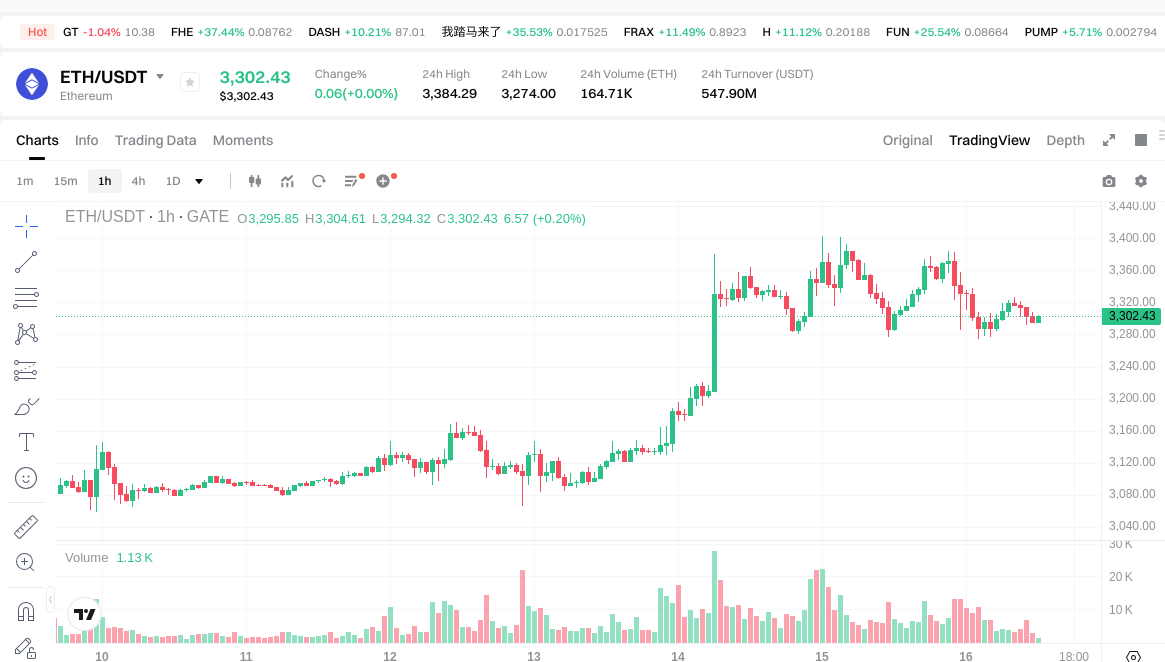
Ethereum's price action demonstrates compelling growth patterns that attract both retail and institutional investors. During recent market cycles, ETH has shown significant appreciation, with notable rallies driven by fundamental developments rather than mere speculation. These price movements reflect growing confidence in Ethereum's technological capabilities and real-world utility.
Institutional investors have poured billions into Ethereum during peak buying periods, demonstrating strong conviction in the asset's long-term potential. Major financial institutions have launched Ethereum-focused investment products, with some exchange-traded funds becoming among the fastest to surpass significant asset milestones. Meanwhile, corporate treasuries have acquired substantial ETH holdings, treating the cryptocurrency as a legitimate treasury asset alongside traditional reserves.
Regulatory developments have provided additional clarity for the ecosystem, particularly regarding stablecoins that operate on Ethereum's network. Legislative progress has confirmed Ethereum's central role in the digital asset ecosystem and removed significant uncertainty that had previously weighed on valuations. These regulatory advances signal growing acceptance of blockchain technology within traditional financial frameworks.
What's particularly encouraging for long-term investors is the decreasing percentage of Ethereum's total supply held on centralized exchanges. When investors move coins off exchanges into personal wallets or staking contracts, it typically signals long-term confidence rather than short-term trading intentions. This supply dynamic creates potential scarcity that can support price appreciation during periods of increased demand.
Why Ethereum Is a Good Investment?
Unmatched Developer Network
Ethereum boasts the largest ecosystem of developers in the blockchain space, creating a powerful competitive advantage that's difficult for competitors to replicate. This network effect creates a virtuous cycle—the more developers build on Ethereum, the more valuable the network becomes, which attracts even more developers and users. The platform hosts thousands of active developers who continuously improve the core protocol and build innovative applications.
Major financial institutions are driving enterprise adoption by building on Ethereum's infrastructure, validating the platform's capabilities for mission-critical applications. From major banks' blockchain initiatives to payment networks' stablecoin settlements, traditional finance increasingly relies on Ethereum's infrastructure for next-generation payment systems. This institutional validation provides credibility and suggests long-term staying power that speculative projects lack.
The developer community has created extensive documentation, development tools, and educational resources that lower barriers to entry for new builders. This robust ecosystem support accelerates innovation and ensures that Ethereum remains at the forefront of blockchain development, even as competing platforms emerge with different technical approaches.
Technology Upgrades Drive Efficiency
Ethereum's roadmap includes several major upgrades designed to dramatically improve performance while maintaining the platform's core principles of security and decentralization. Upcoming protocol improvements target ambitious scalability goals that would enable the network to process tens of thousands of transactions per second, rivaling traditional payment networks while preserving blockchain's unique advantages.
Layer 2 scaling solutions already process significantly more operations than Ethereum's main network while settling back to it for security guarantees. This scaling approach is working as intended, creating a multi-layered architecture that reduces congestion without compromising safety. Technologies like optimistic rollups and zero-knowledge proofs enable applications to achieve high throughput while inheriting Ethereum's security properties.
These technological improvements address previous criticisms about Ethereum's speed and cost, making the platform more competitive with newer blockchains that prioritized scalability from inception. The ability to upgrade and adapt demonstrates Ethereum's resilience and commitment to continuous improvement, essential qualities for long-term infrastructure investments.
Deflationary Economics
Ethereum's economic model includes a token-burning mechanism that removes ETH from circulation with every transaction, creating deflationary pressure that can support price appreciation. When network activity increases, more tokens get burned than created through staking rewards, making Ethereum's supply potentially deflationary during periods of high usage. This contrasts with many cryptocurrencies that have unlimited or continuously inflating supplies.
Combined with staking rewards that lock up additional supply, this creates multiple sources of upward pressure on price during periods of strong demand. Validators must lock substantial ETH amounts to participate in network security, removing these tokens from liquid circulation. As adoption grows and more users stake their holdings, the available supply for trading decreases, potentially amplifying price movements.
The economic fundamentals are straightforward: growing demand plus shrinking or constrained supply typically equals higher prices over time, assuming other factors remain constant. This supply-demand dynamic provides a fundamental basis for investment thesis beyond pure speculation, grounding valuation in actual network usage and economic principles.
Ethereum Investment Risks to Consider
Fierce Competition
Alternative blockchain platforms offer faster transactions and lower fees, presenting legitimate competitive threats to Ethereum's market dominance. While none have fully displaced Ethereum's leadership position yet, they continue capturing market share in specific use cases where their technical advantages provide meaningful benefits. Some competing networks have gained traction by focusing on particular niches like high-frequency trading or gaming applications.
Ethereum's scaling solutions help address speed and cost concerns, but the competition isn't standing still either. New blockchain architectures specifically designed for high throughput continue emerging, incorporating lessons learned from earlier platforms. These competitors benefit from starting with clean-slate designs that can optimize for specific performance characteristics without legacy constraints.
The risk isn't necessarily that a single competitor will overtake Ethereum, but rather that the blockchain landscape may fragment into multiple specialized platforms, each dominant in particular use cases. This fragmentation could limit Ethereum's total addressable market and reduce its network effects, potentially impacting long-term value appreciation.
Regulatory Uncertainty
Despite positive developments like investment product approvals, cryptocurrency regulation remains fluid and subject to change as governments worldwide grapple with how to oversee digital assets. Changes in government policy, tax treatment, or financial regulations could significantly impact Ethereum's price and adoption trajectory. Different jurisdictions take varying approaches, creating a complex patchwork of rules that can affect international users and developers.
Political changes can shift regulatory approaches quickly, as different administrations and legislators hold varying views on cryptocurrency's role in the financial system. What appears as regulatory clarity today might change with new leadership or in response to market events. Investors must remain aware that regulatory risks represent an ongoing consideration rather than a one-time hurdle.
Compliance requirements could also increase operational costs for applications built on Ethereum, potentially slowing innovation or pushing development to more permissive jurisdictions. These regulatory dynamics create uncertainty that can affect investor sentiment and price volatility, even when fundamental technology continues improving.
Technical and Market Risks
Ethereum's complexity creates potential points of failure that investors should understand before committing capital. Smart contract bugs have cost users millions in past incidents, and while security practices have improved, the risk of vulnerabilities remains inherent in complex software systems. Network congestion can make transactions expensive during peak usage periods, potentially limiting accessibility for smaller users.
Cryptocurrency markets remain highly volatile, with prices capable of significant swings based on sentiment, macroeconomic factors, and technical developments. Even fundamentally sound projects can lose substantial value during market downturns as investors flee to safety or respond to broader economic concerns. Ethereum holders need strong risk tolerance and long-term perspectives to weather inevitable price fluctuations without making emotional decisions.
The interconnected nature of DeFi applications built on Ethereum also creates systemic risks, where problems in one protocol can cascade to others through shared dependencies. While this interconnectedness demonstrates the platform's utility, it also means that failures can have broader impacts than isolated incidents might suggest.
Ethereum Investment Predictions by Experts
Most cryptocurrency analysts remain optimistic about Ethereum's price trajectory over various time horizons, though predictions vary significantly based on assumptions and methodologies. Prominent investment firms and analysts have published targets ranging from conservative to highly bullish, reflecting different views on adoption rates, technological progress, and market conditions.
Typical forecast ranges suggest:
- Near-term targets: Moderate appreciation with potential for significant gains during favorable market conditions
- Mid-term outlook: Gradual appreciation as technological upgrades deploy and institutional adoption increases
- Long-term potential: Substantial upside if Ethereum becomes core infrastructure for global finance and Web3 applications
These predictions assume continued technological progress, growing institutional adoption, and favorable regulatory environments developing over time. However, cryptocurrency markets have humbled even the most confident forecasters in the past, with actual outcomes often diverging significantly from expert consensus. Unexpected technological breakthroughs, regulatory changes, or macroeconomic shifts can quickly invalidate even well-reasoned forecasts.
Remember that price predictions should inform your research process, not determine your investment decisions. Market conditions, technological developments, and regulatory changes can quickly alter the landscape in ways that make specific price targets irrelevant. Use predictions as one input among many when forming your investment thesis.
Is Ethereum a Good Investment for You?
Ethereum suits investors who understand and accept cryptocurrency volatility while believing in blockchain technology's long-term potential to transform various industries. The investment makes most sense for people who meet several important criteria that align with the asset's risk-reward profile and time horizon requirements.
Ideal Ethereum investors typically:
Can afford potential losses without impacting their financial security. Never invest money you need for essential expenses like housing, food, or emergency funds. Cryptocurrency investments should represent a small portion of a diversified portfolio, with most assets in traditional investments that provide stability and predictable returns. Financial advisors generally recommend limiting cryptocurrency exposure to a small percentage of total investable assets.
Have long-term investment horizons measured in years, not months. Ethereum's value proposition plays out over extended periods as technological upgrades deploy, applications mature, and institutional adoption progresses. Short-term traders face significant risks from unpredictable price swings driven by sentiment and technical factors that have little relationship to fundamental value. Patient investors who can ignore short-term volatility are better positioned to benefit from long-term appreciation.
Understand the underlying technology and its potential applications. Successful crypto investors typically understand what they're buying beyond just price charts and predictions. Ethereum isn't just a speculative token—it's infrastructure for a new financial system and application platform. Investors who grasp how smart contracts work and why decentralization matters can make more informed decisions about when to buy, hold, or sell based on fundamental developments rather than fear and greed.
Dollar-cost averaging can help reduce timing risk for new investors entering the market. Rather than making one large purchase that might occur at a local price peak, consider buying smaller amounts regularly to smooth out price volatility. This approach removes the pressure of trying to time the market perfectly while building your position gradually as you learn more about the asset.
Is Ethereum Worth Your Investment?
Ethereum presents a compelling but complex investment opportunity that requires careful consideration of both opportunities and risks. The network's technical advantages, developer momentum, and institutional adoption provide strong fundamental support for long-term value appreciation. Recent price action and growing mainstream acceptance suggest increasing confidence in Ethereum's prospects as core digital infrastructure.
However, significant risks remain that could derail even optimistic scenarios. Competition is intensifying from both established blockchains and new entrants with innovative approaches. Regulatory uncertainty persists across jurisdictions, with potential for policy changes that could significantly impact the ecosystem. Cryptocurrency markets can be brutally volatile, with sharp drawdowns testing even committed believers' resolve. Past performance doesn't guarantee future results, and even the most promising investments can disappoint when circumstances change.
For investors who understand these risks and believe in blockchain technology's transformative potential, Ethereum offers exposure to one of the most important infrastructure platforms in the emerging digital economy. The key is investing only what you can afford to lose completely and maintaining realistic expectations about both timeline and potential returns. Extraordinary gains are possible but far from guaranteed, and the path forward will likely include significant volatility and setbacks.
Smart investors approach Ethereum as part of a broader portfolio strategy, not a get-rich-quick scheme or replacement for traditional investments. Done thoughtfully, Ethereum investment can provide meaningful upside potential while contributing to a technology that's reshaping how we think about money, contracts, and digital ownership. The decision ultimately depends on your personal financial situation, risk tolerance, and conviction in blockchain technology's future role in the global economy.
FAQ
What is Ethereum? What are the differences between Ethereum and Bitcoin?
Ethereum is a programmable blockchain platform supporting smart contracts and decentralized applications, while Bitcoin is primarily for peer-to-peer payments. Ethereum uses Proof of Stake, Bitcoin uses Proof of Work. Ethereum has smaller market value than Bitcoin.
What are the advantages and disadvantages of Ethereum as an investment asset?
Advantages: mature ecosystem, extensive DeFi applications, strong developer community, and significant transaction volume. Disadvantages: high price volatility, technical risks, network congestion, and regulatory uncertainty in some regions.
What are the main risks of investing in Ethereum?
Ethereum investment risks include market volatility, technical vulnerabilities, and regulatory uncertainty. High price fluctuations can result in significant losses. Network congestion and competition from alternative blockchains also pose challenges to long-term value.
What are the development prospects of Ethereum in 2024?
Ethereum's 2024 outlook depends on technological advancement and market dynamics. Price predictions range from $2,500 to $4,000. Competition and regulatory developments will significantly influence its future trajectory.
How to safely buy and hold Ethereum?
Register and verify your account, then purchase Ethereum using market or limit orders. For secure storage, use cold storage wallets like hardware wallets instead of hot wallets to prevent hacking risks and ensure long-term asset protection.
How do Ethereum's technical upgrades like Merge and Dencun impact investment value?
Ethereum's upgrades like Merge and Dencun enhance investment value by improving network efficiency, reducing transaction costs, and strengthening security. These improvements attract more users and developers, boosting market confidence and long-term growth potential.
Should I invest in Ethereum or Bitcoin? How to choose between the two?
Bitcoin offers greater stability and long-term value storage, while Ethereum provides higher growth potential with smart contract functionality. Choose based on your risk tolerance and investment goals.
Ethereum's price volatility is substantial—historically ranging from $0.31 to over $4,900. Despite high volatility, it's considered suitable for long-term investment due to strong fundamentals and ecosystem growth.
Ethereum's price volatility is substantial—historically ranging from $0.31 to over $4,900. Despite high volatility, it's considered suitable for long-term investment due to strong fundamentals and ecosystem growth.
What is the impact of DeFi and smart contracts ecosystem on Ethereum's value?
DeFi and smart contracts drive Ethereum's value by enabling decentralized finance applications and expanding use cases. Increased adoption raises ETH demand for gas fees and staking, while growing transaction volume strengthens network effects and long-term appreciation potential.
How much capital do I need to invest in Ethereum? What are some beginner tips?
You can start investing in Ethereum with as little as $100. Begin with direct purchases or Ethereum ETFs to minimize risk. Diversify your portfolio and research thoroughly before investing. Start small and gradually increase your position as you gain experience.

How Does PAXG Holdings and Fund Flow Impact Market Liquidity in 2025?
Investing in Cryptocurrency Index Funds: A Comprehensive Guide

How to Invest in Ethereum with an IRA: What You Should Know

How to Use On-Chain Data Analysis Tools for Ethereum in 2025?

Top Strategies for Cryptocurrency Fund Index Investments

How Does Institutional Holdings Affect Bitcoin's Price in 2025?
What is Litecoin LTC fund flow and exchange inflows showing in 2026

How to analyze on-chain data: tracking active addresses, whale movements, and transaction trends

What is token economy model and how does it impact crypto token allocation and governance?

How does SEC regulatory compliance impact SHIB token value and adoption rates in 2025-2026?

What is Shiba Inu (SHIB) market overview with $5.18B market cap and 589.24T circulating supply?