Is Solana a Good Investment? Complete Analysis & Price Predictions


Why Is Solana a Good Investment?
Solana stands apart from other cryptocurrencies through its innovative technological foundation and rapidly expanding ecosystem. The network's hybrid Proof-of-Stake (PoS) and Proof-of-History (PoH) consensus mechanism delivers exceptional performance without sacrificing security. This unique architecture allows validators to agree on transaction ordering without extensive communication, dramatically reducing network congestion and enabling unprecedented throughput.
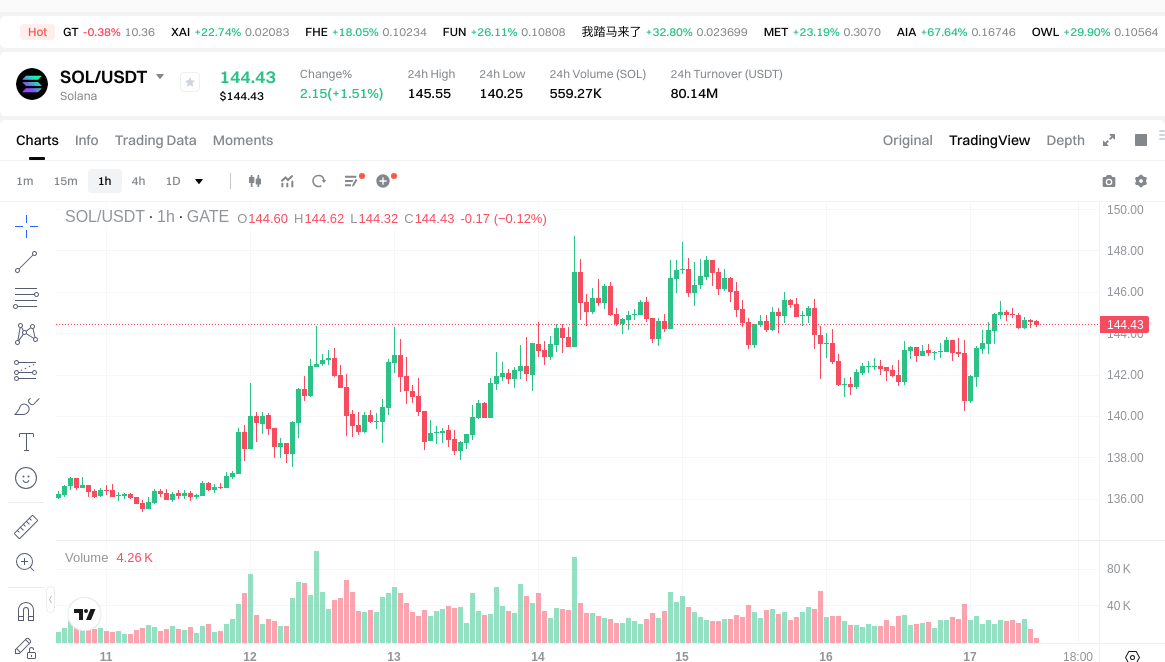
The network consistently processes over 25 million transactions daily, supported by more than 1 million unique active wallets monthly. This demonstrates genuine utility and adoption beyond speculative trading. The sustained transaction volume indicates that users are actively engaging with decentralized applications, conducting real economic activity on the blockchain.
Solana's ecosystem has exploded beyond simple token transfers. The network hosts thriving DeFi protocols, NFT marketplaces, and Web3 applications that rival Ethereum's offerings in both functionality and user experience. Major projects like Helium (decentralized wireless networks), Render Network (distributed GPU rendering), and Hivemapper (decentralized mapping) have migrated to Solana, recognizing the platform's superior performance characteristics and cost efficiency.
Solana has achieved significant institutional recognition, validating its technical capabilities and market position. Companies like Visa utilize Solana for USDC settlements, leveraging the network's speed and low costs for payment processing. Meanwhile, Shopify enables merchants to accept SOL payments through Solana Pay, integrating cryptocurrency payments into mainstream e-commerce infrastructure.
Should I Buy Solana? Investment Analysis
Why Buy Solana?
The network's technical superiority becomes increasingly apparent as crypto adoption grows and scalability demands intensify. While Ethereum averages 15 transactions per second with fees typically ranging from $0.10-$0.50, Solana processes 1,000-3,000+ transactions per second at typically under $0.01 per transaction. This performance advantage positions Solana favorably for applications requiring high throughput, such as gaming, social media, and financial services.
SOL holders can generate passive income through network participation without requiring specialized hardware or technical expertise. Solana's Proof-of-Stake system enables token holders to earn 4-7% annual returns by staking their holdings with validators. This staking mechanism not only provides yield but also contributes to network security and decentralization.
Solana's DeFi ecosystem has experienced substantial growth, demonstrating strong developer and user adoption. Total Value Locked surged from approximately $500 million in early 2023 to over $9 billion in recent periods, reflecting approximately 1,700% growth. This expansion encompasses lending protocols, decentralized exchanges, derivatives platforms, and innovative financial products that leverage Solana's unique capabilities.
Institutional momentum continues to build around Solana as traditional finance recognizes blockchain technology's potential. The potential approval of Solana ETFs could unlock billions in traditional investment capital, similar to how Bitcoin and Ethereum ETFs boosted their respective prices by providing regulated exposure for institutional and retail investors.
Solana Investment Risks
Network reliability remains a concern despite significant improvements over time. Solana experienced multiple outages in 2022 and early 2023, raising questions about the network's production readiness for mission-critical applications. However, the development team has implemented numerous upgrades, and the network achieved 100% uptime during the first half of 2023, demonstrating meaningful progress in stability.
Regulatory uncertainty poses another challenge that could impact Solana's adoption trajectory. While Solana appears less likely to be classified as a security compared to some other cryptocurrencies, evolving enforcement actions and changing regulations could impact the broader cryptocurrency market, affecting SOL's price and utility regardless of its specific regulatory status.
Competition from other Layer 1 blockchains intensifies continuously as the blockchain space matures. Networks like Avalanche, Cosmos, and emerging platforms like Sui and Aptos offer similar promises of speed and low costs, each with unique architectural approaches. Solana must continue innovating and expanding its ecosystem to maintain its competitive position in this crowded market.
Solana Price Prediction Analysis
Conservative estimates suggest SOL could trade between $200-$300 by late 2025, representing a 20-80% upside from current levels around $150-170. These projections assume steady ecosystem growth, continued DeFi expansion, and favorable crypto market conditions without major disruptions. Conservative scenarios account for potential setbacks, regulatory challenges, and competitive pressures.
More bullish analysts target $400-$500 for SOL in 2025, driven by potential ETF approvals and continued DeFi expansion. These optimistic forecasts assume that Solana successfully executes its technical roadmap, particularly the Firedancer upgrade, while capturing significant market share from competing platforms. Institutional adoption through ETFs could drive substantial capital inflows, similar to the impact observed with Bitcoin and Ethereum ETFs.
Long-term forecasts suggest Solana could reach between $275-$1,000 by 2030, depending on ecosystem maturation, global blockchain adoption rates, and Solana's ability to capture market share in key verticals. Some highly optimistic scenarios envision SOL exceeding $1,500 by 2030 if Solana becomes a dominant platform for Web3 applications, DeFi, and decentralized physical infrastructure networks. However, these projections carry significant uncertainty and depend on numerous favorable factors aligning.
Is Solana a Good Long Term Investment?
Solana's long-term investment potential hinges on its ability to capture and retain market share in the evolving blockchain landscape while maintaining technical excellence and ecosystem growth. The platform's architectural advantages provide a strong foundation, but execution and adaptation will determine ultimate success.
The developer ecosystem continues to expand rapidly, with over 50 hackathons and developer events hosted globally in the past year. This creates a robust pipeline of new applications and use cases that drive organic demand for SOL tokens. Developer activity serves as a leading indicator of future ecosystem growth, as today's experimental projects often become tomorrow's mainstream applications.
Solana's focus on real-world utility sets it apart from purely speculative cryptocurrencies. The network's integration with traditional payment processors like Visa and e-commerce platforms like Shopify creates legitimate use cases beyond trading and speculation. These partnerships demonstrate that Solana can bridge the gap between cryptocurrency and traditional commerce, potentially driving mainstream adoption.
The Decentralized Physical Infrastructure Network (DePIN) segment represents another long-term growth driver with substantial potential. Projects bringing real-world data and computing power onto Solana's blockchain create tangible value that extends beyond crypto-native applications. Examples include decentralized wireless networks, mapping services, and distributed computing resources that solve real-world problems while leveraging blockchain technology.
However, long-term success isn't guaranteed in the rapidly evolving blockchain space. Solana must continue executing on its technical roadmaps, particularly the Firedancer upgrade expected by Q4 2025, which promises to further improve performance and reliability. The network must also navigate regulatory challenges, maintain decentralization, and compete effectively against well-funded competitors.
Should I Buy Solana Now?
Historical price volatility has created opportunities for dollar-cost averaging strategies that reduce timing risk. SOL has fluctuated between $150-$230 in recent months, allowing investors to build positions during market dips rather than attempting to time a single perfect entry point. This volatility, while creating risk, also provides opportunities for patient accumulation.
Market sentiment indicators suggest cautious optimism rather than euphoric speculation, which often characterizes market tops. This environment typically provides better risk-adjusted entry points compared to periods of maximum optimism when prices are inflated by excessive enthusiasm. Measured sentiment allows for more rational evaluation of fundamentals versus hype.
Technical analysis shows SOL defending key support levels around $155-$160, with resistance near $190-$210. These price levels have been tested multiple times, suggesting they represent significant psychological and technical barriers. Understanding these levels can help investors plan entry and exit strategies, though technical analysis should complement rather than replace fundamental analysis.
Investors should avoid trying to time the perfect bottom, as this approach often results in missed opportunities or delayed entry. A systematic accumulation strategy over several months typically outperforms attempting to identify precise entry points, as it averages out short-term volatility and reduces the impact of poor timing decisions.
Solana Investment Risks
Technical risks remain Solana's most significant challenge despite substantial improvements in network stability. The network's complexity and high performance requirements create potential failure points that could impact reliability during periods of extreme stress. While the development team has made progress, the architecture's sophistication means that bugs or vulnerabilities could have significant consequences.
Market volatility represents another substantial risk factor that all cryptocurrency investors must consider. SOL has experienced 50%+ price swings within weeks during previous market cycles, reflecting both the asset's growth potential and its risk profile. Investors must be prepared for significant short-term price fluctuations that can test emotional resilience and investment discipline.
Regulatory uncertainty looms over all cryptocurrency investments, creating potential for sudden market disruptions. Evolving enforcement actions demonstrate that regulatory risks are real and evolving, with potential impacts ranging from trading restrictions to classification changes that could affect token utility and value.
Competition from other blockchains poses a strategic risk to Solana's long-term market share and relevance. Emerging platforms with similar performance characteristics or unique features could attract developers and users, potentially eroding Solana's competitive advantages. The blockchain space remains highly dynamic, with technological innovation occurring rapidly across multiple platforms.
Centralization concerns warrant attention from investors prioritizing decentralization principles. While Solana has more validators than many competitors, the network's high hardware requirements create barriers to participation that could limit decentralization over time. These requirements, necessary for high performance, create a tension between scalability and decentralization that Solana must carefully manage.
Is Solana Worth Buying?
Solana represents a compelling but high-risk investment opportunity for investors with appropriate risk tolerance and time horizons. The decision to invest should be based on careful consideration of both potential rewards and substantial risks.
The bull case for Solana rests on solid fundamentals: superior technology that enables high throughput and low costs, growing ecosystem adoption across DeFi, NFTs, and Web3 applications, institutional recognition from major companies, and expanding real-world utility beyond speculative trading. These factors create a foundation for potential long-term value appreciation.
However, substantial risks demand careful consideration before allocating capital. Network reliability concerns, intense competition from other Layer 1 blockchains, regulatory uncertainty affecting the entire cryptocurrency market, and inherent crypto market volatility could all significantly impact returns. These risks are not theoretical but have manifested in various forms throughout Solana's history.
For investors asking "should I buy Solana," the answer depends on individual circumstances:
-
Risk-tolerant investors with strong crypto knowledge, diversified portfolios, and long-term time horizons may find Solana an attractive holding that offers exposure to high-performance blockchain technology with significant growth potential
-
Conservative investors should limit exposure to a small percentage of their portfolio or wait for reduced volatility and clearer regulatory frameworks before making significant allocations to speculative assets like Solana
-
New crypto investors should thoroughly research and understand the risks before allocating significant capital, potentially starting with smaller positions while building knowledge and experience in the cryptocurrency market
The most prudent approach involves dollar-cost averaging over several months rather than making large lump-sum investments. This strategy reduces timing risk, averages out short-term volatility, and allows investors to adjust their approach as market conditions and their understanding evolve.
FAQ
What is Solana and how does it work as a blockchain platform?
Solana is a high-performance blockchain platform utilizing Proof-of-History consensus to enable fast transaction speeds and low fees. It processes thousands of transactions per second through its unique sequencing mechanism, combined with Proof-of-Stake validation, offering efficiency and security for decentralized applications.
What are the main advantages and disadvantages of investing in Solana?
Advantages: High transaction speed, low fees, growing ecosystem. Disadvantages: Smaller user base, shorter track record, network stability concerns, higher volatility compared to established cryptocurrencies.
How does Solana compare to Ethereum and other layer-1 blockchains?
Solana offers faster transactions and significantly lower fees than Ethereum through its Proof-of-History consensus. While Ethereum has a larger market cap and more established DeFi ecosystem, Solana excels in speed and cost-effectiveness, particularly for meme coins and high-frequency trading.
What are the key risks and challenges facing Solana's future development?
Solana faces price volatility from futures market leverage and liquidations, macroeconomic pressures, and geopolitical uncertainties. Network expansion in DeFi and NFTs could mitigate these risks and drive future growth.
What is the current price of Solana and what are expert price predictions for 2024-2025?
As of early 2026, Solana has demonstrated strong performance. Expert analyses predicted SOL could reach $237 by 2025 and $439 by 2027. Current market dynamics continue to support bullish sentiment for Solana's long-term growth trajectory.
How can I buy and store Solana tokens safely?
Purchase SOL on a reputable exchange, transfer to a secure wallet like Phantom or Ledger, enable two-factor authentication, and backup your recovery phrases securely.
What is Solana's tokenomics and how does the SOL token supply affect its value?
Solana has unlimited SOL supply with approximately 470 million circulating tokens. Annual inflation decreases from 8% to a fixed 1.5%, rewarding stakers and validators. This controlled inflation model directly impacts SOL's long-term value dynamics.
Has Solana recovered from past network outages and security issues?
Yes, Solana has substantially recovered from historical network outages and security issues. The network has implemented robust improvements, enhanced validator infrastructure, and strengthened security protocols. The ecosystem remains stable with continuous development and community support driving recovery and resilience.

Projected Investments: The Future of the DeFi Protocol on Solana Through 2025
Exploring the Future of LGNS Token in the DeFi Landscape

Maximize Your Earnings: Passive Income Strategies with Ripple (XRP) in 2025
Maximize Passive Income Opportunities with XRP Staking in 2025

Maximize Your Solana DeFi Yield with Advanced Strategies

How does Chainlink LINK fund flow and holdings concentration influence market sentiment in 2026?
Hamster Kombat Daily Cipher Code Guide: Unlock Your Bonus Rewards
How Many Pi Coins Are Mined Till Now?
Is ETH Mining Dead? Can You Still Mine Ethereum in Recent Years?

Can Avalanche Reach $10,000?
Why Is CVX Stock Down Recently: Key Factors Explained