Is Solana Deflationary?


Importance of Inflationary vs. Deflationary Characteristics
Understanding whether Solana operates under a deflationary or inflationary model is crucial for investors, traders, and users, as it fundamentally affects the token's value and the overall economic sustainability of the network. Inflationary tokens can dilute the value of existing tokens over time, as the increasing supply may lead to depreciation in value per token. This dilution effect can significantly impact long-term holders who may see their purchasing power diminish as new tokens enter circulation.
Conversely, deflationary mechanisms create scarcity by reducing the total token supply, which can potentially increase the value per token as demand remains constant or grows while supply decreases. This scarcity principle is similar to precious metals like gold, where limited supply contributes to value preservation. The dynamic between inflation and deflation directly impacts investment strategies, trading tactics, and long-term holding decisions, making it essential for participants in the Solana ecosystem to understand these mechanisms.
For institutional investors and portfolio managers, this understanding helps in risk assessment and asset allocation decisions. Retail investors can use this knowledge to make informed decisions about when to enter or exit positions, while developers building on Solana need to consider these tokenomics when designing their applications' economic models.
Real-World Examples and Recent Insights
In recent years, Solana has implemented several significant updates that influence its economic model and move it toward a more balanced approach between inflationary and deflationary pressures. Most notably, the introduction of the fee burn mechanism represents a pivotal shift in the network's tokenomics. Under this mechanism, a percentage of transaction fees are permanently removed from circulation, introducing a deflationary aspect to the network that didn't exist in its original design.
This fee burn mechanism is strategically designed to balance the inflation rate set by the network's initial protocol, which aimed for a gradually decreasing inflation rate, ultimately targeting a long-term steady-state rate of 1.5% per year. The implementation represents a sophisticated approach to monetary policy in blockchain networks, where the deflationary pressure from fee burns can offset or even exceed the inflationary pressure from staking rewards, depending on network activity levels.
Practical Applications in Decentralized Finance
The deflationary aspects of Solana have profound practical implications for decentralized finance (DeFi) applications and services built on its network. Decentralized exchanges (DEXs) operating on Solana benefit from the reduced token supply through fee burns, which can potentially increase the value of tokens held as collateral or staked in liquidity pools. This creates a more favorable environment for liquidity providers, who may see the value of their staked assets appreciate over time due to the deflationary pressure.
Lending platforms on Solana can leverage this deflationary trait to offer more competitive financial products. For example, borrowers may find that the real cost of their loans decreases over time if the deflationary pressure causes SOL to appreciate, while lenders benefit from holding an appreciating asset. This makes Solana an increasingly attractive platform for building sophisticated financial applications that can incorporate these tokenomic advantages into their product offerings.
Yield farming protocols and staking services also benefit from this model, as the combination of staking rewards and potential token appreciation creates multiple revenue streams for participants. This dual benefit system encourages long-term participation in network security and governance.
Case Study: Solana's Fee Burn Impact
In a previous year, a significant update was applied to Solana's blockchain that increased the percentage of transaction fees burned, marking a major milestone in the network's evolution. This update was closely monitored and analyzed by economists, investors, and blockchain researchers. Data from the first quarter following the update showed a 0.3% reduction in total circulating supply, representing an unprecedented rate of decrease for the network since its inception.
This reduction contributed to a noticeable increase in the price of SOL, Solana's native token, highlighting the direct and measurable impact of deflationary mechanisms on token economics. The case study demonstrated that well-designed deflationary mechanisms can create positive feedback loops: higher network activity leads to more fee burns, which reduces supply, potentially increasing token value, which in turn attracts more users and developers to the network. This virtuous cycle has important implications for the long-term sustainability and growth of the Solana ecosystem.
Data and Statistics
According to the Solana Foundation's published economic model, the annual inflation rate was initially set at 8% at the network's launch and was designed to decrease gradually each year until it stabilizes at the target rate of 1.5%. This decreasing inflation schedule was built into the protocol from the beginning, reflecting a long-term vision for sustainable tokenomics. The implementation of the fee burn mechanism has effectively accelerated the approach to this target, creating a more aggressive deflationary pressure than originally anticipated.
Recent transaction volume data shows that an average of 50,000 SOL per day is being burned due to transaction fees across the network. This daily burn rate equates to approximately 18 million SOL annually, a substantial amount that significantly impacts the inflation rate and total supply dynamics. To put this in perspective, if the network maintains this burn rate while staking rewards continue at current levels, the net inflation rate could approach zero or even become negative during periods of particularly high network activity.
The relationship between network activity and deflationary pressure is particularly noteworthy. During peak usage periods, such as major NFT mints or DeFi protocol launches, the burn rate can increase substantially, sometimes reaching 100,000 SOL per day or more. This variable burn rate means that Solana's deflationary characteristics are dynamic and responsive to actual network usage, creating a more organic and market-driven approach to supply management compared to fixed-schedule burns used by some other blockchain networks.
Additionally, staking participation rates hover around 70% of total supply, meaning that a significant portion of SOL is locked in staking contracts and not actively circulating. This effective supply reduction, combined with the fee burn mechanism, creates multiple layers of deflationary pressure that work together to influence token economics.
Conclusion and Key Takeaways
Solana's economic model represents a sophisticated hybrid approach that is primarily inflationary with a built-in schedule to decrease inflation over time, while simultaneously incorporating deflationary elements through its fee burn mechanism. This dual nature means that the network can experience periods of net deflation under conditions of high transaction volumes, when the rate of token burning exceeds the rate of new token issuance through staking rewards.
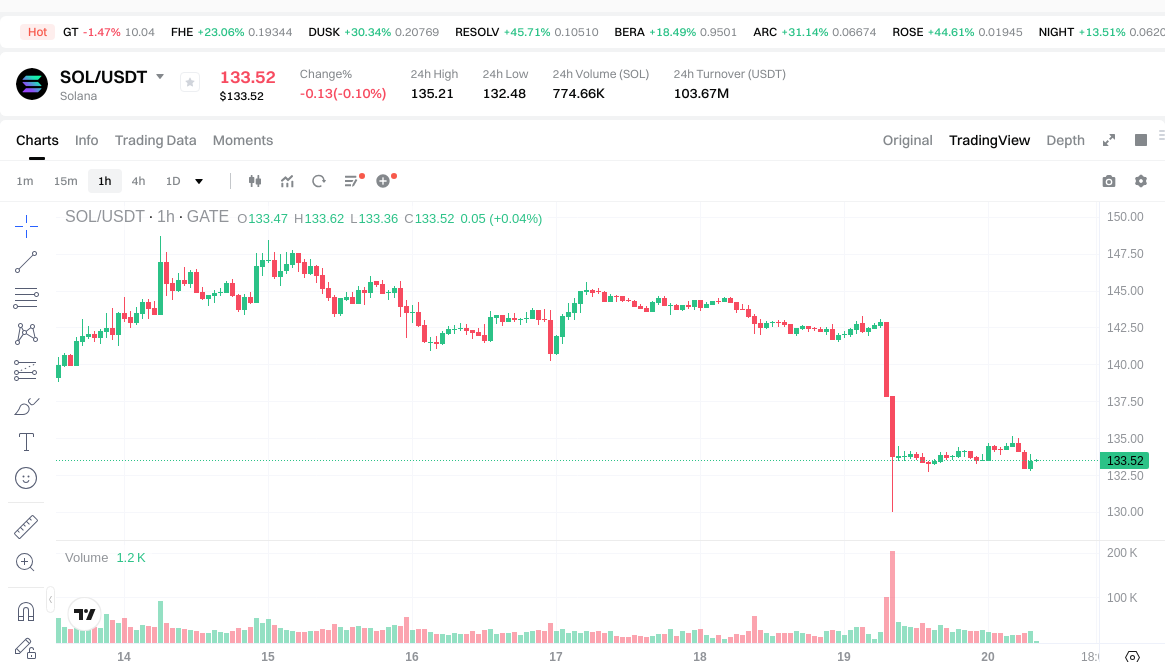
This hybrid approach significantly influences Solana's attractiveness to investors and users, particularly in the context of DeFi applications that can benefit from a potentially appreciating underlying token. The deflationary mechanisms create an economic incentive for long-term holding and active network participation, which strengthens network security and encourages ecosystem development.
Key takeaways for stakeholders include:
-
Conditional Deflation: Solana's deflationary mechanisms are conditional and heavily influenced by network activity levels. Higher transaction volumes lead to increased fee burns, creating stronger deflationary pressure.
-
Monitoring Indicators: Investors should actively monitor transaction volumes, fee policies, and burn rates as key indicators of potential deflationary trends. These metrics provide insight into the network's economic health and future token value trajectory.
-
Protocol Evolution: The evolving nature of blockchain protocols means that changes to economic policies, such as adjustments to fee burning rates or staking reward schedules, can significantly impact the investment landscape. Governance proposals and protocol upgrades should be closely followed.
-
DeFi Opportunities: The deflationary characteristics create unique opportunities for DeFi applications, making Solana an attractive platform for building financial products that can leverage token appreciation alongside traditional yield generation.
-
Long-term Perspective: The gradual approach to the 1.5% target inflation rate, combined with the fee burn mechanism, suggests that Solana's tokenomics are designed with long-term sustainability in mind rather than short-term speculation.
Therefore, staying informed on protocol updates, governance decisions, and network metrics is crucial for anyone involved in the Solana ecosystem, whether as an investor, developer, or user. The interplay between inflationary and deflationary forces creates a dynamic economic environment that rewards active participation and informed decision-making.
FAQ
What is Solana's token economic model?
Solana's token economy features a deflationary design with a decreasing inflation rate. SOL has a maximum supply of 425 million tokens, with annual inflation declining from 8% to reach a long-term 1.5% rate, creating sustainable economics for network validators and participants.
Is Solana deflationary? How is it implemented?
Solana is not inherently deflationary. Validators earn transaction fees and inflation rewards. However, a portion of transaction fees are burned, creating mild deflationary pressure. The network's inflation schedule decreases over time, approaching a long-term 1.5% annual rate, supporting sustainability rather than pure deflation.
How does Solana's transaction fee burning mechanism work?
Solana burns 50% of transaction fees, while 50% goes to validators. As transaction volume increases, more fees are burned, creating deflationary pressure. This mechanism helps reduce SOL supply over time.
What are the differences between Solana and Ethereum in terms of token deflation?
Solana has a fixed 8% annual inflation rate with token burning through transaction fees, creating modest deflation potential. Ethereum uses EIP-1559 to burn base fees, achieving greater deflation when transaction volume is high. Solana's deflation depends more on network growth, while Ethereum's deflation is directly tied to transaction activity and gas consumption.
What is Solana's inflation rate and how will it change in the future?
Solana's initial inflation rate was 8% annually, declining by 15% yearly until reaching 1.5% minimum. This deflationary mechanism reduces token supply over time, supporting long-term value appreciation as the network matures and adoption increases.
What impact does Solana's deflation have on SOL token price?
Solana's deflationary mechanism reduces SOL supply over time, creating positive price pressure. With fewer tokens in circulation and growing demand, this scarcity typically supports long-term price appreciation and strengthens SOL's value proposition in the ecosystem.

Maximize Your Solana DeFi Yield with Advanced Strategies

Maximize Your Returns with Solana DeFi Yield Strategies

Understanding APR and APY in Crypto Yield Strategies

Comparing DeFi Yield: Liquidity Pools and Staking

Understanding Total Value Locked (TVL) in Cryptocurrencies

Unlocking Profits with DeFi Liquidity Mining

How to measure crypto community and ecosystem activity with developer contributions and social media engagement

What is a token economic model and how do allocation mechanisms, inflation design, and governance rights affect crypto value
How does Federal Reserve policy and inflation data impact cryptocurrency prices in 2026
What are the top cryptocurrencies by market cap and trading volume in 2026
What causes crypto price volatility and how do support resistance levels predict market movements