Leading DeFi Initiatives to Watch

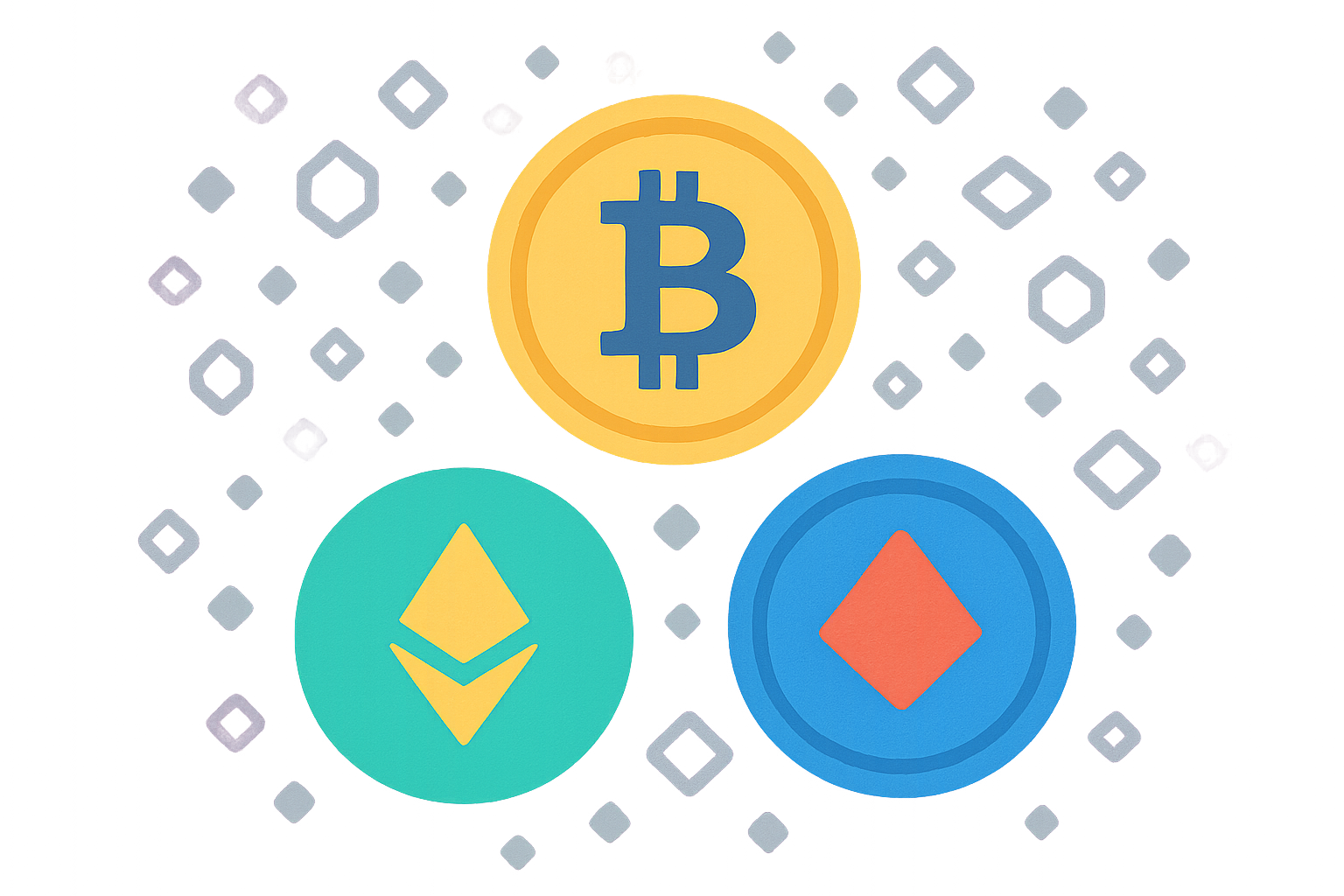
Top DeFi Projects Built on Bitcoin to Watch
Decentralized Finance (DeFi) represents a fundamental shift from traditional centralized financial systems to peer-to-peer oriented platforms, enabled by blockchain technology. Bitcoin, the world's first cryptocurrency, has emerged as a critical foundation for various DeFi projects. Following the Taproot upgrade in November 2021, Bitcoin's capabilities expanded significantly, enabling the development of native DeFi applications within its ecosystem. This evolution marks an important milestone in democratizing financial services by removing centralized intermediaries and creating more accessible, user-friendly platforms for global participants.
What is Bitcoin DeFi?
Bitcoin DeFi refers to the integration of decentralized financial applications and services built on or connected to the Bitcoin blockchain. Traditionally recognized as a secure digital store of value, Bitcoin's role in DeFi became more prominent after the Taproot upgrade, which enhanced the network's capabilities beyond simple peer-to-peer transactions. This upgrade enabled the creation of more sophisticated smart contracts and native DeFi applications within the Bitcoin ecosystem.
Before Taproot, Bitcoin's participation in DeFi primarily occurred through wrapped Bitcoin (wBTC) on the Ethereum network, allowing BTC holders to engage with Ethereum's extensive DeFi ecosystem. However, this approach required trusting third-party custodians and introduced additional complexity.
When comparing Bitcoin and Ethereum in the DeFi space, important distinctions emerge. Ethereum has established itself as a dominant platform for DeFi projects, with its blockchain facilitating sophisticated smart contracts and decentralized applications (DApps) spanning lending, borrowing, and decentralized exchange functionality. Ethereum's open-source nature promotes interoperability across various DeFi protocols, while its Ethereum Virtual Machine (EVM) provides a consistent and secure execution environment.
Bitcoin's DeFi ecosystem, though developing at its own pace, has implemented innovative second-layer solutions such as the Lightning Network and Liquid Network. These solutions address Bitcoin's scalability challenges by enabling faster transactions and providing greater flexibility for DeFi projects while maintaining the security guarantees of the Bitcoin base layer.
What are the top Bitcoin DeFi projects?
The Bitcoin DeFi landscape features several innovative projects that are expanding the network's capabilities and use cases. Each project brings unique features and approaches to building decentralized financial services on Bitcoin.
Taproot Assets was established in 2019 with a mission to enhance Bitcoin's functionalities, particularly regarding smart contracts and decentralized applications. Following its mainnet launch in 2023, the platform has evolved to provide asset issuance capabilities using the Bitcoin blockchain. Key features include asynchronous receipt capabilities and a multiverse feature for managing multiple assets. Its integration with Bitcoin's Lightning Network enables rapid transactions, while also supporting the tokenization of real-world assets such as gold and stablecoins.
Stacks represents a significant development in bringing smart contract functionality to Bitcoin. Founded in 2019, the project underwent substantial evolution with the launch of Stacks 2.0 in 2021. The platform utilizes the STX token for governance, features the Clarity smart contract language designed for predictability and security, and implements a unique proof-of-transfer (PoX) consensus mechanism. This innovative approach leverages Bitcoin's security while allowing users to earn Bitcoin rewards through participation in network consensus.
BitVM, created by Robert Linus of ZeroSync in 2023, aims to bring Ethereum-like smart contract capabilities to Bitcoin without modifying its core code. This project offers Turing-complete contracts on Bitcoin through off-chain computation with on-chain verification, similar to Ethereum's optimistic rollups. BitVM also enables bridging BTC to other blockchain networks and presents the potential for trustless sidechains within the Bitcoin ecosystem.
SRC-20 tokens were developed to enhance Bitcoin by combining elements from Ethereum's ERC-20 and Bitcoin's BRC-20 standards. These tokens enable tokenization on the Bitcoin network, allowing diverse data such as images and text to be embedded directly into Bitcoin transactions. A distinctive feature is their immutability—once minted, SRC-20 tokens are permanent and unalterable. The tokens are stored in transaction outputs, making them resistant to modification, though size limitations exist due to block space constraints.
Ordinals, created by Casey Rodarmor in 2023, introduced a novel way to inscribe digital content onto the Bitcoin blockchain. This innovation leverages the SegWit and Taproot upgrades to attach unique data to individual satoshis, Bitcoin's smallest units. Unlike traditional NFTs that rely on external smart contracts, Ordinals store data directly on the blockchain itself, creating a more native and permanent form of digital collectibles on Bitcoin.
BRC-20 tokens, introduced in March 2023 by an anonymous developer known as Domo, brought fungible token creation capabilities to Bitcoin. Modeled after Ethereum's ERC-20 standard, BRC-20 leverages the Taproot upgrade's enhanced data embedding capabilities. Using ordinal inscriptions and JSON for token management, BRC-20 tokens enable basic functionalities for creating, deploying, and transferring fungible tokens on Bitcoin, marking a significant expansion of the network's utility.
Badger DAO focuses specifically on connecting Bitcoin to other blockchains, particularly Ethereum. The platform features community-driven development through Badger Builders, enabling collaborative advancement of Bitcoin across DeFi applications. Key components include the BADGER governance token for decentralized decision-making, SETT vaults for optimizing Bitcoin asset yields, and DIGG, an innovative Bitcoin-pegged elastic supply cryptocurrency that maintains its focus on Bitcoin-related DeFi projects.
Lightning Network was created to address Bitcoin's scalability challenges by adding a second layer to the blockchain. This technology enables quick, cost-effective Bitcoin transfers by allowing transactions to occur off-chain, with final settlement on the main blockchain only when payment channels close. The Lightning Network significantly reduces transaction times and fees, making Bitcoin more practical for everyday transactions and micro-payments, representing a major advancement in usability and scalability.
Liquid Network, developed by Blockstream, provides traders and exchange users with faster and more confidential Bitcoin transactions. The sidechain offers quick settlement times, Confidential Transactions for enhanced privacy, and capabilities for issuing digital assets and Liquid Securities. The network uses Liquid Bitcoin (L-BTC), which is pegged to Bitcoin, while providing infrastructure for sophisticated financial activities including tokenized asset management.
The challenges facing Bitcoin DeFi
Despite the promising developments in Bitcoin DeFi projects, several significant challenges must be addressed for the ecosystem to reach its full potential. These obstacles span technical, regulatory, and philosophical dimensions.
Scalability remains a primary concern for Bitcoin's DeFi applications. The network's robust security comes at the cost of relatively high transaction fees, particularly during periods of high demand. This creates barriers for smaller transactions and can make certain DeFi projects economically unviable. Additionally, Bitcoin processes a limited number of transactions per second compared to newer blockchain networks, which can result in network congestion and delays during peak usage periods.
Regulatory uncertainty presents another substantial challenge. The evolving legal frameworks surrounding cryptocurrencies and DeFi create ambiguity that can limit growth and adoption. Different jurisdictions maintain varying approaches to cryptocurrency regulation, and compliance with international laws can restrict the global reach of Bitcoin DeFi projects. This regulatory fragmentation makes it difficult for projects to operate at scale while maintaining full compliance.
Bitcoin faces specific technical challenges in the DeFi space. Unlike Ethereum, Bitcoin was not originally designed with complex smart contract functionality as a primary focus. This fundamental difference necessitates creative solutions and workarounds to implement sophisticated DeFi features. Network upgrades that could enhance Bitcoin's DeFi capabilities, such as Taproot, require broad consensus among stakeholders, which can be a gradual process given Bitcoin's decentralized governance structure.
Despite these difficulties, the outlook for Bitcoin in DeFi remains promising. Technological innovations such as the Lightning Network are actively addressing scalability concerns, while ongoing development efforts aim to enable more complex DeFi functionalities on the Bitcoin network. More transparent regulatory guidelines and continued community-led innovation can create a supportive environment for Bitcoin DeFi projects to flourish. The potential for financial innovation and increased accessibility represents a significant opportunity for the broader cryptocurrency ecosystem.
What's new with Bitcoin DeFi?
Innovations continue reshaping the Bitcoin DeFi landscape and expanding the network's capabilities in exciting new directions. BRC-20 tokens and Ordinals have emerged as key drivers in the Bitcoin ecosystem, particularly in the realms of DeFi and non-fungible tokens (NFTs).
These technologies are making Bitcoin more accessible and inclusive for a broader range of users and use cases. Ordinals, in particular, have encouraged creative expression by enabling users to create NFTs directly on Bitcoin at relatively lower costs compared to traditional methods. This has opened new avenues for digital art, collectibles, and cultural expression within the Bitcoin ecosystem.
The BRC-20 token standard has enhanced interoperability between Bitcoin and other blockchain networks, especially Ethereum. This improved connectivity enables more creative cross-chain applications and expands the possibilities for decentralized finance built on Bitcoin's secure foundation. By reducing fees through layer-two solutions and streamlining user experiences, these developments are instrumental in increasing Bitcoin's utility and carving out its distinctive path in the DeFi and NFT markets.
These innovations demonstrate that Bitcoin's role in DeFi continues to evolve beyond its original design as a peer-to-peer electronic cash system. The network is increasingly supporting diverse use cases while maintaining its core values of decentralization, security, and censorship resistance.
Conclusion
Bitcoin's evolution in the decentralized finance landscape represents a significant development in the broader cryptocurrency ecosystem. While Bitcoin's DeFi ecosystem continues to mature, the network is making substantial progress through innovative technologies and creative solutions. The Taproot upgrade marked a pivotal moment, enabling more sophisticated applications to be built natively on Bitcoin.
The nine projects highlighted—Taproot Assets, Stacks, BitVM, SRC-20, Ordinals, BRC-20, Badger DAO, Lightning Network, and Liquid Network—each contribute unique capabilities that expand Bitcoin's utility in DeFi. These DeFi projects address various aspects of decentralized finance, from smart contracts and tokenization to scalability and privacy enhancements.
Challenges remain, including transaction costs, scalability considerations, regulatory uncertainty, and technical constraints related to smart contract functionality. However, ongoing innovations such as the Lightning Network for scalability and new token standards for expanded functionality demonstrate the community's commitment to overcoming these obstacles.
The introduction of BRC-20 tokens and Ordinals has opened new frontiers for Bitcoin, enabling fungible tokens and NFTs while maintaining the network's security guarantees. These developments, combined with second-layer solutions and cross-chain bridges, position Bitcoin to play an increasingly important role in the decentralized finance ecosystem.
Looking ahead, Bitcoin's future in DeFi appears promising. The combination of technological innovation, community-driven development, and Bitcoin's unparalleled security and decentralization creates a strong foundation for continued growth. While the journey may be challenging, the potential for financial innovation, increased accessibility, and the democratization of financial services through Bitcoin DeFi projects remains substantial. The network's evolution from a simple peer-to-peer payment system to a multifaceted platform supporting diverse DeFi applications demonstrates the adaptability and enduring relevance of Bitcoin in the rapidly evolving cryptocurrency landscape.
FAQ
What are DeFi projects?
DeFi projects are decentralized financial services built on blockchain, offering lending, borrowing, and trading without intermediaries. They use smart contracts for transparency and aim to create an inclusive financial ecosystem.
Which is the best DeFi project?
As of 2025, Aave and Uniswap are leading DeFi projects. They stand out for their high market cap, innovation, user engagement, and institutional interest.
How do DeFi projects make money?
DeFi projects generate revenue through transaction fees, lending interest, yield farming, liquidity provision, and token appreciation.
What is the name of Trump's DeFi project?
Trump's DeFi project is called World Liberty Financial (WLFI). It's backed by Donald Trump and his family, focusing on cryptocurrency.

How Active is MERL's Community with $3.5 Billion TVL?

How Can We Measure the Vibrancy of a Cryptocurrency's Community and Ecosystem?

Exploring Leading DeFi Solutions for Bitcoin
Integrating Bitcoin into the DeFi Ecosystem
How to Measure Crypto Community and Ecosystem Vibrancy in 2025?

Leading Innovations in the Decentralized Finance Space
What Does On-Chain Data Analysis Reveal About Crypto Whale Movements and Active Addresses in 2026

What is a token economic model and how does distribution, inflation, burning, and governance work in crypto?

Trade and Get LZBG + GASU Rewards! Celebrate Meme Tokens with Crypto Wallet
Crypto Wallet Security Alert: Fake Application Discovered on Google Play

What are the compliance and regulatory risks in cryptocurrency and how do they impact trading in 2026