

LCP_hide_placeholder
fomox
MarketsPerpsSpotSwapMeme Referral
More
Smart Money Recruitment
Search Token/Wallet
/

Permissionless Blockchain

2026-01-18 05:21:45
Bitcoin
Blockchain
Crypto Tutorial
Ethereum
Web 3.0
Article Rating : 3.5
half-star
165 ratings
This comprehensive guide explores public blockchain networks, focusing on permissionless blockchains that allow open participation without central authority approval. Permissionless blockchains like Bitcoin and Ethereum offer transparency, anonymity through cryptography, decentralization, and open-source code, enabling anyone with internet access to join, transact, and validate transactions. The article contrasts permissionless systems with permissioned blockchains used by enterprises for privacy control, highlighting their distinct use cases and regulatory applications. While permissionless blockchains provide superior security, decentralization, and censorship resistance, they face scalability challenges and slower transaction speeds. This guide addresses key questions about network participation, security mechanisms, and practical applications, helping readers understand how permissionless blockchain technology balances decentralization with operational trade-offs through emerging layer-2 solutions and sca
Permissionless Blockchain

Definition and Core Concept

Permissionless blockchains are open networks that allow anyone to participate in the consensus process without the need to obtain approval, permission, or authorization from any central authority or governing body. This fundamental characteristic distinguishes them from traditional centralized systems and permissioned blockchain networks.

In a permissionless blockchain environment, participation is truly open and democratic. Any individual or entity with an internet connection can join the network, contribute to its operations, and benefit from its services without requiring verification of identity or credentials. This open-access model embodies the original vision of blockchain technology as a tool for democratizing access to financial and data systems.

Key Characteristics

Permissionless blockchains exhibit several defining characteristics that set them apart from other types of distributed ledger systems:

  • Transparency of Transactions: All transactions recorded on a permissionless blockchain are visible to every participant in the network. This complete transparency ensures that all activities can be audited and verified by anyone, creating an environment of accountability. For example, anyone can view Bitcoin transactions on its public ledger, though the identities behind wallet addresses remain pseudonymous.

  • Anonymity: While transactions are transparent, the identities of participants are typically protected through cryptographic techniques. Users interact with the network through pseudonymous addresses rather than revealing personal information, providing a balance between transparency and privacy.

  • Absence of Central Authority: No single entity controls or governs the network. Decision-making power is distributed among all participants, typically through consensus mechanisms. This decentralization prevents any single point of failure or control, making the system more resilient to censorship and manipulation.

  • Open-Source Code: The underlying code of permissionless blockchains is typically publicly available and open to review. This transparency allows developers worldwide to audit the code for security vulnerabilities, propose improvements, and build applications on top of the blockchain. The open-source nature fosters innovation and community-driven development.

Representative Examples

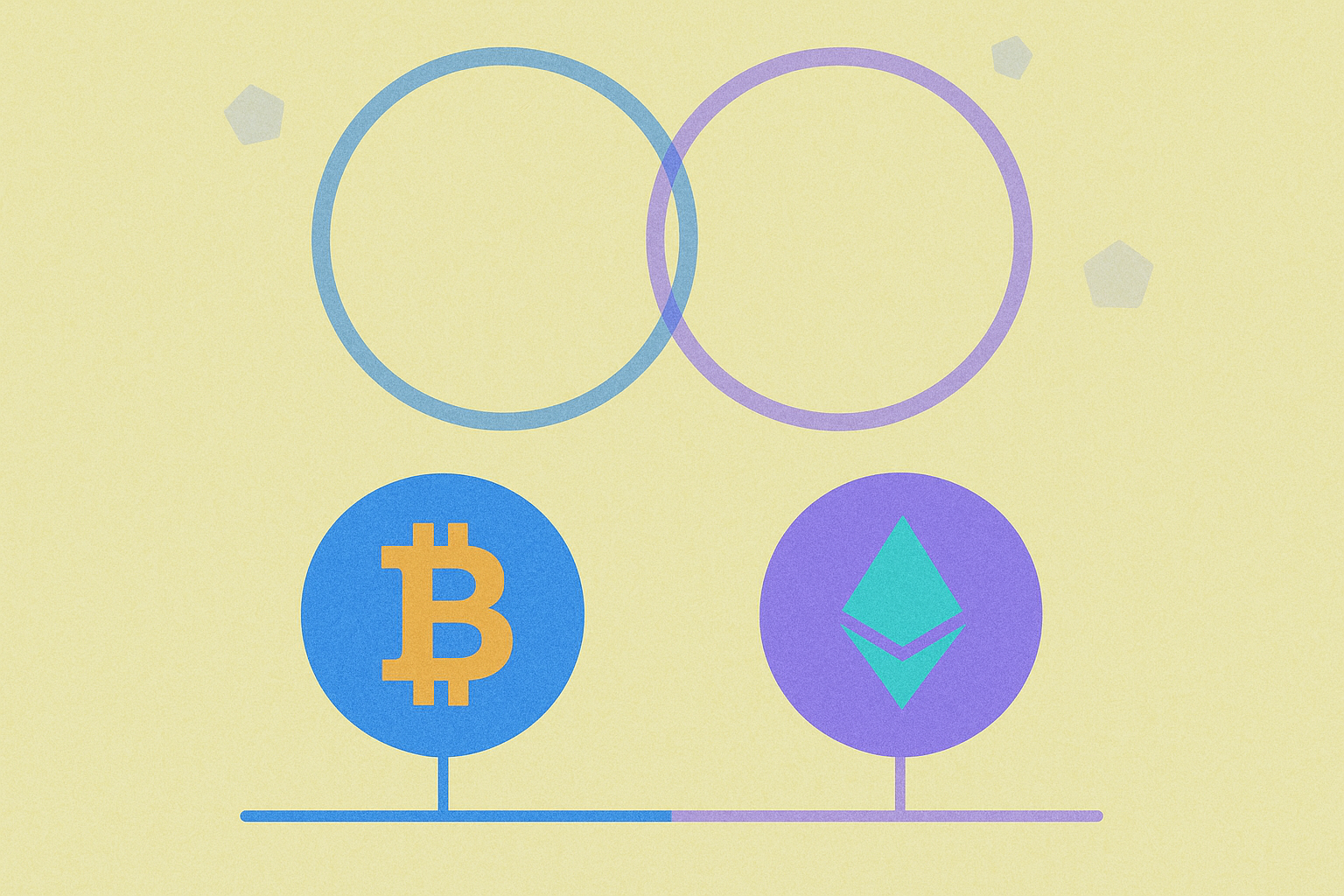
Several prominent permissionless blockchains have demonstrated the viability and potential of this technology model. Bitcoin, the first and most well-known cryptocurrency, operates on a permissionless blockchain where anyone can participate in mining, transaction validation, and network maintenance. Ethereum has expanded the concept by introducing smart contract functionality, enabling developers to build decentralized applications without permission.

Other mainstream public chains have also adopted the permissionless model, each offering unique features and capabilities. Any user with an internet connection has the ability to join these networks, send and receive transactions, view and contribute to the code, operate a node, and participate in the consensus process. This open participation model has led to the creation of diverse ecosystems of applications, services, and communities around these blockchain platforms.

Comparison with Permissioned Blockchains

Permissioned blockchains, on the other hand, are usually controlled by a centralized entity or consortium of organizations. Commonly known as private blockchains, such networks have limits on who can verify transactions and interact with the information recorded on their distributed ledgers.

Private blockchains are typically used by enterprises that aim to utilize blockchain technology but want to ensure that specific information remains private, for either regulatory or competitive reasons. For instance, financial institutions may use permissioned blockchains to streamline interbank settlements while maintaining confidentiality of transaction details. Supply chain networks might employ private blockchains to track goods among known partners without exposing sensitive business information to the public.

The choice between permissionless and permissioned models often depends on the specific use case, regulatory requirements, and the desired balance between openness and control. While permissioned blockchains offer greater control and privacy, they sacrifice the decentralization and censorship resistance that make permissionless blockchains attractive for many applications.

Advantages and Trade-offs

Permissionless blockchains are typically more secure as the possibility of collusion by bad actors within the network is reduced. The distributed nature of these networks, combined with their open participation model, makes it extremely difficult for any single entity or group to manipulate the system. The larger the network of participants, the more secure it becomes against attacks.

However, permissionless blockchains can be relatively slow as they face scalability issues. They can only authenticate a limited number of transactions in a given time, which can lead to network congestion during periods of high demand. This limitation stems from the need to achieve consensus among a large number of independent participants, a process that inherently takes more time than centralized validation.

In a nutshell, permissionless blockchains offer decentralization and are open to everyone, while permissioned models are more centralized and restrictive. This isn't without sacrifice as decentralization usually comes at the cost of speed and scalability. The ongoing development of layer-2 solutions, sharding, and other scaling technologies aims to address these limitations while preserving the core benefits of permissionless systems. The trade-off between decentralization, security, and scalability remains a central challenge in blockchain technology, often referred to as the blockchain trilemma.

FAQ

What is a Permissionless Blockchain? What are its core characteristics?

A permissionless blockchain is an open network where anyone can participate and transact without requiring approval from any central authority. Its core features are decentralization, transparency, and accessibility. No permission needed to join, validate transactions, or access the network.

What is the difference between Permissionless Blockchain and Permissioned Blockchain?

Permissionless blockchains allow anyone to participate and validate transactions, while permissioned blockchains restrict access to authorized users. Permissionless offers decentralization and transparency, whereas permissioned provides better control and customization for enterprises.

What are the main advantages and disadvantages of permissionless blockchain?

Advantages: Decentralization, censorship resistance, and open access for anyone. Disadvantages: Lack of regulation, slower transaction speed, and scalability challenges.

Are Bitcoin and Ethereum permissionless blockchains? Provide examples.

Yes, both Bitcoin and Ethereum are permissionless blockchains. Anyone with internet access can join, transact, and run nodes without requiring special permission or approval from any central authority.

How does a permissionless blockchain ensure network security and prevent malicious behavior?

Permissionless blockchains ensure security through decentralized consensus mechanisms, cryptographic validation, and distributed node networks. Proof-of-Work or Proof-of-Stake makes attacks economically unfeasible. Immutable ledgers and transparent transactions deter malicious actors while maintaining system integrity.

What challenges does permissionless blockchain face in practical applications?

Permissionless blockchains encounter security vulnerabilities, scalability limitations, regulatory uncertainty, and energy consumption concerns. They struggle with transaction finality, network congestion, and balancing decentralization with governance efficiency.

What are the advantages of permissionless blockchains compared to centralized systems?

Permissionless blockchains offer greater decentralization, enabling broader network participation and eliminating single points of failure. They provide enhanced security, transparency, and user autonomy while reducing reliance on intermediaries for transactions and data management.

How to participate in mining or validating transactions on a permissionless blockchain?

On permissionless blockchains, anyone can join the network and participate in mining or transaction validation without central authority approval. Simply run a node, stake assets if required by the consensus mechanism, and start validating transactions directly to earn rewards.

* The information is not intended to be and does not constitute financial advice or any other recommendation of any sort offered or endorsed by Gate.

Share

Content

Definition and Core Concept

Key Characteristics

Representative Examples

Comparison with Permissioned Blockchains

Advantages and Trade-offs

FAQ

Related Articles
Understanding Blockchain Network Infrastructure: The Role of Nodes

Understanding Blockchain Network Infrastructure: The Role of Nodes

Understanding Blockchain Network Infrastructure: The Role of Nodes explores the essential functions and types of blockchain nodes, emphasizing their significance in decentralization, security, and transaction validation. The guide addresses practical challenges in node operation, from storage and bandwidth requirements to technical expertise, catering to those interested in operating nodes or understanding blockchain systems. It provides insight into operating full, light, and masternodes, as well as validating consensus mechanisms. The article is structured to offer a comprehensive overview followed by implementation guidance, optimizing keyword density to enhance readability and facilitate quick scanning.
2025-12-04 14:23:20
Understanding Cryptographic Hash Functions in Digital Security

Understanding Cryptographic Hash Functions in Digital Security

The article "Understanding Cryptographic Hash Functions in Digital Security" explores the vital role crypto hashing plays in digital security and cryptocurrency networks. It discusses how these functions work, their purpose, differences from key encryption, and their application in cryptocurrency. The content is structured around defining cryptographic hash functions, explaining their mechanisms, and detailing their importance for data integrity and security. This article caters to anyone seeking to understand blockchain technology, cybersecurity, and data protection methods. Keywords such as cryptographic hash functions, SHA-256, data integrity, and blockchain enhance readability for quick comprehension.
2025-12-02 11:08:03
Understanding Blockchain Hashing: Essential Algorithms Explained

Understanding Blockchain Hashing: Essential Algorithms Explained

The article "Understanding Blockchain Hashing: Essential Algorithms Explained" delves into the critical role of hashing in blockchain technology, offering insights into its mechanics, applications, and significance in securing digital transactions. It addresses key questions around hashing processes, algorithm examples like SHA-256, and their applications in transaction integrity and security. Geared towards blockchain enthusiasts and professionals, it provides a structured exploration of hashing mechanisms, examples, usage in blockchain, benefits, and potential vulnerabilities, underscoring its indispensable function in blockchain's secure, decentralized operations.
2025-12-01 07:09:35
Exploring Merkle Trees: The Backbone of Blockchain Data Structures

Exploring Merkle Trees: The Backbone of Blockchain Data Structures

The article delves into the significance of Merkle trees in blockchain data structures, explaining their role in efficient data storage and security. It highlights the advantages of Merkle trees, such as data compression, enhanced decentralization, tamper detection, and collision resistance. The piece also explores the concept of Merkle tree proof of reserve and introduces Verkle trees as an evolution for better scalability. Targeting blockchain enthusiasts and tech professionals, it provides key insights into how these cryptographic structures underpin transaction integrity and boost blockchain efficiency.
2025-11-25 04:32:54
Understanding Blockchain Hashing: How Algorithms Secure Your Transactions

Understanding Blockchain Hashing: How Algorithms Secure Your Transactions

Explore the vital role of blockchain hashing in securing digital transactions through this comprehensive guide. Understand what hashing is and how it operates, including a breakdown of key algorithms like SHA-256 and Ethash. Learn its application in transaction and block verification, and discover the benefits of enhanced security, integrity, and efficiency it brings to blockchain technology. Dive into challenges such as collision attacks and centralization, with ongoing advancements addressing them. Perfect for those seeking to grasp the technical backbone of blockchain security.
2025-11-22 06:53:09
Understanding Public Ledger Systems in Blockchain Technology

Understanding Public Ledger Systems in Blockchain Technology

This article dives into the essential aspects of public ledger systems in blockchain, explaining their function, types, and impact on digital transactions. Readers will gain insights into how decentralized, transparent, and immutable public ledgers enhance security and efficiency in cryptocurrency networks. It addresses key differences between Distributed Ledger Technology (DLT) and blockchain, and explores consensus mechanisms like Proof of Work and Proof of Stake. The piece also contrasts permissionless and permissioned ledgers, evaluating the pros and cons of DLT. Ideal for anyone interested in cutting-edge data management and transaction transparency.
2025-11-04 10:36:19
Recommended for You
How does PENGU price fluctuate with support at $0.0087 and resistance at $0.0198?
How does PENGU price fluctuate with support at $0.0087 and resistance at $0.0198?

This article provides comprehensive analysis of PENGU price fluctuations within key technical levels at $0.0087 support and $0.0198 resistance. It explores how PENGU oscillates between $0.00598 and $0.0341 throughout 2025, examining the critical trading zones that shape investor decisions. The guide details technical support and resistance mechanics, explaining how these levels create trading channels for market participants. Additionally, it analyzes liquidation dynamics and high-leverage activity that amplifies volatility during price swings, and examines PENGU's correlation with the Solana ecosystem where network metrics directly influence token performance. Designed for traders seeking practical strategies, this resource clarifies how to formulate trading approaches, identify breakout opportunities beyond resistance levels, and manage risks near support zones on Gate exchange.
2026-01-18 07:06:34
How Many Wallets Hold 10,000 XRP: A Deep Dive

How Many Wallets Hold 10,000 XRP: A Deep Dive

This article explores XRP wallet distribution patterns and their significance for network health and investor behavior. Approximately 27,000-30,000 wallets hold 10,000+ XRP, indicating concentrated yet committed holdings across the ecosystem. The analysis examines how wallet distribution serves as a key metric for measuring decentralization, adoption trends, and market stability on the XRP Ledger. Key insights include recent year-over-year growth in mid-sized holders, the impact of major events on wallet accumulation, and the distinction between active holders and custodial wallets on platforms like Gate. By understanding these distribution dynamics, investors and analysts can assess network resilience, predict potential market movements, and evaluate XRP's long-term viability within the cryptocurrency landscape.
2026-01-18 07:03:26
How do futures open interest, funding rates, and liquidation data signal crypto derivatives market trends?

How do futures open interest, funding rates, and liquidation data signal crypto derivatives market trends?

This comprehensive guide reveals how three core derivatives metrics signal crypto market trends and reversals. Rising futures open interest of 12.3% indicates fresh capital inflows and bullish momentum among traders and institutions deploying leverage into crypto derivatives. Funding rates and long-short ratios breaking the 1.3 threshold expose institutional participation extremes that often precede price corrections rather than further gains. Liquidation cascades—from 32.4% collapses to 48.9% rebounds—demonstrate predictable reversal mechanics where forced selling creates medium-term recovery opportunities. By monitoring open interest growth, funding rate extremes, and liquidation data collectively on Gate, traders identify market inflection points, detect overheated leverage positions, and capitalize on sentiment reversals through data-driven risk management strategies tailored to crypto derivatives markets.
2026-01-18 07:02:44
What are the biggest security risks and smart contract vulnerabilities in crypto exchanges in 2026?

What are the biggest security risks and smart contract vulnerabilities in crypto exchanges in 2026?

This comprehensive guide examines critical security threats facing cryptocurrency exchanges in 2026, including infrastructure breaches, smart contract vulnerabilities, and centralized custody risks. Drawing from recent incidents like Upbit's $37M hack and WOO X's $14M exploit, the article reveals how exchanges remain vulnerable through inadequate private key management and code-level weaknesses. It analyzes how monthly smart contract losses exceed $147M through economic model vulnerabilities and cross-chain exploitation patterns. The guide explores systemic contagion effects when custody concentrates on major platforms, demonstrating how single breaches trigger liquidation cascades and stablecoin depegs. Designed for traders, exchange operators, and security professionals, this resource provides actionable insights on attack vectors, prevention strategies, and industry best practices to strengthen digital asset protection in an evolving threat landscape.
2026-01-18 07:00:16
How does MON token holdings and exchange inflows affect its 2025 market performance and price volatility?

How does MON token holdings and exchange inflows affect its 2025 market performance and price volatility?

This article examines how MON token's market performance in 2025 is shaped by exchange net inflows, institutional adoption, and on-chain token mechanics. Exchange capital flows generate 15-20% price volatility through concentrated buying and selling pressure on platforms, with January 2026 data revealing how $8 billion in crypto allocation drives sharp price swings. Institutional holdings surged 20% in Q4 2025 following Monad's mainnet launch, demonstrating professional investor confidence in Layer 1 technology despite market skepticism. The token's constrained circulation—only 10.83% unlocked while 89.17% remains locked through smart contracts—creates natural price stability by reducing sudden supply shocks. Together, these factors establish MON's market foundation: exchange dynamics drive short-term volatility, institutional accumulation provides long-term conviction, and token locking enforces holder commitment, positioning MON for sustained growth through 2025-2026.
2026-01-18 06:58:17
How to use MACD, RSI, and Bollinger Bands to identify cryptocurrency trading signals and volume divergence?

How to use MACD, RSI, and Bollinger Bands to identify cryptocurrency trading signals and volume divergence?

This comprehensive guide teaches cryptocurrency traders how to leverage MACD, RSI, and Bollinger Bands for identifying high-probability trading signals and detecting false breakouts through volume divergence analysis. Learn to recognize bullish and bearish crossovers using combined indicator confirmation, execute the golden cross strategy for trend following, and integrate Bollinger Bands with RSI for overbought/oversold detection. The article demonstrates practical multi-indicator approaches that filter false signals and enhance entry/exit precision on platforms like Gate. Whether you're capturing mean reversion opportunities or confirming trend sustainability, this guide combines technical analysis fundamentals with actionable trading strategies designed to improve signal accuracy and reduce costly false breakouts in volatile cryptocurrency markets.
2026-01-18 06:56:06