Shock to Crypto's Resilience: Why Bitcoin Crashed 10% as Macro Risk Roiled Markets
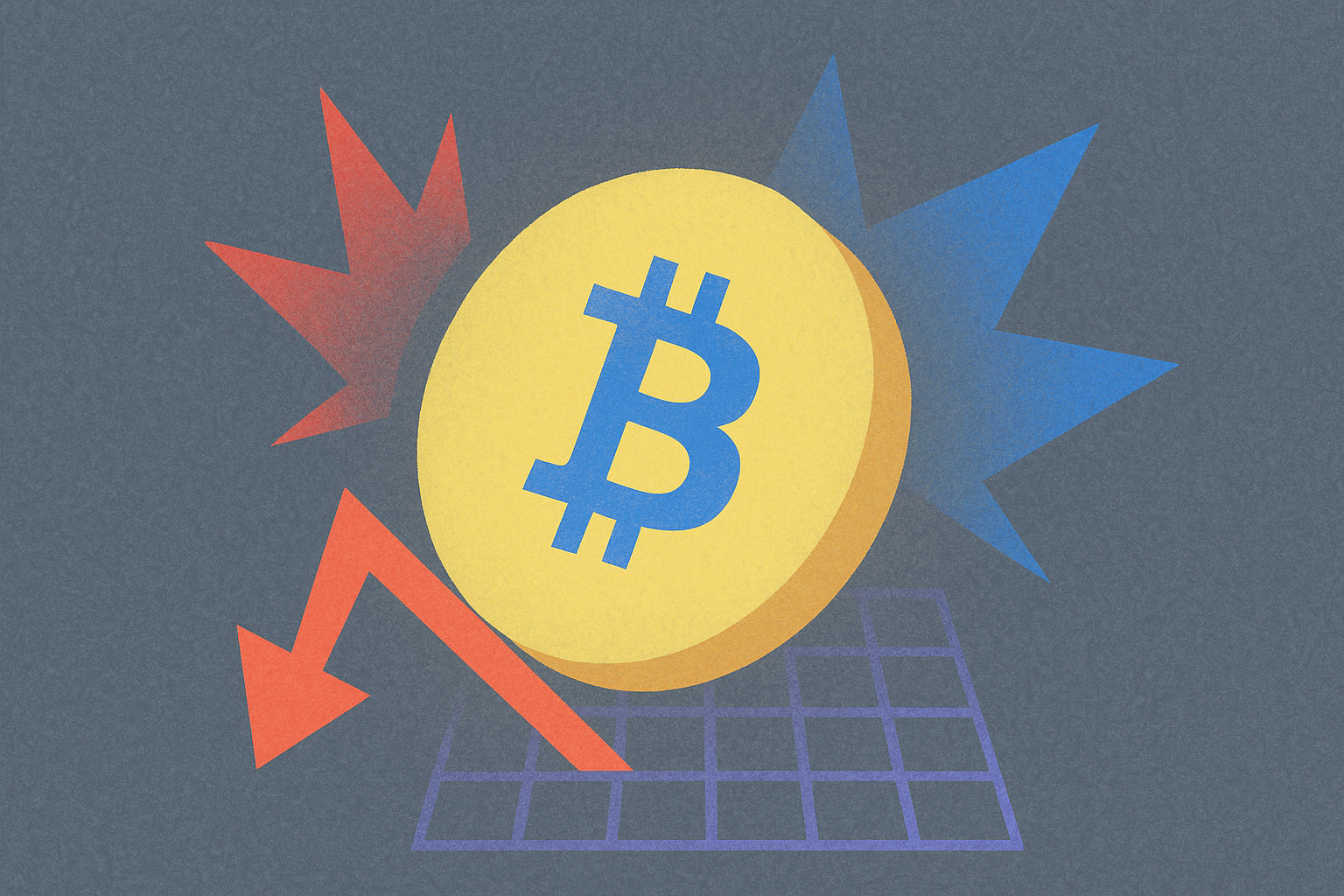
What Triggered the Selloff
The catalyst for this sharp market correction was geopolitical in nature rather than crypto-native. In October 2025, escalating U.S.-China trade tensions reached a critical point when threats of sweeping tariffs on Chinese goods were announced, dramatically intensifying the dispute between the world's two largest economies.
This announcement sent shockwaves through global financial markets. Major cryptocurrencies experienced immediate downward pressure, with Bitcoin initially declining by approximately 2% before accelerating into steeper losses. The geopolitical uncertainty rattled investors worldwide. Asian equities tumbled in overnight trading, traditional safe-haven assets rallied as investors sought protection, and Bitcoin followed broader risk assets lower as market participants rushed to reduce exposure amid mounting uncertainty.
Data from CoinGlass reveals that over $16.74 billion in BTC long positions were liquidated within a 24-hour period, representing the largest single-day liquidation event in cryptocurrency history. Futures open interest dropped sharply, indicating widespread deleveraging across exchanges as traders moved urgently to reduce their exposure in response to escalating geopolitical risks.
A Familiar Pattern: Bitcoin Reacts to Macro Shock
Bitcoin's significant decline was not an isolated phenomenon within cryptocurrency markets. Equity futures also experienced notable losses, with the Nasdaq 100 sliding 2.5% and the S&P 500 declining over 1%. This pattern has emerged repeatedly in recent years: whenever macroeconomic uncertainty spikes significantly, Bitcoin tends to behave more like a conventional risk asset than a hedge against economic disruption.
The underlying reason is structural in nature. While Bitcoin's long-term investment thesis emphasizes monetary independence and fixed supply characteristics, its short-term trading dynamics remain predominantly influenced by leverage, derivatives activity, and liquidity sensitivity. When funding rates turn negative and traders move to de-risk their positions, Bitcoin tends to experience sharper and more severe declines compared to less leveraged asset classes.
The cryptocurrency market's continuous 24/7 operational nature also amplifies price movements during periods of stress. Unlike traditional equity markets that feature circuit breakers and trading halts to manage volatility, cryptocurrency exchanges operate without interruption, allowing selling pressure to cascade unimpeded. This structural difference creates more pronounced short-term volatility during crisis moments.
Liquidity, Rates, and Tariff Shock
The recent selloff occurred during a particularly fragile macroeconomic environment characterized by several concerning factors:
- U.S. Treasury yields have climbed back above 4.3%, tightening overall liquidity conditions in financial markets.
- Central bank policy remains restrictive, with signals indicating resistance to near-term rate reductions despite evidence of slowing economic growth, maintaining elevated real yields that weigh on non-yielding assets such as Bitcoin.
- ETF inflows into Bitcoin investment products have cooled substantially, declining approximately 30% on a month-over-month basis according to Bloomberg Intelligence data.
Against this backdrop, the sudden escalation of tariff risks adds another significant threat to global trade stability, revives inflation concerns among investors, and redirects capital toward traditional defensive assets including gold, government bonds, and the U.S. dollar.
Historical Parallels: When Bitcoin Breaks Correlation
The current market dynamics echo similar episodes from Bitcoin's trading history:
- March 2020: Bitcoin experienced a severe 50% decline during the acute COVID-19 liquidity panic, only to subsequently lead the post-stimulus bull market that followed.
- Mid-2022: As the Federal Reserve pursued aggressive rate hiking, Bitcoin declined alongside equities but demonstrated superior performance during 2023's recovery phase.
- October 2024: When bond yields spiked sharply, Bitcoin corrected significantly before rebounding once rate expectations moderated.
In each historical instance, Bitcoin initially traded as a conventional risk asset before reclaiming its store-of-value narrative once market volatility subsided and stability returned. The current correction may well follow this established pattern, particularly given that infrastructure improvements including ETF products, advanced scaling solutions, and institutional-grade custody services are now substantially more mature and robust than in previous cycles.
Market Mechanics: Leverage, Liquidations, and Whale Activity
Detailed analysis from CoinGlass and CryptoQuant data provides insight into the mechanics driving the recent decline:
- Over $820 million in BTC long positions experienced forced liquidation.
- Open interest in Bitcoin futures declined 15% within a single trading day.
- Funding rates across major cryptocurrency exchanges turned deeply negative, indicating substantial de-risking.
- Large whale wallets, particularly those holding 1,000 BTC or greater quantities, demonstrated minor accumulation activity near the $118,000 level, suggesting that sophisticated market participants view this price decline as a buying opportunity rather than evidence of structural problems.
Retail investor sentiment, by contrast, remains notably fragile and vulnerable. Social media data from Santiment shows a sharp increase in discussions mentioning "fear" and "liquidation," patterns that historically signal emotionally-driven selling that often precedes mid-term price reversals and recoveries.
Investor Outlook: Macro Narratives Still Rule
For traders and institutional investors navigating current market conditions, several consistent themes emerge. Bitcoin's sensitivity to macroeconomic factors has not diminished; rather, it continues to evolve as market structure changes. In environments characterized by abundant liquidity, Bitcoin typically performs well. Conversely, in liquidity-constrained environments like the current one, Bitcoin tends to correct sharply. However, historical analysis demonstrates that the post-stress recovery phase has consistently been where Bitcoin outperforms traditional asset classes.
Several critical factors warrant close monitoring during the coming weeks and months:
- Central Bank Policy Path: A shift toward more accommodative monetary policy could reignite institutional demand for Bitcoin and other risk assets.
- ETF Inflow Dynamics: A recovery in institutional allocations following the resolution of current volatility could provide significant upside momentum.
- Volatility Compression: Historically, consolidation patterns that emerge following major liquidation events frequently precede the continuation of established trends.
Conclusion: Bitcoin in a Real-World Storm
Bitcoin's recent 10% decline serves as a powerful reminder that digital assets do not operate in isolation from broader economic and geopolitical forces. Global political developments, interest rate policies, and liquidity conditions continue to exert substantial influence over short-term price movements, even as Bitcoin's long-term fundamental characteristics remain robust and sound.
As geopolitical uncertainty persists and evolves, Bitcoin will once again face rigorous testing of its resilience and macro asset properties. Historical precedent suggests that Bitcoin tends to emerge from such turbulent periods in a strengthened position, with enhanced institutional adoption and improved market infrastructure supporting long-term value creation.
FAQ
Why did Bitcoin drop 10%? What are the main reasons?
Bitcoin's 10% decline was driven by macro headwinds, hawkish Fed signals, stalled regulatory progress, institutional fund outflows, and long-term holder profit-taking, marking a shift from typical retail-driven corrections.
What is macroeconomic risk and how does it affect Bitcoin and cryptocurrency markets?
Macroeconomic risk refers to broad economic factors like Federal Reserve policy, inflation, and interest rates that drive market volatility. Bitcoin and cryptocurrencies increasingly move in tandem with traditional markets, making them sensitive to macroeconomic shifts. Rate changes and inflation data directly influence investor sentiment and capital allocation to digital assets.
Does Bitcoin really have risk resistance capability? Why does it still experience significant price declines when macro risks emerge?
Bitcoin lacks true risk-resistance properties. Its high volatility and sensitivity to market sentiment cause substantial price drops during macro crises. When risk appetite diminishes, investors liquidate positions, triggering sharp declines regardless of Bitcoin's long-term fundamentals.
In times of macroeconomic uncertainty, how should investors manage cryptocurrency investments?
Diversify your portfolio and monitor Federal Reserve policies closely, as they drive 5-10% cryptocurrency volatility. Bitcoin and crypto correlate 0.7 with traditional markets. Track macro indicators and adjust positions accordingly during policy shifts.
Is Bitcoin's decline related to declines in traditional financial markets (stocks, bonds)?
Yes, Bitcoin and traditional markets show strong correlation during market downturns. During macro risk events, Bitcoin typically declines alongside stocks and bonds, reflecting increasing interconnection between crypto and traditional finance sectors.
How does this market volatility affect the long-term prospects of cryptocurrency?
Short-term price fluctuations are normal, but long-term fundamentals remain strong. Technological advancement, institutional adoption, and regulatory clarity will drive sustained growth. Market cycles create opportunities for believers in decentralized finance.

How Does the Federal Reserve's Monetary Policy Affect Bitcoin Price Volatility in 2025?

How Does Macroeconomic Correlation Affect Cryptocurrency Value in 2025?

How Do Federal Reserve Policy and Inflation Data Impact Cryptocurrency Prices in 2025?

How Does Federal Reserve Policy Affect Bitcoin and Cryptocurrency Prices in 2026?

How Do Federal Reserve Policy and Inflation Data Impact Cryptocurrency Prices in 2025?
How does macroeconomic data impact cryptocurrency prices: Fed policy, inflation, and market correlation

MPC Wallet: Experience a new level of secure and seamless crypto asset management

Roam Listing Details: Launch Date, Price Predictions, and How to Buy $ROAM

DePIN: Hardware Set to Transform Web3

MACD指標是什麼?

Bitget Wallet Valued at $300 Million After Investment from Mainstream Exchange, Boasts 10 Million Users