
fomox
MarketsPerpsSpotSwap
Meme
Referral
More
Become a Smart Money on Tracker
Search Token/Wallet
/

Understanding Advanced Crypto Wallet Solutions

2026-01-12 14:35:54
Blockchain
Crypto Tutorial
DeFi
Stablecoin
Web3 wallet
Article Rating : 3.5
half-star
168 ratings
This comprehensive guide introduces affordable blockchain wallet solutions designed for beginners seeking high-value opportunities. The article covers three essential areas: First, Stablecoin Earn Plus reveals how users can generate competitive annual yields (up to 10%+) through flexible stablecoin staking with accessible withdrawal options. Second, multi-chain ecosystem support demonstrates how modern wallets seamlessly connect major networks like Ethereum, Solana, and layer-2 solutions including Arbitrum and Optimism, enabling users to access diverse DeFi opportunities and lower transaction fees. Finally, the FAQ section addresses critical wallet fundamentals—distinguishing hot and cold wallets, explaining private key security, and comparing hardware, software, and custodial solutions. Whether you're exploring DeFi yield generation on Gate or managing cross-chain assets, this guide equips beginners with practical knowledge to maximize returns while maintaining robust security. Ideal for users transitioning
Understanding Advanced Crypto Wallet Solutions

Stablecoin Earn Plus: High-Yield Opportunities with Flexible Access

Stablecoins have emerged as a critical bridge connecting the cryptocurrency ecosystem with traditional financial systems. Recent market research indicates that a significant majority of institutional investors—approximately 83% according to industry surveys—are planning to increase their digital asset allocations in the coming years. Among their top priorities are stablecoin-based products and decentralized finance (DeFi) yield-generating opportunities.

This growing institutional interest reflects a broader trend: stablecoin staking is rapidly evolving into a mainstream financial instrument. Unlike volatile cryptocurrencies, stablecoins maintain price stability by pegging their value to traditional assets like the US dollar, making them ideal for earning passive income without exposure to extreme market fluctuations.

Modern wallet platforms now offer sophisticated stablecoin earning mechanisms that can deliver competitive annual percentage yields (APY), with some products offering rates up to 10% or higher. These products typically feature flexible withdrawal options, allowing users to access their funds without lengthy lock-up periods—a significant advantage over traditional fixed-term deposits.

The underlying technology powering these high-yield products often involves automated liquidity provision, lending protocols, and yield optimization strategies across multiple DeFi platforms. By aggregating liquidity and automatically reallocating assets to the highest-yielding opportunities, these solutions can consistently outperform traditional savings accounts while maintaining the stability characteristics that make stablecoins attractive to both retail and institutional investors.

For users seeking to maximize returns on their stablecoin holdings, it's important to understand the risk-reward profile of different earning strategies. While some products offer guaranteed returns through centralized lending, others leverage decentralized protocols where yields may fluctuate based on market demand. The key advantage of flexible withdrawal products is that they provide liquidity alongside competitive returns, making them suitable for both short-term parking of funds and longer-term passive income strategies.

Multi-Chain Ecosystem Support and Cross-Chain Capabilities

The evolution of blockchain technology has led to a proliferation of specialized networks, each offering unique advantages in terms of transaction speed, cost efficiency, and specific use cases. Leading wallet solutions have adapted to this multi-chain reality by providing comprehensive support across numerous blockchain protocols.

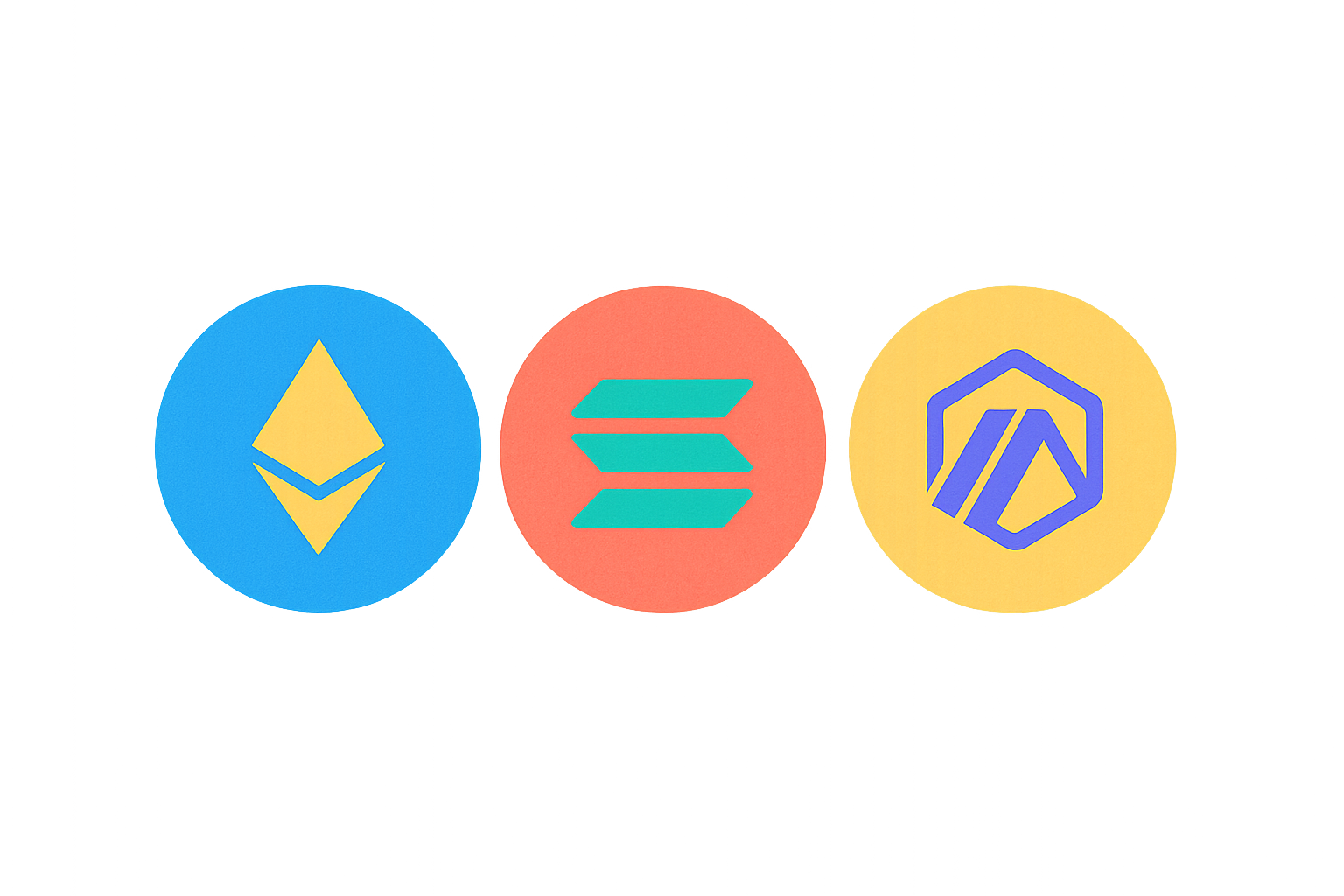
In recent years, major wallet platforms have expanded their compatibility to include a diverse range of networks. This includes established layer-1 blockchains like Ethereum and Solana, as well as emerging protocols such as Injective Protocol, which specializes in decentralized derivatives trading, and BitTorrent Chain, which focuses on cross-chain interoperability and decentralized file sharing.

The integration of layer-2 scaling solutions represents another critical development in the wallet ecosystem. Platforms like Arbitrum and Optimism have been incorporated to provide users with faster transaction processing and significantly reduced gas fees compared to Ethereum mainnet operations. These layer-2 solutions maintain the security guarantees of the underlying Ethereum network while offering dramatically improved performance characteristics.

Cross-chain functionality has become increasingly important as users seek to move assets seamlessly between different blockchain networks. Modern wallet solutions typically incorporate decentralized exchange (DEX) aggregators and cross-chain bridges, enabling users to swap tokens across multiple networks without leaving the wallet interface. This integration often includes support for 10 or more major mainnets, including Ethereum, Binance Smart Chain, Polygon, Avalanche, Fantom, and others.

The practical implications of multi-chain support are significant for users. For example, a user holding assets on Ethereum can easily bridge them to Polygon to take advantage of lower transaction fees, or move funds to Avalanche to participate in specific DeFi protocols offering attractive yields. This flexibility eliminates the need for multiple wallet applications and reduces the complexity of managing assets across different blockchain ecosystems.

Furthermore, comprehensive multi-chain support enables participation in a wider range of decentralized applications (DApps). Users can access decentralized exchanges like Uniswap and SushiSwap on Ethereum, engage with gaming and NFT platforms on networks optimized for these use cases, and participate in emerging DeFi protocols on newer blockchain networks—all from a single wallet interface.

The ongoing expansion of blockchain protocol support reflects the wallet industry's commitment to providing users with maximum flexibility and access to the full spectrum of Web3 opportunities. As new blockchain networks emerge and existing protocols evolve, leading wallet solutions continue to integrate these technologies, ensuring users can participate in the latest innovations without technical barriers or the need to constantly switch between different platforms.

FAQ

What is a cryptocurrency wallet? What is the difference between hot wallets and cold wallets?

A cryptocurrency wallet stores and manages digital assets. Hot wallets are online-based, offering convenience but lower security. Cold wallets store offline, providing superior security but less accessibility. Both support major cryptocurrencies like Bitcoin and Ethereum.

How to safely store and manage cryptocurrency private keys?

Use hardware wallets or cold storage for maximum security. Never store private keys online to prevent hacking. Maintain regular backups in secure locations. Keep your seed phrases offline and protected from unauthorized access.

What are the advantages and disadvantages of hardware wallets, software wallets, and custodial wallets?

Hardware wallets offer high security but complex operations; software wallets provide convenience but carry higher risks; custodial wallets are user-friendly but depend on third-party security.

How does a multi-sig wallet improve asset security?

Multi-sig wallets require multiple private keys to authorize transactions, making it significantly harder for attackers to access funds. This distributed approval mechanism ensures that no single compromised key can move assets, providing enhanced security through cryptographic redundancy and decentralized control.

What is an HD wallet (Hierarchical Deterministic wallet)? What are its advantages?

An HD wallet is a hierarchical deterministic wallet that generates unlimited child keys from a single master seed. Its advantages include enhanced security through key isolation, simplified backup management, and improved privacy by using unique addresses for each transaction while maintaining centralized control.

How to choose a cryptocurrency wallet solution suitable for yourself?

Select a wallet based on security level, ease of use, and supported assets. Use hot wallets for frequent trading and cold wallets for maximum security. Always safeguard your private keys.

What is the difference between a wallet address and a private key?

A wallet address is a public identifier derived from your private key, similar to a bank account number for receiving funds. A private key is a secret 256-bit number that grants complete control over the assets in that address. Never share your private key; losing it means losing access to your funds permanently.

What is the difference between DeFi wallets and traditional wallets?

DeFi wallets give you direct control of your assets without intermediaries, while traditional wallets are managed by banks where you don't control your funds directly. DeFi wallets offer greater autonomy and transparency.

* The information is not intended to be and does not constitute financial advice or any other recommendation of any sort offered or endorsed by Gate.

Share

Content

Stablecoin Earn Plus: High-Yield Opportunities with Flexible Access

Multi-Chain Ecosystem Support and Cross-Chain Capabilities

FAQ

Related Articles
Understanding Rewards from Providing Liquidity to Pools

Understanding Rewards from Providing Liquidity to Pools

Understanding Rewards from Providing Liquidity to Pools explores the concept of liquidity pools in the DeFi ecosystem, detailing their structure, operation, and potential benefits for participants. The article highlights participation benefits, such as earning trading fees, LP tokens, and protocol-specific rewards, while addressing inherent risks like smart contract vulnerabilities and impermanent loss. It is ideal for crypto investors seeking decentralized market opportunities. The content is structured to guide readers through liquidity pool basics, operational mechanics, significance in DeFi, rewards, and risks, ensuring high keyword density and readability.
2025-12-20 09:01:22
Understanding DeFi: A Beginner's Guide to Decentralized Finance Users

Understanding DeFi: A Beginner's Guide to Decentralized Finance Users

"Understanding DeFi: A Beginner's Guide to Decentralized Finance Users" explores the transformative power of DeFi, eliminating traditional intermediaries by using blockchain technology. Readers learn the difference between CeFi and DeFi, with a focus on user autonomy and privacy. The article addresses starter tips for DeFi, security concerns, and types of applications like trading, lending, and staking, catering to those seeking greater control over their financial decisions. It highlights the paradigm shift towards a more inclusive financial system, with an emphasis on accessibility, transparency, and user engagement through community-driven governance.
2025-12-19 22:24:39
Lựa chọn ví tiền điện tử phù hợp nhất cho người mới bắt đầu
Lựa chọn ví tiền điện tử phù hợp nhất cho người mới bắt đầu

Bài viết này giúp người mới bắt đầu lựa chọn ví tiền điện tử phù hợp, tập trung vào 10 ví tốt nhất ở Việt Nam năm 2025 với tiêu chí bảo mật, khả năng tiếp cận và hỗ trợ địa phương. Đọc giả sẽ hiểu rõ chức năng của từng ví crypto và cách chọn ví an toàn nhất. Những yếu tố như phí giao dịch, giao diện tiếng Việt và hỗ trợ khách hàng được phân tích kỹ càng. Bài viết cũng nhấn mạnh tầm quan trọng của việc sao lưu và bảo vệ tài sản crypto. Tổng thể, nó là hướng dẫn toàn diện nhất cho thị trường tiền điện tử Việt Nam.
2025-12-25 08:18:56
What is DeFi (Decentralized Finance) and How it Works
What is DeFi (Decentralized Finance) and How it Works

# Understanding Decentralized Finance: A Beginner's Guide to DeFi **Introduction** This comprehensive guide demystifies DeFi by explaining how blockchain-based finance eliminates traditional intermediaries through smart contracts and decentralized protocols. Designed for beginners, it addresses key questions about DeFi's mechanics, benefits, and risks while providing actionable steps to start participating safely. Covering lending platforms, decentralized exchanges, yield farming, and stablecoins, this article reveals how DeFi offers lower fees, 24/7 accessibility, and financial inclusion without credit checks. Whether you're exploring cryptocurrency investments or seeking alternatives to traditional banking, this guide equips you with essential knowledge about DeFi platforms like Uniswap, Aave, and Compound. Learn practical wallet setup, transaction execution, security best practices, and emerging DeFi trends shaping the future of finance.
2026-01-04 22:23:41
What is cryptocurrency? How does cryptocurrency work? The ultimate beginner's guide to digital assets

What is cryptocurrency? How does cryptocurrency work? The ultimate beginner's guide to digital assets

A Comprehensive Beginner’s Guide to Cryptocurrencies: Understanding Cryptocurrency, Blockchain Fundamentals, Cryptocurrency Types, Pros and Cons, Wallet Security, Ukraine’s Regulatory Landscape, and the Future of Digital Assets. Discover how to invest securely with Gate.
2026-01-09 11:54:18
Understanding TRC20 Token Standard: A Comprehensive Guide

Understanding TRC20 Token Standard: A Comprehensive Guide

This comprehensive guide explores the TRC20 token standard, which governs token creation on the TRON blockchain, ensuring compatibility across wallets, exchanges like Gate, and dApps. Learn about the advantages of USDT TRC20 such as fast transactions, low fees, and widespread adoption. Address security considerations with insights into smart contracts, wallet risks, and phishing threats. Discover how to track TRC20 addresses and choose the right wallet based on security, user interface, custody, and integrations. Ideal for cryptocurrency enthusiasts seeking to navigate TRON's growing ecosystem.
2025-11-12 12:49:35
Recommended for You
Automated Market Makers (AMM)

Automated Market Makers (AMM)

This comprehensive guide explores Automated Market Makers (AMMs), a revolutionary decentralized trading mechanism powered by smart contracts and liquidity pools. AMMs eliminate the need for traditional order books by using mathematical formulas—most commonly x*y=k—to determine asset prices based on supply and demand. Unlike centralized exchanges, AMMs enable anyone to become a liquidity provider, earning passive income from transaction fees while maintaining trustless, non-custodial trading. The article covers how AMMs function through liquidity pools, their security advantages, pricing mechanisms, and their critical role in the DeFi ecosystem. It also compares AMMs with traditional order book exchanges, highlights key features like decentralization and smart contract automation, and discusses both advantages—24/7 availability, lower barriers to entry, and price stability—and challenges such as impermanent loss and smart contract vulnerabilities. Perfect for investors seeking to understand next-generation dec
2026-01-12 16:38:57
NFT 無聊猿是什麼?5 分鐘輕鬆看懂無聊猿的起源和生態!

NFT 無聊猿是什麼?5 分鐘輕鬆看懂無聊猿的起源和生態!

本文深入探討無聊猿NFT(BAYC)的獨特魅力與價值。首先介紹BAYC由Yuga Labs於2021年推出的10,000個獨特數位資產,以及其在加密文化中的重要地位。其次分析無聊猿的價值創造機制,包括稀有度系統和會員權益帶來的社群認同。隨後闡述其龐大生態體系:衍生NFT系列擴張、與知名品牌聯名合作、收購CryptoPunks和Meebits、推出ApeCoin代幣與Otherside元宇宙。最後通過FAQ解答購買流程、持有權益及風險注意事項,幫助讀者全面了解這個數位時代最具影響力的NFT項目。
2026-01-12 16:35:26
What is BlockDAG: Better Network Scalability with Directed Acyclic Graph

What is BlockDAG: Better Network Scalability with Directed Acyclic Graph

BlockDAG revolutionizes distributed ledger technology by replacing traditional linear blockchain architecture with a Directed Acyclic Graph structure, enabling parallel block processing and significantly higher transaction throughput. Unlike Bitcoin or Ethereum, BlockDAG addresses the blockchain trilemma by simultaneously improving scalability, security, and decentralization without compromising any aspect. The platform offers diverse mining options—from specialized hardware (X10, X30, X100) to mobile app mining accessible via smartphone—democratizing cryptocurrency participation. With a capped supply of 150 billion BDAG tokens and structured halving events, the tokenomics ensure scarcity and long-term value. BlockDAG's roadmap progresses from presale and mainnet development through strategic partnerships to full mainnet launch, supported by comprehensive technical infrastructure and community engagement initiatives throughout implementation.
2026-01-12 16:31:58
Understanding Decentralized Exchanges

Understanding Decentralized Exchanges

This comprehensive guide explores decentralized exchanges (DEXs) and leading DEX aggregators, demonstrating how they revolutionize cryptocurrency trading through peer-to-peer models and smart contracts. The article covers three primary DEX types—order book, automated market maker (AMM), and DEX aggregators—each offering distinct advantages for traders seeking self-custody and enhanced security. DEXs eliminate intermediaries, reduce fees, and provide diverse token access, though users must navigate risks like liquidity constraints and token verification. Leading DEX aggregators on Gate consolidate prices across 100+ platforms, offering optimal trading routes with minimal slippage, advanced security features, and user-friendly interfaces. Whether you're a beginner or experienced trader, this guide provides actionable insights on leveraging decentralized platforms while managing inherent risks effectively.
2026-01-12 16:28:46
Avalanche Integration Guide for MetaMask

Avalanche Integration Guide for MetaMask

A comprehensive guide to integrating the Avalanche network into MetaMask for AVAX asset management. Discover the steps to configure RPC settings, Chain ID, and properly set up Avalanche C-Chain on your MetaMask wallet. Enjoy low-fee trading on Gate and seamless access to DeFi apps.
2026-01-12 16:26:31
Understanding Decentralized Exchanges and DEX Aggregators

Understanding Decentralized Exchanges and DEX Aggregators

This comprehensive guide explores decentralized exchanges (DEXs) and their revolutionary impact on cryptocurrency trading. It examines three primary DEX models—order book DEXs, automated market makers (AMMs), and DEX aggregators—each offering distinct trading mechanisms. The article highlights key advantages including self-custody control, enhanced security, lower fees, and diverse trading options, while addressing challenges such as token risks, liquidity constraints, and complex interfaces. Featuring a leading DEX aggregator available on Gate, the guide demonstrates how advanced routing algorithms deliver superior pricing across 100+ platforms and 10+ blockchains, while implementing proprietary security features and charging zero platform fees. Ideal for traders seeking decentralized alternatives, this resource provides practical insights on optimizing DEX trading through aggregators while managing inherent DeFi risks effectively.
2026-01-12 16:19:49