Understanding Custodial and Non-Custodial Wallets: Key Differences Explained
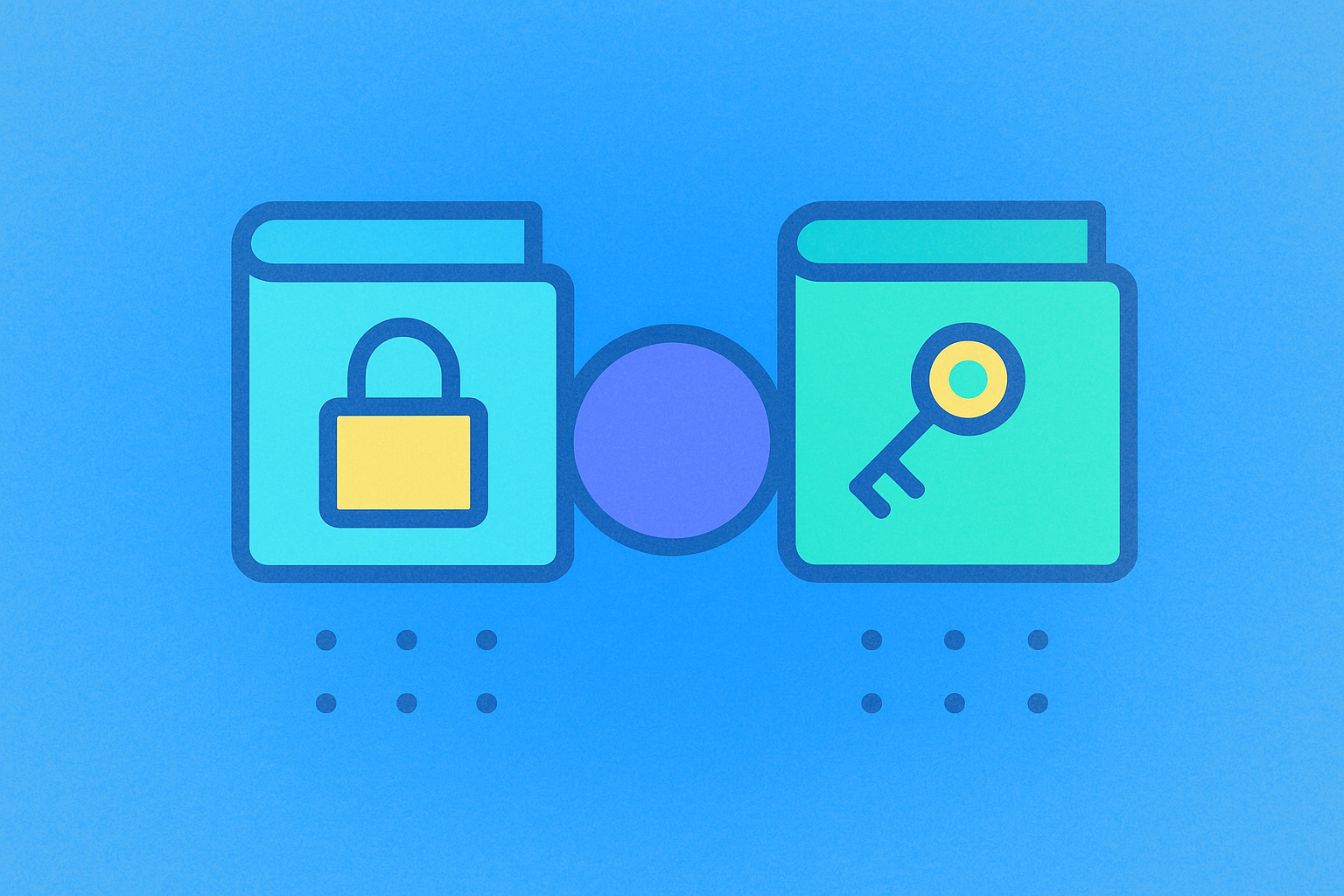
Custodial Versus Non-Custodial Wallets
Trading cryptocurrencies requires a digital wallet, which serves as the fundamental infrastructure for managing digital assets. However, not every wallet provides traders with the same degree of control over their holdings. Understanding the distinction between wallet types is crucial for anyone entering the cryptocurrency space, particularly when evaluating what's the difference between a custodial and a non-custodial wallet.
There are two main categories of cryptocurrency wallets: custodial and non-custodial. All wallets, whether physical or software-based, are managed through a combination of cryptographic addresses called "private keys" and "public keys"—chains of encrypted alphanumeric characters that secure access to digital assets. Public keys function similarly to a mailing address, allowing wallet owners to send and receive assets from friends, family, or businesses without granting access to the wallet's contents. Private keys, conversely, are like the key to a mailbox, giving the individual who possesses them complete control over the assets inside. The fundamental difference between custodial and non-custodial wallets lies in who holds these private keys.
Both types of wallets come with unique benefits and risks. Investors must thoroughly understand how custodial versus non-custodial wallets operate to evaluate which storage option best suits their needs, risk tolerance, and trading objectives.
What is a Custodial Wallet?
A custodial wallet is a cryptocurrency storage solution where investors do not have direct access to their private keys. Instead, a third-party entity—such as a cryptocurrency exchange or professional custodial service—controls and manages the account on behalf of the user.
Although users can still interact with the cryptocurrencies held in their custodial wallets (often referred to as "exchange wallets"), they do not possess complete control over their assets. This arrangement means that, theoretically, a custodial provider could freeze all cryptocurrency on its platform at any time, subject to their terms of service or regulatory requirements.
Most custodial wallets operate under specific terms and conditions that prospective users must agree to before utilizing the service. In this sense, a custodial wallet functions much like a traditional bank account: wallet holders only have rights over their digital assets up to a point defined by the custodian's policies and applicable regulations.
Custodial wallets are closely associated with centralized crypto exchanges. After creating an account on a centralized exchange, users can access dozens of custodial wallet addresses for various cryptocurrencies like Bitcoin (BTC) and Ethereum (ETH). However, only the exchange retains knowledge of the wallet's private keys. While every trader on a centralized platform can move their cryptocurrency on or off the exchange platform, the exchange maintains the power to restrict transactions, potentially impacting the trader's autonomy and access to their funds.
What is a Non-Custodial Wallet?
Non-custodial wallets represent a fundamentally different approach to cryptocurrency storage, giving traders complete control over their digital assets. Only the wallet's owner is shown the private keys, which they must keep secure and confidential.
When someone opens a non-custodial wallet, they receive a list of random words known as a "seed phrase" or "recovery phrase." This seed phrase acts as the master private key to the wallet, meaning anyone with access to this passcode can access all the cryptocurrency stored inside. The seed phrase typically consists of 12 to 24 words and must be recorded and stored securely.
Investors can also use the seed phrase to recover a lost wallet in case of device failure or loss. For instance, if someone broke their phone and needed to redownload their mobile wallet application on a new device, they could enter the seed phrase to restore their entire balance and transaction history.
With a non-custodial wallet, traders don't have to trust a third-party exchange or company to safeguard their digital tokens. Instead, the responsibility for cryptocurrency storage, security, and management falls entirely on the individual wallet owner. This self-custody model embodies the original vision of cryptocurrency: true peer-to-peer transactions without intermediaries.
The Differences Between Custodial and Non-Custodial Wallets
Understanding what's the difference between a custodial and a non-custodial wallet begins with examining control over funds. The key distinction between custodial and non-custodial wallets is the fundamental ability to control funds. Since custodial wallets don't provide users with private keys, they only grant partial control over cryptocurrencies. The custodian retains ultimate authority over the assets. By contrast, non-custodial wallet holders have sole, complete control over their assets, with no intermediary able to restrict access.
Exchange and non-custodial wallets also differ significantly in their privacy requirements. In most cases, non-custodial wallets don't require personal identification or verification—users can create a wallet anonymously. However, many centralized exchanges require customers to submit extensive documentation including a photo of a government-issued ID, social security number, and home address to receive and use a custodial wallet, as part of regulatory compliance measures.
Additionally, these two types of wallets can look and function very differently. Custodial wallets are usually available as mobile or desktop applications with user-friendly interfaces designed for ease of use. Although dozens of non-custodial wallets are also downloadable software applications, traders have the additional option to purchase a hardware wallet. These physical devices—resembling USB drives—keep each user's private keys completely offline, which can help significantly reduce the risk of remote hacking attempts and unauthorized access.
Which Type of Wallet is Right for You?
There's no one-size-fits-all rule for digital wallets—the right choice depends on a trader's experience level, trading strategy, security priorities, and personal preferences. That's why carefully reviewing the benefits and drawbacks of each cryptocurrency storage solution is essential before making a decision about what's the difference between a custodial and a non-custodial wallet for your specific needs.
Custodial Wallets
Exchange wallets represent an attractive choice for new traders and those interested in frequent trading or active portfolio management. These accounts provide convenience and support but also come with notable downsides that users should consider.
Benefits:
-
Simple to set up and use: Many centralized exchanges feature beginner-friendly user interfaces that make trading and transferring cryptocurrency easy to understand, even for those new to digital assets. The setup process for joining a centralized platform is straightforward and typically takes no more than a few minutes, requiring only basic information and verification.
-
Access to customer support: If a trader has questions or concerns about their custodial wallet, they can contact the exchange's customer care division for assistance. While only a few crypto exchanges offer phone support, most provide email and live chat features, along with comprehensive help centers and documentation.
-
Potential insurance protections: Cryptocurrencies don't qualify for federal protections like the Federal Deposit Insurance Corporation (FDIC) that covers traditional bank accounts, but some centralized exchanges maintain funds in reserve to protect their clients. For instance, some exchanges have established Secure Asset Funds for Users (SAFUs) to repay victims of cyberattacks or platform failures.
Risks:
-
Exposure to third-party risks: Traders who hold cryptocurrency in a custodial wallet must trust that their custodian will honor the terms of the agreement and maintain platform security. Although many reputable centralized exchanges use advanced encryption technologies and security protocols, there's always a chance they could suffer a major hack, experience technical failures, or withhold customer funds. Furthermore, if an exchange collapses or declares bankruptcy, users may lose access to their funds entirely.
-
Reduced anonymity: Regulated centralized exchanges use a process called "Know Your Customer" (KYC) to verify the identity of every client for regulatory compliance. However, although KYC laws might help some centralized exchanges prevent issues like money laundering and fraud, they also make it easier for companies, government agencies, and regulators to trace every transaction back to the account holder and their government identity, not just a pseudonymous wallet address.
-
Not available in every country: Depending on each country's regulatory framework and policies toward cryptocurrency, crypto trading may not be accessible everywhere. For instance, the People's Republic of China introduced a comprehensive ban on crypto trading, making it illegal for centralized exchanges to offer services to residents there.
Non-Custodial Wallets
Non-custodial wallets are particularly well-suited for long-term holding strategies (HODLing), privacy-conscious users, and those who prioritize complete control over their assets. However, they're not the best choice for everyone, especially beginners. Understanding what's the difference between a custodial and a non-custodial wallet helps determine if this option aligns with your goals.
Benefits:
-
Full control over cryptocurrencies: Non-custodial wallets give traders the maximum possible control over their digital assets. Thanks to the private seed phrase, there are no third parties or intermediaries between a wallet holder and their cryptocurrencies, embodying the decentralized ethos of blockchain technology.
-
Hardware wallets are more hack-resistant: Hardware wallets can significantly lower the risk of cyberattack and unauthorized access. Because these storage devices keep users' private keys completely offline in "cold storage," remote hackers cannot access them through internet-based attacks, providing superior security for large holdings.
-
Easy to access decentralized applications (dApps): dApps are web-based applications that run on blockchains like Ethereum and Solana, enabling various decentralized services. To interact with the latest dApps in Web3, traders need a non-custodial wallet to connect with each protocol. Downloading a compatible non-custodial wallet means they can explore emerging fields such as play-to-earn games, decentralized finance (DeFi), non-fungible tokens (NFTs), and other blockchain-based innovations.
Risks:
-
No protections: The flipside of complete control is that traders bear full responsibility for their funds and security. Non-custodial wallets have zero insurance protections and limited to no customer support options. If a trader loses their seed phrase, forgets their password, or falls victim to a phishing scam, their cryptocurrency could be permanently lost with no recourse for recovery.
-
Need for technical skill: Although some software wallets feature a beginner-friendly user experience with intuitive interfaces, wallet holders still need to understand how to properly send and receive cryptocurrency, verify addresses, and manage gas fees to use them safely. Traders new to the cryptocurrency ecosystem must invest extra time learning how these wallets function to make secure transfers and avoid costly mistakes.
-
Inconvenient access: Private crypto wallets that are physical hardware devices are less convenient to use for regular transactions. While traders can access a software wallet app on a mobile or desktop device from almost anywhere with internet connectivity, they must have their hardware wallet physically present along with a PC to send, receive, or spend cryptocurrency, making spontaneous transactions more difficult.
Where to Find Cryptocurrency Wallets
To open a custodial wallet, a trader must set up an account with a centralized exchange that is registered to operate legally in their home country or jurisdiction. Major cryptocurrency exchanges like Coinbase and Kraken have official websites and mobile applications that people can use to submit their KYC information, verify their identity, and access exchange wallets for trading and storage.
When it comes to non-custodial wallets, dozens of internet-based applications are available for both iOS and Android devices, offering various features and supported blockchains. Many popular mobile wallets—such as Trust Wallet, Coinbase Wallet, and Rainbow Wallet—are free to download on Google Play and the Apple App Store. There are also official websites for desktop wallets, like MetaMask, where users can download a browser extension wallet onto their internet browser for seamless interaction with Web3 applications.
For the enhanced security protection of a hardware wallet, manufacturers like Ledger, Trezor, and ShapeShift sell various USB-style devices on their official websites. Ordering hardware devices directly from the manufacturer rather than third-party retailers significantly lowers the risk of downloading malware or receiving compromised devices, ensuring the integrity of your security solution.
Does dYdX use Custodial Wallets?
dYdX operates as a non-custodial decentralized platform, meaning it does not issue traders centralized custodial wallets or take custody of user funds. Since dYdX is built as a decentralized application (dApp) on the Ethereum blockchain, traders can connect their preferred non-custodial wallet to make peer-to-peer crypto transactions directly, maintaining full control of their assets throughout the trading process.
A few supported non-custodial wallets on dYdX include MetaMask, Trust Wallet, Coinbase Wallet, and Rainbow Wallet, among others. Users simply connect their existing wallet to the platform to begin trading, without needing to deposit funds into a centralized account or surrender control of their private keys.
Conclusion
The choice between custodial and non-custodial wallets represents a fundamental decision in cryptocurrency management, balancing convenience against control, and ease of use against security responsibility. Understanding what's the difference between a custodial and a non-custodial wallet is essential for every cryptocurrency user.
Custodial wallets offer simplicity, customer support, and user-friendly interfaces that make them ideal for beginners and active traders, but they require trusting third parties with asset control and accepting reduced privacy. Non-custodial wallets provide complete ownership, enhanced security through hardware options, and access to the broader Web3 ecosystem, but they demand greater technical knowledge and place full responsibility for security on the user.
Ultimately, the right wallet type depends on individual circumstances, including experience level, trading frequency, security priorities, and long-term cryptocurrency goals. Many experienced users employ a hybrid approach, using custodial wallets for active trading and non-custodial wallets for long-term storage. As the cryptocurrency ecosystem continues to evolve, understanding these fundamental differences—particularly what's the difference between a custodial and a non-custodial wallet—empowers traders to make informed decisions that align with their needs and values, whether prioritizing convenience, security, privacy, or some combination thereof. The key is to carefully evaluate the trade-offs and select the solution that best matches your specific use case and risk tolerance.
FAQ
Which is better, a custodial or non-custodial wallet?
Neither is universally better. Non-custodial wallets offer full control over your private keys and funds, ideal for security-conscious users. Custodial wallets provide convenience and third-party security management, suitable for beginners. Choose based on your priorities: maximum control or ease of use.
What is a non-custodial wallet?
A non-custodial wallet is a digital wallet where you control the private keys and manage your own funds directly. You have full control over your assets and security, without relying on third parties to hold your cryptocurrency.
Is a non-custodial wallet good for beginners?
Yes, non-custodial wallets are excellent for beginners. They offer complete control over your private keys, stronger security, and full ownership of your assets. While they require more learning than custodial options, they eliminate risks of platform failures or frozen funds.
What are the benefits of a custodial wallet?
Custodial wallets offer user-friendly interfaces ideal for beginners, provide professional security management reducing user error risks, and simplify cryptocurrency management with convenient features like account recovery and customer support.
Who controls the private keys in a custodial vs non-custodial wallet?
In custodial wallets, the provider controls your private keys. In non-custodial wallets, you control your own private keys. Losing your private keys in non-custodial wallets means losing access to your funds permanently.
What are the security risks of each wallet type?
Custodial wallets risk exchange hacks and internal fraud. Non-custodial wallets risk private key loss, phishing attacks, and user error. Both face smart contract vulnerabilities and malware threats depending on implementation.
Can I lose my crypto with a non-custodial wallet?
Yes, you can lose your crypto if you misplace or forget your private keys. Non-custodial wallets give you full control but no third-party recovery option. Always securely backup and protect your private keys.

Understanding Decentralized Finance Wallet Solutions

Understanding Decentralized Finance Wallets

Adding Sui Network to Your Crypto Wallet

Top Secure Solutions for Cryptocurrency Wallets
Secure Solutions for Non-Custodial Crypto Storage

Secure Wallet for Avalanche: A Dependable Storage Solution

What are SPL-20 Inscriptions?

What is a token economics model and how do token allocation, inflation mechanisms, and governance work?

What Are the Biggest Smart Contract Vulnerabilities and Crypto Exchange Security Risks in 2026?

Identifying Fake Customer Service Scams
What Does On-Chain Data Analysis Reveal About Whale Movements and Active Addresses in Crypto Markets