Understanding Decentralized Autonomous Organizations (DAOs)
What is a DAO?
Decentralized Autonomous Organizations (DAOs) have emerged as a revolutionary governance structure in the Web3 ecosystem, particularly following significant events in the cryptocurrency market. After the collapse of centralized exchanges in 2022, which triggered major questions about decentralization in the crypto industry, DAOs gained increased attention for their ability to enable community-driven decision-making through transparent voting mechanisms. DAOs collectively hold substantial capital in their treasuries, positioning them as one of the most well-funded sectors in emerging crypto fields like decentralized finance (DeFi). This substantial capital accumulation demonstrates the growing trust and adoption of DAOs as a dominant governance structure in Web3, with some advocates claiming they represent a revolutionary advancement for democracy and could potentially replace traditional business models.
What is a DAO in Crypto?
A Decentralized Autonomous Organization (DAO) is an innovative online governance structure where no single entity maintains total control over decision-making processes. Understanding what is a DAO requires examining how these organizations operate similarly to peer-to-peer (P2P) networks like Bitcoin, but instead of transferring cryptocurrency, they verify and record digital ballots. Unlike traditional government organizations or corporate boards of directors with hierarchical chains of command, DAOs leverage blockchain technology to provide users with equal access to voting on proposals and maintain a transparent record of all prior decisions.
The theoretical foundation for DAOs was introduced by computer scientist Dan Larimer in the mid-2010s, but they didn't achieve mainstream adoption until Ethereum's launch. Ethereum's "smart contracts" were instrumental in making the world's first DAOs possible. These smart contracts are specialized computer programs that facilitate complex pre-programmed commands, removing intermediaries from decision-making processes and enabling secure voting on digital platforms without requiring centralized ballot verification. Smart contracts on DAOs automatically execute the "will of the community" and record this data on a public ledger, promising a trustless, non-hierarchical voting experience.
The first and most notorious DAO in crypto history was an Ethereum-based project simply called "The DAO," launched in 2016. Traders invested $150 million to participate in this unconventional governance community, which included voting rights on fund distribution from its virtual treasury. However, several months after launch, hackers exploited vulnerabilities in The DAO's smart contract code and stole $50 million worth of crypto funds. This "DAO hack" caused a significant split in the Ethereum development community, with one faction creating a new blockchain to reimburse traders, while others argued that any third-party interference contradicted decentralization principles. Today, Ethereum Classic (ETC) represents the original Ethereum blockchain with the DAO hack in its ledger, while the current Ethereum manually restored the stolen DAO funds.
Despite this high-profile security breach, Web3 developers remained committed to the DAO concept. Hundreds of new crypto projects have adopted DAOs to give users a voice in protocol upgrades. DAOs account for a significant portion of the total value in the DeFi sector, and other projects including play-to-earn games and non-fungible token (NFT) collections utilize DAOs to drive engagement with their online communities.
How do DAOs Work?
While each DAO has unique operational procedures, most issue cryptocurrencies called "governance tokens," where each token represents one vote on the protocol. To understand what is this governance mechanism, developers encode the rules that community members must follow into smart contracts and deploy them on dedicated "governance portals." When developers or community members propose changes to a decentralized application (dApp) or want to move funds in the DAO's treasury, they write a proposal in the governance portal and submit it for voting. Holders of the dApp's governance tokens stake these cryptocurrencies directly into a smart contract to vote for or against the proposal. Once the scheduled voting window closes, the smart contract automatically tallies the votes and executes the commands corresponding to the winning side.
For example, the ApeCoin DAO, a Web3 community centered around Yuga Labs' popular NFT collection Bored Ape Yacht Club (BAYC), conducted a significant vote in 2022. Community members voted on whether to keep the ApeCoin cryptocurrency (APE) on the Ethereum blockchain or migrate to a competing blockchain like Avalanche. After the voting period concluded, 54% of APE holders voted to remain on Ethereum, so the smart contract did not enact a protocol change, demonstrating the direct democracy enabled by DAO governance structures.
How to Join a DAO
Joining a DAO involves acquiring the official governance token associated with a Web3 project's protocol. Once you have the associated cryptocurrency in your digital wallet, you can link your crypto account on the DAO's homepage and participate in voting procedures. For instance, to join the decentralized crypto lending site Aave, you need AAVE tokens to vote on proposals in Aave's Governance Forum. Thanks to the proliferation of DAO projects like Aave and Uniswap, governance tokens are readily available on major crypto exchanges and decentralized trading platforms. Many DAOs also distribute governance tokens as rewards to community members who contribute to their projects, such as early traders or yield farmers.
However, even without governance tokens in your crypto wallet, you can still view upcoming proposals and write comments on some governance forums. Many DAOs feature open-source code to provide complete transparency and welcome improvements and suggestions from the online community. Although governance tokens are required to place votes on proposals, anyone can view and contribute to online debates and discussions, fostering an inclusive environment for community participation.
What are the Benefits of Crypto DAOs?
The primary advantages of DAOs that excite community members are their inherent decentralization and transparency. When asking what is a DAO's core benefit, the answer lies in how blockchain technology's anonymity and decentralization prevent authorities from blocking anyone's vote on a protocol, ensuring democratic participation. As long as individuals have access to a crypto wallet and the protocol's native governance token, they can express their opinions on significant changes. This open decision-making model stands in direct contrast to hierarchical corporate and government structures, where decision-making processes are often opaque and restricted to select individuals.
DAOs eliminate the possibility of "closed door" meetings and significantly reduce fears of election fraud through the determinacy of smart contract code and the transparency of a blockchain's public ledger. Every vote is recorded immutably, and the execution of decisions is automated and verifiable, creating an unprecedented level of accountability and trust in governance processes. This transparency extends to financial management as well, with DAO treasuries and fund allocations visible to all community members, fostering a sense of collective ownership and responsibility.
What are the Risks of Crypto DAOs?
Despite significant evolution since the 2016 "DAO hack," cyberattacks remain a substantial concern for DAO developers and voters. Hackers who discover vulnerabilities in a smart contract's source code can steal funds or interfere with elections. The open-source nature of many Web3 programs, while promoting transparency, also provides skilled hackers with a clear window into a DAO's system. If any bugs exist in a DAO's code, malicious actors can exploit the protocol, potentially invalidating the entire Web3 project and causing significant financial losses.
Beyond security concerns, DAOs often struggle with decision-making efficiency and implementation speed. Since DAOs operate on code rather than a top-down command chain, they must use their voting model for every proposal, including minor software upgrades or bug fixes. This overreliance on community polling can stall dApps' innovation and growth compared to centralized competitors, who can make rapid decisions through executive leadership.
Additionally, questions persist about the true democratic nature of some DAOs. Research suggests that less than 1% of DAO community members hold up to 90% of the governance tokens on some Web3 applications. The more tokens one entity controls, the more power they wield over voting procedures, potentially creating oligarchic rather than democratic governance structures. However, some DAO advocates are developing innovative solutions to address this issue. For example, "soulbound tokens" (SBTs) are experimental non-transferrable cryptocurrencies that serve as virtual IDs. Some DAOs might transition to SBTs rather than governance tokens to ensure everyone has an equal say in voting, regardless of their financial resources.
What's the Most Known DAO in Crypto?
The most prominent DAO varies depending on individual interests and use cases. Some crypto traders may favor DAOs on their preferred decentralized trading platforms, while others may support DAOs involved in charitable causes. Ultimately, each user's favorite DAO will likely relate to shared common interests or services they regularly use in the crypto ecosystem.
While it's impossible to definitively claim any DAO is superior to another, several DAOs command significant market share in Web3. Crypto price aggregator sites feature sections dedicated to the most prominent "DAO tokens," and a few projects consistently rank near the top of the list:
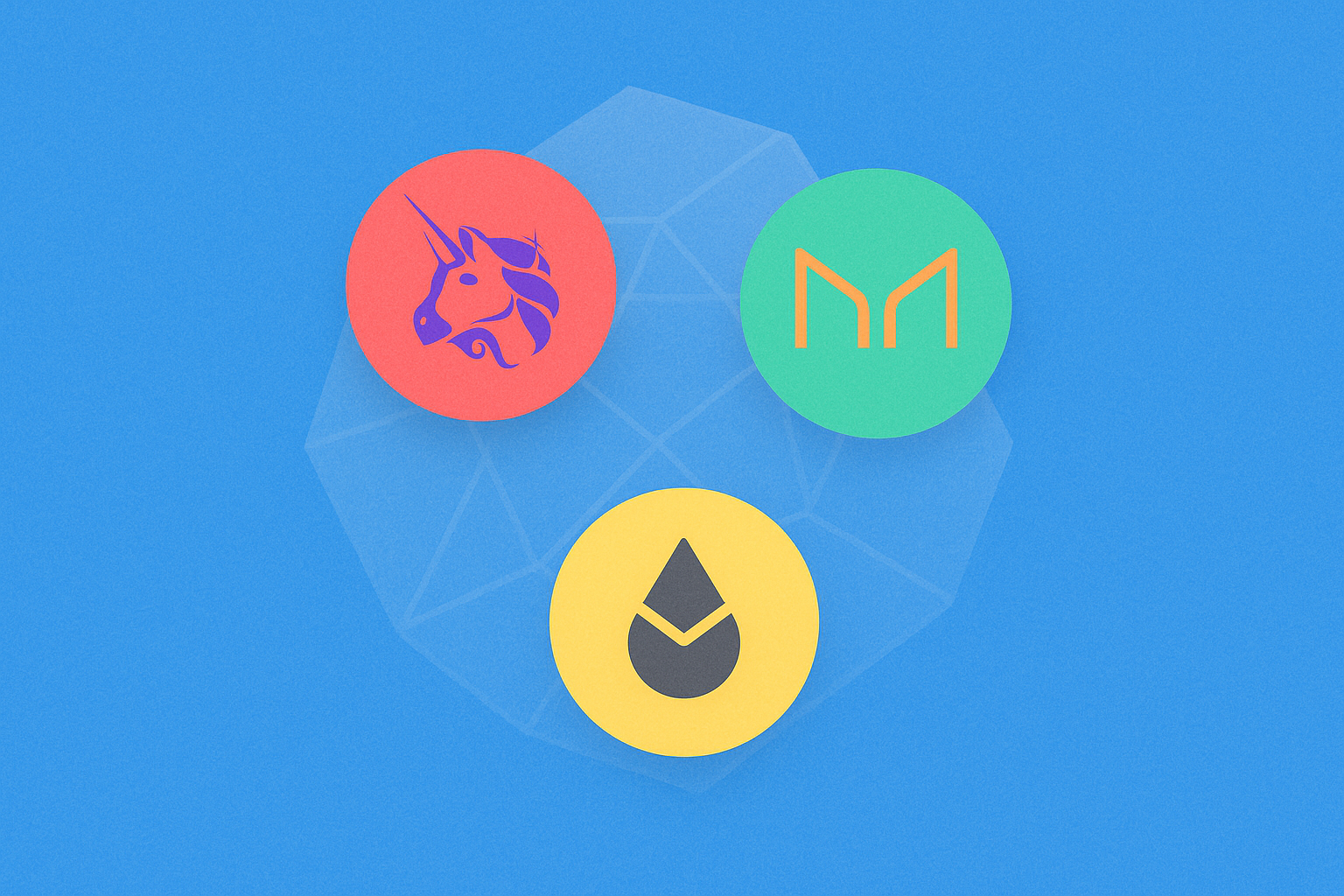
Uniswap DAO serves as the governing body for the Ethereum-based decentralized trading platform Uniswap. Uniswap community members vote on proposals using UNI governance tokens on the platform's official Governance tab. Due to Uniswap's major influence in DeFi, UNI tokens are actively traded on numerous trading platforms, making it one of the most accessible and liquid governance tokens.
MakerDAO, launched in 2017, operates as a decentralized lending platform on Ethereum best known for launching the stablecoin DAI. Anyone holding MakerDAO's MKR governance token can vote on proposed changes to the protocol, including critical decisions like interest rate adjustments that directly impact the stability and functionality of the DAI stablecoin.
Lido DAO is a DeFi platform that helps users stake cryptocurrencies including Ethereum, Solana, and Polygon (MATIC). Individuals interested in voting on changes to Lido's procedures or treasury management utilize the LDO governance token. Lido's importance has grown significantly with Ethereum's transition to proof-of-stake, making it a crucial infrastructure provider in the DeFi ecosystem.
Conclusion
Decentralized Autonomous Organizations represent a paradigm shift in organizational governance, offering unprecedented transparency, community participation, and democratic decision-making in the Web3 ecosystem. Understanding what is a DAO and what is this revolutionary governance model helps explain their growing importance in the crypto industry. Despite facing significant challenges including security vulnerabilities, decision-making inefficiencies, and concerns about token distribution concentration, DAOs continue to evolve and gain traction across various sectors of the cryptocurrency industry. With substantial capital held in DAO treasuries and representing a significant portion of DeFi's total value, these organizations have demonstrated remarkable resilience and growth potential. As innovative solutions like soulbound tokens emerge to address current limitations, and as more projects adopt DAO governance structures, these organizations may indeed fulfill their promise of revolutionizing democracy and corporate governance in the digital age. The success of prominent DAOs like Uniswap, MakerDAO, and Lido demonstrates that despite early setbacks like the 2016 DAO hack, the fundamental concept of decentralized governance remains compelling and viable for coordinating collective action and managing shared resources in the crypto ecosystem.
FAQ
What does "DAO" stand for?
DAO stands for Decentralized Autonomous Organization. It's a blockchain-based entity governed by smart contracts and community members.
What is DAO?
A DAO is a decentralized organization governed by smart contracts, operated transparently and controlled by members without central authority. It requires rules, funding tokens, and voting rights.
What is DAO used for?
DAOs are used for decentralized governance, collective decision-making, and fund management in Web3 projects. They enable community-driven operations and transparent voting on proposals.

Understanding ENS Domains and Their Role in the Ethereum Name Service

Monetization Strategies for Decentralized Applications

Understanding the ERC20 Token Standard in Ethereum Ecosystem

Unlock the Potential of Ethereum Name Service Domains
Everything You Need to Know About ENS Domains
Creating Powerful Decentralized Applications: A Guide to dApp Development
Roam Listing Details: Launch Date, Price Predictions, and How to Buy $ROAM

DePIN: Hardware Set to Transform Web3

MACD指標是什麼?

Bitget Wallet Valued at $300 Million After Investment from Mainstream Exchange, Boasts 10 Million Users
How to Buy $LUNA Coin and What is the Lynk's Cat Token?