Understanding Directed Acyclic Graphs in Blockchain Technology

What is a directed acyclic graph (DAG)?
Directed acyclic graph (DAG) is an innovative technology in the fintech space, often considered an alternative to traditional blockchain systems. This article explores DAG, its workings, and how it compares to blockchain technology.
DAG vs blockchain technology
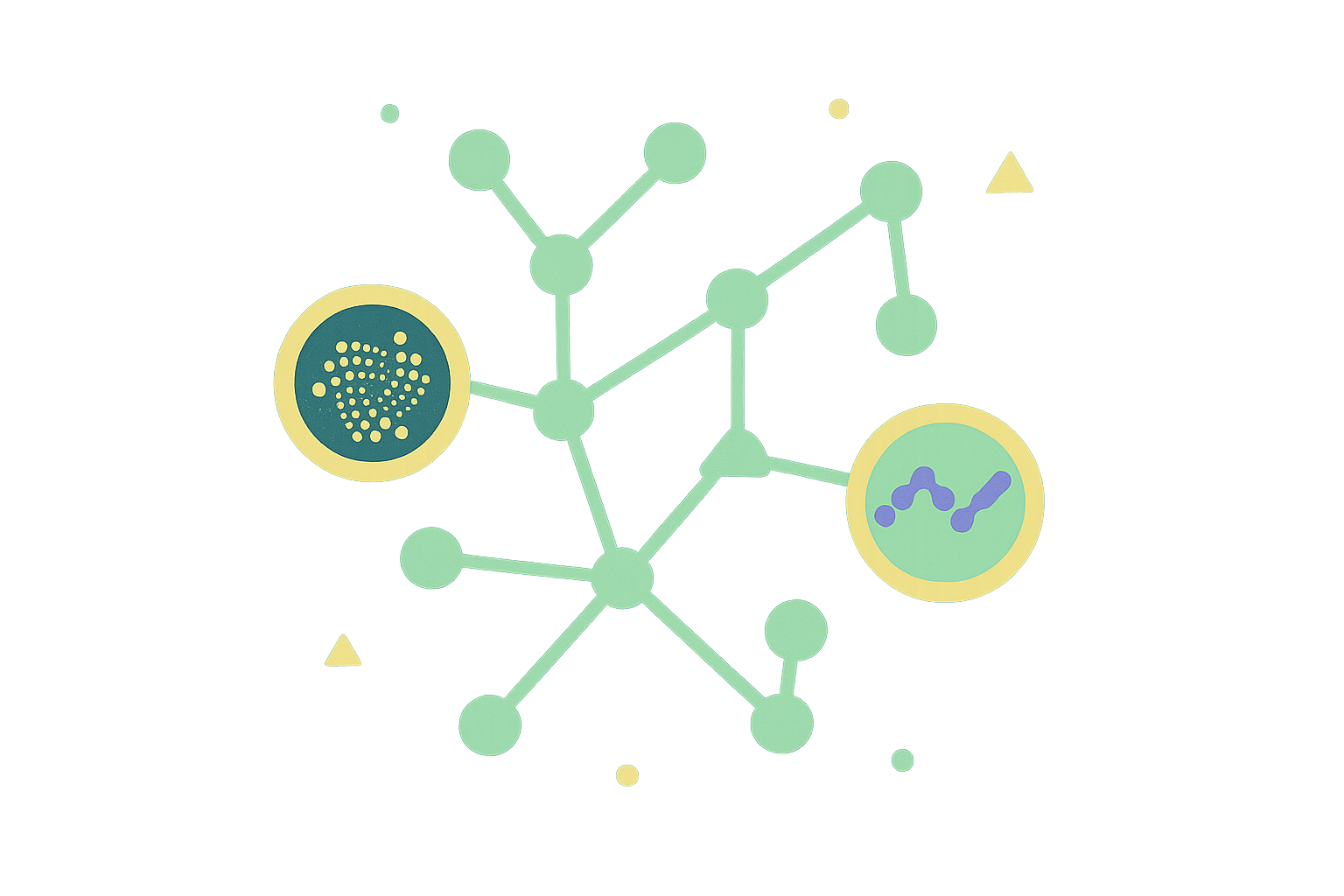
DAG is a data modeling tool used by some cryptocurrencies instead of a blockchain. It's sometimes referred to as a potential "disruptor" in the blockchain space due to its advantages. The DAG architecture uses circles (vertices) representing activities to be added to the network, and lines (edges) showing the order of transaction approval. Unlike blockchain, DAG doesn't gather transactions into blocks but builds them on top of each other, significantly improving transaction speed.
How does DAG technology work?
In a DAG-based system, each transaction (represented by a circle or vertex) is built on top of previous ones. To make a transaction, a user must confirm a prior unconfirmed transaction (tip). This process creates layers of transactions, allowing the system to grow continually. DAG also includes a system to prevent double-spending by assessing the entire transaction path back to the first transaction.
What is DAG used for?
DAG is primarily used for processing transactions more efficiently than blockchain. Its key applications include:
- Fast transaction processing without block-related waiting times
- Energy-efficient operation, consuming only a fraction of the power used by PoW blockchains
- Facilitating micropayments with very low or no transaction fees
Which cryptocurrencies use DAG?
Several projects utilize DAG technology:
- IOTA (MIOTA): Known for fast transactions, scalability, and data integrity
- Nano: Combines DAG and blockchain technology, offering fast, feeless transactions
- BlockDAG: Uses DAGs for energy-efficient mining
DAG pros and cons
DAG technology offers several advantages:
- Speed: No block time restrictions
- Zero or low fees: Particularly beneficial for microtransactions
- Energy efficiency: Minimal carbon footprint
- Scalability: No long waiting periods
However, it also faces challenges:
- Decentralization issues: Some DAG protocols have centralized elements
- Limited testing at scale: DAG hasn't been as widely adopted as other blockchain protocols
Conclusion
Directed acyclic graph technology presents an intriguing alternative to blockchain with potential advantages in transaction speed, fees, and scalability. However, as of late 2025, it's still evolving and faces challenges, particularly in terms of decentralization and widespread adoption. As the technology continues to develop, it will be interesting to see how DAG progresses and whether it can overcome its current limitations to compete more effectively with blockchain technology in the crypto space.
FAQ
What does a DAG show?
A DAG (Directed Acyclic Graph) shows the structure of transactions and data flow in a blockchain network, illustrating how information is connected and validated without traditional blocks.
What does DAG stand for?
DAG stands for Directed Acyclic Graph, a data structure used in some cryptocurrencies as an alternative to traditional blockchain technology.
How to make a DAG diagram?
Use specialized software like draw.io or Lucidchart. Start with nodes, add directed edges, ensure no cycles. Arrange nodes top-down or left-right for clarity.
What is the difference between a tree and a DAG graph?
A tree has a single root and no cycles, while a DAG (Directed Acyclic Graph) can have multiple roots and allows for multiple paths between nodes, but still no cycles.

Exploring DAG Technology in Blockchain Networks

Understanding Directed Acyclic Graph in Blockchain Technology

Exploring Directed Acyclic Graph in Blockchain Networks

Exploring Directed Acyclic Graphs in Blockchain Technology
DAG vs. Blockchain: Comparison and Benefits
Innovative Blockchain Solutions with Directed Acyclic Graph Technology

What is Hachiko ($HACHI) Fundamentals: How Does Whitepaper Logic, Use Cases, and Team Background Affect Price Prediction
How does UNI token fund flow and holdings concentration affect price movements in 2026?
How does RIVER token distribution affect exchange inflows and on-chain staking concentration
How do derivatives market signals predict crypto price movements in 2026?

What Is Fantasy Pepe (FEPE)? The AI Football Memecoin on Polygon