fomox
MarketsPerpsSpotSwap
Meme
Referral
More
Search Token/Wallet
/

Understanding Governance Tokens: A Complete Beginner's Guide to Blockchain Tokenized Governance
2025-12-19 21:27:16
Blockchain
Crypto Tutorial
DAO
DeFi
Web 3.0
Article Rating : 4
13 ratings
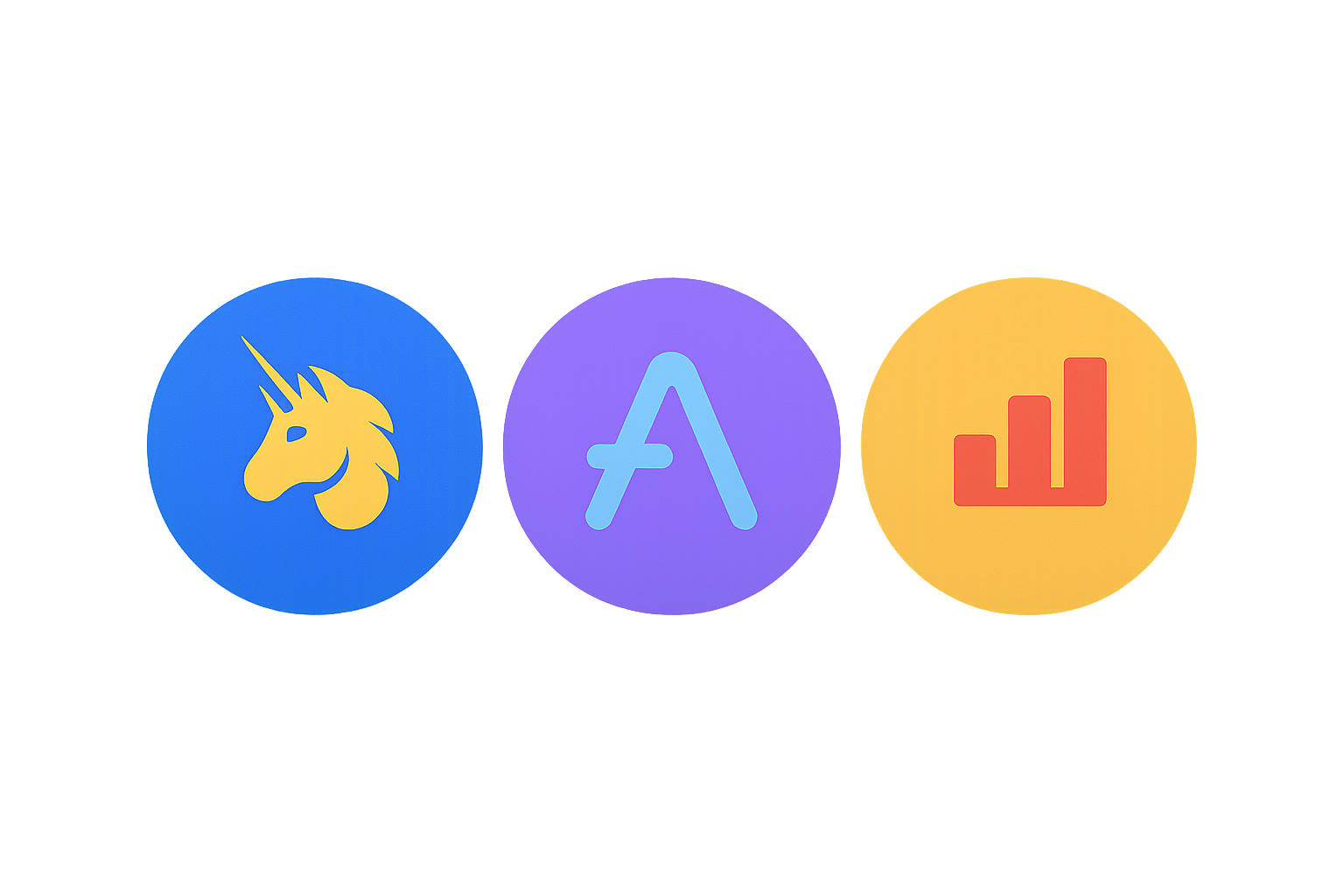
This comprehensive beginner's guide to governance tokens in the blockchain space explains their function as empowering community-driven decision-making in decentralized finance (DeFi) and decentralized applications (dApps). The article clarifies what governance tokens are, their key mechanisms, and their importance in decentralizing power and aligning incentives. It addresses potential challenges like voter apathy and whale dominance while providing insights on acquiring and effectively using governance tokens. Popular examples such as Uniswap (UNI), Aave (AAVE), and Compound (COMP) are discussed, alongside practical guidance for participants in this evolving ecosystem.
Understanding Governance Tokens: A Complete Beginner's Guide to Blockchain Tokenized Governance

What is a Governance Token? A Comprehensive Guide

Introduction

In the world of decentralized finance (DeFi) and blockchain technology, governance tokens have emerged as a revolutionary mechanism for community-driven decision-making. But what exactly is a governance token, and why has it become such a crucial component of modern blockchain projects?

What is a Governance Token?

A governance token is a type of cryptocurrency that grants holders the right to participate in the decision-making process of a blockchain protocol or decentralized application (dApp). Unlike traditional cryptocurrencies that primarily serve as mediums of exchange or stores of value, governance tokens empower their holders to vote on proposals, protocol upgrades, and other critical decisions affecting the project's future.

How Do Governance Tokens Work?

Governance tokens operate on the principle of decentralized governance, where decision-making power is distributed among token holders rather than concentrated in a central authority. The more governance tokens you hold, the greater your voting power typically becomes.

Key Mechanisms:

  1. Proposal Creation: Token holders can submit proposals for changes or improvements to the protocol
  2. Voting Rights: Holders vote on active proposals, with voting power usually proportional to token holdings
  3. Implementation: Approved proposals are executed, either automatically through smart contracts or by the development team

Why Are Governance Tokens Important?

Governance tokens represent a fundamental shift toward decentralized autonomous organizations (DAOs) and community ownership. Here's why they matter:

1. Decentralization of Power

Governance tokens distribute control across the community, preventing any single entity from having absolute authority over the protocol.

2. Aligned Incentives

When users hold governance tokens, they have a vested interest in the project's success, aligning their incentives with the protocol's long-term health.

3. Transparency

All proposals and votes are typically recorded on-chain, ensuring complete transparency in the decision-making process.

4. Community Empowerment

Users transition from passive participants to active stakeholders who can shape the project's direction.

Common Uses of Governance Tokens

Governance tokens enable holders to influence various aspects of a protocol:

  • Protocol Parameters: Adjusting fees, interest rates, or collateralization ratios
  • Treasury Management: Deciding how to allocate community funds
  • Feature Development: Voting on new features or protocol upgrades
  • Partnership Decisions: Approving collaborations or integrations
  • Token Economics: Modifying tokenomics, including emission rates or burning mechanisms

Many leading DeFi protocols have implemented governance tokens to decentralize their operations:

  • Uniswap (UNI): Holders govern the protocol's development and treasury
  • Aave (AAVE): Used for voting on protocol improvements and risk parameters
  • Compound (COMP): Enables community governance of the lending protocol
  • MakerDAO (MKR): Governs the DAI stablecoin system

Benefits of Holding Governance Tokens

For Token Holders:

  • Voting Rights: Direct influence over protocol decisions
  • Potential Value Appreciation: As the protocol grows, token value may increase
  • Rewards: Some protocols offer incentives for active governance participation
  • Community Status: Recognition as a committed community member

For Projects:

  • Community Engagement: Active involvement from users
  • Decentralization: Reduced regulatory risk through distributed control
  • Innovation: Diverse perspectives lead to better solutions
  • Legitimacy: Community ownership enhances project credibility

Challenges and Considerations

While governance tokens offer numerous benefits, they also present certain challenges:

1. Voter Apathy

Many token holders don't actively participate in governance, leading to low voter turnout.

2. Whale Dominance

Large token holders may have disproportionate influence over decisions.

3. Complexity

Understanding technical proposals requires significant knowledge, creating barriers to participation.

4. Short-term Thinking

Some voters may prioritize immediate gains over long-term sustainability.

5. Regulatory Uncertainty

The legal status of governance tokens remains unclear in many jurisdictions.

How to Acquire Governance Tokens

There are several ways to obtain governance tokens:

  1. Trading Platforms: Purchase tokens through various cryptocurrency exchanges
  2. Liquidity Provision: Earn tokens by providing liquidity to decentralized protocols
  3. Protocol Participation: Receive tokens as rewards for using the platform
  4. Airdrops: Some projects distribute tokens to early users or community members
  5. staking: Lock up other cryptocurrencies to earn governance tokens

Best Practices for Governance Token Participation

If you're considering participating in token governance, keep these practices in mind:

1. Do Your Research

Thoroughly understand proposals before voting. Read documentation and community discussions.

2. Active Engagement

Participate in community forums and discussions to stay informed about ongoing developments.

3. Long-term Perspective

Consider the protocol's long-term health rather than short-term gains when voting.

4. Delegate Wisely

If you can't actively participate, consider delegating your voting power to trusted community members.

5. Diversification

Don't put all resources into a single governance token; maintain a balanced portfolio.

The Future of Governance Tokens

Governance tokens continue to evolve, with several trends shaping their future:

Improved Voting Mechanisms

Projects are experimenting with quadratic voting, conviction voting, and other systems to create more equitable governance structures.

Enhanced Participation

New tools and interfaces are being developed to make governance more accessible to average users.

As regulators worldwide develop frameworks for digital assets, governance tokens may achieve greater legal recognition.

Cross-chain Governance

Future governance systems may enable token holders to influence decisions across multiple blockchains.

Integration with Traditional Governance

Hybrid models combining on-chain and off-chain governance may emerge, bridging DeFi and traditional finance.

Governance Tokens vs. Utility Tokens

It's important to understand the distinction between governance tokens and utility tokens:

Governance Tokens: Primarily grant voting rights and decision-making power

Utility Tokens: Provide access to specific products or services within an ecosystem

Many modern tokens combine both functions, offering utility features alongside governance rights.

Conclusion

Governance tokens represent a paradigm shift in how blockchain projects are managed and controlled. By distributing decision-making power to the community, these tokens embody the core principles of decentralization and democratization that underpin the blockchain revolution.

Understanding what governance tokens are and how they function is essential for anyone participating in the DeFi ecosystem. Whether you're a developer, investor, or user, governance tokens offer a unique opportunity to actively shape the future of blockchain protocols while potentially benefiting from their growth.

As the blockchain space continues to mature, governance tokens will likely play an increasingly important role in creating truly decentralized, community-driven platforms that challenge traditional centralized systems. By participating responsibly in token governance, you can contribute to building a more open, transparent, and equitable financial future.

The key to successful governance token implementation lies in balancing efficiency with decentralization, ensuring active community participation, and maintaining alignment between individual interests and collective benefit. As these systems evolve and improve, governance tokens will continue to redefine our understanding of organizational structure and decision-making in the digital age.

FAQ

Token quản trị là gì? Nó khác gì với token thông thường?

Governance tokens grant holders voting rights on protocol decisions. Unlike standard tokens, they provide governance power, allowing community participation in project direction, parameter adjustments, and fee structures through democratic processes.

What are the rights and permissions of governance tokens? What can holders do?

Governance token holders can vote on protocol changes, participate in treasury management decisions, propose new features, and influence project direction. They may also earn rewards through staking and have voting power proportional to their holdings.

How to earn governance tokens? Do they have value or profit potential?

Earn governance tokens through staking, liquidity provision, or community participation. These tokens grant voting rights on protocol decisions and often appreciate as the project grows, potentially generating significant returns through price appreciation and governance rewards.

Rủi ro của token quản trị là gì? Nó có an toàn không?

Governance tokens carry risks including price volatility, smart contract vulnerabilities, and voting manipulation. However, established governance tokens with active communities and transparent mechanisms are generally safer. Security depends on the project's audits, team credibility, and decentralization level.

* The information is not intended to be and does not constitute financial advice or any other recommendation of any sort offered or endorsed by Gate.

Share

Content

Introduction

What is a Governance Token?

How Do Governance Tokens Work?

Why Are Governance Tokens Important?

Common Uses of Governance Tokens

Benefits of Holding Governance Tokens

Challenges and Considerations

How to Acquire Governance Tokens

Best Practices for Governance Token Participation

The Future of Governance Tokens

Governance Tokens vs. Utility Tokens

Conclusion

FAQ

Related Articles
Exploring Bonding Curves: A Key Mechanism in DeFi Systems

Exploring Bonding Curves: A Key Mechanism in DeFi Systems

The article delves into the innovative bonding model as a key mechanism in DeFi, exploring how it builds protocol-owned liquidity through direct user engagement via discounted token bonds. It addresses the nuances between traditional liquidity mining and the bonding model, highlighting benefits such as sustainable economics, liquidity ownership, and strategic asset accumulation. For protocols, it offers reduced token emissions and revenue generation, while users gain discounted tokens and risk mitigation. It also covers practical implementation challenges and evolving dynamics in DeFi systems, offering insights for both protocol designers and active users. Key phrases include "bonding model," "protocol-owned liquidity," "sustainable economics," and "DeFi innovation."
2025-12-19 06:23:59
Understanding Risks of Wrapped Tokens in Decentralized Finance

Understanding Risks of Wrapped Tokens in Decentralized Finance

The article explores the transformative role of wrapped tokens in decentralized finance, highlighting their function in bridging blockchain interoperability gaps. It covers the mechanics of wrapping and unwrapping tokens, while addressing the advantages such as increased liquidity and accessibility in DeFi applications. The article also delves into risks like centralization concerns, smart contract vulnerabilities, and regulatory uncertainties, providing a comprehensive overview for cryptocurrency traders. With insights into mitigating wrapped tokens risks, it serves as a vital resource for understanding and safely leveraging synthetic assets across blockchain ecosystems.
2025-12-20 11:35:11
Exploring the Potential of Blockchain Utility Tokens

Exploring the Potential of Blockchain Utility Tokens

Explore the dynamic world of utility tokens in this insightful article, diving into their functionalities beyond mere value transfer. Learn the distinction between crypto coins and tokens, and discover the unique applications of utility tokens like SAND, UNI, LDO, LINK, and BAT. Understand how traders acquire these tokens via platforms like Gate, dApps, and DeFi protocols. This piece serves both investors and enthusiasts, offering a comprehensive guide to navigating the evolving cryptocurrency ecosystem.
2025-11-08 07:10:53
Understanding the Role of Oracles in Blockchain Technology

Understanding the Role of Oracles in Blockchain Technology

Understanding the Role of Oracles in Blockchain Technology explores how blockchain oracles bridge the gap between decentralized networks and external data. The article delves into the oracle problem, decentralized solutions, and various types such as hardware, software, and human oracles. It highlights key use cases like DeFi, automated insurance, and tokenization of real assets. Ideal for blockchain developers and enthusiasts, it offers insights into the ongoing evolution of blockchain integration with real-world applications.
2025-11-04 06:43:56
Exploring Web3 Education: Your Guide to Decentralized Learning Platforms for Beginners

Exploring Web3 Education: Your Guide to Decentralized Learning Platforms for Beginners

Exploring Web3 Education provides a deep dive into Web3Camp, a gamified learning platform democratizing Web3 knowledge. It engages users through quizzes and rewards while offering structured learning paths on decentralized technologies. The article addresses the fragmentation in Web3 education and highlights accessibility, gamification benefits, and stakeholder engagement via governance tokens. Suitable for beginners and experts, readers gain insights into monetization opportunities and how Web3Camp overcomes conventional educational barriers.
2025-12-25 21:53:38
Proxy Contract

Proxy Contract

# Understanding Proxy Contracts in Blockchain Technology Proxy Contracts are essential smart contract mechanisms that enable blockchain applications to upgrade seamlessly while maintaining consistent addresses and data integrity. This article explores how proxy contracts separate logic from storage through delegatecall, allowing developers to modify contract behavior without redeployment. Designed for developers, investors, and blockchain platform operators including Gate, this guide covers core architecture, practical DeFi and NFT applications, security considerations, and implementation patterns like Transparent Proxy and UUPS. By examining real-world use cases and addressing critical concerns around gas costs and access control, this resource helps stakeholders understand why proxy contracts are vital for scalable, adaptable blockchain ecosystems.
2026-01-04 15:14:07
Recommended for You
How to Evaluate Cryptocurrency Community and Ecosystem Activity in 2026
How to Evaluate Cryptocurrency Community and Ecosystem Activity in 2026

This comprehensive guide teaches investors and enthusiasts how to systematically evaluate cryptocurrency community strength and ecosystem vitality in 2026. The article explores four critical assessment dimensions: social media presence through Twitter and Telegram follower growth patterns, community engagement metrics measuring interaction frequency and participation rates across platforms, developer activity tracking technical contributions and innovation momentum, and DApp ecosystem scale evaluating maturity through application diversity and transaction volume. By analyzing these interconnected indicators—including on-chain data, social sentiment, GitHub activity, and governance participation—readers gain practical frameworks to distinguish genuine community momentum from artificial engagement. The guide emphasizes cross-platform verification methods, real-time monitoring tools like Santiment and LunarCrush, and balanced multi-metric analysis approaches. Whether assessing investment opportunities or buildin
2026-01-12 02:12:18
What are SPL-20 Inscriptions?

What are SPL-20 Inscriptions?

SPL-20 inscriptions represent a groundbreaking standard on Solana that fundamentally transforms digital art storage by embedding media directly on-chain rather than relying on external platforms like IPFS. Drawing inspiration from Bitcoin's BRC-20 standard, SPL-20 provides creators and collectors with enhanced integrity, permanence, and security through unique on-chain addresses. The ecosystem has experienced explosive growth with over 400,000 inscriptions and 33,500+ creators participating by late 2023, driven by Solana's low transaction costs and accessible inscription process. A distinctive feature is controlled mutability, enabling dynamic art evolution while maintaining security through update authority mechanisms. LibrePlex has been instrumental in developing this open-source protocol, while major platforms like Magic Eden integrate SPL-20 support. Although challenges regarding network bloat and scalability persist, SPL-20 inscriptions continue reshaping Solana's NFT landscape by offering unprecedented
2026-01-12 02:11:03
What is a token economics model and how do token allocation, inflation mechanisms, and governance work?

What is a token economics model and how do token allocation, inflation mechanisms, and governance work?

This comprehensive guide explores token economics models, a critical framework for sustainable cryptocurrency projects. The article covers four essential pillars: token allocation mechanisms that balance team (15-20%), investors (30-40%), and community (40-50%) distribution to prevent value concentration; inflation and emission schedules that control supply dynamics while maintaining token value stability; deflationary strategies including burning and buyback programs that create programmatic scarcity; and governance tokenomics that distribute voting rights proportional to holdings. Using MYX Finance's 1 billion token structure as a practical example, the guide demonstrates how balanced design across these components creates resilient ecosystems. The article includes detailed FAQs addressing common questions about allocation methods, inflation rate design, on-chain governance, and sustainability evaluation criteria, providing readers with actionable insights for understanding or designing effective token econ
2026-01-12 02:10:53
What Are the Biggest Smart Contract Vulnerabilities and Crypto Exchange Security Risks in 2026?

What Are the Biggest Smart Contract Vulnerabilities and Crypto Exchange Security Risks in 2026?

This comprehensive guide examines critical security vulnerabilities threatening the crypto ecosystem in 2026. The article covers reentrancy attacks and logic flaws draining over $100M annually from DeFi protocols, alongside centralized exchange custody risks responsible for $14B in documented losses since 2020. It explores how smart contract vulnerabilities in derivatives platforms and AMMs create cascading ecosystem threats through complex state management failures. The guide outlines essential mitigation strategies including professional code audits, multi-signature wallet implementations, and non-custodial trading models like Gate's platform that eliminate third-party asset custody. Designed for developers, traders, and security-conscious investors, this resource bridges the gap between understanding attack vectors and implementing robust defensive measures to protect digital assets throughout 2026.
2026-01-12 02:09:18
Identifying Fake Customer Service Scams
Identifying Fake Customer Service Scams

This comprehensive guide protects cryptocurrency users from fake customer support scams through practical education and verification strategies. The article explores how scammers impersonate official support staff in Telegram, Discord, and social media to steal mnemonic phrases and private keys. It provides systematic verification steps to authenticate legitimate support, identifies critical warning signs including unsolicited messages and urgency tactics, and outlines immediate actions if compromised. Essential protection measures include enabling two-factor authentication, never sharing sensitive credentials, and verifying contacts through official channels only. The guide emphasizes developing long-term security habits while building community awareness, ensuring users recognize sophisticated social engineering tactics before falling victim to these increasingly prevalent crypto scams.
2026-01-12 02:08:54
What Does On-Chain Data Analysis Reveal About Whale Movements and Active Addresses in Crypto Markets

What Does On-Chain Data Analysis Reveal About Whale Movements and Active Addresses in Crypto Markets

This comprehensive guide explores on-chain data analysis as a powerful tool for understanding cryptocurrency market dynamics through whale movements and active addresses. The article examines how active address trends measure genuine network participation independent of price fluctuations, providing insights into ecosystem health across major blockchains. It analyzes whale accumulation patterns as leading indicators for market direction, revealing how large holder movements create favorable conditions for price momentum. The guide covers transaction volume dynamics as sentiment barometers, network fee economics reflecting investor behavior and market congestion, and demonstrates how these interconnected metrics enable traders to distinguish authentic adoption from speculation. By integrating active address monitoring, whale tracking, and transaction analysis through platforms like Gate, market participants gain comprehensive on-chain intelligence for anticipating significant price movements and identifying in
2026-01-12 02:07:36