fomox
MarketsPerpsSpotSwap
Meme
Referral
More
Search Token/Wallet
/

Understanding Merkle Proofs in Blockchain Technology

2025-12-18 23:18:47
Blockchain
Crypto Ecosystem
Crypto Tutorial
Web 3.0
Zero-Knowledge Proof
記事評価 : 3
122件の評価
The article delves into the importance of Merkle Trees in blockchain technology, highlighting their role in enabling Proof of Reserves on Gate. It explains the significance of cryptographic hashing and Merkle proof in verifying data security and integrity without intermediaries. Key sections include an overview of hashes and Merkle Trees, and how these structures ensure transaction transparency. With a focus on user protection, the piece addresses issues such as asset verification in centralized platforms. Ideal for those interested in cryptocurrency security, the article provides essential insights into safeguarding digital assets.
Understanding Merkle Proofs in Blockchain Technology

What are Merkle trees and how do they enable Proof of Reserves?

Merkle trees represent a fundamental cryptographic structure that enables secure verification of data in blockchain systems and cryptocurrency exchanges. This technology, combined with Proof of Reserves mechanisms, provides transparency and trust in decentralized financial systems. Understanding how Merkle trees function and how merkle proof works is essential for comprehending how modern cryptocurrency platforms maintain security and accountability.

First, what's a "hash"?

A hash is a unique, immutable sequence of numbers and letters generated by a data set of any length and size. In blockchain technology, this cryptographic function serves as the foundation for data integrity and security. The hash function converts transaction data from a block into a unique string of text that creates an unbreakable link between consecutive blocks.

The cryptographic nature of hashing ensures that any alteration to the original data set will produce a completely different hash value. This property makes it computationally infeasible to reverse-engineer a hash to reveal the original source data, providing robust security against decryption attempts. Once a hash is generated, it becomes permanently linked to its source data, creating an immutable record.

In blockchain systems, each new block is cryptographically linked to the preceding block through its hash value. This chaining mechanism ensures that any attempt to alter historical data would require recalculating all subsequent hashes in the chain, making the blockchain tamper-proof and immutable. A Transaction Hash (Tx Hash) serves as a unique identifier for each cryptocurrency transaction, providing proof that the transaction was validated and permanently recorded on the blockchain.

Then what's a Merkle Tree?

Patented by Ralph Merkle in 1979, a Merkle Tree is a sophisticated hash-based data structure that enables efficient verification of large datasets in peer-to-peer networks. This cryptographic structure solves a critical challenge in decentralized systems: how to verify data consistency across multiple nodes without requiring constant validation of every transaction. The merkle proof mechanism derived from this structure allows for efficient verification of specific data elements within the tree.

To understand how Merkle Trees work, consider an analogy of managing an ice cream shop's monthly finances. When calculating January's profit and loss, discovering an error in the January 5th entry for cream and sugar would traditionally require recalculating all subsequent entries manually. This process is inefficient and error-prone. A cryptographic hash function, like a Merkle Tree, operates similarly to spreadsheet software, where changes to individual entries automatically update related calculations without manual intervention.

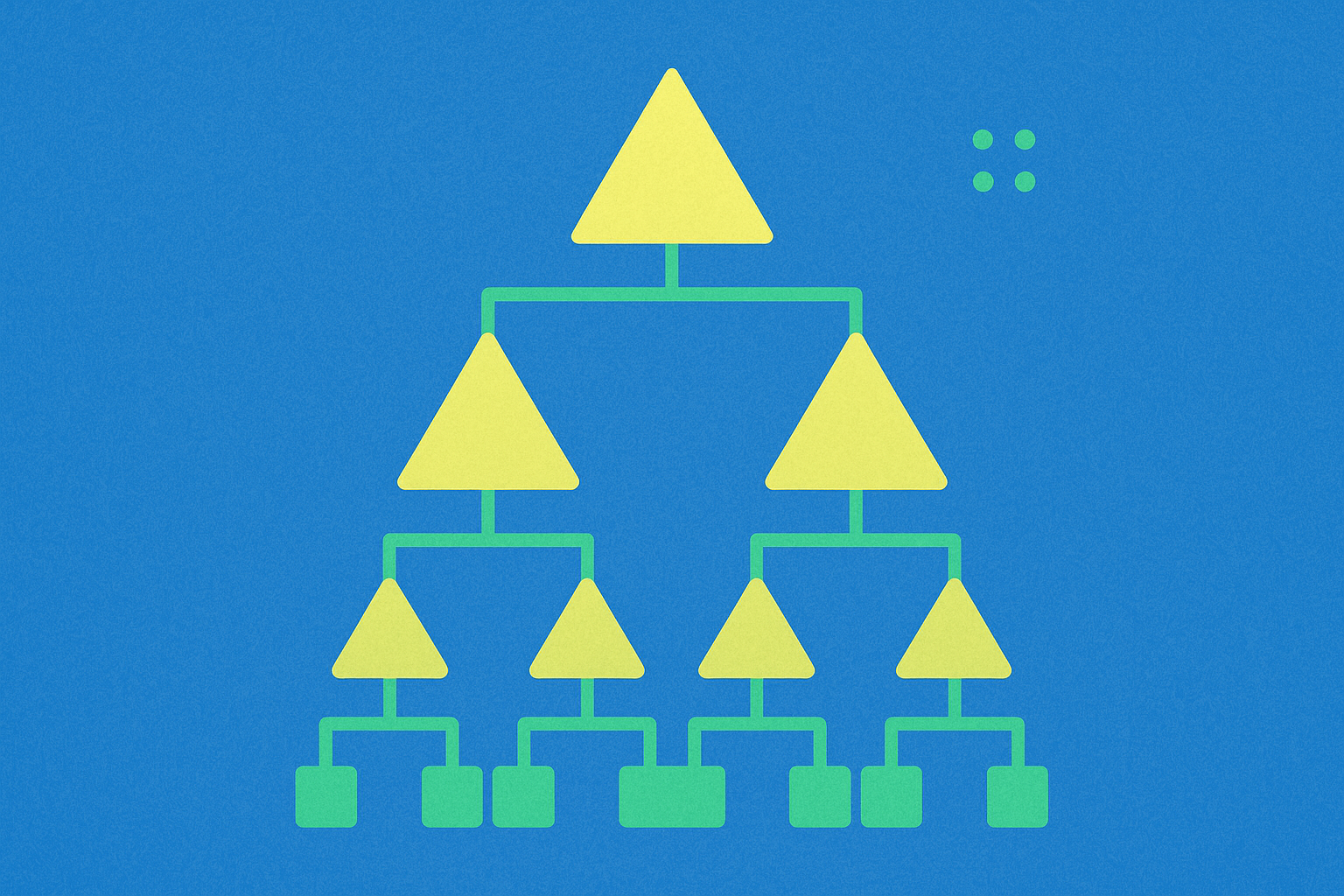
In the blockchain context, Merkle Trees organize transaction data hierarchically. The structure consists of leaf nodes at the bottom, which are hashes representing individual transactions or data blocks. Moving up the tree, parent nodes are created by combining and hashing their child nodes. For example, Hash 1 is generated by combining Hash 1-0 and Hash 1-1: Hash 1 = Hash(Hash 1-0 + Hash 1-1). This hierarchical structure continues until reaching the Top Hash or root at the apex of the tree.

The Top Hash is particularly important because it represents a cryptographic summary of all data in the tree. This allows efficient verification of any transaction without examining the entire dataset through a process known as merkle proof. When data is transmitted across a peer-to-peer network, recipients can verify its integrity by comparing received branches against the trusted Top Hash. If any data has been altered or damaged during transmission, the hash verification will fail, ensuring data integrity without requiring a trusted third party. This mechanism is fundamental to cryptocurrency's "trustless" nature.

What are Proof of Reserves?

Proof of Reserves is a transparency mechanism developed to address customer concerns about the safety of funds held in centralized cryptocurrency platforms. This protocol provides verifiable evidence that a custodian actually holds the assets it claims to hold on behalf of its users. The implementation leverages Merkle Tree technology and merkle proof to create an auditable and transparent system.

The Proof of Reserves system operates through two key verification methods. First, individual users can locate their specific balance within the Merkle Tree structure, allowing them to independently verify that their assets are included in the platform's total balance through merkle proof. This gives users direct proof that their funds are accounted for without relying solely on the platform's claims. Second, the total balance calculated from the Merkle Tree is compared against the platform's publicly visible on-chain wallet balances, providing comprehensive verification of the reserves.

This approach addresses a fundamental trust issue in cryptocurrency platforms. In traditional finance, third-party auditors review and verify financial records to ensure accuracy and prevent misappropriation of funds. However, decentralized platforms often lack such oversight. Without independent verification, users have no way to confirm that their deposited funds remain secure and haven't been used for other purposes. While blockchain explorers provide some transparency, history has shown they aren't always sufficient to prevent bad actors from misusing customer funds.

By utilizing the Merkle Tree's cryptographic properties and merkle proof verification, platforms can demonstrate immutable transaction data and prove that records haven't been tampered with. This gives customers mathematical certainty that their assets are held on a 1:1 basis, meaning every token shown in their account balance corresponds to an actual token held in reserve. This level of transparency and verifiability represents a significant advancement in platform accountability and user protection.

Conclusion

Merkle Trees represent a cornerstone technology in blockchain and cryptocurrency systems, enabling efficient verification of large datasets while maintaining security and immutability. Through cryptographic hashing, these structures create tamper-proof records that can be verified without trusting intermediaries. The merkle proof mechanism provides an elegant solution for verifying individual transactions within the larger dataset efficiently. When applied to Proof of Reserves protocols, Merkle Trees and merkle proof provide cryptocurrency platforms with a powerful tool for demonstrating transparency and building user trust. By allowing both individual balance verification through merkle proof and total reserve confirmation, this technology addresses fundamental concerns about fund security in centralized platforms. As the cryptocurrency ecosystem continues to evolve, the combination of Merkle Trees, merkle proof, and Proof of Reserves remains essential for maintaining accountability and protecting user assets in an increasingly decentralized financial landscape.

FAQ

How to generate Merkle proof?

Hash all leaf nodes, then iteratively hash parent nodes until reaching the root. The proof includes sibling hashes needed to verify a specific transaction's inclusion in the Merkle tree without processing the entire tree.

What is Merkle proof of inclusion?

A Merkle proof of inclusion verifies that specific data exists within a larger dataset without revealing the complete dataset. It uses hash tree structure for efficient, privacy-preserving data verification.

What is the meaning of Merkle?

Merkle refers to a cryptographic concept, specifically the Merkle tree developed by cryptographer Ralph Merkle. It is a hash tree structure used in blockchain and cryptography to efficiently verify large data sets and ensure data integrity.

What is a Merkle used for?

A Merkle tree is used to efficiently verify data integrity and authenticity in blockchain and cryptographic systems. It enables quick verification of large data sets by creating a hash tree where each node represents multiple data blocks, allowing secure and scalable proof mechanisms.

* 本情報はGateが提供または保証する金融アドバイス、その他のいかなる種類の推奨を意図したものではなく、構成するものではありません。

共有

内容

First, what's a "hash"?

Then what's a Merkle Tree?

What are Proof of Reserves?

Conclusion

FAQ

関連記事
Cryptography: From Ancient Ciphers to Blockchain. The Complete Guide to Information Security in the Digital Age

Cryptography: From Ancient Ciphers to Blockchain. The Complete Guide to Information Security in the Digital Age

Blockchain Cryptography Essentials: Explore Encryption, Digital Signatures, and Hashing. This comprehensive guide is tailored for novice investors, Web3 developers, and anyone interested in crypto security on Gate.
2026-01-03 19:19:39
Introduction to Cryptography: A Beginner's Guide
Introduction to Cryptography: A Beginner's Guide

The article provides a comprehensive introduction to cryptography, highlighting its significance in modern digital security by explaining fundamental concepts such as encryption, cryptographic keys, and hash functions. It discusses different types of cryptography—symmetric, asymmetric, and hash functions—and their applications, including secure communications, blockchain technology, and digital identity. The article addresses issues like quantum computing threats and key management, making it relevant for beginners seeking to understand cryptographic principles and their impact on digital trust. Keywords such as encryption, blockchain, digital security, and cryptographic algorithms enhance readability and ensure quick comprehension.
2025-12-18 19:35:08
Understanding Merkle Tree Proofs in Blockchain Technology

Understanding Merkle Tree Proofs in Blockchain Technology

Explore the significance of Merkle trees in blockchain technology, focusing on their role in enabling Proof of Reserves. Learn how hashes provide unique data fingerprints in immutable chains, ensuring security and tamper-proof characteristics. Discover Merkle trees' hierarchical structure for efficient data verification, utilized by platforms like Gate for transparent reserve management. Understand how these cryptographic solutions empower users to verify holdings independently, maintaining trust and privacy in decentralized systems. This article offers valuable insights for anyone interested in blockchain's security and transparency mechanisms.
2025-12-19 03:55:51
Understanding Cryptography: Essential Concepts for Blockchain Security

Understanding Cryptography: Essential Concepts for Blockchain Security

This article explores the fundamental concepts of cryptography, a critical factor in ensuring blockchain security. Highlighting its historical evolution from ancient codes to modern applications, it delves into symmetric and asymmetric cryptography methodologies and their roles in digital security. Addressing the need for secure communication and data protection, it serves as a valuable resource for anyone keen on understanding digital security frameworks, especially in the context of blockchain and cryptocurrency. By providing clear insights into keys, encryption types, and practical use cases, the article enhances comprehension of how digital security operates within computer networks.
2025-12-18 19:37:08
Enhancing Security in Blockchain Networks with Cryptography Techniques

Enhancing Security in Blockchain Networks with Cryptography Techniques

This article explores the crucial role of cryptography in enhancing security within blockchain networks, highlighting its evolution from ancient times to modern digital applications. It delves into cryptographic techniques like encryption and key management, emphasizing their relevance in protecting sensitive data across computer networks. The text addresses challenges and solutions offered by symmetric and asymmetric cryptography, suitable for diverse applications such as secure transactions and decentralized systems. Cryptography's impact on digital security, privacy, and trust is underscored, offering insights for anyone involved in digital communication and blockchain technologies.
2025-12-19 10:25:06
Understanding Merkle Proofs in Blockchain Technology

Understanding Merkle Proofs in Blockchain Technology

The article explores Merkle trees, their role in blockchain security, and how they enable Proof of Reserves. Readers will understand how Merkle trees verify transaction integrity through cryptographic hashes, ensuring transparency without the need for third-party audits. It addresses trust issues in centralized platforms, providing users with mechanisms to validate asset custodies independently. Organized logically, it details Merkle trees, hash functions, and their application in cryptocurrency ecosystems, offering essential insights for both novice and experienced crypto enthusiasts.
2025-12-18 12:33:49
あなたへのおすすめ
What is Fuel Network (FUEL)? Everything You Need to Know about FUEL

What is Fuel Network (FUEL)? Everything You Need to Know about FUEL

Fuel Network (FUEL) is an advanced Layer 2 scaling solution that addresses Ethereum's congestion and high gas fees through innovative FuelVM technology and parallel transaction execution. This comprehensive guide explores FUEL token fundamentals, including its revolutionary features like the Sway programming language and native multi-asset support that empower developers and users. Learn about the project's robust tokenomics model with 10 billion total supply, carefully structured allocations for community growth, ecosystem development, and contributor incentives. Discover how to acquire FUEL tokens on Gate exchange and secure them in trusted wallets like MetaMask. Understand the experienced leadership team's vision for democratizing blockchain development while analyzing long-term value drivers including ecosystem adoption, technical innovation, and competitive positioning. Whether you're a developer, investor, or blockchain enthusiast, this guide provides essential insights into Fuel Network's potential to
2026-01-11 14:41:45
Zora (ZORA) Airdrop Guide: Participation Steps, Reward Collection, and Price Predictions

Zora (ZORA) Airdrop Guide: Participation Steps, Reward Collection, and Price Predictions

Discover Zora, the groundbreaking on-chain platform redefining how creators earn from their content. Get step-by-step guidance on joining the ZORA airdrop, take advantage of the 35% community allocation in its tokenomics, mint NFTs, and trade seamlessly on Gate. Access detailed snapshot instructions, 2025 price forecasts, and explore new earning opportunities tailored for creators.
2026-01-11 14:38:49
What Is BNB Chain?

What Is BNB Chain?

This comprehensive guide explores BNB Chain, a decentralized blockchain ecosystem powered by BNB token, developed to foster innovation through its dual-chain architecture. BNB Chain distinguishes itself with high-speed transaction processing, low fees, and EVM compatibility, supporting diverse applications across DeFi, gaming, and NFTs. The guide covers the thriving ecosystem hosting hundreds of active projects including PancakeSwap, Venus, and CryptoBlades, alongside key tokens like Injective, Gala, and CAKE. Learn how to acquire BNB through major exchanges like Gate, select optimal wallets with multi-chain support, and understand investment considerations. Explore BNB's long-term prospects driven by continuous infrastructure development, increasing institutional adoption, and expanding Web3 integration, while recognizing inherent cryptocurrency market risks and volatility.
2026-01-11 14:28:14
All You Need To Know About Yescoin

All You Need To Know About Yescoin

YesCoin is an innovative blockchain-based gaming platform built on The Open Network (TON) that combines accessible mobile gaming with Web3 mechanics. This comprehensive overview explores how YesCoin's unique swipe-to-earn mechanism attracts over 18 million players globally by blending nostalgic gameplay with cryptocurrency rewards. The guide covers core gameplay systems including coin collection, treasure chests, task completion, and passive earning through YesPac robots. Key differentiators include TON blockchain integration for transparency, vibrant community engagement, and the speculative YES native token launch. The article provides step-by-step onboarding instructions, airdrop eligibility strategies, wallet selection guidance, and addresses frequently asked questions about security, tokenomics, and future development prospects within the emerging play-to-earn economy.
2026-01-11 14:25:25
How to Buy Baron ($BARRON) Coin: What is Baron Trump Cryptocurrency?

How to Buy Baron ($BARRON) Coin: What is Baron Trump Cryptocurrency?

This comprehensive guide explores $BARRON, a Solana-based meme coin inspired by Barron Trump that surged nearly 500-fold after launch. The article examines the token's community-driven appeal, technical infrastructure on Solana, and its intersection with Trump family cryptocurrency ventures including World Liberty Financial. Key sections detail $BARRON's high-speed transactions, liquidity across exchanges, and cultural significance within political cryptocurrency circles. The guide thoroughly addresses investment risks associated with unconfirmed celebrity connections, analyzing real examples of token collapses and market manipulation. Finally, it provides practical purchasing instructions, price analysis, and essential risk management strategies for potential investors considering this highly volatile speculative asset.
2026-01-11 14:23:18
What Is AI Dev Agent (AIDEV)? No-Code Platform for Building Products

What Is AI Dev Agent (AIDEV)? No-Code Platform for Building Products

AI Dev Agent (AIDEV) is an innovative no-code platform powered by artificial intelligence that democratizes digital product creation by enabling anyone to build fully functional products through natural language descriptions. The platform combines zero-code automation with integrated blockchain tokenization, allowing creators to launch cryptocurrency tokens alongside their digital creations without technical expertise. Core capabilities include AI-powered asset generation, multi-product support for websites, games, and applications, and a community marketplace for asset sharing and monetization. AIDEV tokens unlock premium features, enhanced AI capabilities, and commercial rights to generated content. The platform operates through a streamlined process—idea input, AI generation, iterative refinement, tokenization, and deployment—while delivering substantial cost reductions and accelerated time-to-market for digital entrepreneurs. Strategic partnerships with GameSwift, Polkastarter, and Cookie3 enhance technol
2026-01-11 14:16:26