LCP_hide_placeholder
fomox
Search Token/Wallet
/

Understanding NFTs in the Web3 Ecosystem
2025-12-25 09:12
Blockchain
Gaming
Metaverse Crypto
NFTs
Web 3.0
Article Rating : 3
127 ratings
The article delves into the transformative role of Web3 NFTs, highlighting their growth and adoption across various sectors. It discusses the historical development of NFTs, their multifaceted applications in industries like art, gaming, and IP rights, and their impact on technology and investment landscapes. The piece addresses the needs of investors, creators, and tech enthusiasts by explaining key concepts and recent innovations like fractional NFTs. Structured logically, it begins with an introduction, followed by historical context, functions, significant impacts, recent trends, and a conclusion, enhancing readability and keyword density for efficient scanning.
Understanding NFTs in the Web3 Ecosystem

Web3 NFT

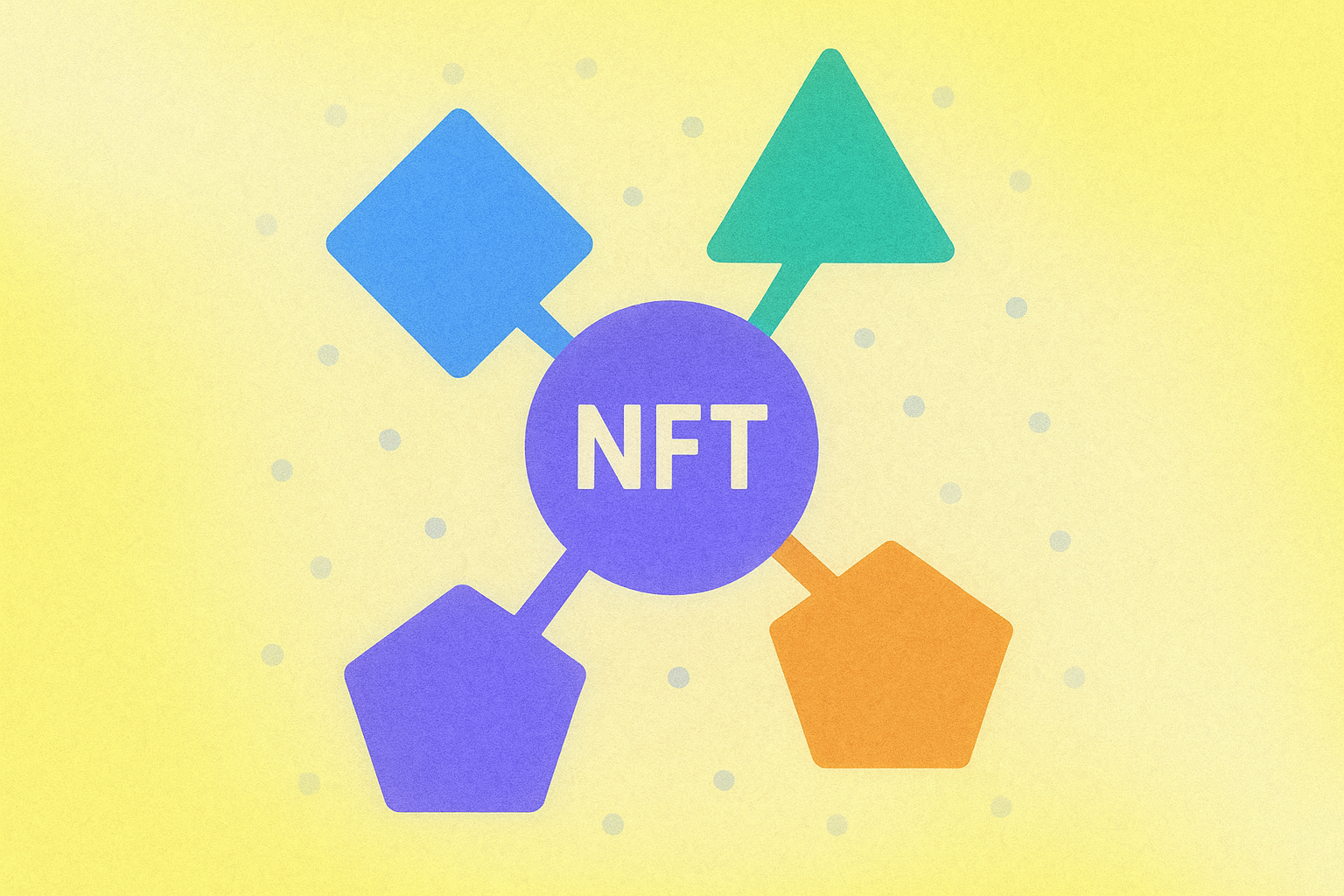
Web3 NFT, an abbreviation for Web3 Non-Fungible Tokens, represents unique virtual assets on the blockchain that establish ownership rights or authenticate the legitimacy of specific digital or physical objects. Developed and popularized within Web 3.0 technologies, these tokens have fundamentally transformed our understanding of value and ownership in the digital realm.

Market data underscores the significant growth trajectory of the NFT market. According to industry analysis, the market volume has expanded substantially over recent years, demonstrating sustained growth and increasing mainstream adoption across various sectors and use cases.

Historical Background of Web3 NFT

The emergence of Web3 NFT traces back to the inception of blockchain technology. However, the pivotal moment came with the introduction of the ERC-721 standard on the Ethereum platform, which established interoperability protocols for NFTs. This standardization catalyzed widespread adoption of the technology. The breakthrough success of CryptoKitties, a collection of digital cats valued as collectible items, served as a proof-of-concept and marked the commencement of the NFT boom, demonstrating genuine market demand for unique digital assets.

Functions of Web3 NFT

Web3 NFTs possess diverse applications spanning multiple industries and use cases. In the creative sector, they facilitate digital art and music ownership, allowing artists to monetize their work directly. NFTs also extend to domain names and virtual real estate, providing exclusive digital properties. Furthermore, the gaming industry has benefited significantly, enabling players to own unique in-game assets with real value. Additionally, in intellectual property rights management, creators can maintain ownership and control over their digital creations, preserving authorship and enabling direct monetization without intermediaries.

Impact on Technology and Investment Landscape

The flourishing Web3 NFT market represents far more than a temporary trend; it has fundamentally reshaped the technology and investment ecosystem. This transformation has catalyzed numerous innovations across multiple sectors. By eliminating traditional intermediaries, Web3 NFTs establish direct connections between creators and consumers, resulting in enhanced economic opportunities. This disintermediation has sparked substantial investment flows into artist-centric projects and platforms, fostering an environment where creative professionals can thrive independently and capture greater value from their work.

The Web3 NFT landscape has witnessed several transformative innovations in recent years. Virtual worlds powered by NFTs enable users to purchase, sell, and exchange parcels of virtual land, creating immersive digital economies. Algorithmically generated art collections have democratized digital art creation through computational methods. Additionally, fractional NFTs represent a significant innovation where expensive NFTs are subdivided into smaller, more accessible shares, enabling broader participation from investors with varying capital levels.

The market growth trajectory demonstrates the substantial value creation within this space, with consistent expansion in NFT trading volumes and user adoption rates across decentralized platforms.

Conclusion

Web3 NFTs have transcended being merely a technological phenomenon to become a transformative force reshaping digital ownership paradigms. By disrupting conventional notions of asset ownership and unlocking innovative platforms within blockchain and digital art ecosystems, NFTs have demonstrated substantial impact on creative industries and investment dynamics. As the intersection of technology, art, and finance continues to evolve, the influence and practical applications of Web3 NFTs are positioned for significant expansion, promising to redefine value creation and ownership models across multiple sectors in the digital economy.

FAQ

What is Web3 and NFT?

Web3 is the decentralized internet built on blockchain technology. NFTs are unique digital assets representing ownership of specific items on blockchain. Both enable true digital ownership and decentralized applications without intermediaries.

Does NFT pay real money?

Yes, NFTs can be bought and sold for real money. Their value is determined by market demand, and collectors are willing to pay substantial amounts for valuable NFTs. You can earn real money by selling NFTs or trading them in the secondary market.

What exactly is Web3?

Web3 is the decentralized internet built on blockchain technology, enabling users to own digital assets, control their data, and participate in peer-to-peer transactions without intermediaries. It represents the next evolution of the web.

Are NFTs safe and what are the risks?

NFTs carry security risks including phishing attacks, malicious links, and wallet compromises. Protect yourself by verifying sources, avoiding suspicious offers, and using secure wallets. With proper precautions, you can safely manage your NFT assets.

What is the difference between NFTs and cryptocurrencies?

NFTs are unique digital assets representing items like art or collectibles, while cryptocurrencies are interchangeable digital currencies used for transactions. NFTs cannot be divided or exchanged one-to-one, unlike cryptocurrencies which are fungible and divisible.

* The information is not intended to be and does not constitute financial advice or any other recommendation of any sort offered or endorsed by Gate.

Share

Content

Historical Background of Web3 NFT

Functions of Web3 NFT

Impact on Technology and Investment Landscape

Conclusion

FAQ

Related Articles
Choosing Your Ideal Digital Wallet in 2025: A Starter's Guide

Choosing Your Ideal Digital Wallet in 2025: A Starter's Guide

Explore the evolving landscape of crypto wallets in 2025 with this comprehensive starter's guide. Understand the fundamental functionalities and types—hot and cold wallets—and learn to choose the best one based on user needs like trading, NFT collecting, and long-term holding. Discover key considerations in wallet selection, such as security features, multi-chain compatibility, and practical use for everyday transactions. Gain insights on setup processes and advanced wallet capabilities to optimize your digital asset management. This guide equips both beginners and seasoned users with the knowledge to make informed decisions suitable to their crypto engagement level.
2025-12-21
Comprehensive Analysis of Leading Multi-Chain Wallet for Web3 Advancement

Comprehensive Analysis of Leading Multi-Chain Wallet for Web3 Advancement

The article provides a detailed review of Math Wallet, a leading multi-chain Web3 solution for cryptocurrency management. It highlights Math Wallet's broad support for over 100 blockchain networks, offering both custodial and non-custodial options, staking capabilities, and its integrated DApp store. Targeting both novice and experienced users, it addresses the need for secure and versatile digital wallets in the expanding crypto landscape. The article explores Math Wallet’s features, contrasts its pros and cons, and guides on using and staking with the wallet, positioning it as a top choice for efficient crypto asset management.
2025-12-19
Exploring the Evolution and Future of Blockchain-Powered Gaming

Exploring the Evolution and Future of Blockchain-Powered Gaming

Explore the evolution and potential of blockchain-powered gaming, where distributed ledger technology meets interactive entertainment. This article demystifies crypto gaming by examining how it works, detailing investment strategies, and discussing associated risks. With a deeper understanding of mechanics like NFTs and play-to-earn models, readers can identify promising opportunities and anticipate future trends like decentralized governance and interoperable ecosystems. Perfect for gamers, developers, and investors, the content addresses key issues such as scalability and security. As blockchain gaming evolves, staying informed is essential for navigating this dynamic digital revolution.
2025-11-22
Understanding Web3 Wallets: A Comprehensive Guide

Understanding Web3 Wallets: A Comprehensive Guide

This article provides a comprehensive guide to understanding Web3 wallets, highlighting their significance in securely managing and trading digital assets. It delves into the infrastructure of these wallets, their compatibility with decentralized applications, and their empowerment of users through non-custodial control. Targeted at cryptocurrency traders and investors, the article addresses the need for secure storage solutions and explores the variety of Web3 wallets available, including hardware and software options. It also discusses Web3's advanced internet framework, security features, and benefits, making it essential reading for anyone navigating the decentralized digital economy.
2025-12-22
A Beginner's Guide to Selecting the Ideal Crypto Wallet in 2025

A Beginner's Guide to Selecting the Ideal Crypto Wallet in 2025

The article "A Beginner's Guide to Selecting the Ideal Crypto Wallet in 2025" offers essential insights for choosing a suitable crypto wallet, crucial for securely managing digital assets like Bitcoin, NFTs, and DeFi investments. The guide explains the distinctions between hot and cold wallets, evaluates their security features, and details their functionality, including multi-chain compatibility and NFT support. It lays out criteria for selecting a wallet based on user needs—daily trading, NFT collecting, or long-term holding. Keywords such as "crypto wallet types," "security," and "multi-chain" ensure ease of scanning.
2025-12-21
Understanding DApps: The Ultimate Guide to Decentralized Applications

Understanding DApps: The Ultimate Guide to Decentralized Applications

The article "Understanding DApps: The Ultimate Guide to Decentralized Applications" explores the rising significance of dApps in reshaping software interaction through blockchain technology. It delves into how dApps operate via smart contracts, offering transparency, security, and user autonomy without traditional intermediaries. Addressing the needs of tech enthusiasts, it elucidates different dApp categories, such as DeFi, gaming, and social networks, and compares them to traditional applications. The guide further enhances comprehension by providing safe access tips through Bitget Wallet, making it ideal for both beginners and seasoned Web3 users seeking privacy and control.
2025-12-25
Recommended for You
What is BULLA coin: analyzing whitepaper logic, use cases, and team fundamentals in 2026

What is BULLA coin: analyzing whitepaper logic, use cases, and team fundamentals in 2026

BULLA coin introduces decentralized accounting and on-chain data management innovation built on BNB Smart Chain, eliminating intermediaries while ensuring real-time transaction verification. The platform addresses critical gaps in cryptocurrency infrastructure by embedding accounting logic directly into smart contracts, enabling transparent audit trails and regulatory compliance. Real-world applications include seamless transaction imports across multiple exchanges, comprehensive crypto portfolio tracking, and secure record-keeping for investors. Trade import tools enhance user experience by automating data categorization and consolidation. Founded in 2021 by blockchain architect Benjamin with support from experienced fintech designers and engineers, BULLA Networks demonstrates active development momentum with continuous smart contract iterations through early 2026. The 2026-2027 strategic roadmap prioritizes network infrastructure expansion and enhanced security protocols, positioning BULLA as a robust decen
2026-02-08
How does MYX token's deflationary tokenomics model work with 100% burn mechanism and 61.57% community allocation?

How does MYX token's deflationary tokenomics model work with 100% burn mechanism and 61.57% community allocation?

This article examines MYX token's innovative deflationary tokenomics, featuring a distinctive 61.57% community allocation and 100% burn mechanism. The community-focused distribution empowers token holders through MYX DAO governance while ensuring value flows back to ecosystem participants. The 100% burn mechanism systematically removes node-generated revenue from circulation, reducing the total supply from one billion tokens and creating genuine scarcity. This supply-driven deflation counters inflation pressures and strengthens long-term holder value without requiring external demand. The combination of broad community distribution and aggressive token elimination creates sustainable deflationary economics. Ideal for investors seeking to understand how MYX Finance aligns community interests with protocol success through structural value preservation and decentralized governance mechanisms on Gate exchange.
2026-02-08
What Are Derivatives Market Signals and How Do Futures Open Interest, Funding Rates, and Liquidation Data Impact Crypto Trading in 2026?

What Are Derivatives Market Signals and How Do Futures Open Interest, Funding Rates, and Liquidation Data Impact Crypto Trading in 2026?

This comprehensive guide decodes cryptocurrency derivatives market signals essential for 2026 trading success. Learn how futures open interest, funding rates, and liquidation data—such as ENA's $17 billion contract volume and $94 million daily position closures—reveal market sentiment and institutional positioning. The article explains how long-short ratios and liquidation heatmaps identify reversal opportunities, while options imbalance signals indicate smart money accumulation strategies. Discover why exchange outflows and funding rate extremes precede major price movements. From analyzing $46.45M ENA outflows to understanding leverage risks, this resource equips traders with actionable intelligence for predicting market turning points. Perfect for beginners and experienced traders leveraging Gate's analytics tools to navigate increasingly complex derivatives markets with informed entry and exit strategies.
2026-02-08
How do futures open interest, funding rates, and liquidation data predict crypto derivatives market signals in 2026?

How do futures open interest, funding rates, and liquidation data predict crypto derivatives market signals in 2026?

This article explores how three critical derivatives metrics—open interest exceeding $20 billion, funding rates shifting positive, and liquidation volume declining 30%—predict crypto derivatives market signals in 2026. The guide reveals institutional participation driving market maturation while positive funding rates signal strengthened bullish momentum. Long-short ratio stabilization at 1.2 with put-call ratio below 0.8 demonstrates sophisticated hedging strategies on Gate and other platforms. Reduced liquidation volumes indicate improved risk management and market resilience. By analyzing how these indicators combine—measuring position sizing, sentiment extremes, and forced selling pressure—traders gain precise tools for identifying trend reversals, leverage exhaustion, and market turning points with 55-65% AI-driven accuracy for 2026.
2026-02-08
What is a token economics model and how does GALA use inflation mechanics and burn mechanisms

What is a token economics model and how does GALA use inflation mechanics and burn mechanisms

This article explores GALA's innovative token economics model, examining how inflation mechanics and burn mechanisms create sustainable ecosystem growth. The guide covers GALA token distribution through 50,000 Founder's Nodes requiring 1 million GALA for 100% daily rewards, establishing long-term community participation. A dual-mechanism approach pairs controlled inflation with strategic annual supply reduction to establish deflationary pressure. The burn mechanism, powered by 100% transaction fee burning on GalaChain combined with NFT royalty enforcement averaging 6.1%, creates continuous supply reduction while incentivizing creator participation. Governance utility empowers node holders to vote on game launches through consensus mechanisms, transforming GALA holders into active stakeholders. Perfect for investors and ecosystem participants seeking to understand how GALA balances token scarcity with ecosystem vitality through integrated economic incentives and community governance on Gate.
2026-02-08
What is on-chain data analysis and how does it reveal whale movements and active addresses in crypto?

What is on-chain data analysis and how does it reveal whale movements and active addresses in crypto?

On-chain data analysis reveals cryptocurrency market dynamics by examining active addresses and transaction metrics that expose whale movements and investor behavior. This comprehensive guide explores how blockchain data serves as a critical market indicator, demonstrating the correlation between large holder activities and price movements—such as FLOKI's 950% surge in whale transactions. The article covers whale movement tracking, holder distribution patterns showing 73.47% concentration among major stakeholders, and on-chain fee trends as cycle indicators. Essential metrics include active addresses reflecting genuine network participation, transaction volumes revealing strategic positioning, and network congestion patterns during market cycles. By tracking these interconnected indicators through platforms like Glassnode and Gate, investors and traders can identify market sentiment shifts, anticipate price movements, and distinguish institutional activity from retail participation, making on-chain analysis i
2026-02-08