LCP_hide_placeholder
fomox
Search Token/Wallet
/

Understanding USDC by Circle
2025-12-06 08:41:19
Blockchain
Crypto Insights
DeFi
Stablecoin
USDC
Article Rating : 4
33 ratings
This article delves into USD Coin (USDC), a stablecoin issued by Circle and pegged to the U.S. Dollar, ensuring price stability in the cryptocurrency ecosystem. It explains USDC’s operational mechanism, emphasizing its reserve-backed model and regulatory compliance, crucial for transparency and trust. The article also highlights USDC's various applications, including trading, payments, and DeFi, addressing needs for stability and liquidity. Additionally, it contrasts USDC with USDT in terms of transparency and regulatory standards. The discussion extends to its benefits, challenges, and its role in bridging traditional and decentralized finance.
Understanding USDC by Circle

What is USDC?

In the dynamic world of cryptocurrencies, where assets like Bitcoin and Ethereum are known for their price volatility, stablecoins have emerged as a crucial innovation designed to maintain consistent value. Among these, USD Coin (USDC) stands out as one of the most widely adopted and trusted stablecoins in the digital asset ecosystem.

What is USDC?

USD Coin (USDC) is a prominent stablecoin that maintains a 1:1 peg with the U.S. Dollar, distinguishing itself from traditional volatile cryptocurrencies through its price stability. Created through a strategic partnership between a major cryptocurrency exchange and fintech company Circle, USDC was launched in 2018 by the Centre Consortium, a joint venture established specifically for this purpose.

Since its inception, USDC has experienced remarkable growth, becoming the second-largest stablecoin by market capitalization. Initially built on the Ethereum blockchain using smart contracts, USDC has the official Ethereum contract address: 0xa0b86991c6218b36c1d19d4a2e9eb0ce3606eb48. Over time, the stablecoin has expanded its reach across multiple blockchain networks, including Solana, TRON, Polygon, and Avalanche, demonstrating its versatility and widespread adoption in the cryptocurrency ecosystem.

How Does USDC Work? Understanding Circle USDC

The operational mechanism of USDC is based on a reserve-backed model, which means that every USDC token in circulation is purportedly backed by an equivalent amount of U.S. Dollars held in reserve. This reserve system is fundamental to maintaining USDC's stability and trustworthiness.

Circle, the primary issuer of USDC, maintains accounts holding USD and USD-denominated assets, such as Treasury Bonds. The minting and burning process works as follows: when someone purchases USDC, Circle deposits an equivalent amount of fiat currency into their reserves before creating or "minting" new USDC tokens. Conversely, when investors redeem their USDC for USD, Circle destroys or "burns" the corresponding tokens, maintaining the balance between circulating supply and reserves.

To ensure transparency and build trust within the cryptocurrency community, Circle has implemented rigorous auditing procedures. Circle USDC undergoes regular reviews of reserves with attestation reports published on Circle's website. Circle works with major accounting firms for auditing USDC reserves, strengthening the credibility of the verification process. Additionally, Circle publishes regular reserve updates and files official reports with the U.S. Securities and Exchange Commission (SEC), demonstrating their commitment to regulatory compliance and transparency.

What are the Uses of USDC?

Unlike volatile cryptocurrencies where investors primarily seek capital appreciation, USDC serves fundamentally different purposes in the digital asset ecosystem. The stablecoin's consistent value opens doors to numerous practical applications:

Potential Inflation Hedge: In countries experiencing inflation or hyperinflation, USDC provides a potential mechanism for preserving purchasing power. While not recognized as legal tender, it offers convenient exposure to USD value, allowing individuals to protect their wealth from local currency depreciation.

Cryptocurrency Trading: USDC has become a fundamental trading pair on numerous exchanges, serving as a stable base for cryptocurrency transactions and price quotations. Its high liquidity and predictable value make it an ideal medium for seamless conversions between different digital assets, simplifying the trading process and improving price transparency.

De-risking Strategies: Traders frequently use USDC as a safe haven when closing high-risk positions. By converting volatile assets into USDC, investors can effectively lock in gains or limit losses while remaining within the cryptocurrency ecosystem, ready to re-enter positions when market conditions become favorable.

Electronic Payments: An increasing number of merchants are accepting USDC for transactions due to its price stability. Research indicates that stablecoins have gained significant adoption for daily transactions in various regions, and major payment processors are actively experimenting with USDC payment solutions, demonstrating the growing acceptance of stablecoins in mainstream commerce.

Remittances: USDC provides an efficient solution for cross-border remittances, particularly for migrants sending money to their families. With internet access and crypto wallets, users can transfer value securely and quickly across international borders without traditional banking intermediaries.

Decentralized Finance (DeFi): Within the emerging DeFi sector, Circle USDC plays a crucial role in various automated financial services. Many DeFi applications on blockchains like Ethereum utilize USDC to reduce volatility and enhance liquidity. Decentralized platforms accept USDC deposits for various trading activities, where it serves as collateral for executing trades.

Benefits and Drawbacks of USDC

While USDC enjoys widespread trust and adoption in the cryptocurrency industry, potential users should carefully consider both its advantages and limitations before incorporating it into their digital asset portfolios.

Pros of USDC:

The stablecoin offers several compelling advantages. First, USDC demonstrates remarkably low price volatility, maintaining a tight 1:1 value with the U.S. Dollar throughout its operational history. Second, as the second-largest stablecoin, USDC benefits from high liquidity and accessibility, being readily available on both centralized and decentralized platforms with substantial daily trading volumes that facilitate fast conversions. Third, Circle USDC is backed by U.S. assets and issued by highly regulated American companies that publish transparent operational reports and work with third-party accounting firms to verify reserves. Finally, USDC's availability across multiple blockchains including Ethereum, Solana, and Polygon ensures broad compatibility with various Web3 applications, making it accessible to most participants in the cryptocurrency ecosystem.

Cons of USDC:

Despite its strengths, USDC faces several challenges and limitations. Regulatory uncertainty remains a significant concern as lawmakers worldwide craft new policies for stablecoin oversight, potentially introducing restrictions that could impact USDC's operations. Unlike traditional bank deposits, USDC lacks federal protection such as FDIC insurance, as it's not issued by the U.S. government. Additionally, as central banks explore government-controlled Central Bank Digital Currencies (CBDCs), USDC may face increased competition from state-backed alternatives. According to Circle's attestations, most reserves are held in Treasury Bonds rather than immediate cash, raising questions about liquidity during potential mass withdrawal events. Finally, USDC's purchasing power is directly tied to the U.S. Dollar's strength; if the USD depreciates in foreign exchange markets, USDC's value correspondingly declines.

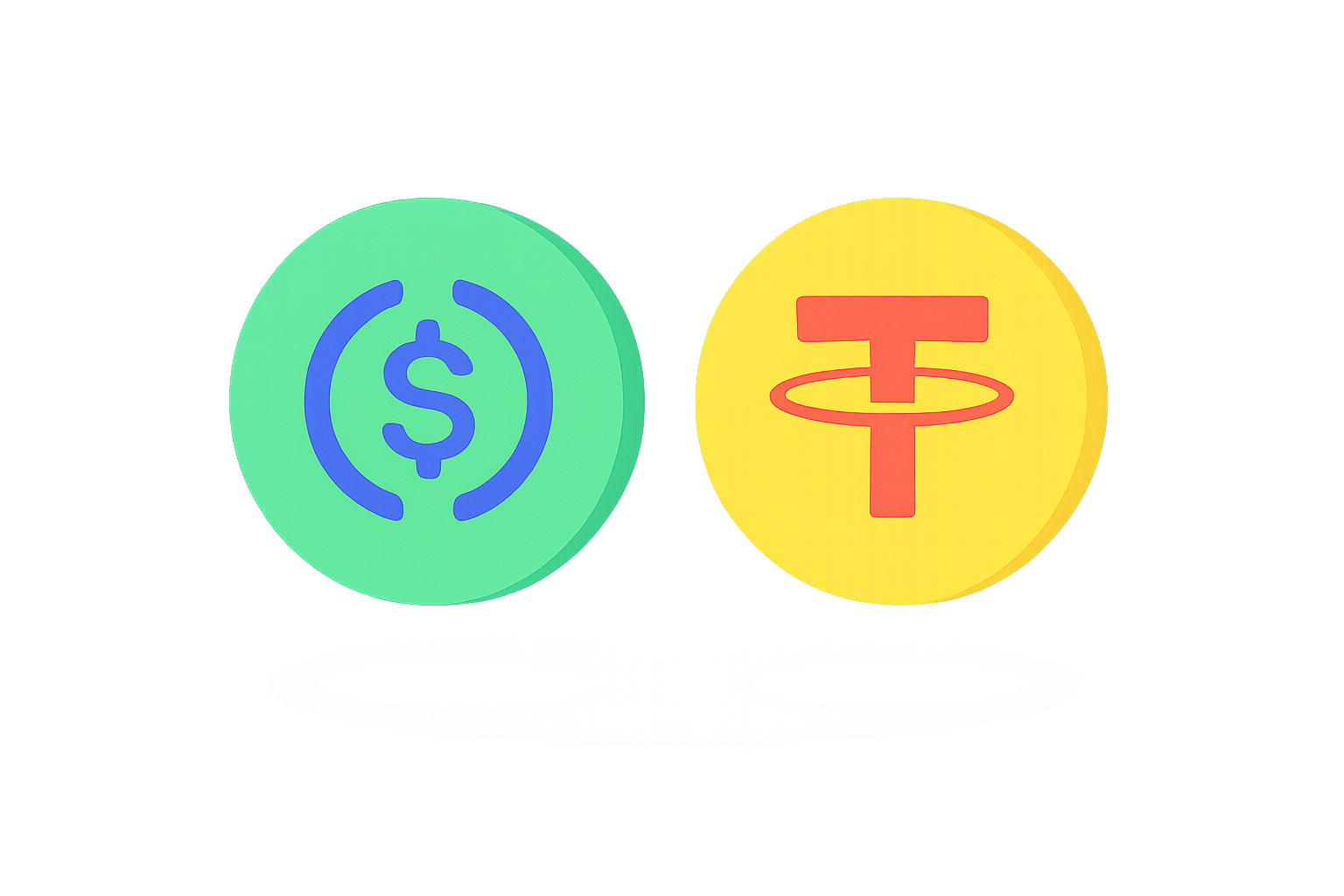
USDC versus USDT: What's the difference?

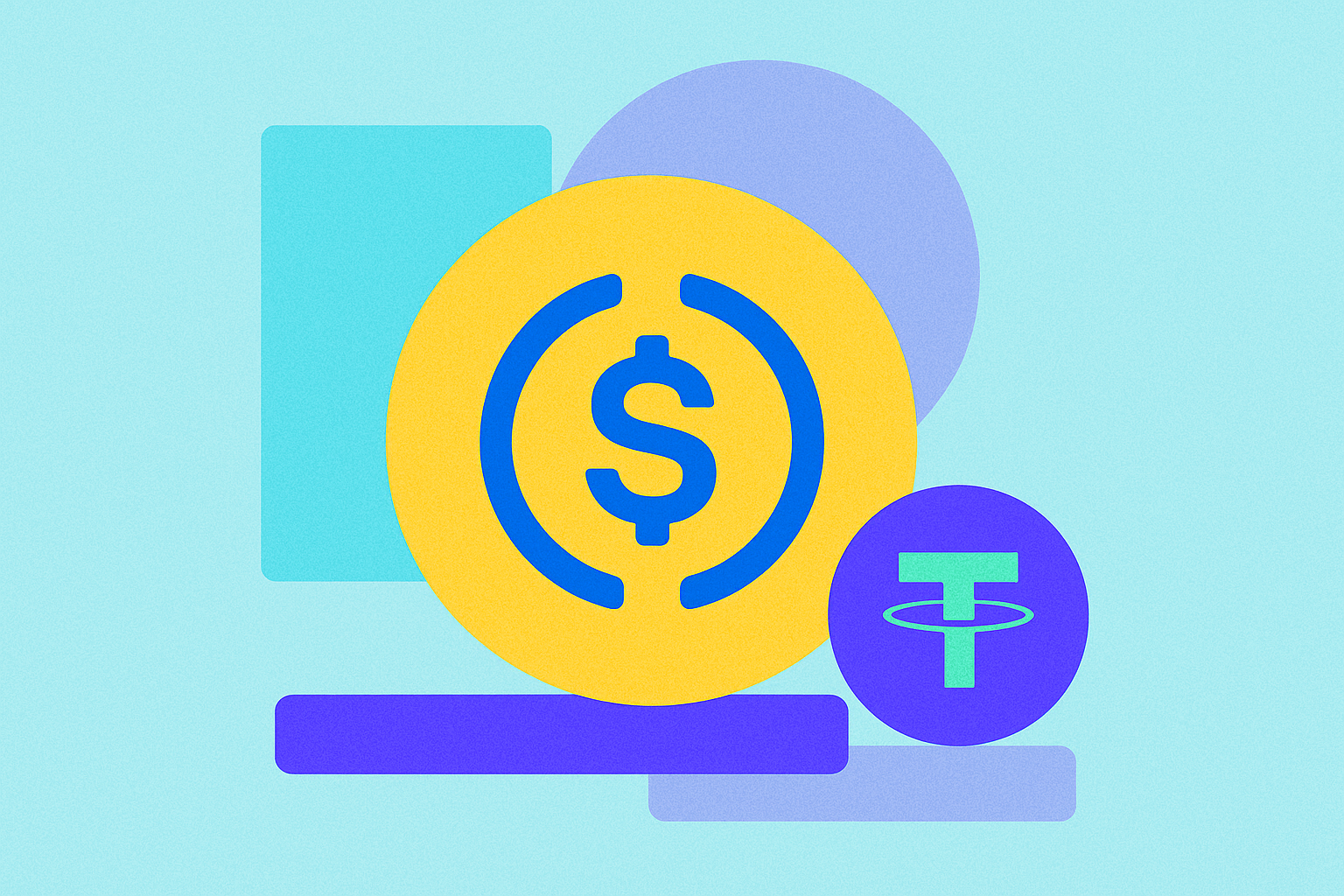
When comparing Circle USDC with Tether (USDT), the oldest and largest reserve-backed stablecoin by market capitalization and trading volume, several key distinctions emerge. Both stablecoins maintain a 1:1 peg with the U.S. Dollar and operate across multiple blockchains including Ethereum, TRON, and Algorand.

The fundamental difference lies in their issuing entities and regulatory frameworks. USDT is issued by Tether Limited, a subsidiary of a Hong Kong-based conglomerate, meaning it operates outside U.S. regulatory jurisdiction and doesn't follow the same compliance standards that Circle USDC maintains. This jurisdictional difference has implications for transparency and oversight.

Despite USDT's long-standing presence in the cryptocurrency market, questions persist regarding Tether Limited's reserves. Unlike Circle, Tether's leadership doesn't consistently release regular attestations or comprehensive audits from independent third-party accounting firms, creating uncertainty about the actual backing of each USDT token. While theoretically every USDT should equal $1 USD in reserves, the lack of transparent reporting leaves the composition of Tether's balance sheet unclear. In contrast, Circle maintains a commitment to transparency by regularly publishing detailed reports on its holdings and claims adherence to U.S. federal guidelines, providing greater assurance to users and regulators.

Conclusion

USD Coin (USDC) represents a significant innovation in the cryptocurrency ecosystem, offering stability and utility in a market often characterized by volatility. As a reserve-backed stablecoin pegged to the U.S. Dollar, Circle USDC has successfully established itself as the second-largest stablecoin, serving diverse purposes from trading and payments to DeFi applications and cross-border remittances. Its foundation through the collaboration of major industry players and Circle, combined with transparent reserve auditing and multi-blockchain availability, has built substantial trust within the digital asset community. While USDC faces challenges including regulatory uncertainty, lack of federal insurance protection, and dependence on U.S. Dollar stability, its advantages—particularly low volatility, high liquidity, and regulatory compliance—make it a valuable tool for individuals and institutions navigating the cryptocurrency landscape. As the digital asset industry continues to evolve, Circle USDC's role in bridging traditional finance and decentralized systems positions it as a crucial component of the emerging digital economy.

FAQ

How does Circle USDC work?

Circle USDC is a stablecoin pegged to the US dollar, backed by reserves in regulated institutions. It's regularly audited for transparency and used to protect against crypto volatility.

Is USDC always $1 dollar?

USDC is designed to maintain a stable 1:1 peg to the US dollar, backed by reserves of cash and U.S. Treasury securities. While it aims to always equal $1, minor fluctuations can occur in the market.

Is Circle USDC safe?

Circle USDC is generally considered safe due to regulatory compliance, transparent reserves, and wide adoption. It maintains a 1:1 peg with USD, but like all digital assets, it's not risk-free.

Is Circle the same as USDC?

No, Circle and USDC are not the same. Circle is the company that issues USDC, which is a stablecoin product created by Circle.

* The information is not intended to be and does not constitute financial advice or any other recommendation of any sort offered or endorsed by Gate.

Share

Content

What is USDC?

How Does USDC Work? Understanding Circle USDC

What are the Uses of USDC?

Benefits and Drawbacks of USDC

USDC versus USDT: What's the difference?

Conclusion

FAQ

Related Articles
Understanding Stablecoin Varieties: A Comparison Guide for Choosing Wisely

Understanding Stablecoin Varieties: A Comparison Guide for Choosing Wisely

Explore the essential role of stablecoins as a bridge between traditional finance and the digital asset ecosystem. This guide outlines the types of stablecoins—fiat-collateralized, crypto-collateralized, algorithmic—and the key benefits of using stablecoins, such as price stability and transaction efficiency. Suitable for traders, businesses, and crypto enthusiasts, the article addresses potential risks like centralization and regulatory uncertainty. Learn to choose the right stablecoin by assessing transparency, market capitalization, and utility in compliance with legal frameworks.
2025-12-21 10:17:21
Discovering USDC: An Introductory Guide to Top Stablecoin Across Networks

Discovering USDC: An Introductory Guide to Top Stablecoin Across Networks

USD Coin (USDC) is a leading stablecoin designed to maintain a 1:1 value ratio with the U.S. Dollar, serving as a bridge between traditional finance and digital assets. As a reserve-backed stablecoin, USDC offers stability, transparency, and utility across various blockchain networks, including Ethereum, Solana, TRON, and Polygon. The article explores how USDC functions, its widespread uses in cryptocurrency trading, payments, and international remittances, while comparing it with USDT and highlighting its advantages and challenges. Ideal for traders and everyday users seeking a stable digital asset, USDC is a key player in the evolving crypto ecosystem.
2025-12-20 10:12:13
What is PAXG (PAX Gold): How 100% Physical Gold Backing Works in Blockchain

What is PAXG (PAX Gold): How 100% Physical Gold Backing Works in Blockchain

# Article Overview: PAX Gold (PAXG) - Blockchain-Based Physical Gold Investment PAX Gold (PAXG) is a regulated, blockchain-backed token representing physical gold stored in London LBMA-certified vaults, issued by Paxos Trust Company under NYDFS oversight. This article examines how PAXG maintains 100% gold backing through independent monthly audits by KPMG and WithumSmith+Brown, ensuring transparent 1:1 reserve verification. Explore PAXG's integration into DeFi platforms like MakerDAO and Aave, its $600M market cap, and near-instant cross-border settlement capabilities. Designed for institutional and retail investors seeking tokenized gold exposure on Gate without counterparty risk, this guide clarifies regulatory compliance, custody security, redemption processes, and comparative advantages over traditional gold ETFs, addressing key concerns about blockchain-based commodity investment. --- **Key Topics Covered:** - 100% physical gold backing mechanism with monthly independent audits - DeFi integration and
2026-01-03 03:43:38
Differences Between USDT-M Futures and Coin-M Futures

Differences Between USDT-M Futures and Coin-M Futures

# Article Introduction This comprehensive guide explores USDT-M Futures and Coin-M Futures trading on Gate, two distinct derivative products designed for different investment strategies in Web3. USDT-M Futures offers intuitive profit calculation in stablecoins with hundreds of trading pairs, ideal for traders holding USDT seeking diversified leverage exposure. Coin-M Futures enables cryptocurrency holders to trade using their assets as collateral, maximizing capital efficiency during bull markets while maintaining long-term positions. The article compares key differences including settlement methods, fee structures, and risk profiles, helping traders select the optimal futures product based on their asset holdings, risk tolerance, and investment objectives. Whether you prioritize stable settlement or cryptocurrency-denominated returns, this guide provides actionable insights for navigating Gate's futures markets.
2026-01-01 13:02:33
Blockchain-Powered Music Royalty Distribution: Avalanche Drives the Digital Transformation

Blockchain-Powered Music Royalty Distribution: Avalanche Drives the Digital Transformation

See how Avalanche is transforming music royalty payments with blockchain. Artists receive instant payouts, full transparency, and direct access without intermediaries. Record Finance and Avalanche are reshaping the music industry through innovative Web3 solutions and USDC stablecoins. The future of creative finance begins now.
2025-12-27 00:02:56
Understanding Decentralized Finance: A Comprehensive Guide

Understanding Decentralized Finance: A Comprehensive Guide

This comprehensive guide dives into the revolutionary world of decentralized finance (DeFi), detailing the core principles, historical evolution, and diverse ecosystems that drive its transformative potential. The article explores how DeFi operates, emphasizing its benefits over traditional finance, such as permissionless access, transparency, and cost-efficiency. It is tailored for anyone interested in understanding DeFi's mechanics, including key protocols, tokens, and innovative concepts like smart contracts and oracles. Structured elegantly, this guide provides a clear roadmap from defining DeFi to navigating its complex interactions and real-world applications, enhancing both keyword relevance and readability for quick scanning.
2025-12-05 16:37:24
Recommended for You
What is BULLA coin: analyzing whitepaper logic, use cases, and team fundamentals in 2026

What is BULLA coin: analyzing whitepaper logic, use cases, and team fundamentals in 2026

BULLA coin introduces decentralized accounting and on-chain data management innovation built on BNB Smart Chain, eliminating intermediaries while ensuring real-time transaction verification. The platform addresses critical gaps in cryptocurrency infrastructure by embedding accounting logic directly into smart contracts, enabling transparent audit trails and regulatory compliance. Real-world applications include seamless transaction imports across multiple exchanges, comprehensive crypto portfolio tracking, and secure record-keeping for investors. Trade import tools enhance user experience by automating data categorization and consolidation. Founded in 2021 by blockchain architect Benjamin with support from experienced fintech designers and engineers, BULLA Networks demonstrates active development momentum with continuous smart contract iterations through early 2026. The 2026-2027 strategic roadmap prioritizes network infrastructure expansion and enhanced security protocols, positioning BULLA as a robust decen
2026-02-08 08:20:10
How does MYX token's deflationary tokenomics model work with 100% burn mechanism and 61.57% community allocation?

How does MYX token's deflationary tokenomics model work with 100% burn mechanism and 61.57% community allocation?

This article examines MYX token's innovative deflationary tokenomics, featuring a distinctive 61.57% community allocation and 100% burn mechanism. The community-focused distribution empowers token holders through MYX DAO governance while ensuring value flows back to ecosystem participants. The 100% burn mechanism systematically removes node-generated revenue from circulation, reducing the total supply from one billion tokens and creating genuine scarcity. This supply-driven deflation counters inflation pressures and strengthens long-term holder value without requiring external demand. The combination of broad community distribution and aggressive token elimination creates sustainable deflationary economics. Ideal for investors seeking to understand how MYX Finance aligns community interests with protocol success through structural value preservation and decentralized governance mechanisms on Gate exchange.
2026-02-08 08:12:23
What Are Derivatives Market Signals and How Do Futures Open Interest, Funding Rates, and Liquidation Data Impact Crypto Trading in 2026?

What Are Derivatives Market Signals and How Do Futures Open Interest, Funding Rates, and Liquidation Data Impact Crypto Trading in 2026?

This comprehensive guide decodes cryptocurrency derivatives market signals essential for 2026 trading success. Learn how futures open interest, funding rates, and liquidation data—such as ENA's $17 billion contract volume and $94 million daily position closures—reveal market sentiment and institutional positioning. The article explains how long-short ratios and liquidation heatmaps identify reversal opportunities, while options imbalance signals indicate smart money accumulation strategies. Discover why exchange outflows and funding rate extremes precede major price movements. From analyzing $46.45M ENA outflows to understanding leverage risks, this resource equips traders with actionable intelligence for predicting market turning points. Perfect for beginners and experienced traders leveraging Gate's analytics tools to navigate increasingly complex derivatives markets with informed entry and exit strategies.
2026-02-08 08:08:39
How do futures open interest, funding rates, and liquidation data predict crypto derivatives market signals in 2026?

How do futures open interest, funding rates, and liquidation data predict crypto derivatives market signals in 2026?

This article explores how three critical derivatives metrics—open interest exceeding $20 billion, funding rates shifting positive, and liquidation volume declining 30%—predict crypto derivatives market signals in 2026. The guide reveals institutional participation driving market maturation while positive funding rates signal strengthened bullish momentum. Long-short ratio stabilization at 1.2 with put-call ratio below 0.8 demonstrates sophisticated hedging strategies on Gate and other platforms. Reduced liquidation volumes indicate improved risk management and market resilience. By analyzing how these indicators combine—measuring position sizing, sentiment extremes, and forced selling pressure—traders gain precise tools for identifying trend reversals, leverage exhaustion, and market turning points with 55-65% AI-driven accuracy for 2026.
2026-02-08 08:05:14
What is a token economics model and how does GALA use inflation mechanics and burn mechanisms

What is a token economics model and how does GALA use inflation mechanics and burn mechanisms

This article explores GALA's innovative token economics model, examining how inflation mechanics and burn mechanisms create sustainable ecosystem growth. The guide covers GALA token distribution through 50,000 Founder's Nodes requiring 1 million GALA for 100% daily rewards, establishing long-term community participation. A dual-mechanism approach pairs controlled inflation with strategic annual supply reduction to establish deflationary pressure. The burn mechanism, powered by 100% transaction fee burning on GalaChain combined with NFT royalty enforcement averaging 6.1%, creates continuous supply reduction while incentivizing creator participation. Governance utility empowers node holders to vote on game launches through consensus mechanisms, transforming GALA holders into active stakeholders. Perfect for investors and ecosystem participants seeking to understand how GALA balances token scarcity with ecosystem vitality through integrated economic incentives and community governance on Gate.
2026-02-08 08:03:30
What is on-chain data analysis and how does it reveal whale movements and active addresses in crypto?

What is on-chain data analysis and how does it reveal whale movements and active addresses in crypto?

On-chain data analysis reveals cryptocurrency market dynamics by examining active addresses and transaction metrics that expose whale movements and investor behavior. This comprehensive guide explores how blockchain data serves as a critical market indicator, demonstrating the correlation between large holder activities and price movements—such as FLOKI's 950% surge in whale transactions. The article covers whale movement tracking, holder distribution patterns showing 73.47% concentration among major stakeholders, and on-chain fee trends as cycle indicators. Essential metrics include active addresses reflecting genuine network participation, transaction volumes revealing strategic positioning, and network congestion patterns during market cycles. By tracking these interconnected indicators through platforms like Glassnode and Gate, investors and traders can identify market sentiment shifts, anticipate price movements, and distinguish institutional activity from retail participation, making on-chain analysis i
2026-02-08 08:01:25