Web3 Wallet vs CEX Wallet
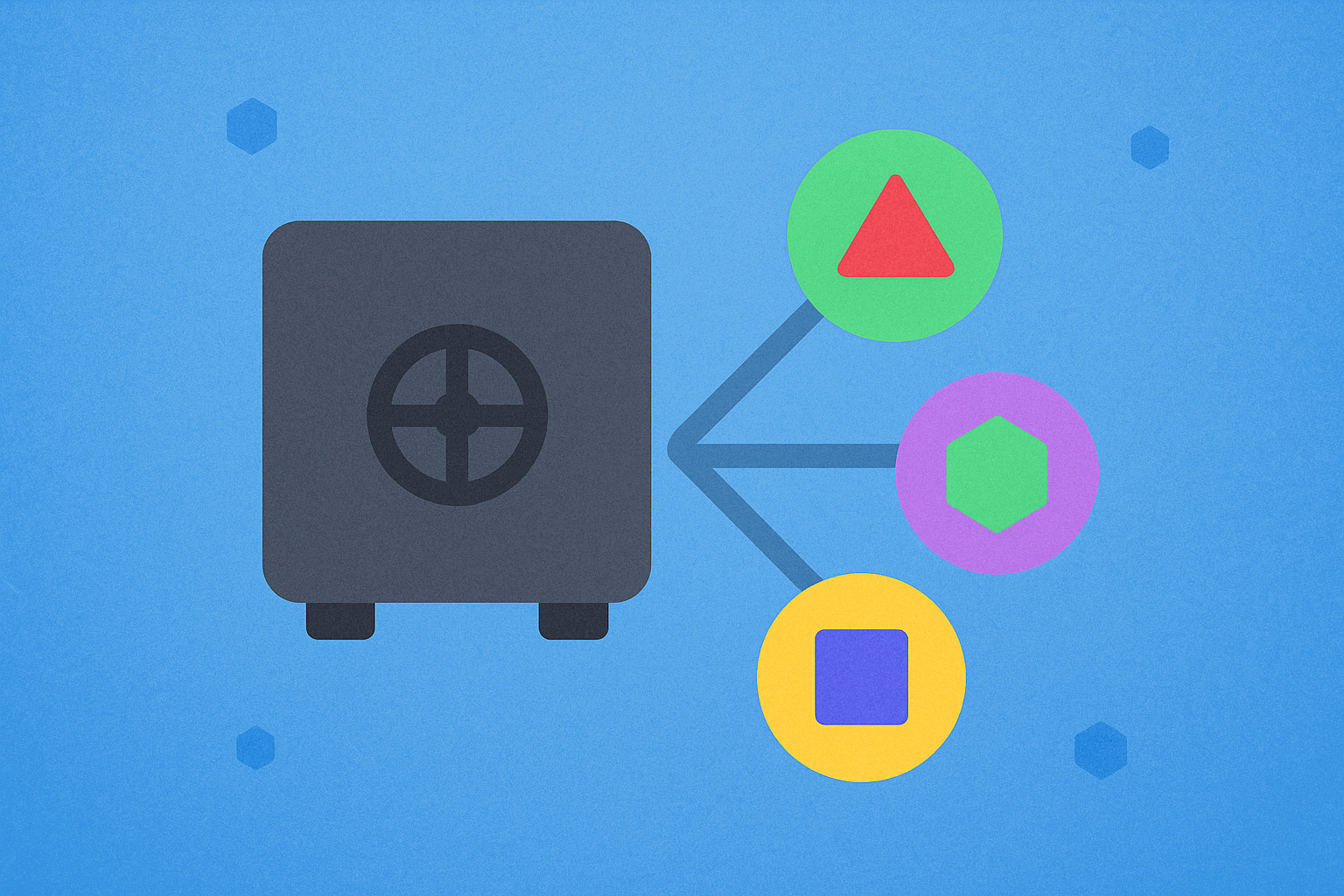
Introduction to Web3 Wallets
The rise of blockchain technology has not only revolutionized financial transactions through cryptocurrencies but has also paved the way for a new era known as Web3, reshaping the internet landscape. Central to this transformation are Web3 wallets, pivotal tools that go beyond traditional digital wallets by serving as gateways to decentralized applications (dApps) and smart contracts. These wallets play a crucial role in managing a new generation of digital assets, emphasizing principles such as decentralization, privacy, and user control.
Unlike their predecessors, which primarily focused on storing and transferring cryptocurrencies, Web3 wallets offer advanced functionalities tailored to meet the growing demand for personal data security and autonomous management of digital assets. This evolution from Web2 to Web3 technologies underscores the increasing importance of decentralized systems and user sovereignty in the digital age. For instance, Web3 wallets enable users to sign transactions directly on the blockchain without intermediaries, ensuring complete ownership of their digital identities. Additionally, they provide a user-friendly experience and seamless integration with dApps, making it easier for both newcomers and experienced users to navigate the decentralized ecosystem.
Types of Web3 Wallets
Web3 wallets come in various forms tailored to different user needs and preferences. Each type of wallet plays a crucial role in enabling users to manage and interact with decentralized applications and assets in the evolving Web3 landscape. Understanding the distinctions between these wallet types helps users choose the most suitable option based on their security requirements, usage frequency, and technical expertise. Here, we explore three main categories of Web3 wallets.
Browser Extensions
Browser extensions like MetaMask seamlessly integrate with web browsers, providing smooth access to dApps directly from your desktop environment. These wallets are perfect for users who frequently interact with different dApps, ensuring a streamlined experience in the decentralized web environment. Browser extension wallets typically store private keys locally on the user's device, encrypted with a password chosen during setup. This approach balances convenience with security, allowing users to quickly connect to DeFi protocols, NFT marketplaces, and other blockchain-based services without leaving their browser. For example, a user can swap tokens on a decentralized exchange, mint NFTs, and participate in governance voting all within the same browsing session, making browser extensions ideal for active Web3 participants who value efficiency.
Mobile Apps
Mobile apps such as certain mainstream mobile wallet applications offer convenience by allowing users to manage digital assets and engage with the decentralized web on the go. They often include features like built-in dApp browsers and support for decentralized finance (DeFi) platforms, enhancing usability and functionality for active Web3 participants. Mobile wallets are particularly advantageous for users who need to access their assets anytime, anywhere, whether for making quick transactions, checking portfolio values, or interacting with mobile-optimized dApps. Many mobile Web3 wallets also incorporate biometric authentication such as fingerprint or face recognition, adding an extra layer of security while maintaining ease of use. These applications typically support multiple blockchain networks, enabling users to manage diverse digital assets within a single interface.
Hardware Wallets
For those prioritizing security, hardware wallets like Ledger and Trezor store private keys offline, offering robust protection against online threats such as phishing attacks, malware, and hacking attempts. These wallets are well-suited for securely storing cryptocurrencies and digital assets over extended periods, making them the preferred choice for long-term investors and users holding significant asset values. Hardware wallets function as physical devices that must be connected to a computer or mobile device to authorize transactions, ensuring that private keys never leave the secure environment of the device itself. This "cold storage" approach dramatically reduces the attack surface compared to software wallets that remain connected to the internet. While hardware wallets may require a small investment and are less convenient for frequent transactions, they provide unparalleled security for safeguarding substantial holdings.
What Are CEX Wallets
CEX wallets, short for Centralized Exchange wallets, are wallets issued by centralized cryptocurrency exchanges upon user registration. Each user is assigned a wallet linked to their exchange account, primarily used for trading and storing cryptocurrencies within the ecosystem of the exchange. These wallets provide convenience and straightforward access, enabling users to swiftly deposit and withdraw funds from their exchange accounts without the need to manage private keys themselves.
The operational model of CEX wallets differs fundamentally from Web3 wallets in that the exchange acts as a custodian of user assets. When you deposit cryptocurrency into a CEX wallet, you are essentially trusting the exchange to hold your funds securely and execute transactions on your behalf. This custodial arrangement simplifies the user experience, particularly for beginners who may find the responsibility of managing private keys daunting. However, utilizing CEX wallets entails a trade-off regarding security. Since funds are stored on the exchange, users depend on the security protocols of the exchange and are vulnerable to potential security breaches or cyberattacks aimed at compromising the exchange's infrastructure. Historical incidents have demonstrated that even major exchanges can fall victim to hacks, resulting in significant losses for users. Therefore, while CEX wallets offer convenience for active trading, they may not be the optimal choice for long-term asset storage.
Differences Between Web3 Wallets and CEX Wallets
Web3 wallets and centralized exchange (CEX) wallets represent distinct approaches to managing digital assets in the cryptocurrency ecosystem. Understanding these differences is essential for users to make informed decisions about how to store and interact with their digital assets. In the following comparison, we examine the different approaches to security, control, access, and use cases that distinguish these two wallet types.
Security Comparison
Web3 wallets vary in security depending on their implementation, offering features for interacting securely with decentralized applications. Security in Web3 wallets is primarily determined by how well users protect their private keys and recovery phrases. Since Web3 wallets are non-custodial, the responsibility for security lies entirely with the user. This means that while Web3 wallets eliminate the risk of exchange hacks, they require users to implement best practices such as using strong passwords, enabling two-factor authentication where available, and securely storing backup phrases offline. Hardware wallets, as a subset of Web3 wallets, provide the highest level of security by keeping private keys in an isolated, offline environment.
In contrast, CEX wallets rely on security measures implemented by centralized exchanges, which typically include advanced encryption, cold storage for the majority of funds, insurance policies, and dedicated security teams. While reputable exchanges invest heavily in security infrastructure, the centralized nature of these platforms makes them attractive targets for sophisticated cyberattacks. Users of CEX wallets must trust that the exchange has implemented adequate security measures and that their funds are protected against both external threats and internal vulnerabilities. The trade-off here is between user responsibility (Web3 wallets) and institutional trust (CEX wallets).
Control and Ownership
Web3 wallets empower users with complete control over their private keys and assets, promoting autonomy and ownership in accordance with the core principles of blockchain technology. When using a Web3 wallet, users are the sole custodians of their private keys, which means they have absolute authority over their funds without requiring permission from any third party. This level of control aligns with the decentralized ethos of cryptocurrency, where individuals should have sovereignty over their own assets. The phrase "not your keys, not your coins" encapsulates this principle, emphasizing that true ownership requires direct control of private keys.
In contrast, CEX wallets delegate control to the centralized exchange, necessitating trust in their management of user assets. When you deposit funds into a CEX wallet, you no longer hold the private keys to those assets; instead, the exchange controls them on your behalf. While this arrangement simplifies the user experience and enables features like instant trading and account recovery through customer support, it also means that users must rely on the exchange's policies and operational integrity. In extreme cases, exchanges may freeze accounts, impose withdrawal limits, or even face insolvency, all of which can impact users' access to their funds. Therefore, the choice between Web3 and CEX wallets often comes down to whether users prioritize autonomy and self-custody or convenience and institutional support.
Access and Use Case
Web3 wallets are specifically crafted for engaging with decentralized finance applications, enabling activities like yield farming, lending, borrowing, and participating in decentralized autonomous organizations (DAOs). These wallets serve as the primary interface for interacting with smart contracts on various blockchain networks, allowing users to explore the full potential of the decentralized web. For example, a user with a Web3 wallet can provide liquidity to a decentralized exchange, stake tokens in a protocol to earn rewards, participate in NFT auctions, and vote on governance proposals—all without intermediaries. The versatility of Web3 wallets makes them indispensable tools for anyone looking to actively participate in the Web3 ecosystem beyond simple asset storage.
CEX wallets, on the other hand, focus on trading, facilitating functions such as buying, selling, and exchanging cryptocurrencies within the exchange environment. They are optimized for users who primarily engage in speculative trading, portfolio management, and fiat-to-crypto conversions. CEX wallets typically offer features like advanced trading interfaces, margin trading, futures contracts, and integration with traditional payment methods, making them well-suited for traders who require liquidity and speed. However, CEX wallets generally do not support direct interaction with dApps or smart contracts, limiting their utility in the broader Web3 landscape. For users whose primary goal is to trade cryptocurrencies efficiently, CEX wallets provide a practical solution, whereas those interested in exploring decentralized applications will find Web3 wallets more appropriate.
Key Features of a Good Web3 Wallet
When selecting a Web3 wallet, it is essential to consider the following critical features that determine the wallet's effectiveness, security, and overall user experience:
Security: Prioritize wallets that employ advanced authentication and encryption technologies, such as multi-signature capabilities and integration with hardware wallets. These measures are crucial for ensuring the security and protection of user funds. Multi-signature wallets, for instance, require multiple private keys to authorize a transaction, adding an extra layer of security that protects against single points of failure. Additionally, look for wallets that offer features like transaction confirmation prompts, address whitelisting, and the ability to set spending limits, all of which help prevent unauthorized access and accidental transfers.
Functionality: Seek wallets that offer more than just basic storage and transfer functionalities. Look for features like support for multiple token standards (such as ERC-20, ERC-721, and BEP-20), robust trading capabilities through integrated decentralized exchanges, options for staking directly from the wallet, integration with decentralized finance (DeFi) protocols, and the ability to participate in crowdfunding and Security Token Offerings (STOs). Advanced Web3 wallets may also include portfolio tracking tools, price alerts, and transaction history analysis, enhancing the versatility and utility of the wallet within the Web3 ecosystem. The more comprehensive the feature set, the more value the wallet provides to users who engage in diverse blockchain activities.
Usability: Opt for a wallet with a user-friendly interface that facilitates easy management and interaction with Web3-related digital assets. Intuitive navigation and clear functionality ensure a smooth user experience, especially for those new to decentralized technologies. A well-designed Web3 wallet should simplify complex operations like connecting to dApps, approving transactions, and managing multiple accounts across different blockchain networks. Features such as customizable dashboards, search functions, and educational resources within the wallet can significantly enhance usability. Additionally, consider wallets that offer customer support, community forums, and detailed documentation to assist users in troubleshooting issues and learning best practices.
Non-Custodial: Choose a wallet that is non-custodial, meaning users retain full ownership and control of their private keys. This feature allows users to store assets securely in a local wallet or trade directly on decentralized exchanges (DEXs), thereby enhancing privacy and data security without relying on third-party custody. Non-custodial wallets align with the fundamental principles of blockchain technology, ensuring that users are not dependent on any centralized entity for access to their funds. This characteristic is particularly important for users who value financial sovereignty and wish to minimize counterparty risk. By maintaining control of their private keys, users can be confident that their assets remain secure even if the wallet provider ceases operations or experiences technical difficulties.
The Future Outlook for Web3 Wallets
The future of Web3 wallets appears poised for dynamic innovation, reflecting the evolving landscape of Web3 technology. Emerging advancements such as virtual reality (VR) and augmented reality (AR) hold promise for integration with Web3 wallets, potentially enabling users to manage digital assets within immersive environments. As VR and AR technologies mature, we may see the development of entirely new interfaces for interacting with blockchain networks, where users can visualize their portfolios in three-dimensional spaces, attend virtual conferences using tokenized tickets, and engage in social experiences powered by decentralized protocols.
Picture scenarios where users can acquire virtual real estate on VR platforms using their Web3 wallets, or gain access to blockchain-driven events through digital tokens stored securely in their wallets. These developments have the potential to redefine digital ownership and identity, amplifying the role of Web3 wallets as essential tools in our digital experiences. For example, a user might walk through a virtual art gallery, purchase NFTs directly from their wallet, and display them in their virtual home—all without leaving the immersive environment. Similarly, AR applications could overlay blockchain data onto the physical world, allowing users to see real-time information about tokenized assets simply by pointing their device at an object.
Furthermore, advancements in cross-chain interoperability and layer-2 scaling solutions are expected to enhance the functionality of Web3 wallets, making them more efficient and capable of handling higher transaction volumes with lower fees. Integration with decentralized identity systems may also enable Web3 wallets to serve as universal digital identity credentials, streamlining access to various online services while preserving user privacy. In essence, as Web3 continues to evolve, the integration of VR and AR with Web3 wallets, along with other technological innovations, could usher in new possibilities and paradigms for managing and interacting with digital assets, reinforcing their significance in our increasingly interconnected digital world.
Choosing the Right Wallet
Selecting the appropriate wallet type hinges on individual preferences, security needs, and intended cryptocurrency use. Web3 wallets cater to active participants in decentralized finance who value autonomy, privacy, and the ability to interact directly with smart contracts and dApps. They are ideal for users who are comfortable managing their own private keys and who wish to explore the full range of opportunities available in the Web3 ecosystem, from yield farming to NFT collecting. On the other hand, CEX wallets offer convenience for trading but entail reliance on centralized exchanges for asset security, making them more suitable for users who prioritize ease of use, customer support, and access to advanced trading features over complete self-custody.
When making this decision, consider factors such as your technical expertise, the frequency and nature of your transactions, the amount of assets you plan to hold, and your tolerance for risk. For example, a beginner who primarily wants to buy and hold cryptocurrency might start with a CEX wallet for its simplicity, then gradually transition to a Web3 wallet as they become more comfortable with blockchain technology. Conversely, an experienced user engaged in DeFi activities would likely benefit more from a Web3 wallet that supports direct interaction with protocols. Some users may choose to use both types of wallets in tandem, keeping a small amount in a CEX wallet for active trading while storing the majority of their holdings in a secure Web3 hardware wallet. Evaluating these factors allows users to make informed decisions about cryptocurrency storage and utilization that align with their goals and risk profile.
FAQ
What is the difference between Web3 wallets and CEX wallets?
Web3 wallets are non-custodial, meaning you control your private keys and seed phrases. CEX wallets are custodial, managed by exchanges on their servers. Web3 wallets offer greater security and true asset ownership, while CEX wallets provide convenience but require trusting the exchange with your funds.
What are the advantages and disadvantages of Web3 wallets compared to CEX wallets?
Web3 wallets offer superior privacy and require no identity verification, enabling true self-custody. CEX wallets provide convenience and regulatory compliance but demand strict KYC/AML procedures. Web3 wallets give users full control; CEX wallets offer easier asset management and customer support.
Do I need to manage private keys myself when using a Web3 wallet? What are the risks?
Yes, Web3 wallets require you to manage your own private keys, as they control your funds. Losing your private key means permanently losing access to your assets. Keep private keys secure and never share them with anyone.
Can assets be recovered after losing a CEX wallet?
If you lose your CEX wallet private key, assets are permanently lost. No recovery method exists once the key is gone. Always backup your private keys securely.
Should beginners choose Web3 wallets or CEX wallets?
Beginners should start with CEX wallets for ease of use and simplicity. As you gain experience and seek more control over your assets, transition to Web3 wallets for enhanced security and decentralized features.
Which mainstream blockchain networks does Web3 wallet support?
Web3 wallets support major blockchains including Bitcoin, Ethereum, Binance Smart Chain, and Solana, with coverage across 80+ public chains and their native assets.
How to safely use Web3 wallet for transactions?
Verify recipient addresses carefully before confirming transactions, use strong passwords, never share private keys, enable multi-signature security when available, and keep your device updated and malware-free.
If a CEX wallet is frozen or the platform goes bankrupt, what happens to your assets?
Your assets may become inaccessible or permanently lost. Funds held on CEX are custodial and vulnerable to platform risks. Withdraw crypto to self-custody wallets immediately after trading to protect your assets.
What are the differences between popular Web3 wallets like MetaMask and Ledger?
MetaMask is a browser extension wallet offering flexibility and cross-chain compatibility for frequent interactions. Ledger is a hardware wallet providing maximum security through physical isolation, ideal for long-term asset storage. Choose based on your needs: MetaMask for convenience, Ledger for enhanced security.
Secure Web3 Wallet for Crypto Trading Enthusiasts
Exploring App Features: A Complete Guide to Wallets vs. Exchanges
Ultimate Web3 Wallet Guide for Crypto Trading
Multi-Chain Wallet & FstSwap Joint Trading Carnival Event

Crypto Trading: Differences Between Wallets and Exchanges

Advanced Crypto Wallet Browser Extension Solution

What is the current crypto market overview and how are top coins ranked by market cap and trading volume

What is on-chain data analysis and how does it predict crypto price movements through active addresses, transaction volume, and whale activity

What Do Crypto Derivatives Market Signals Tell Us About Future Price Movement

What is the core whitepaper logic and technical innovation behind this crypto project in 2026

What Do Crypto Derivatives Market Signals Tell Us About Price Movements: Futures Open Interest, Funding Rates, and Liquidation Data