fomox
MarketsPerpsSpotSwap
Meme
Referral
More
Search Token/Wallet
/

What are Privacy Coins?

2026-01-01 00:07:21
Altcoins
Blockchain
Crypto Ecosystem
Web 3.0
Zero-Knowledge Proof
Article Rating : 4.5
half-star
119 ratings
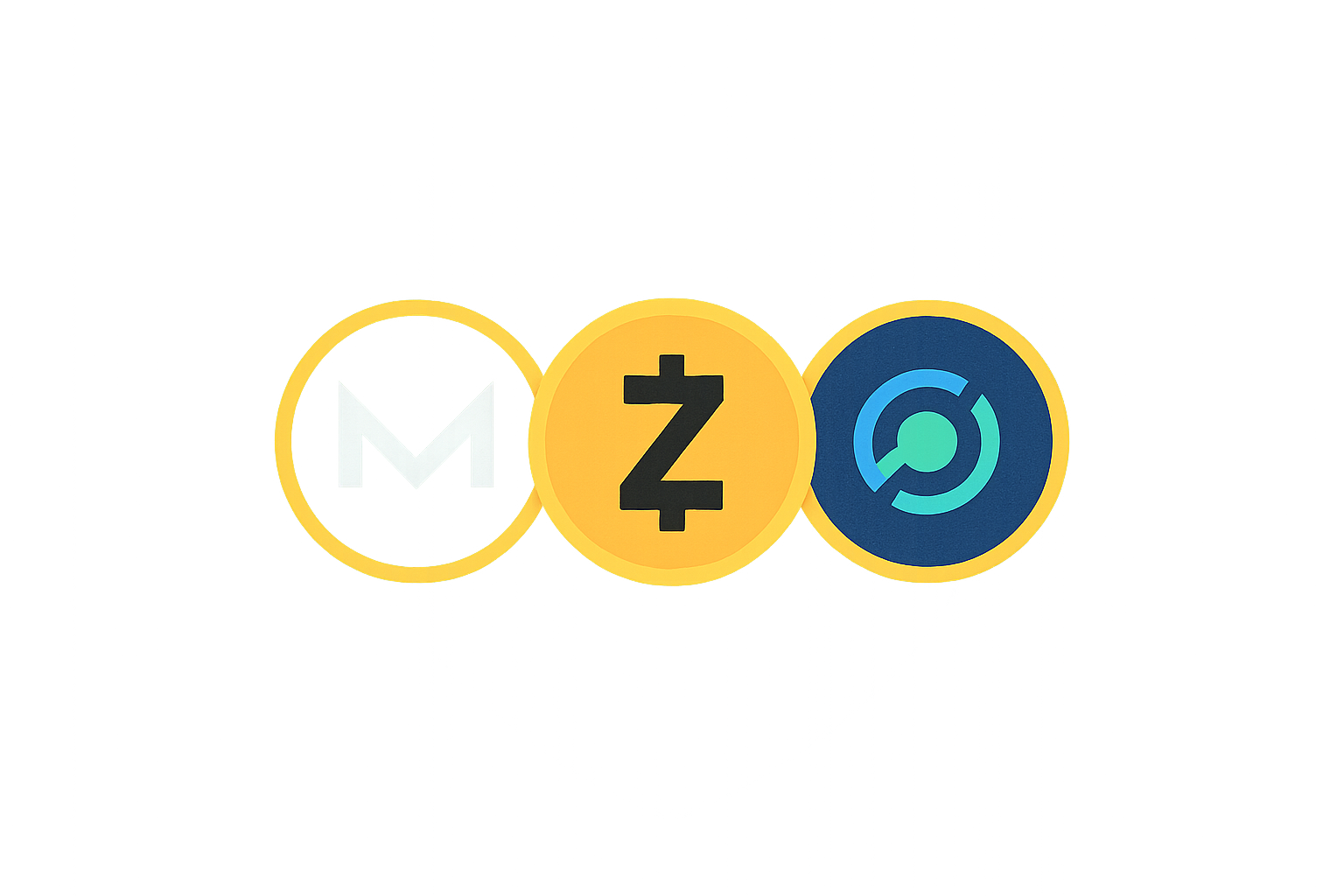
# Top Anonymous Cryptocurrencies: A Comprehensive Guide to Privacy Coins Privacy coins like Monero, Zcash, and Horizen offer essential financial anonymity through advanced cryptographic techniques, addressing growing concerns about digital surveillance and data protection. This guide serves investors, traders, and everyday users seeking to understand privacy-focused cryptocurrencies and their role in portfolio diversification. The article examines core privacy technologies, real-world applications across business and humanitarian sectors, and market adoption trends. You'll discover how privacy coins work, their key differences from Bitcoin, and regulatory considerations. Whether you're exploring privacy solutions or trading privacy coins on Gate, this comprehensive resource provides actionable insights for making informed decisions in the evolving digital economy.
What are Privacy Coins?

Importance of Privacy Coins for Investors, Traders, and Users

Privacy coins are cryptocurrencies that prioritize user anonymity and data protection, offering a higher degree of privacy compared to conventional cryptocurrencies like Bitcoin or Ethereum. These coins use various cryptographic techniques to obscure the details of transactions, ensuring that the identities of the sender and receiver, as well as the transaction amount, remain concealed. This feature addresses the transparency of traditional blockchain technologies, where transaction details are often publicly accessible.

Privacy coins matter significantly in the financial ecosystem for several reasons. For investors and traders, these coins offer a layer of financial privacy that is akin to the anonymity of cash transactions. This is particularly appealing in scenarios where users prefer to keep their wealth and transaction details confidential to avoid potential threats like hacking or identity theft. Moreover, privacy coins are often seen as a critical part of portfolio diversification strategy, potentially reducing risk by spreading investments across different types of assets.

For everyday users, privacy coins provide a means to maintain personal financial privacy. This is crucial in an era where digital footprints are exhaustively tracked and monetized. By using privacy coins, individuals can avoid targeted advertising, price discrimination, and reduce the risk of personal data breaches.

Examples and Key Privacy Coin Technologies

Several privacy coins have gained prominence in recent years, each employing unique technologies to achieve transactional privacy:

Monero (XMR): Monero uses ring signatures and stealth addresses to obscure the origins, amounts, and destinations of transactions. It remains one of the most popular privacy coins due to its robust privacy features and has been increasingly adopted in regions with stringent financial surveillance.

Zcash (ZEC): Zcash offers the option of "shielded" transactions, which are encrypted using zk-SNARKs technology, allowing for secure ledger entries without disclosing transaction details. This selective transparency approach has found a niche among users who prefer flexibility in their privacy choices.

Horizen (ZEN): Horizen uses zk-SNARKs to enable fully private transactions and also offers a secure messaging system and sidechain capabilities for building decentralized applications. Horizen's sidechain technology has enabled the development of private and customizable blockchain solutions, broadening its applications beyond mere currency use.

These privacy-focused cryptocurrencies have demonstrated varying levels of adoption and utility across different user segments and geographical regions.

Applications and Relevance in the Modern Economy

Privacy coins are not only used for personal transactions but also have applications in business and governance. Companies use privacy coins to confidentially handle sensitive financial data, protecting corporate secrets and client information. In countries with unstable economic conditions, privacy coins offer a discreet method of wealth storage and transfer, safeguarding against currency devaluation and capital controls.

Furthermore, privacy coins have been instrumental in supporting humanitarian efforts. They facilitate anonymous donations to controversial causes or regions under oppressive regimes, where other forms of aid might be blocked or censored. This capability underscores the broader role of privacy-focused technologies in protecting financial freedom and enabling support for causes that might otherwise face barriers.

Trading volumes for privacy coins like Monero and Zcash have shown steady growth over recent years, reflecting increasing consumer interest in financial privacy solutions. This uptick demonstrates a growing recognition of the value that privacy-focused digital currencies provide in the broader cryptocurrency ecosystem.

Market capitalization for privacy coins has also expanded, indicating robust demand for privacy-focused digital currencies. This trend continues as more users and businesses recognize the importance of privacy in the digital age. The sustained interest in these assets reflects a fundamental shift in how the market values confidentiality and financial autonomy.

Conclusion and Key Takeaways

Privacy coins play a crucial role in the modern financial landscape by offering an essential service: privacy. They protect users' identities and transaction details, contribute to portfolio diversification for investors, and offer businesses a means to maintain confidentiality in financial transactions. As the digital economy continues to evolve, the importance of privacy coins is likely to grow, reflecting the increasing value that users place on privacy and financial sovereignty.

For potential investors or users considering privacy coins, it is important to stay informed about the regulatory environment as it continues to develop, as this could impact the utility and value of privacy-focused cryptocurrencies. Understanding the distinct technologies and use cases of different privacy coins can help stakeholders make informed decisions aligned with their privacy and investment objectives.

Ultimately, as the demand for digital privacy increases, privacy coins will likely play an increasingly significant role in shaping the future of confidential transactions and digital rights management.

FAQ

What are Privacy Coins and how do they work?

Privacy coins are cryptocurrencies designed to enhance transaction anonymity using cryptographic techniques like Ring Signatures, Stealth Addresses, and zk-SNARKs. They obscure transaction histories, sender identities, and recipient information, unlike traditional transparent cryptocurrencies. Monero and ZCash are leading examples.

What are the main differences between Privacy Coins and Bitcoin?

Privacy coins use advanced cryptography to hide transaction details, sender, receiver, and amounts, while Bitcoin transactions are completely transparent and traceable on its public blockchain.

Monero, Zcash, and Dash are leading privacy coins. Monero uses ring signatures for anonymity, Zcash offers zero-knowledge proofs, and Dash provides optional privacy features. Each employs distinct cryptographic techniques to enhance transaction privacy and user anonymity.

How do Privacy Coins hide transaction information and user identity?

Privacy coins use advanced cryptographic techniques like zero-knowledge proofs and ring signatures to obscure transaction details and user identities. These methods make it difficult to trace transactions back to individuals, ensuring complete anonymity on the blockchain.

Privacy coins like Monero and Zcash remain legal to use and trade in many jurisdictions as of 2026. However, regulations vary by country, so check local laws before trading or holding privacy coins in your region.

What are the risks and benefits of using Privacy Coins?

Benefits include enhanced financial privacy, transaction obscurity, and protection against tracking. Risks involve regulatory scrutiny, exchange delisting, potential illicit use concerns, and price volatility exposure.

* The information is not intended to be and does not constitute financial advice or any other recommendation of any sort offered or endorsed by Gate.

Share

Content

Importance of Privacy Coins for Investors, Traders, and Users

Examples and Key Privacy Coin Technologies

Applications and Relevance in the Modern Economy

Conclusion and Key Takeaways

FAQ

Related Articles
How Does Mina's Privacy Technology Comply with Regulatory Requirements?

How Does Mina's Privacy Technology Comply with Regulatory Requirements?

This article explores Mina Protocol's innovative privacy technology, highlighting its alignment with regulatory requirements such as AML and CFT standards. Mina's zero-knowledge proofs facilitate privacy-preserving transactions while ensuring compliance without compromising sensitive data. Strategic collaborations, such as with Mirae Asset Financial Group, underline its regulatory-friendly architecture, promoting institutional adoption. The article also examines Mina's competitive advantage in high-demand markets and showcases zkApps that revolutionize asset ownership verification by reducing data exposure risks. These factors position Mina as a pioneering solution in the cryptocurrency sector, addressing privacy and compliance needs.
2025-11-07 02:16:15
What is the fundamental analysis of crypto projects and how does it impact token value?
What is the fundamental analysis of crypto projects and how does it impact token value?

The article explores the fundamental analysis of cryptocurrency projects, emphasizing how it influences token value. It covers whitepaper core logic evaluation, focusing on project vision, problem-solution fit, and economic model sustainability to determine tokenomics and market capitalization. Use case scenarios demonstrate real-world applications driving token utility, while technical innovation assesses development milestones and roadmap execution. The leadership credentials and track record are analyzed for impact on token valuation, highlighting industry reputation. Key insights revolve around token utility, market adoption, technical advancements, and leadership effectiveness in enhancing the token's value proposition.
2025-12-22 01:33:11
How to Analyze NEAR Protocol's On-Chain Data: Key Metrics and Growth Trends

How to Analyze NEAR Protocol's On-Chain Data: Key Metrics and Growth Trends

This article provides a comprehensive analysis of NEAR Protocol's on-chain data, focusing on key metrics and growth trends. It explores NEAR's exponential increase in active addresses, reflecting user engagement and network utility. The piece addresses issues like adoption metrics, transaction volume, and total value locked (TVL), making it valuable for blockchain investors, developers, and enthusiasts. It systematically covers the surge in active addresses, transaction growth, and TVL rise, emphasizing NEAR's strategic use of AI and developer-friendly infrastructure. Keywords such as "NEAR Protocol," "active addresses," "transaction volume," and "TVL" are optimized for clarity and quick scanning.
2025-12-08 03:23:55
Blockchain-Based Human Verification: Exploring Proof of Humanity

Blockchain-Based Human Verification: Exploring Proof of Humanity

The article explores the integration of Blockchain-Based Human Verification, emphasizing the importance of Proof of Humanity in addressing AI-induced security challenges. It highlights vulnerabilities in traditional KYC methods and advocates decentralized identity solutions for enhanced security and user control. Key projects like Proof of Humanity and Civic Pass illustrate innovative approaches to authenticating human identities while ensuring privacy and interoperability. The growing ecosystem and standardization efforts are paving the way for a secure, efficient, and user-centric digital identity framework.
2025-12-07 06:35:11
Decentralized Identity Verification on Blockchain Systems
Decentralized Identity Verification on Blockchain Systems

The article delves into how decentralized identity verification on blockchain systems can tackle the vulnerabilities of traditional KYC processes facing AI-powered manipulations. It addresses challenges such as AI-generated fake identities and security breaches in centralized systems while proposing decentralized solutions that enhance personal data control and proof of humanity. Targeting financial institutions and digital identity users, the article logically explores the benefits, framework standardization, and emerging projects like World ID and Gitcoin Passport, reinforcing security and human authenticity in digital ecosystems.
2025-12-06 15:40:00
Human Identity Verification via Blockchain Technology

Human Identity Verification via Blockchain Technology

The article explores the integration of AI and blockchain technology in transforming identity verification, focusing on decentralized identity solutions to counter traditional KYC vulnerabilities. It addresses the challenge of AI-driven forgeries and emphasizes the benefits of decentralized systems such as enhanced security, user sovereignty, and efficient global standards. It details innovative projects like Worldcoin's World ID and Civic Pass, showcasing their role in safeguarding digital identity and enabling proof of humanity, fostering safer online interactions. The piece is valuable for financial institutions, tech developers, and digital identity stakeholders, promoting a user-centric and secure verification approach.
2025-12-06 13:38:06
Recommended for You
What is The White Whale (WHITEWHALE) meme coin and why does it lack fundamental support despite 2500% surge

What is The White Whale (WHITEWHALE) meme coin and why does it lack fundamental support despite 2500% surge

The White Whale (WHITEWHALE) is a Solana-based meme coin that surged 2500% driven purely by speculation and social media hype rather than fundamental support. This article dissects why WHITEWHALE lacks credibility despite its explosive rally. It exposes the absence of a whitepaper, technical innovation, and real-world use cases—revealing WHITEWHALE operates entirely on community sentiment and FOMO-driven trading dynamics. The extreme RSI reading of 99.2 signals overbought conditions unsupported by sustainable fundamentals. Additionally, an anonymous development team and unproven roadmap raise accountability concerns. The analysis demonstrates how liquidity injections and marketing initiatives artificially inflated prices without establishing genuine utility, making WHITEWHALE particularly vulnerable to market corrections once speculative momentum fades on Gate and other trading platforms.
2026-01-12 07:18:46
How active is the Kaspa (KAS) community and ecosystem in 2026?
How active is the Kaspa (KAS) community and ecosystem in 2026?

This article examines Kaspa's vibrant community and ecosystem activity throughout 2026, measuring engagement through multiple data points. The Kaspa community achieved significant social media momentum with 8,000 new Twitter followers and 1,600 Telegram members added in 30 days, reaching 500,000 total social followers. Developer participation surged following strategic Rust migration, enabling rapid DApp ecosystem expansion and attracting experienced builders seeking efficient smart contract environments. Network adoption metrics demonstrate genuine decentralization, with non-zero holder addresses expanding and hashrate reaching 763.92 PH/s—reflecting worldwide mining confidence. The article reveals how BlockDAG architecture and volunteer-driven development sustain long-term ecosystem growth, positioning Kaspa as an active, decentralized community extending beyond speculative interest toward genuine technological infrastructure adoption and innovation on Gate.
2026-01-12 07:13:50
How does Kaspa (KAS) price volatility compare to Bitcoin and Ethereum in 2026?

How does Kaspa (KAS) price volatility compare to Bitcoin and Ethereum in 2026?

This article analyzes Kaspa (KAS) price volatility throughout 2026, comparing it with Bitcoin and Ethereum market dynamics. KAS demonstrates moderate volatility with a trading range of $0.045-$0.2 and 24-hour fluctuations around 12.50%, characterized by oversold RSI-7 readings of 26.92 and compressed support-resistance bands. With a $1.36 billion market cap, Kaspa exhibits higher volatility than Bitcoin and Ethereum due to limited liquidity and smaller market size, yet maintains independent price discovery patterns. The article evaluates technical indicators, including 7-day SMA positioning and MACD divergences, revealing bearish technicals balanced against institutional accumulation signals. Despite liquidity constraints moderating price movements, whale activity and growing adoption suggest potential breakout scenarios. The comparative analysis highlights that altcoins like Kaspa experience greater price swings and lower correlation coefficients with major cryptocurrencies, positioning it as a higher-risk a
2026-01-12 07:12:11
How to Remove a Wallet

How to Remove a Wallet

This comprehensive guide walks users through safely unlinking wallets from their digital asset tracker while protecting their cryptocurrency holdings. The article emphasizes the critical distinction between removing a wallet from an application and losing blockchain assets—your funds remain on-chain regardless of removal. Designed for cryptocurrency holders seeking to organize their portfolio, this guide covers essential prerequisites including credential backup verification, asset review, and security assessment. It provides step-by-step instructions for accessing wallet lists and executing removal processes, while highlighting irreversible consequences of losing mnemonic phrases or private keys. The guide addresses common misconceptions through FAQs and delivers best practices including credential verification, security audits, and proper documentation. Whether managing Gate accounts or consolidating wallets, readers will understand how to safely unlink wallets without risking permanent asset loss.
2026-01-12 07:11:06
Sui TVL Soars, Which DeFi Projects Should You Pay Attention To?

Sui TVL Soars, Which DeFi Projects Should You Pay Attention To?

This article comprehensively explores the DeFi expansion on the Sui blockchain, positioning it as a rapidly emerging Layer 1 ecosystem with over $402 million TVL by early 2024. Sui's success stems from high staking rewards exceeding 20% APY, the inaugural Sui Basecamp conference, and innovative technical architecture including object-centric design and parallel execution supporting 270,000 TPS. The guide examines leading DeFi protocols—Scallop Lend ($88M TVL), Cetus Protocol, NAVI Protocol ($116M TVL), and KriyaDEX—each offering distinct value propositions from lending to derivatives trading on Gate and other platforms. Sui differentiates itself through zkLogin and Sponsored Transactions, significantly lowering Web3 entry barriers. The article emphasizes security best practices using mainstream wallets and highlights future opportunities in DeFi, GameFi, and RWA tokenization, bolstered by AI development partnerships with Alibaba Cloud. This resource is essential for investors and developers evaluating Sui's p
2026-01-12 07:07:07
Defi Cattos Airdrop Guide: Participation Steps and How to Receive $CATTOS Rewards

Defi Cattos Airdrop Guide: Participation Steps and How to Receive $CATTOS Rewards

The ultimate guide to free NFT distribution. Learn exactly how to claim the Defi Cattos (CATTOS) airdrop, complete Galxe quests, use the Tap-to-Airdrop feature, connect your wallet, and maximize your rewards. This step-by-step DeFi airdrop guide is tailored for beginners.
2026-01-12 07:04:30