LCP_hide_placeholder
fomox
MarketsPerpsSpotSwapMeme Referral
More
Smart Money Recruitment
Search Token/Wallet
/

What Day and Time Did Bitcoin Launch?

2026-01-22 02:36:57
Bitcoin
Blockchain
Crypto Insights
Cryptocurrency market
Mining
Article Rating : 3
109 ratings
This article provides a comprehensive timeline of Bitcoin's launch and evolution. Starting with the genesis block mined on January 3, 2009, by Satoshi Nakamoto, the article explores the technical achievement and philosophical significance behind Bitcoin's creation during the 2008 financial crisis. It details how Bitcoin solved the double-spending problem and established the first peer-to-peer digital currency system. The article traces major milestones including the 2010 pizza transaction, network upgrades, and institutional adoption, highlighting Bitcoin's transformation from experimental technology to a globally recognized asset class. Key dates and legacy events demonstrate Bitcoin's resilience and profound impact on finance and blockchain innovation. Ideal for investors, crypto enthusiasts, and those understanding digital currency history.
What Day and Time Did Bitcoin Launch?

The Genesis Block: Bitcoin's Birth Moment

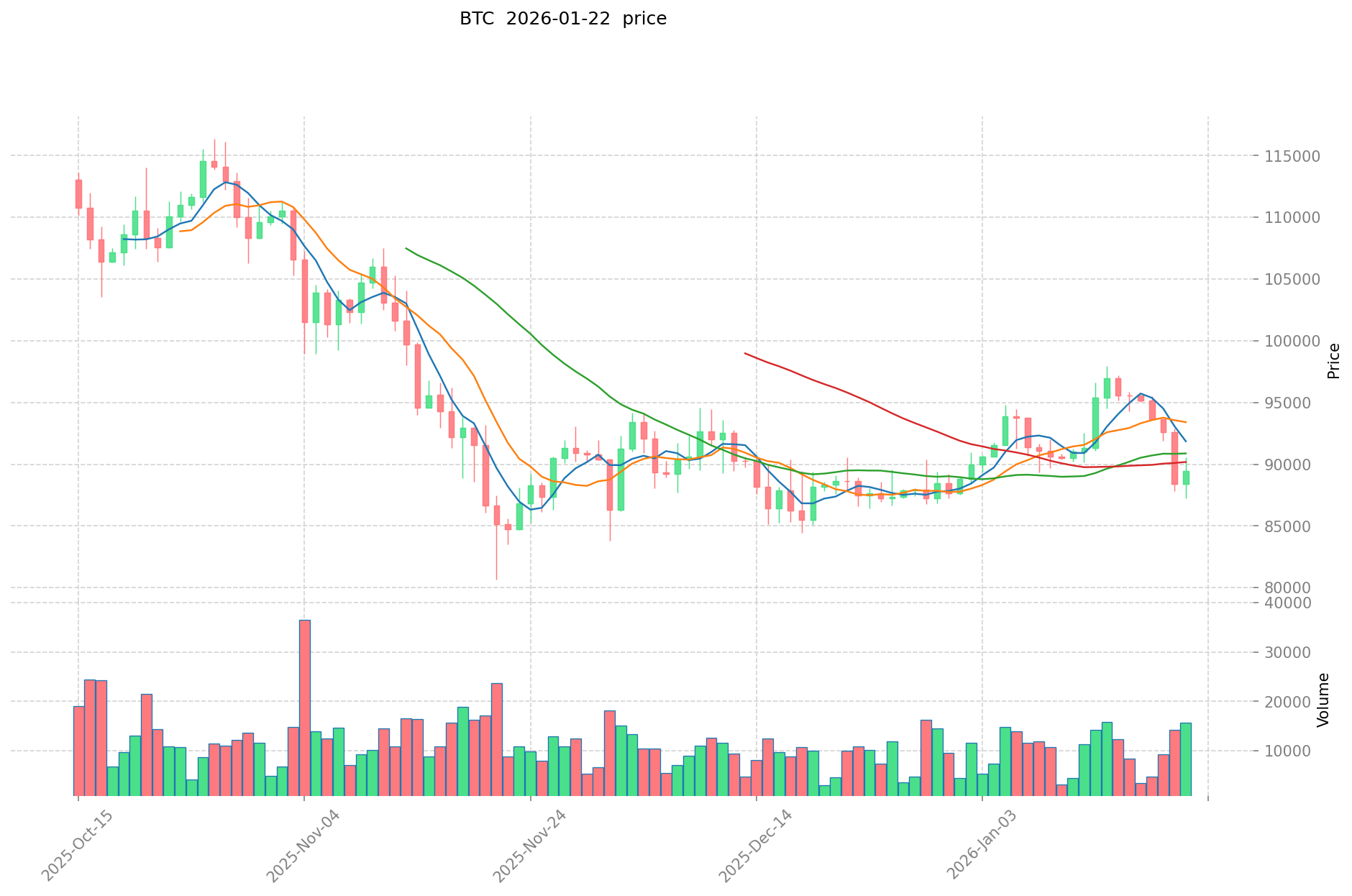
The question of when Bitcoin officially launched has a precise answer that marks a watershed moment in financial history. On January 3, 2009, at 6:15 PM UTC, the first block of the Bitcoin blockchain, known as the genesis block or Block 0, was successfully mined by the pseudonymous creator Satoshi Nakamoto. This specific moment represents the technical birth of Bitcoin as a functioning decentralized digital currency system. image_url
The genesis block is unique in several ways. It contained a coinbase transaction that created the first 50 bitcoins, though these coins remain unspendable due to the way the code was written. More significantly, Nakamoto embedded a message in the genesis block: "The Times 03/Jan/2009 Chancellor on brink of second bailout for banks." This headline from The Times newspaper served as both a timestamp and a philosophical statement about Bitcoin's purpose as an alternative to the traditional banking system.

The mining of this first block was not just a technical achievement but a carefully orchestrated launch that would set the foundation for a revolutionary approach to money and value transfer. The choice of this particular date and time, while seemingly arbitrary, has become one of the most celebrated moments in cryptocurrency history.

The Historical Significance of Bitcoin's Launch

The launch of Bitcoin on January 3, 2009, marked the beginning of a new era in financial technology. This date is now commemorated annually by the cryptocurrency community as "Bitcoin Genesis Day" or "Proof of Keys Day," highlighting its importance in the evolution of digital currencies. The timing of Bitcoin's launch was particularly significant, coming in the wake of the 2008 global financial crisis, which had exposed vulnerabilities in the traditional banking system.

Bitcoin's creation represented the first successful implementation of a peer-to-peer electronic cash system that operated without the need for a trusted third party or central authority. Prior attempts at creating digital currencies had failed due to the "double-spending problem" – the risk that a digital token could be copied and spent multiple times. Nakamoto's innovation of combining cryptographic proof with a distributed timestamp server solved this problem elegantly, creating a system where transactions could be verified by network consensus rather than by a central authority.

The launch set in motion a chain of events that would fundamentally challenge conventional thinking about money, value, and financial sovereignty. From its humble beginnings as an experimental technology known only to a small group of cryptography enthusiasts, Bitcoin would grow to become a global phenomenon that sparked an entire industry of blockchain-based innovations.

Bitcoin's Evolution and Current Status

Since that pivotal moment on January 3, 2009, Bitcoin has undergone a remarkable transformation. In recent years, Bitcoin has established itself as the first and most well-known cryptocurrency in the world, with a market capitalization reaching hundreds of billions of dollars. What began as a niche project discussed primarily in cryptography forums has evolved into a globally recognized asset class that attracts attention from individual investors, institutional players, and governments alike.

The journey from the genesis block to mainstream recognition has been marked by significant milestones. The first real-world Bitcoin transaction occurred on May 22, 2010, when programmer Laszlo Hanyecz paid 10,000 BTC for two pizzas – a date now celebrated as "Bitcoin Pizza Day." Over the following years, Bitcoin weathered numerous challenges, including exchange hacks, regulatory scrutiny, and extreme price volatility, yet it continued to demonstrate resilience and adaptability.

Bitcoin has proven to be more than just a speculative asset; it represents a resilient and innovative form of money that operates on principles of decentralization, transparency, and cryptographic security. The Bitcoin network has maintained near-perfect uptime since its launch, processing millions of transactions and securing billions of dollars in value. This track record has established Bitcoin as a serious alternative to traditional financial systems, particularly in regions with unstable currencies or limited access to banking services.

The Legacy of January 3, 2009

The date and time of Bitcoin's launch – January 3, 2009, at 6:15 PM UTC – has become more than just a historical footnote; it represents the birth of a movement that has challenged the traditional financial system and paved the way for a new era of digital transactions. Every time someone uses Bitcoin to make a purchase, send remittances across borders, or store value outside the conventional banking system, they are participating in the legacy that began on that specific day.

Bitcoin's launch has inspired thousands of alternative cryptocurrencies and blockchain projects, each attempting to build upon or improve the foundation laid by Nakamoto. The concepts introduced with Bitcoin – decentralization, cryptographic security, distributed consensus, and programmable money – have influenced fields far beyond finance, including supply chain management, digital identity, and decentralized governance.

The mystery surrounding Satoshi Nakamoto's true identity adds to the mystique of Bitcoin's origin story, but the precise timing and execution of the launch demonstrate careful planning and deep technical expertise. The fact that Nakamoto chose to remain anonymous and eventually disappear from the project has reinforced Bitcoin's decentralized nature, ensuring that no single person or entity controls its development or direction.

As Bitcoin continues to evolve and mature, the significance of its launch date remains a powerful reminder of how a single innovation, released at the right moment in history, can catalyze profound changes in how society thinks about and uses money. The genesis block stands as a permanent record on the blockchain, an immutable timestamp marking the moment when the future of finance began to take shape.

FAQ

Bitcoin was officially launched on what date and time?

Bitcoin was officially launched on January 3, 2009, at 18:15:05 UTC, when Satoshi Nakamoto mined the Genesis Block (Block 0), marking the beginning of the Bitcoin network and blockchain history.

What information did Bitcoin's Genesis Block contain?

Bitcoin's Genesis Block contains the timestamp January 3, 2009, a coinbase transaction with 50 BTC reward, and an embedded message referencing a financial crisis headline from The Times newspaper that day.

Who created Bitcoin? Is Satoshi Nakamoto a real identity?

Bitcoin was created by Satoshi Nakamoto in 2009. Satoshi Nakamoto is a pseudonym; the true identity remains unknown. This person or group published the Bitcoin whitepaper and launched the network, but has never been publicly confirmed.

When did Bitcoin's first transaction occur?

Bitcoin's first transaction occurred on January 12, 2009, when Satoshi Nakamoto sent 10 BTC to computer programmer Hal Finney. This historic transaction marked the beginning of Bitcoin's real-world utility and peer-to-peer value transfer.

What major historical events and upgrades has Bitcoin experienced since its launch?

Bitcoin's evolution includes: 2010 pizza transaction, 2012 halving, 2013 price surge, 2015 Segregated Witness proposal, 2017 bull run, 2020 halving and institutional adoption, 2021 El Salvador adoption, 2024 spot ETF approval, and multiple network upgrades enhancing security and scalability.

* The information is not intended to be and does not constitute financial advice or any other recommendation of any sort offered or endorsed by Gate.

Share

Content

The Genesis Block: Bitcoin's Birth Moment

The Historical Significance of Bitcoin's Launch

Bitcoin's Evolution and Current Status

The Legacy of January 3, 2009

FAQ

Related Articles
Effective Strategies to Prevent Double Spending in Bitcoin Cash Transactions

Effective Strategies to Prevent Double Spending in Bitcoin Cash Transactions

The article explores effective strategies to prevent double spending in Bitcoin Cash transactions, addressing a major concern in decentralized cryptocurrency networks. It explains double spending, the associated vulnerabilities in digital cash systems, and how cryptocurrencies like Bitcoin use Proof-of-Work to counteract these attacks. The discussion includes various double spend attack methods and how Proof-of-Stake provides an alternative defense. Through real-world examples, the article highlights the importance of network security and decentralization. It is essential reading for crypto enthusiasts and developers looking to fortify their digital transactions against fraudulent threats.
2025-11-30 08:31:20
Understanding the Legality of Bitcoin Mining in India: Regulations and Insights

Understanding the Legality of Bitcoin Mining in India: Regulations and Insights

# Understanding the Legality of Bitcoin Mining in India: Regulations and Insights This comprehensive guide examines India's bitcoin mining legal status, operating within a regulatory grey area where mining remains unprohibited yet unsupported by formal policies. Addressing critical concerns for miners, investors, and cryptocurrency users, the article contrasts India's ambiguous framework with progressive regulations in Canada and Norway. Through real-world mining operations, statistical data on electricity consumption, and practical cost analyses, readers gain actionable insights into India's mining landscape. The content explores how regulatory clarity impacts investment decisions, market stability, and industry growth potential. Essential for stakeholders navigating India's crypto mining sector on Gate, this resource clarifies compliance considerations while revealing untapped opportunities in Asia's emerging mining hub.
2025-12-29 09:23:56
Is Crypto Mining Legal in Tunisia?

Is Crypto Mining Legal in Tunisia?

# Article Introduction This comprehensive guide explores **Bitcoin regulations and cryptocurrency legality in Tunisia**, addressing critical legal considerations for investors, traders, and tech enthusiasts. The article examines Tunisia's strict 2018 BCT directive prohibiting crypto mining, analyzes its economic impact on local innovation, and evaluates alternative blockchain applications within legal boundaries. Through international comparisons with crypto-friendly jurisdictions like Canada and Switzerland, it highlights regulatory best practices and missed opportunities. The FAQ section clarifies current legal risks, tax obligations, and enforcement mechanisms, providing essential clarity for anyone considering cryptocurrency activities in Tunisia. Perfect for stakeholders navigating Tunisia's restrictive crypto landscape on platforms like Gate.
2026-01-05 11:16:28
Is Cryptocurrency Mining Legal in Canada?
Is Cryptocurrency Mining Legal in Canada?

# Introduction: Understanding the Legality of Bitcoin Mining Worldwide This comprehensive guide explores cryptocurrency mining legality across global jurisdictions, with particular focus on Canada's regulatory framework. Designed for investors, traders, and mining operators, this article clarifies legal requirements, tax obligations, and compliance standards essential for profitable mining ventures. Through real-world examples—including Hydro-Québec's 500MW renewable energy initiative and Canada Revenue Agency tax guidelines—readers gain actionable insights into operating legally. The article examines provincial variations, environmental regulations, and current industry statistics showing 30% operational growth since 2022. Whether you're establishing mining operations or trading on Gate, understanding these legal landscapes ensures sustainable, compliant investments in the blockchain ecosystem.
2026-01-01 17:11:30
When Did Bitcoin Come Out: A Brief History
When Did Bitcoin Come Out: A Brief History

This article traces Bitcoin's complete timeline from its 2008 whitepaper publication to modern adoption, exploring how Satoshi Nakamoto's revolutionary peer-to-peer digital cash system transformed global finance. The narrative spans from the January 2009 Genesis Block launch through early skepticism and Laszlo Hanyecz's 2010 pizza transaction, highlighting Bitcoin's transition from obscure technology experiment to legitimate asset class. It examines the cryptocurrency's remarkable evolution amid market volatility, regulatory challenges, and technological advances, while demonstrating how Bitcoin's scarcity and decentralization established it as digital gold. The article concludes by analyzing Bitcoin's far-reaching impact on cryptocurrency ecosystems and its role as a foundational innovation reshaping financial systems globally.
2026-01-21 03:21:27
What Was the Price of Bitcoin When It First Came Out

What Was the Price of Bitcoin When It First Came Out

This article traces Bitcoin's extraordinary journey from its inception in 2009 when it held virtually zero value to becoming a global asset class. It explores how Bitcoin transitioned from a theoretical concept to a tradable commodity through key milestones: the first price discovery on October 5, 2009 ($1 = 1,309.03 BTC), and the legendary Bitcoin Pizza Day transaction on May 22, 2010, establishing the first real-world exchange rate at $0.0041 per coin. The article examines Bitcoin's evolution through emerging exchanges like Gate and Mt. Gox, reaching $1 in 2011 and subsequently experiencing dramatic volatility. Beyond price history, it analyzes Bitcoin's socioeconomic impact on financial inclusion, decentralization, and blockchain innovation. Perfect for readers seeking to understand how Bitcoin's early valuations reflected computational costs and emerging market dynamics, this comprehensive overview demonstrates how visionary ideas transformed into trillion-dollar phenomena while addressing common question
2026-01-20 21:11:36
Recommended for You
What is the fundamentals analysis of a cryptocurrency project: whitepaper logic, use cases, technology innovation, roadmap progress, and team background explained
What is the fundamentals analysis of a cryptocurrency project: whitepaper logic, use cases, technology innovation, roadmap progress, and team background explained

This article provides a comprehensive framework for fundamental analysis of cryptocurrency projects across five critical dimensions. Learn how to evaluate whitepaper economics, assess real-world use cases and adoption potential, analyze technological differentiation and competitive advantages, measure roadmap execution and team track record, and compare similar projects. By examining these interconnected layers—from token economics to institutional-grade applications—investors can identify projects with sustainable business models and genuine market demand. The guide demonstrates how projects like Ondo Finance leverage on-chain technology and institutional partnerships to build credible value propositions. Whether you're evaluating trading opportunities on Gate or conducting investment research, this fundamental analysis framework helps distinguish between speculative ventures and projects with proven execution capability, transparent governance, and measurable ecosystem growth.
2026-01-22 03:56:54
How does macroeconomic policy and inflation impact cryptocurrency prices in 2026
How does macroeconomic policy and inflation impact cryptocurrency prices in 2026

This article examines how macroeconomic policy and inflation dynamics directly impact cryptocurrency prices in 2026. It explores Federal Reserve monetary policy transmission mechanisms, demonstrating how interest rate decisions and quantitative tightening affect Bitcoin and Ethereum valuations through liquidity contraction and increased discount rates. The analysis reveals cryptocurrency's correlation with Consumer Price Index data, positioning digital assets as inflation hedges alongside traditional commodities. Additionally, the article tracks traditional finance spillovers from S&P 500 and gold movements as leading indicators for crypto volatility. Key insights demonstrate that tighter monetary conditions typically pressure crypto prices, while elevated inflation may support digital assets as hedges. For traders and portfolio managers, understanding these macroeconomic relationships through CPI releases, Fed policy signals, and equity market movements provides essential predictive frameworks for positionin
2026-01-22 03:55:08
What is the difference between competing cryptocurrencies in the same blockchain sector

What is the difference between competing cryptocurrencies in the same blockchain sector

This comprehensive guide explores the critical differences between competing cryptocurrencies within the same blockchain sector. It examines performance metrics including transaction speed, throughput, and network efficiency that determine platform viability. The article analyzes market adoption indicators such as market capitalization trends, trading volumes, and user growth rates to assess project maturity. It highlights differentiation strategies through unique technological innovations like Fully Homomorphic Encryption and ecosystem development that create sustainable competitive advantages. Finally, it tracks market share dynamics showing how emerging challengers reshape competitive positions against established players. Whether you're evaluating blockchain investments, selecting platforms on Gate for trading, or comparing infrastructure solutions, this guide provides essential metrics and insights to understand how cryptocurrencies differentiate themselves and compete within specific blockchain sectors.
2026-01-22 03:53:22
What Are the Biggest Crypto Security Risks: Smart Contract Vulnerabilities, Exchange Hacks, and Network Attacks Explained
What Are the Biggest Crypto Security Risks: Smart Contract Vulnerabilities, Exchange Hacks, and Network Attacks Explained

This comprehensive guide examines the three most critical cryptocurrency security risks threatening digital assets today. Smart contract vulnerabilities have cost the ecosystem over $14 billion since 2016, with exploits like the Ronin bridge hack ($625 million) exposing code flaws in decentralized protocols. Centralized exchange hacks represent equally devastating threats, as platforms concentrate vast user assets in single locations, creating attractive targets for attackers. Network-level attacks, including 51% attacks and DDoS assaults, target blockchain infrastructure and consensus mechanisms directly. The article dissects each threat category, provides historical context, explores prevention strategies, and addresses practical security questions. Whether you're storing crypto on Gate or managing smart contracts, understanding these vulnerabilities is essential for protecting your digital assets. Readers will learn identification methods, protective measures, and best practices for navigating the evolving
2026-01-22 03:51:26
What is the current crypto market overview and which coins rank highest by market cap, trading volume, and liquidity in 2026
What is the current crypto market overview and which coins rank highest by market cap, trading volume, and liquidity in 2026

This comprehensive guide examines the cryptocurrency market landscape in 2026, analyzing top-performing coins across market capitalization, trading volume, and liquidity metrics. The article provides investors with essential tools to understand cryptocurrency rankings and market dynamics on platforms like Gate. Readers will discover how market cap calculations influence investment decisions, why 24-hour and 7-day trading volume matter for identifying market trends, and how exchange coverage impacts asset accessibility. The guide covers circulation supply implications, fully diluted valuations, and real-time liquidity conditions for major digital assets. Through practical analysis of leading cryptocurrencies including Bitcoin and Ethereum, the article clarifies relationships between market position, trading activity, and investment viability. Perfect for traders and investors seeking data-driven insights into 2026's evolving crypto ecosystem.
2026-01-22 03:49:47
How Does Federal Reserve Policy Impact Cryptocurrency Prices in 2026

How Does Federal Reserve Policy Impact Cryptocurrency Prices in 2026

This comprehensive guide examines how Federal Reserve policy decisions directly reshape cryptocurrency markets in 2026 through multiple transmission channels. The article explores three critical mechanisms: how rate adjustments alter the opportunity cost of risk assets like Bitcoin and Ethereum, causing significant valuation shifts; how CPI releases trigger predictable 5-15% crypto corrections as traders anticipate Fed responses; and how traditional market movements—S&P 500 drawdowns and gold price shifts—serve as leading indicators for crypto downturns. By analyzing the inverse correlation between real interest rates and digital asset values, alongside institutional portfolio rebalancing patterns on platforms like Gate, the article demonstrates that cryptocurrency price movements have become increasingly synchronized with macroeconomic policy signals. The guide equips investors with actionable frameworks to anticipate crypto volatility based on Fed communications, inflation data surprises, and equity market
2026-01-22 03:47:37